Artwork
Mystic Marriage of St. Catherine
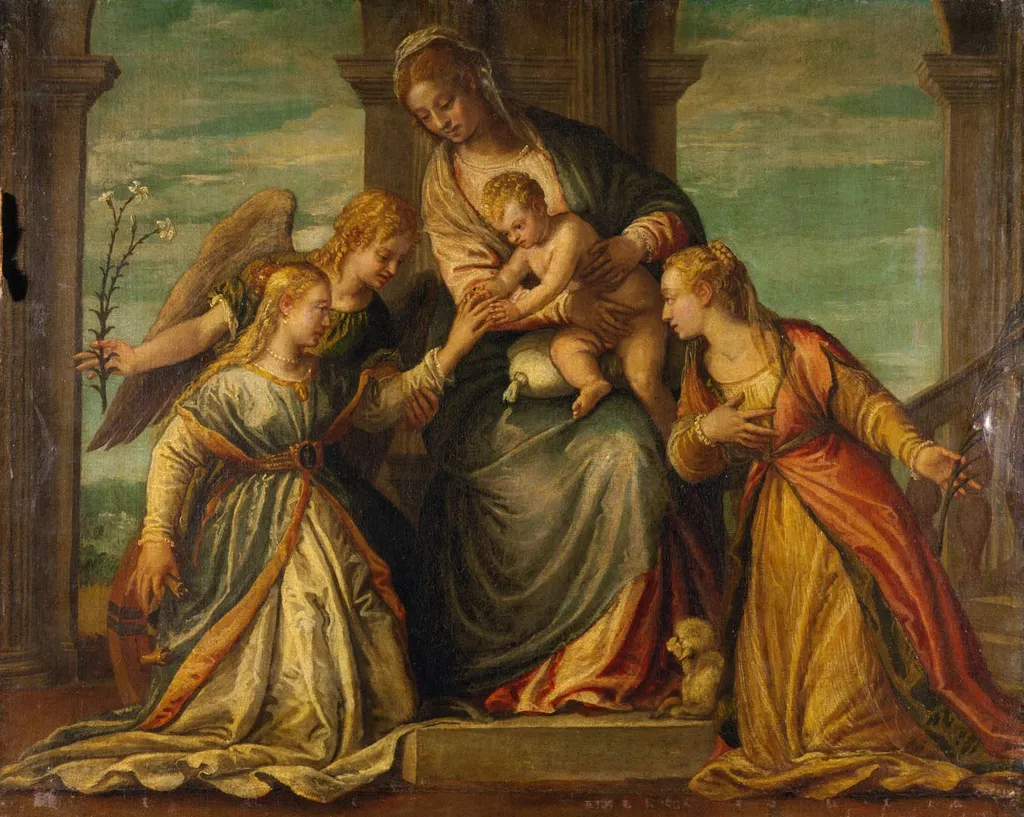
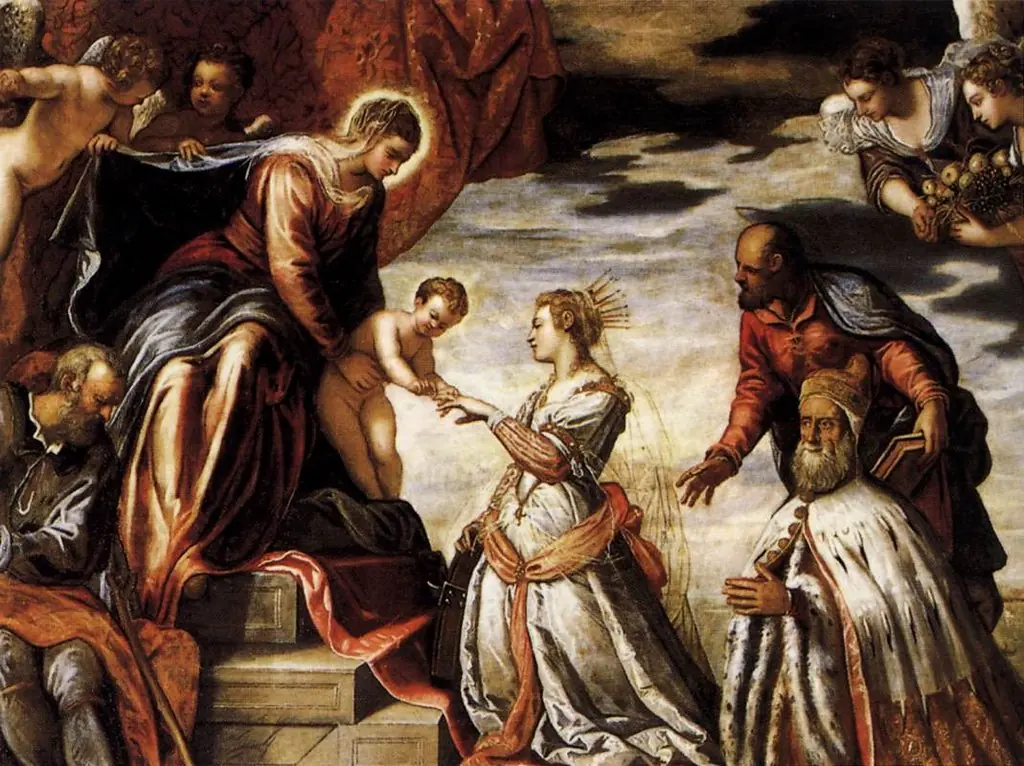
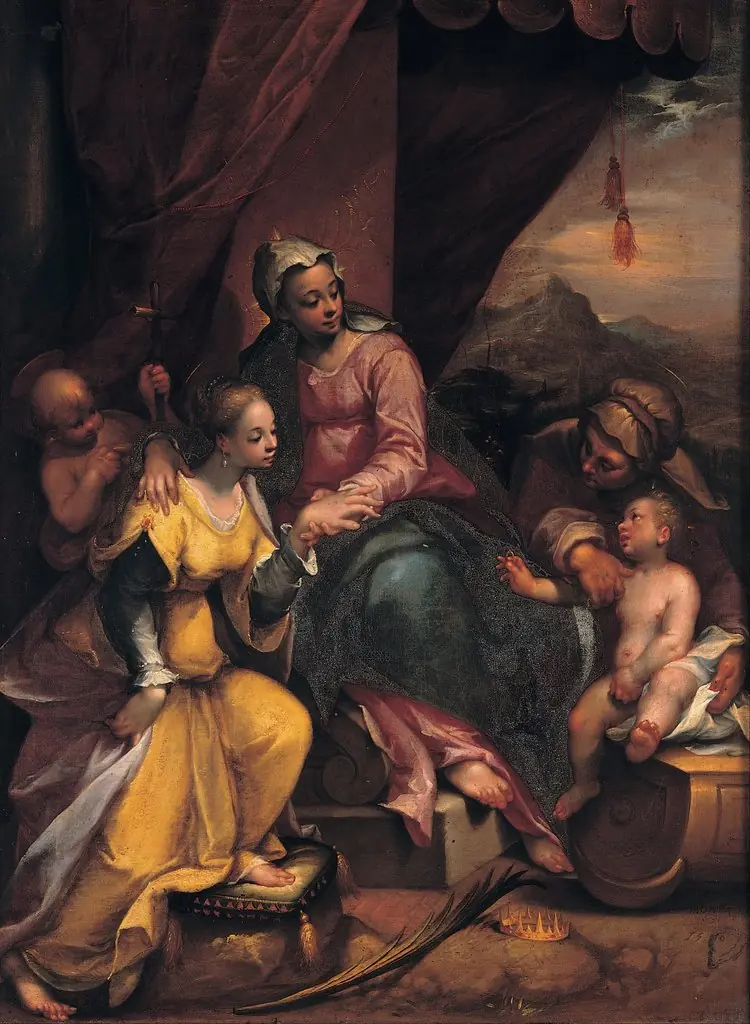
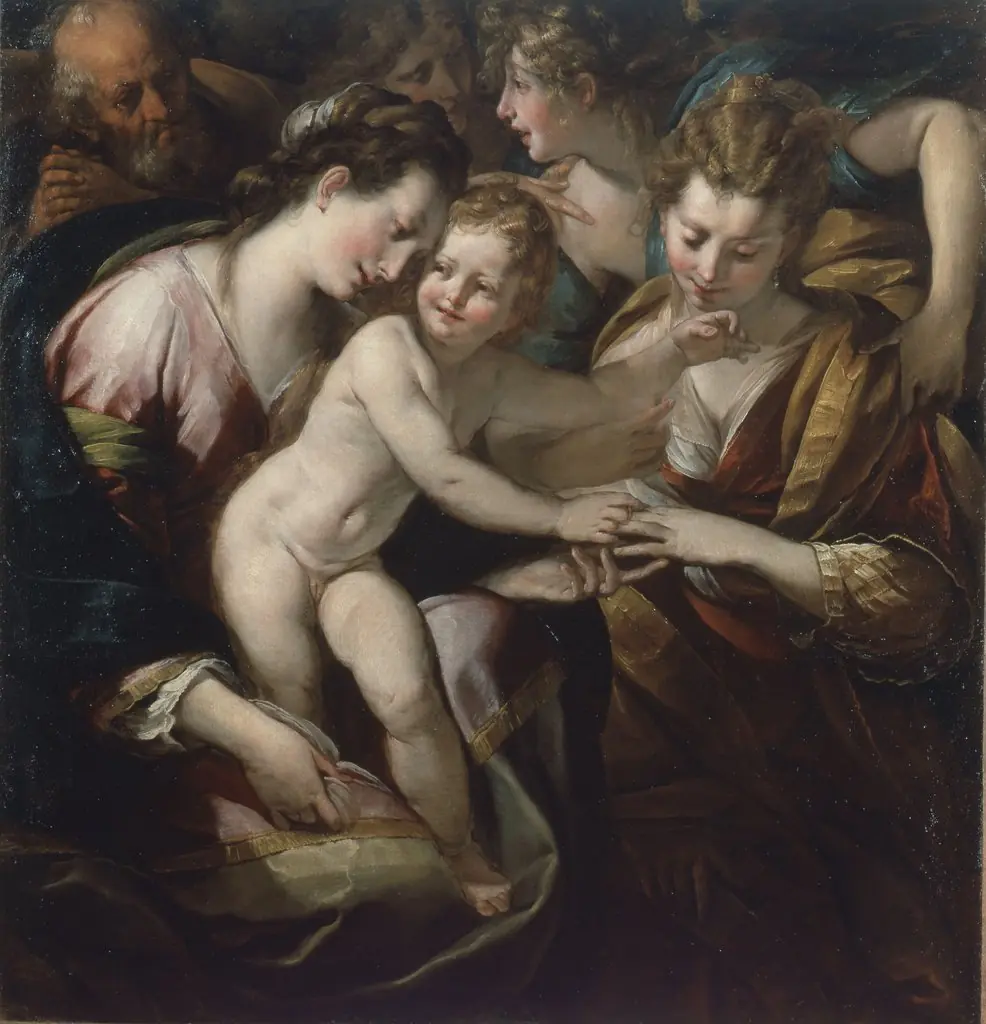
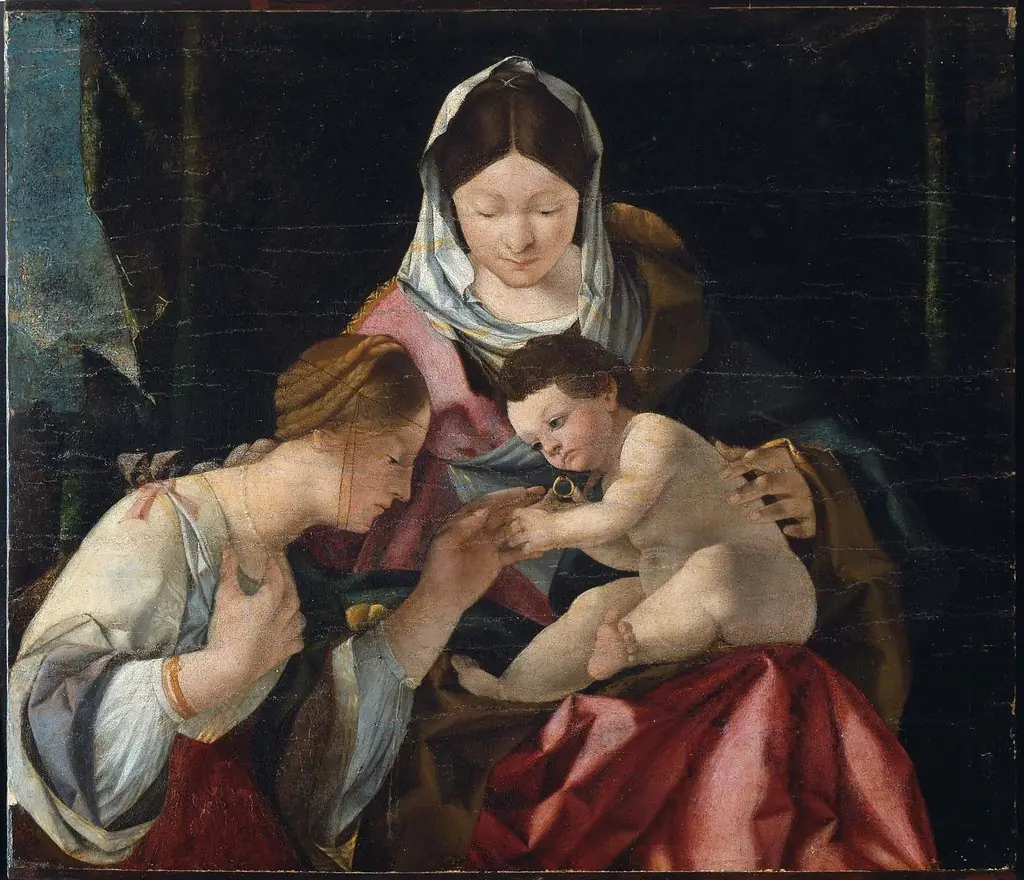
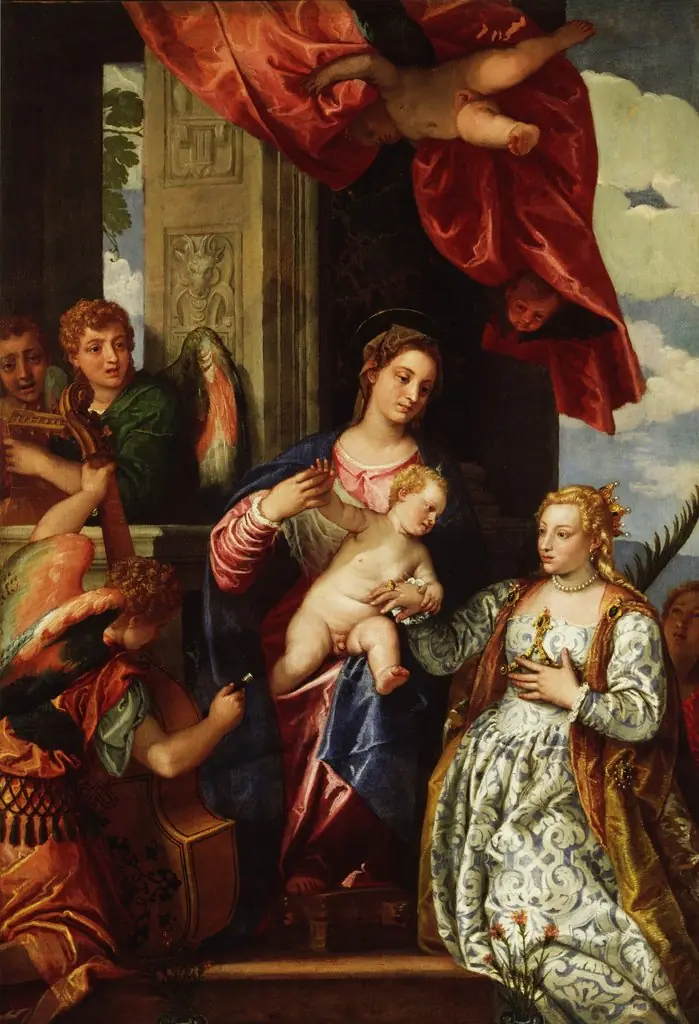
Mystic Marriage of St. Catherine is an oil painting. It dates from 1596 and is held in the collection of the Kunsthistorisches Museum. The work depicts a serene gathering of women in a classical interior, centered on a figure cradling a naked infant.
About this work
Subject & Meaning
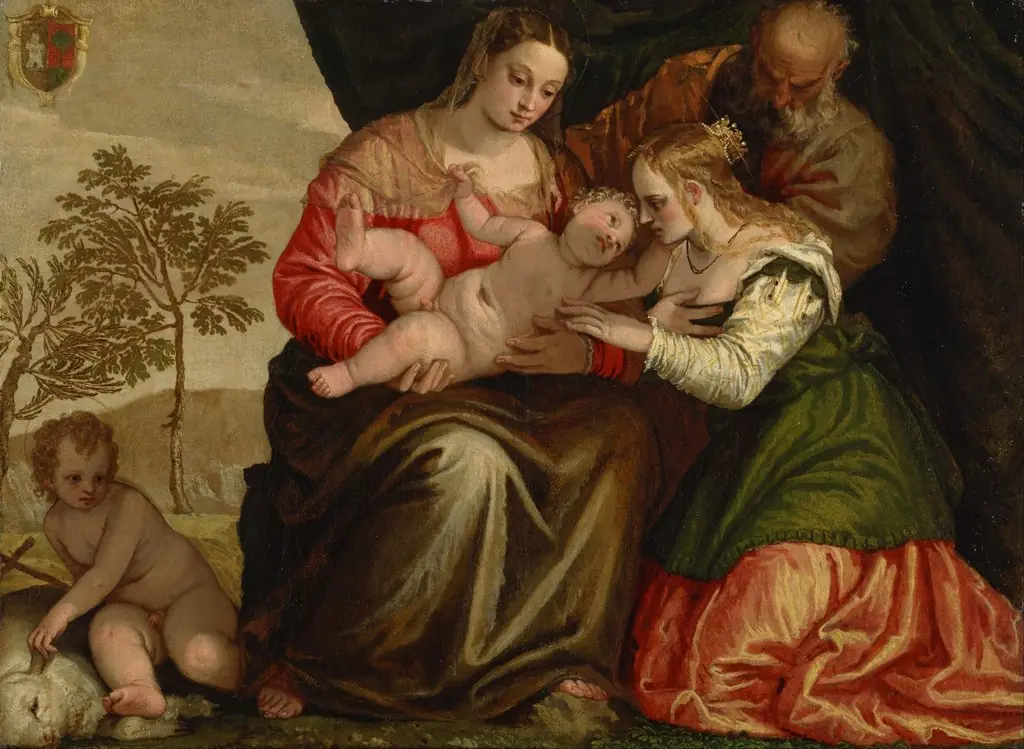
Saint Agnes of Rome is also present, identifiable by her attribute of a lamb, reinforcing the theme of youthful holiness and divine betrothal.
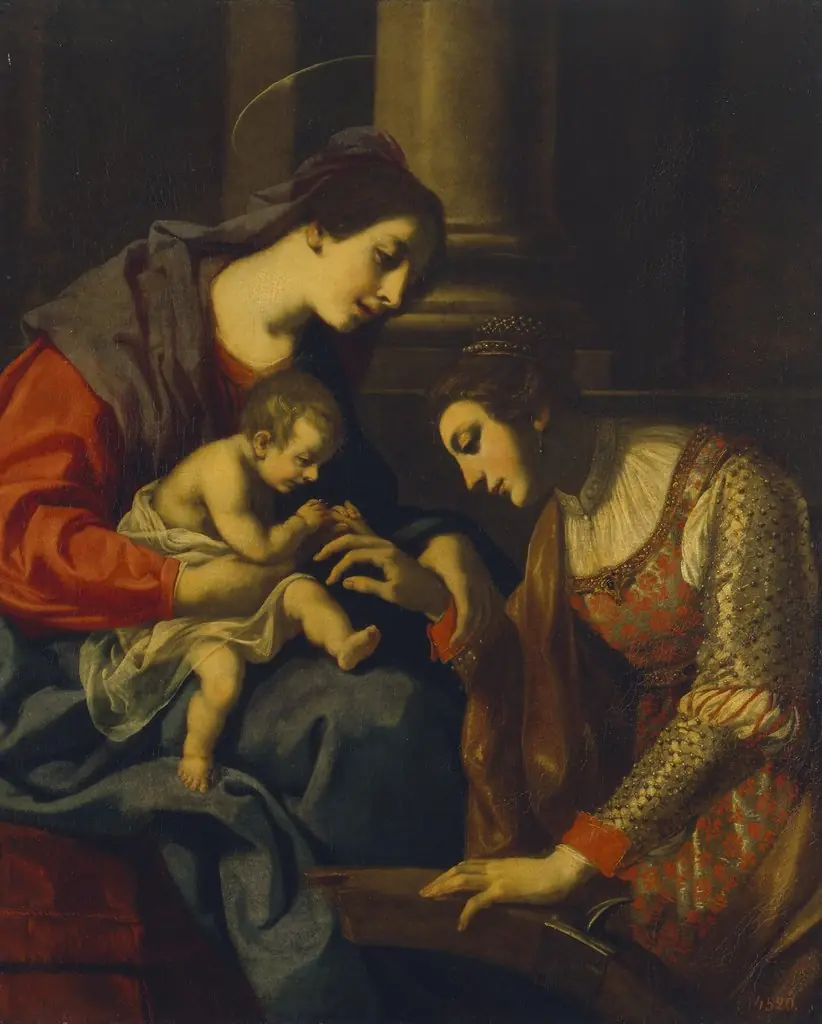
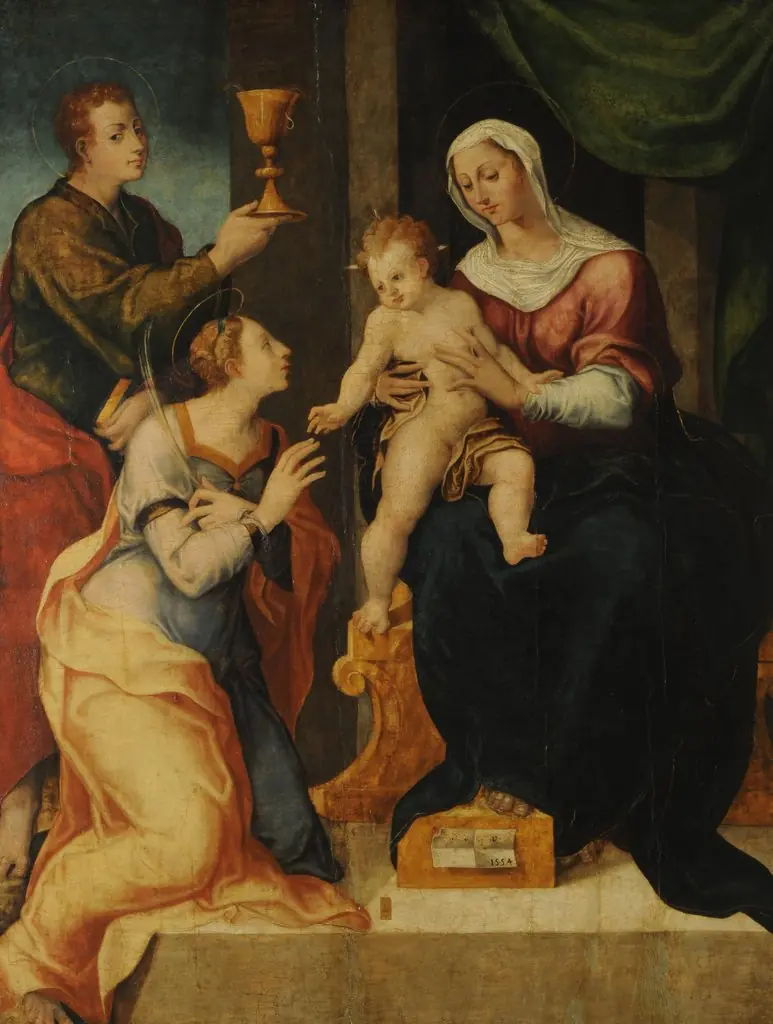
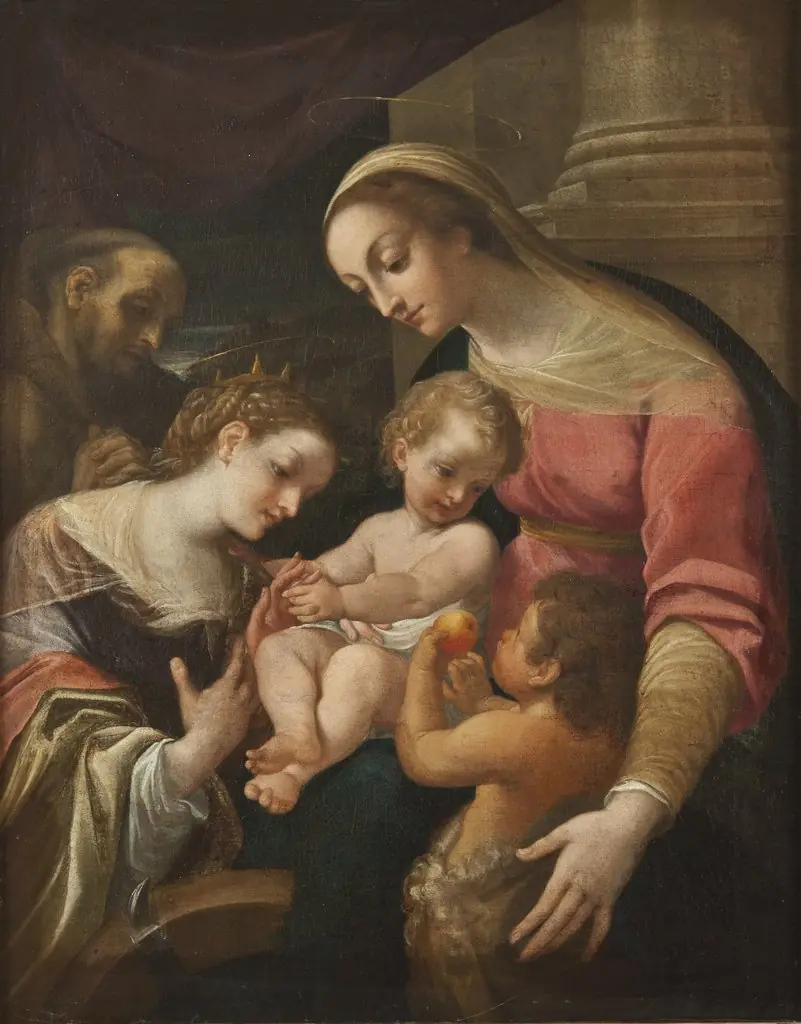
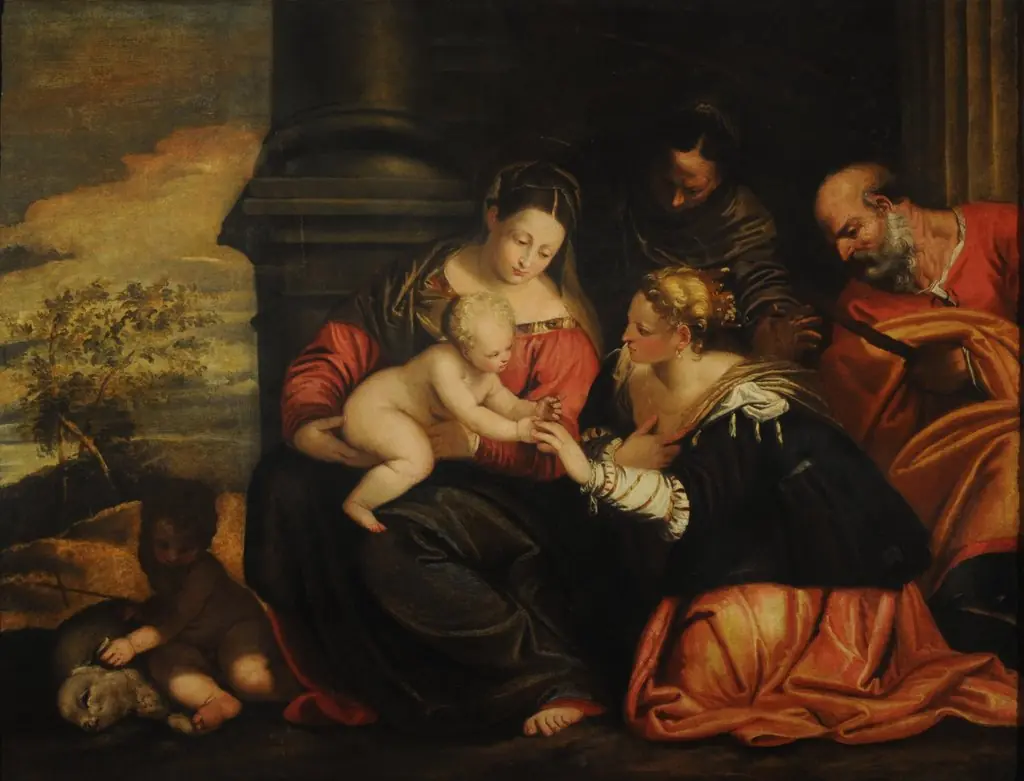
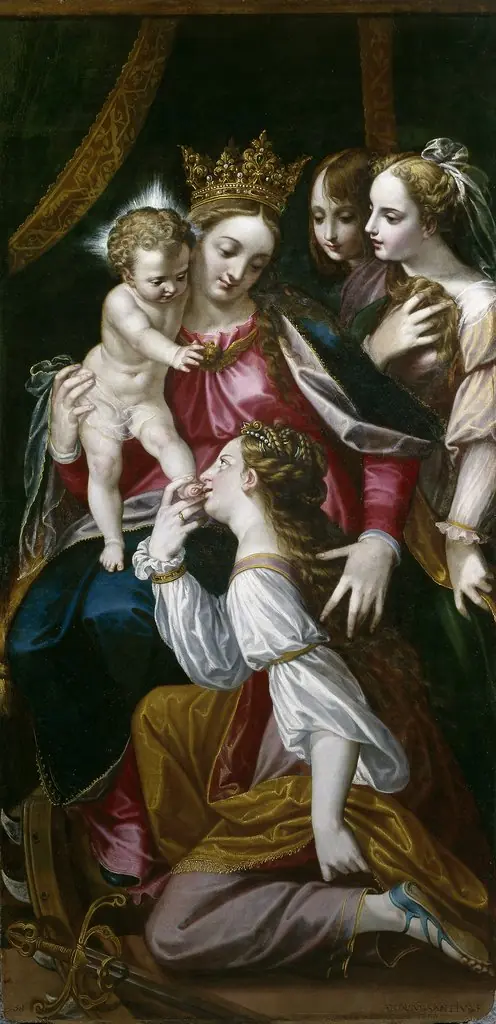
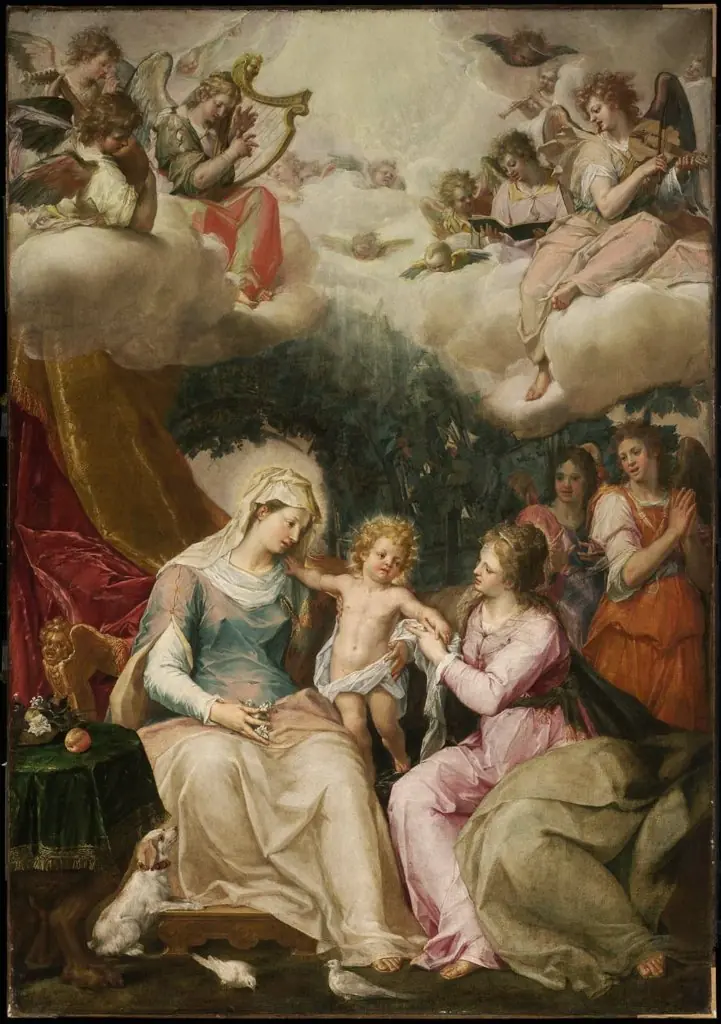
The painting depicts the Mystic Marriage of Saint Catherine of Alexandria, a central episode in her legend in which the infant Christ places a ring on the saint’s finger, signifying a spiritual union. The scene is set before a classical architectural backdrop, with Saint Catherine kneeling to receive the ring from the Christ Child, who is held by the Virgin Mary. Saint Agnes of Rome is also present, identifiable by her attribute of a lamb, reinforcing the theme of youthful holiness and divine betrothal.
The composition emphasizes sacred intimacy and heavenly sanction of Catherine’s mystical vow, aligning with Counter-Reformation devotional imagery that underscores the authority of female saints and the sacrament of spiritual espousal.
Technique & Style
Created in 1590 using oil paint on canvas, the Mystic Marriage of St. Catherine depicts a religious scene of Saint Catherine of Alexandria's mystical marriage to Christ. The composition shows Catherine of Alexandria and Agnes of Rome within a devotional framework characteristic of Counter-Reformation art. The work is attributed to the workshop of Paolo Caliari, known as Veronese, and currently resides in the Kunsthistorisches Museum.
The painting's formal qualities include rich coloration and intricate drapery typical of Veronese's style, though executed by his workshop rather than by Veronese himself. Its condition remains stable within the museum's collection, preserving the original canvas support and oil medium without significant degradation.
History & Provenance
The painting titled Mystic Marriage of St. Catherine was created in 1590 by the workshop of Paolo Caliari, known as Veronese. Executed in oil on canvas, the work depicts the religious subject of the mystic marriage of Saint Catherine of Alexandria alongside Saint Agnes of Rome. Historical records indicate that Archduke Leopold Wilhelm of Austria previously owned the piece before it entered the collection of the Kunsthistorisches Museum, where it remains today.
The painting is held in the collection of the Kunsthistorisches Museum in Vienna. According to provenance records, it was formerly owned by Archduke Leopold Wilhelm of Austria before passing into the museum's holdings. The work is catalogued as an oil-on-canvas religious painting dated to 1590 and attributed to the workshop of Paolo Caliari, called Veronese. No specific inventory or accession number, nor any exhibition history, is recorded in the available sources.
The sources confirm the current location and prior ownership but do not provide details on accession numbering or past exhibitions.
Overview
The work depicts a serene gathering of women in a classical interior, centered on a figure cradling a naked infant. Flanked by three attendants, one kneeling, the others standing, the scene unfolds beneath marble columns against a blue sky mottled with clouds. The central woman is robed in dark fabric with a white veil, her gaze tenderly fixed on the child.
Context
The work reflects the Counter‑Reformation emphasis on personal devotion and the veneration of saints. By portraying Saint Catherine’s mystical marriage, the artist aligns with contemporary devotional practices that encouraged believers to contemplate intimate, spiritual unions with the divine.
Artist & collection