Artwork
Giocatrici di astragali
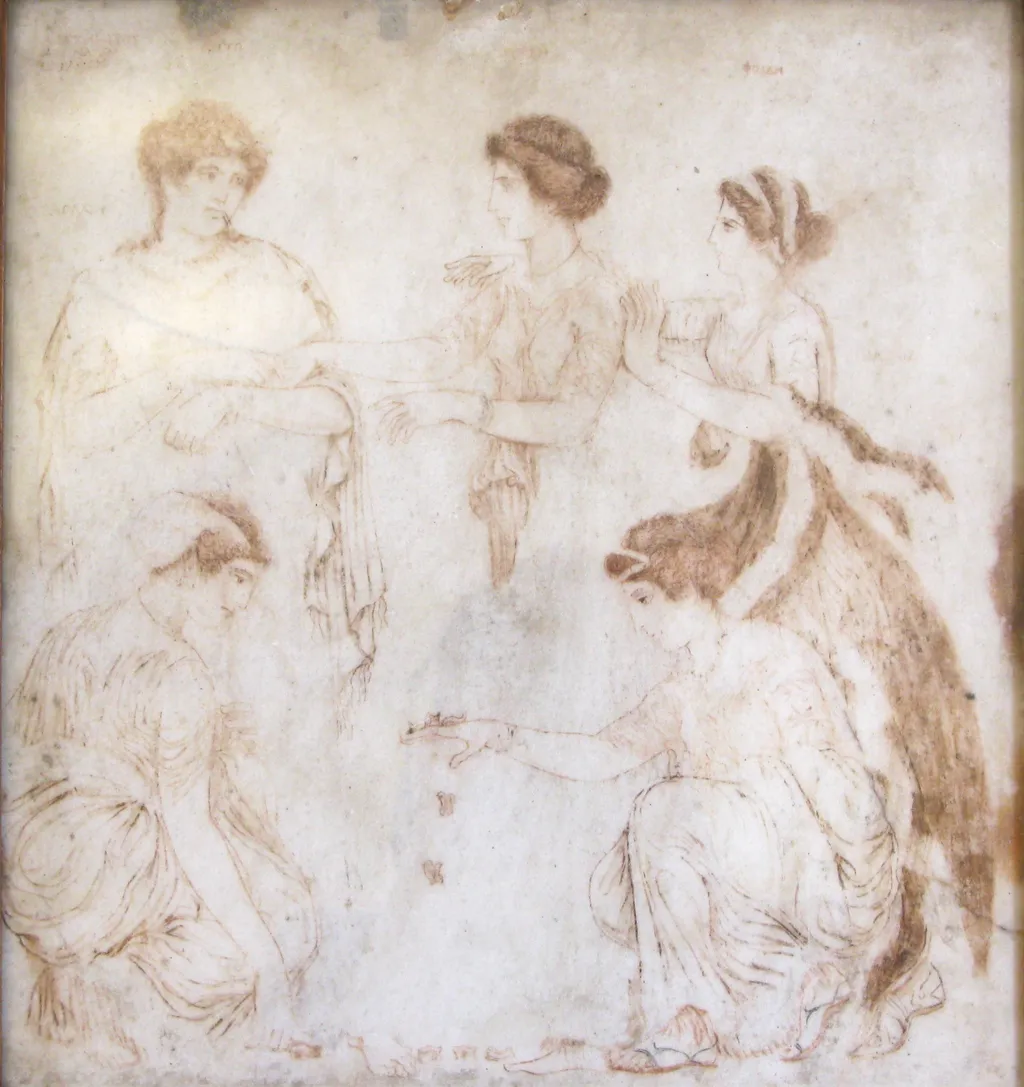
Giocatrici di astragali is a marble painting by Unknown. It dates from 1850 and is held in the collection of the Naples National Archaeological Museum. This work is a sculptural relief carved from marble, not a painting as sometimes misattributed.
About this work
Overview
This work is a sculptural relief carved from marble, not a painting as sometimes misattributed. It depicts figures engaged in a game involving astragali—knucklebones used in ancient Greek and Roman pastimes. The composition captures movement and interaction among the players, reflecting a common scene of daily life in antiquity.
Subject & Meaning
The figures shown are women playing astragali, a game popular among all social classes in the classical world. The scene conveys leisure and social bonding, not ritual or myth. Its focus on ordinary activity suggests an interest in domestic life, possibly commissioned for private spaces to evoke harmony and routine.
Technique & Style
The relief is carved with subtle depth, using low relief techniques to suggest volume without full three-dimensionality. Drapery folds are rendered with soft, flowing lines, and the figures' postures are naturalistic, indicating familiarity with Hellenistic conventions of movement and anatomy.
History & Provenance
The piece likely dates to the late Hellenistic or early Roman period, possibly from a domestic context in southern Italy or Asia Minor. Its survival suggests it was valued enough to be preserved, though its exact find location and early ownership remain undocumented in surviving records.
Context
Games with astragali appear frequently in mosaics and reliefs from the classical world, often in domestic or funerary settings. This work aligns with a broader trend of depicting everyday activities as subjects worthy of artistic representation, contrasting with mythological or heroic themes more common in public art.
Legacy
Though not widely known today, the relief contributes to understanding how ancient societies visualized gender, play, and social interaction. It remains a quiet testament to the cultural significance of simple pastimes in antiquity, preserved through material rather than text.
Artist & collection

Museum
Naples National Archaeological Museum
Continue through works from the same source collection.
 Domestic Scene
 Giacomo and Cardinal Marco, investing Andrea, Abbot of San Zeno, with his Benefice
 The Nymph of Fontainebleau
 Portrait of a Woman
 Madonna and Child with Saints in the Enclosed Garden
 Venus and Minerva
 Family Group of Four on Sofa
 Wall painting from Room H of the Villa of P. Fannius Synistor at Boscoreale
 Heracles and Omphale
 Scenă mitologică
 Scenă alegorică
 Women Captives and Guards
 Four Dancing Muses
 The Three Marys at the Tomb
 Cameo, No. 1 (Mother and Child)
 Studies of Classical Women, with Eros
 Achille costretto a cedere briseide a ad Agamennone
 Woman from the Villa Albani
 Landscape with Diana and Nymphs
 Bacchus and Ariadne