Artwork
Radha and Krishna's Reconciliation
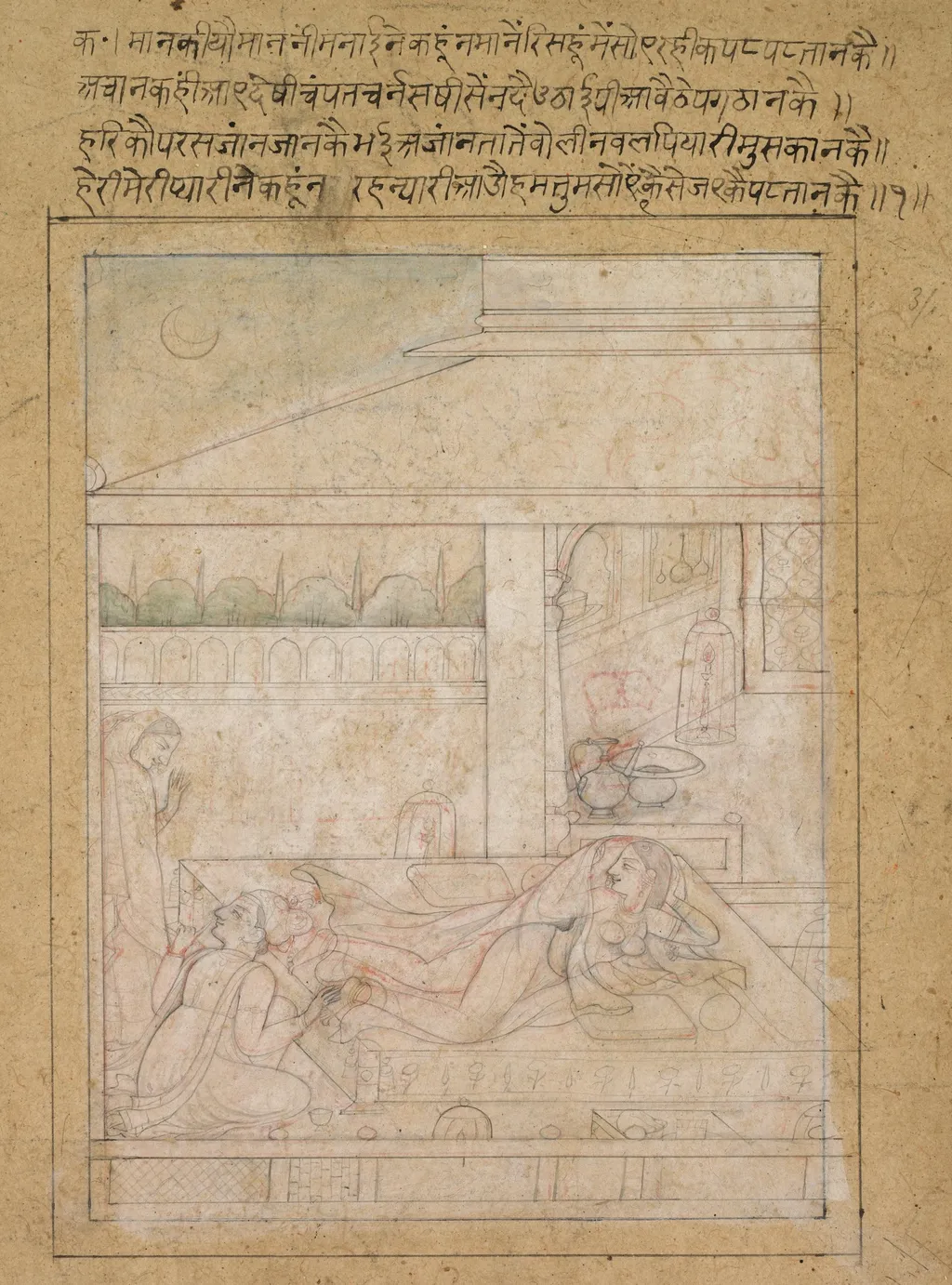
Radha and Krishna's Reconciliation is an unspecified painting. It dates from 1798 and is held in the collection of the Cleveland Museum of Art.
About this work
Subject & Meaning
Created in 1795, the artwork serves as a visual narrative of divine love and restoration, capturing the emotional resolution of the pair's relationship.
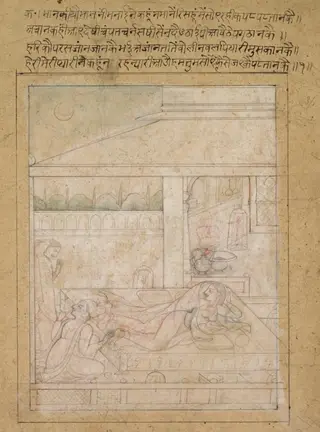
The painting depicts the reconciliation between the divine figures Radha and Krishna, centering on their reunion. As the title indicates, the work illustrates the moment of resolving conflict or separation between these two beloved figures in Hindu tradition. The subject focuses exclusively on Krishna, who is explicitly identified as the primary figure portrayed in the composition.
Created in 1795, the artwork serves as a visual narrative of divine love and restoration, capturing the emotional resolution of the pair's relationship.
History & Provenance
Radha and Krishna's Reconciliation is part of the Cleveland Museum of Art's collection, listed under accession number 1936.682. The painting, dated 1795, is housed in the museum's designated storage or exhibition space, though specific gallery details are not provided in the source. Its provenance indicates acquisition by the museum, but no further transfer records are documented.
Exhibition records are not detailed in the available documentation, and the work has not been featured in publicly listed temporary shows according to the sources consulted.
Overview
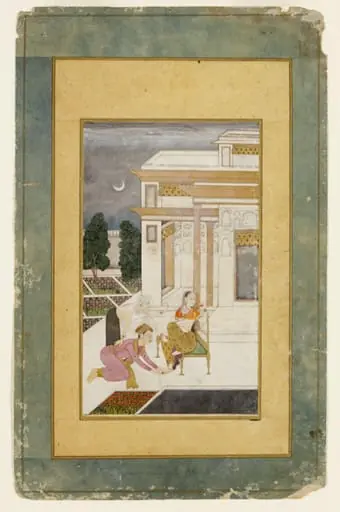
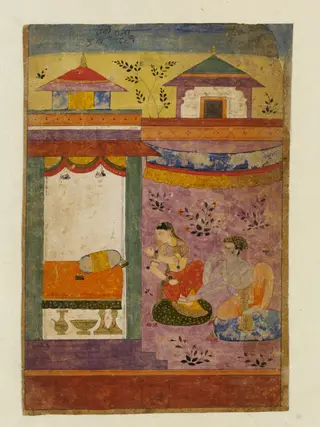
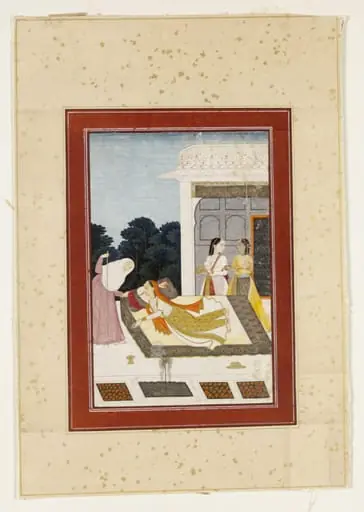
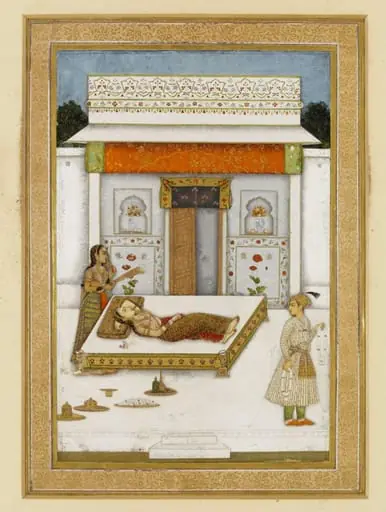
This painting, titled Radha and Krishna's Reconciliation, depicts a tender moment between the divine lovers from Hindu mythology. The scene unfolds within an intimate domestic setting, focusing on the emotional exchange between Radha and Krishna. It captures a specific narrative point in their relationship, emphasizing forgiveness and renewed affection after a period of estrangement.
Technique & Style
The composition places the two figures prominently within a sparsely furnished room, drawing attention to their interaction. Radha, dressed in traditional attire, occupies the bed, while Krishna kneels beside her. Everyday objects like a table and a bowl are subtly included, grounding the divine narrative in a relatable domestic space.
A window in the background offers a glimpse beyond the immediate scene, adding depth to the intimate portrayal.
Artist & collection