Artwork
Radha's Hair Being Dressed
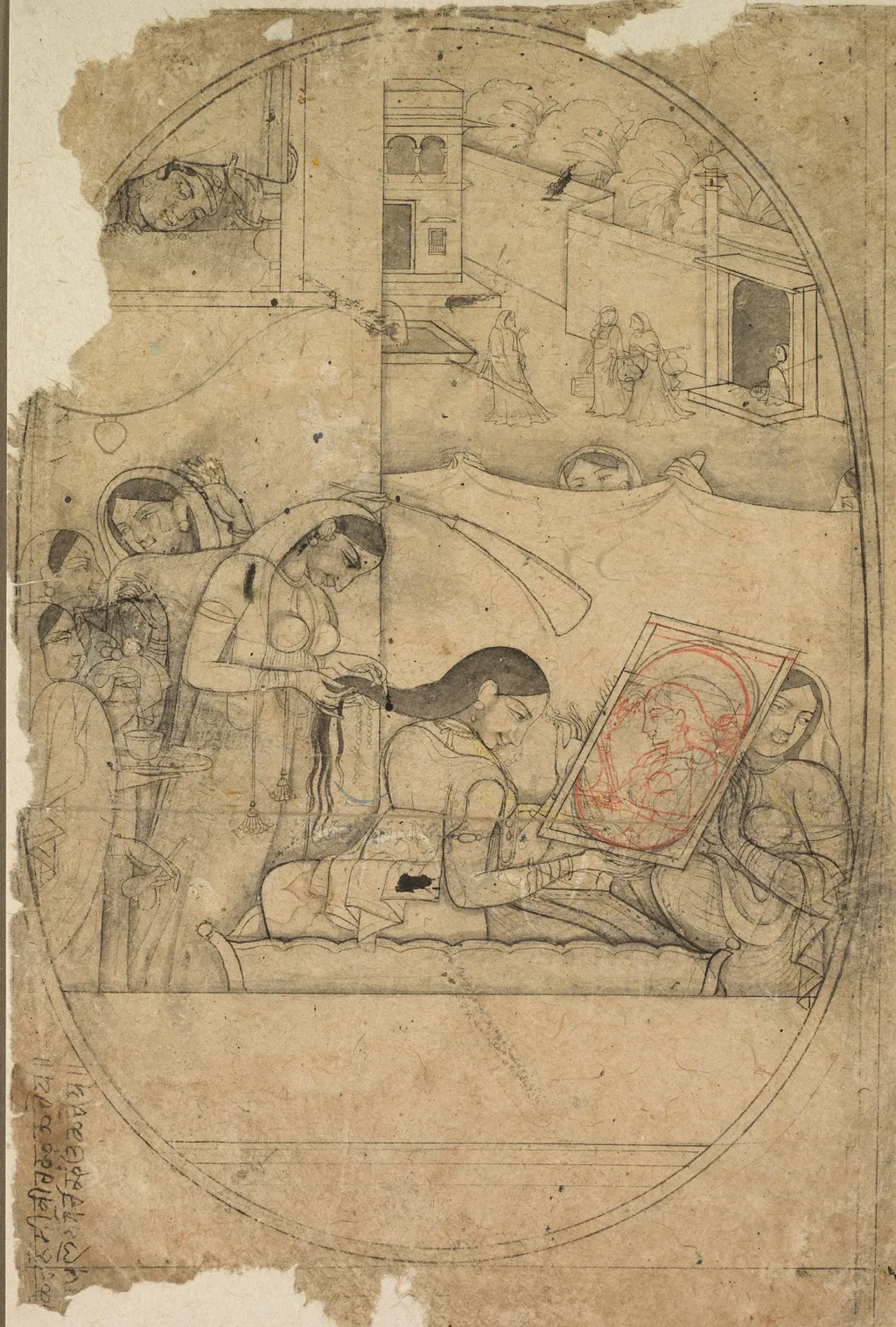
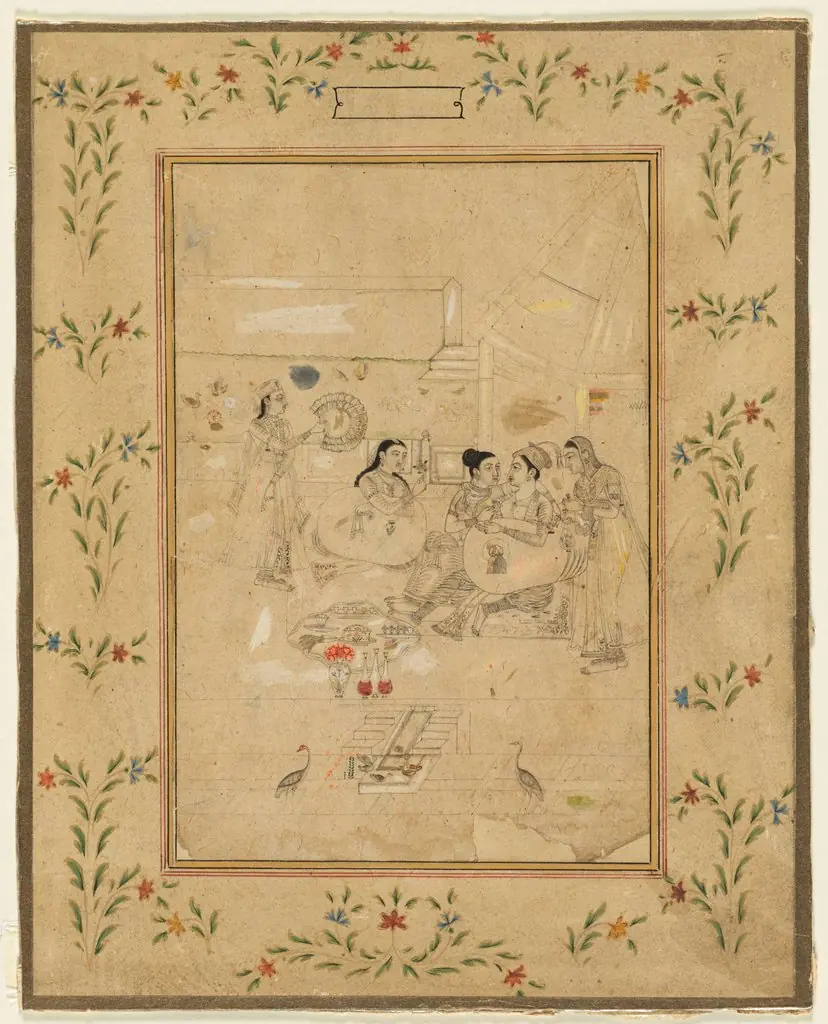
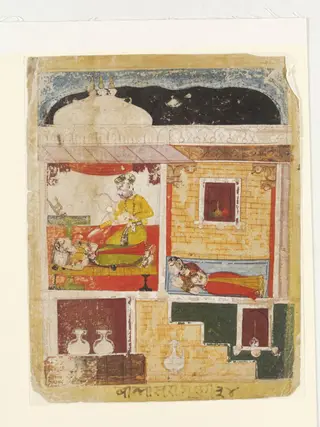
Radha's Hair Being Dressed is an unspecified painting. It dates from 1798 and is held in the collection of the Cleveland Museum of Art. The work depicts a domestic interior where a kneeling woman has her long dark hair being arranged by another female figure.
About this work
History & Provenance
The work entered the collection of the Cleveland Museum of Art, where it is currently housed and identified by the accession number 1969.
Radha's Hair Being Dressed is a painting created in 1795 by an artist whose identity remains unknown. The work entered the collection of the Cleveland Museum of Art, where it is currently housed and identified by the accession number 1969.35. No specific details regarding the original commission, earlier ownership history, or the circumstances of its creation beyond the year of execution are provided in the available records.
Radha's Hair Being Dressed is held in the collection of the Cleveland Museum of Art, located in Cleveland. The institution identifies the work with the accession number 1969.35. While the painting dates to 1795, the provided records do not list specific exhibitions or loan histories for this object.
Legacy
Radha's Hair Being Dressed has influenced subsequent artistic representations of divine femininity within the Pahari painting tradition, particularly inspiring later works that explore intimate devotional gestures. Its compositional focus on ritualized adornment contributed to a recurring motif in regional schools that emphasized tactile intimacy as spiritual expression. The painting remains part of the Cleveland Museum of Art's collection, ensuring continued scholarly attention to its stylistic innovations.
Overview
The work depicts a domestic interior where a kneeling woman has her long dark hair being arranged by another female figure. A seated man nearby holds a sketch of a face marked with red lines, indicating a study of facial proportions. In the distance, a group of figures stands before a colonnaded building, while an upper register shows a reclining figure beside a small temple.
Subject & Meaning
The central scene focuses on personal grooming and artistic instruction, juxtaposing everyday care with the practice of drawing. The presence of the annotated sketch suggests an emphasis on anatomical learning, while the surrounding figures and architectural elements may allude to broader social or ritual contexts.
Technique & Style
The composition employs chiaroscuro, using contrasts of light and shadow to model forms and create spatial depth. The red lines on the facial study are a didactic device typical of workshop practices, highlighting the artist’s interest in precise proportion and anatomy.
Context
Works that combine genre scenes with instructional sketches were common in periods when artists emphasized the scientific study of the human body. The inclusion of architectural motifs and a reclining figure reflects a synthesis of everyday life and classical references.
Artist & collection

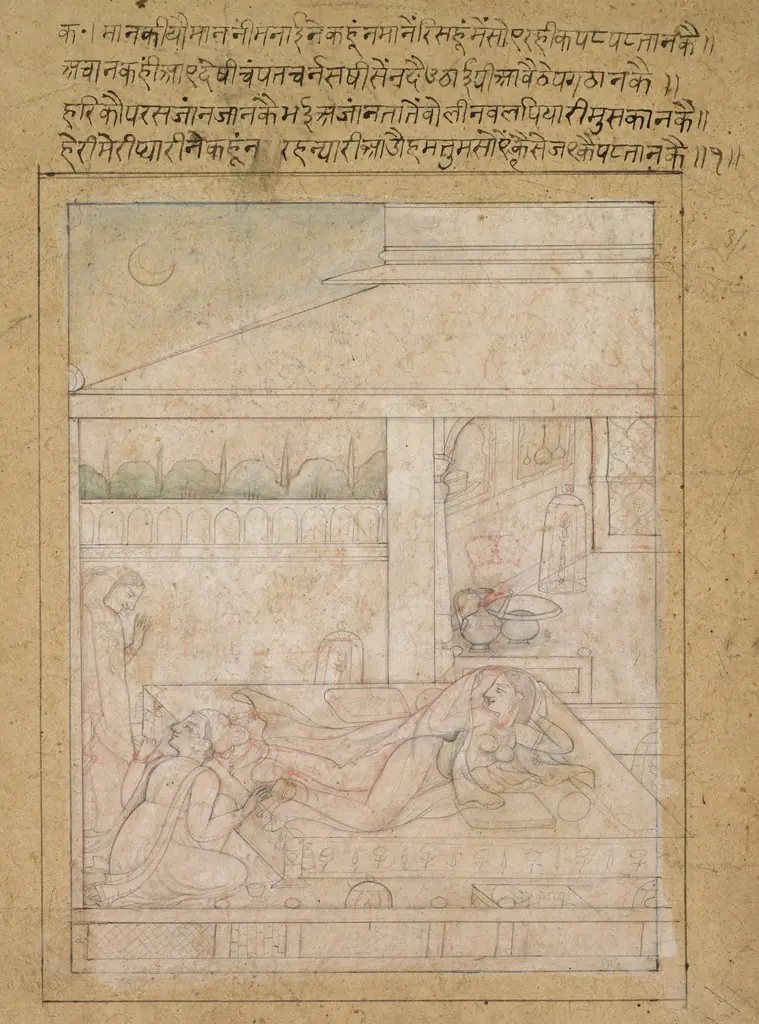 Radha and Krishna's Reconciliation
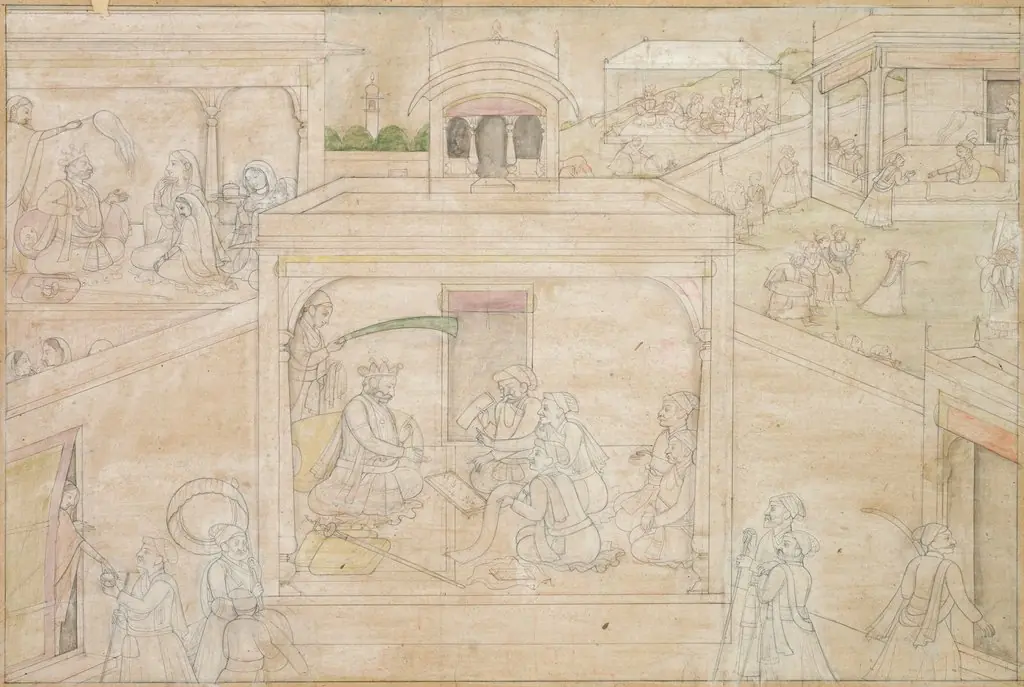 Bhima's Consultation with the Astrologer: Scene from the Nala-Damayanti Drawings
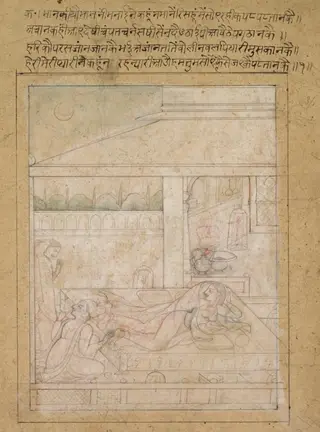 Radha and Krishna's reconciliation
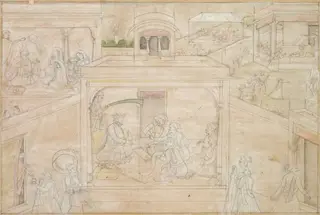 Bhima’s consultation with the astrologer, from a Nala-Damayanti
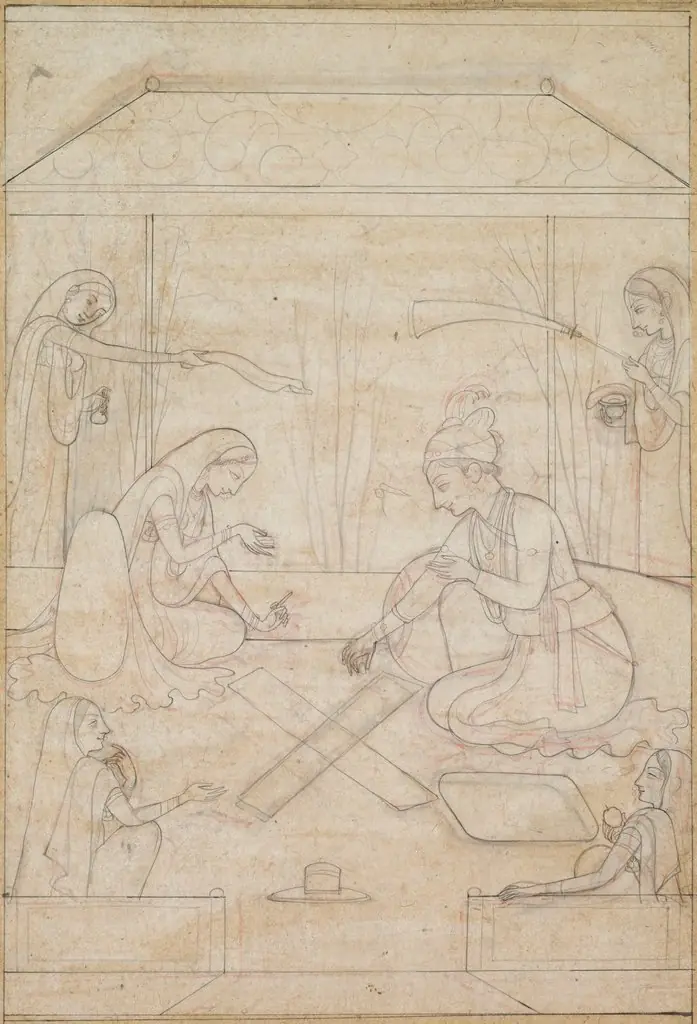 Couple Playing Chaupar on a Terrace
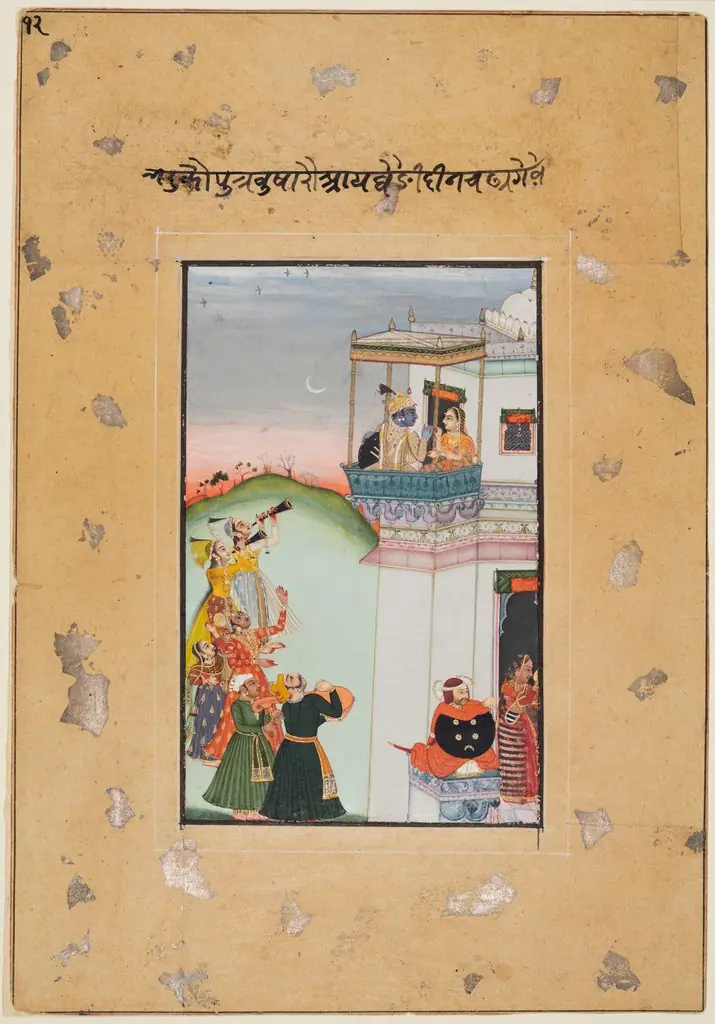 Krishna and Consort on a Palace Balcony with Musicians: Vukharo Ragaputra of Bhairav, from the “Boston Ragamala”
 Women playing at cross-dressing
 Krishna being dressed in women’s clothes for the spring festival Holi
 Untitled
 Untitled
 Vibhasa Ragini
- Radha's hair being dressed