Artwork
Speeljacht (Pleasure Yacht) and Warship
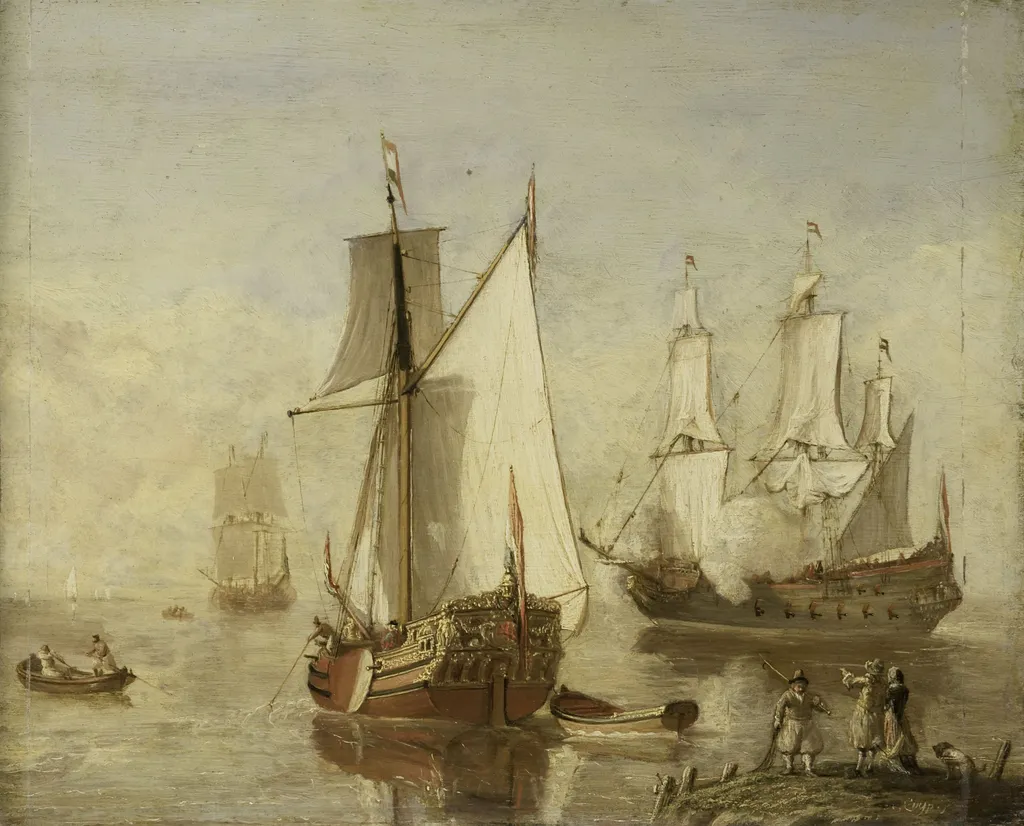
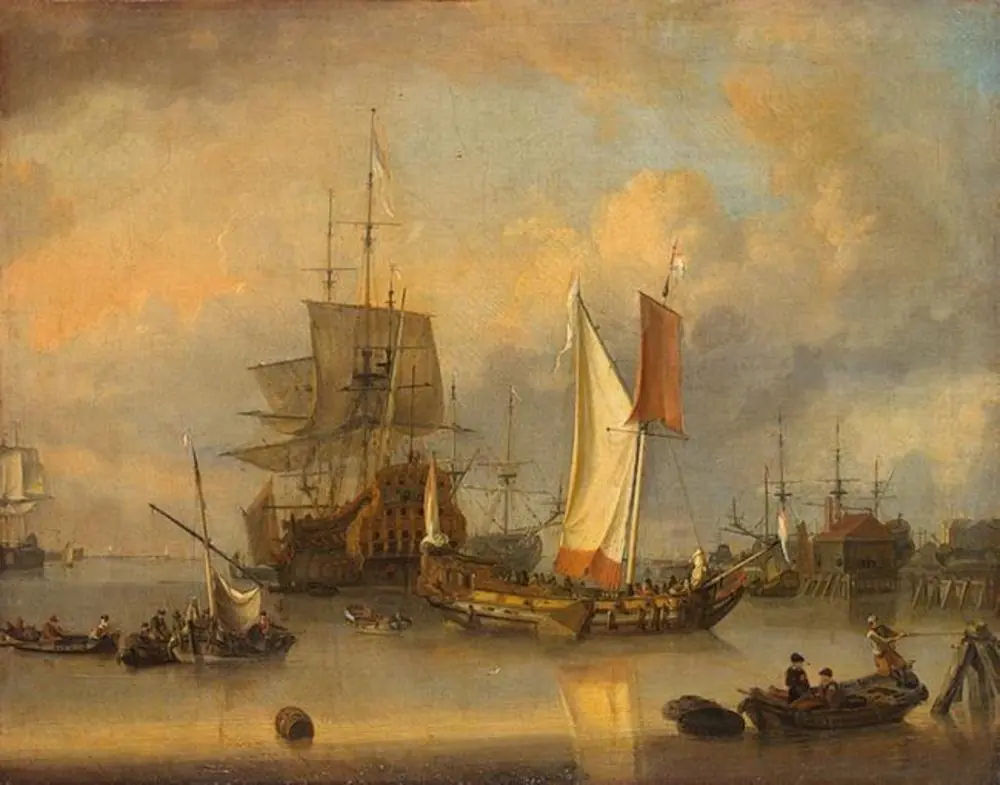
Speeljacht (Pleasure Yacht) and Warship is an oil painting. It dates from 1694 and is held in the collection of the Rijksmuseum. The oil painting depicts a tranquil seascape populated by two vessels and a modest boat.
About this work
Technique & Style
The paint handling follows the typical smooth, detailed approach of late‑17th‑century Dutch seascapes, emphasizing the vessels’ hulls and rigging.
The work is executed in oil paint on a wooden panel, a common support for small-scale Dutch marine paintings of the period. As an anonymous piece dated to 1687 and made in Holland, it belongs to the marine genre, depicting a pleasure yacht alongside a warship. The paint handling follows the typical smooth, detailed approach of late‑17th‑century Dutch seascapes, emphasizing the vessels’ hulls and rigging.
While the sources do not comment on the painting’s current condition, its technique and materials align with the conventions of contemporary panel‑based marine art.
History & Provenance
The painting titled Speeljacht (Pleasure Yacht) and Warship was created in 1687 in Holland as an oil paint on panel work depicting a boat, classified within marine art, and is presently held by the Rijksmuseum in Amsterdam.
The artwork was commissioned as an anonymous marine painting, reflecting the maritime interests of the period, and its creation history is tied to the artistic output of the late 17th century in the Dutch Republic.
Dating to 1687, the piece was executed on a panel measuring 32 centimeters in height and 39 centimeters in width, and it remains part of the Rijksmuseum's collection today.
Speeljacht (Pleasure Yacht) and Warship is an oil painting on panel held in the Rijksmuseum collection. It was created in 1687 in Holland and measures 32 cm by 39 cm. The work has been exhibited at the Rijksmuseum, where it is part of the permanent display of marine art.
The painting is catalogued under the Rijksmuseum inventory and is listed in the museum's records of marine artworks.
Context
The painting titled Speeljacht (Pleasure Yacht) and Warship was created in 1687 by an anonymous artist in Holland, as documented in the Rijksmuseum's collection and described in the work's catalogue entry. Executed in oil paint on panel, the marine artwork measures 32 centimeters in height and 39 centimeters in width, depicting a vessel within a broader tradition of marine art. Its inclusion in the Rijksmuseum's holdings situates it within the institutional preservation of 17th-century Dutch maritime subjects, reflecting contemporary artistic engagement with naval themes during the Dutch Golden Age.
Overview
The oil painting depicts a tranquil seascape populated by two vessels and a modest boat. The foreground boat, painted with a red hull and a white sail, is richly ornamented with carved details and a figurehead. Behind it, a larger three‑masted ship with a white sail drifts on the calm water, while a hazy sky stretches above the scene.
Subject & Meaning
The composition contrasts a small, decorative craft with a substantial warship, suggesting a dialogue between leisure and military power. The presence of the figurehead and elaborate carvings on the smaller boat emphasizes its ceremonial or pleasure function, whereas the imposing rigging of the larger vessel underscores its martial purpose.
Artist & collection

 Lake Lucerne
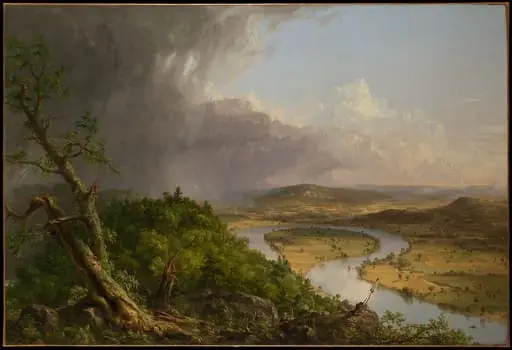 View from Mount Holyoke, Northampton, Massachusetts, after a Thunderstorm—The Oxbow
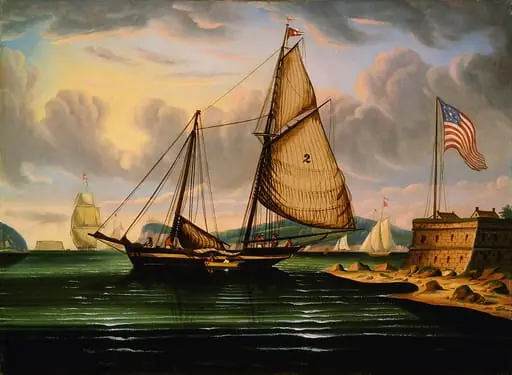 New York Harbor with Pilot Boat "George Washington"
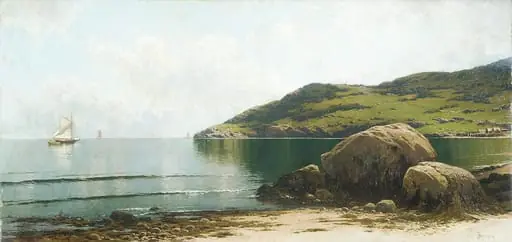 Marine Landscape
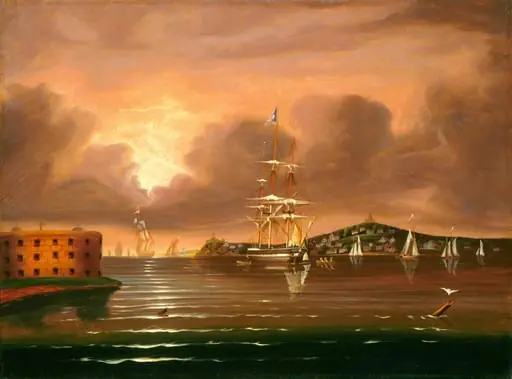 Threatening Sky, Bay of New York
 Lake George and the Village of Caldwell
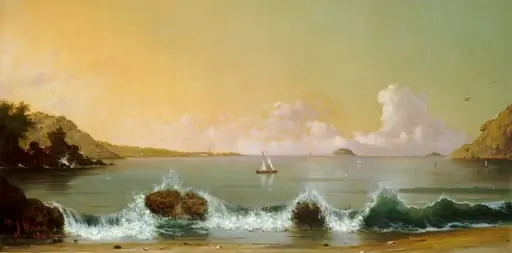 Rio de Janeiro Bay
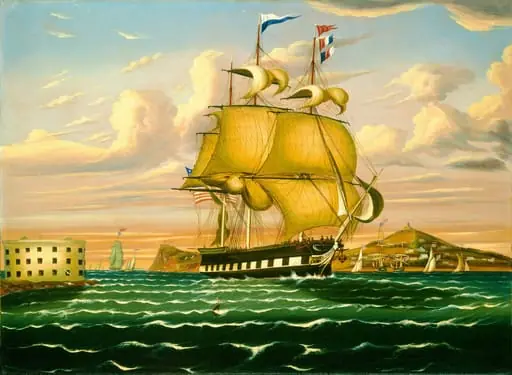 Packet Ship Passing Castle Williams, New York Harbor