Artwork
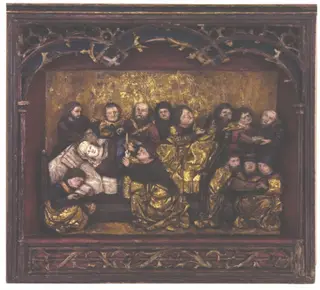
The Death of the Virgin (The Dormition)
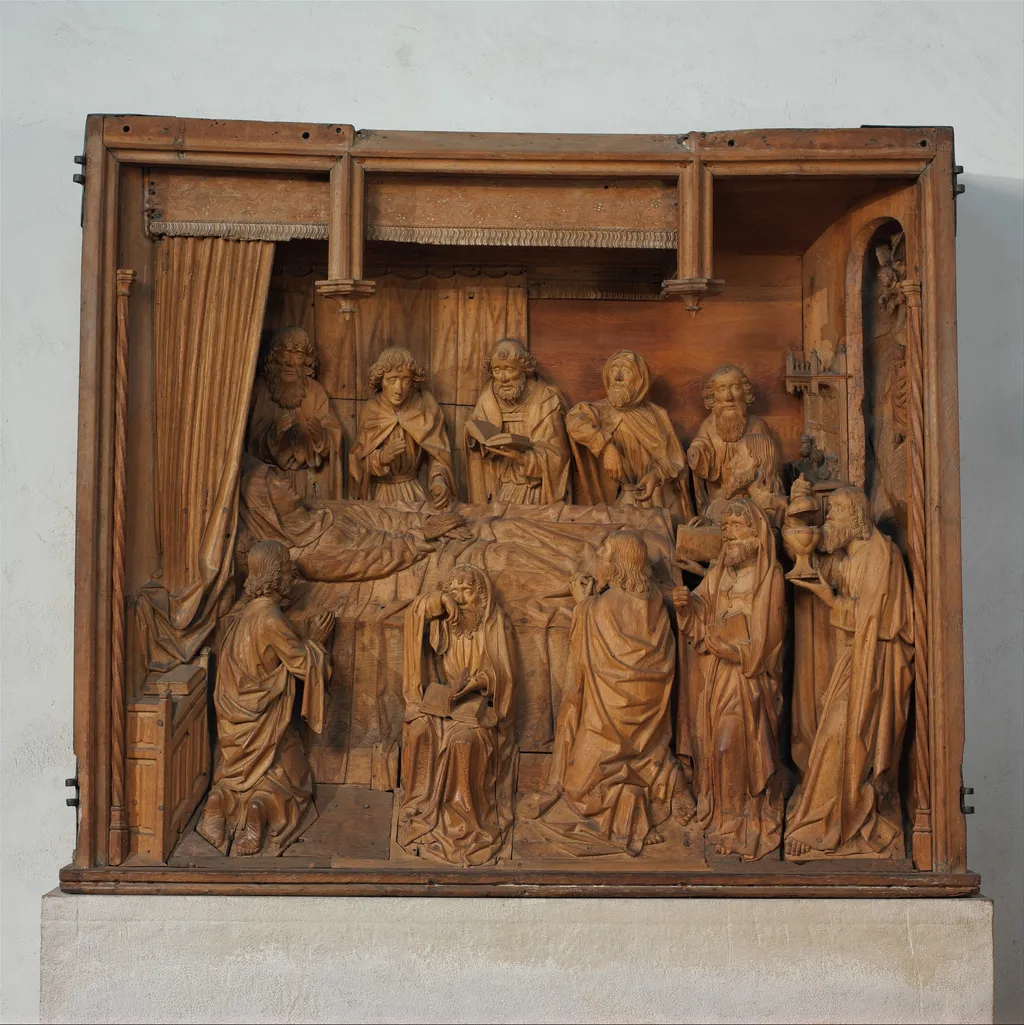
The Death of the Virgin (The Dormition) is an unspecified painting. It dates from 1450 and is held in the collection of the Metropolitan Museum of Art.
About this work
Subject & Meaning
The painting represents the Death of the Virgin, also known as the Dormition, a traditional religious subject focusing on the passing of the Virgin Mary.
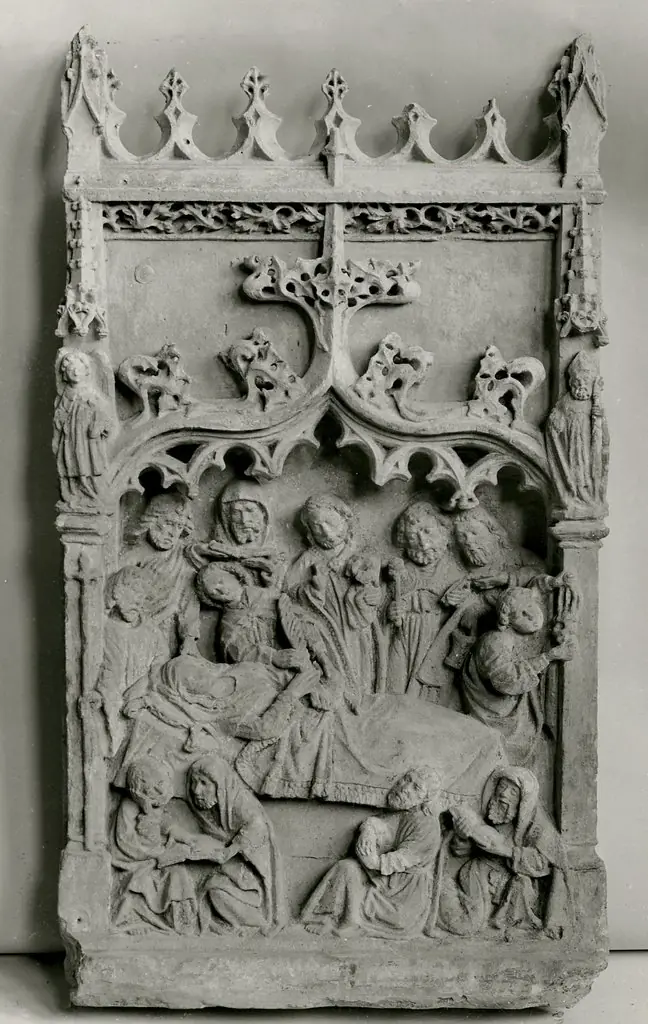
The painting represents the Death of the Virgin, also known as the Dormition, a traditional religious subject focusing on the passing of the Virgin Mary. The iconography centers on Mary as she lies upon a bed, surrounded by saints and apostles who gather in mourning. This assembly of figures emphasizes her revered status and the communal grief of the early Christian community.
The term 'Dormition' signifies the belief that Mary's end was a peaceful sleep before her assumption into heaven, a concept visually anchored by her repose on the bed and the solemn, prayerful presence of her divine companions.
History & Provenance
The painting known as The Death of the Virgin (The Dormition), attributed to the Workshop of Tilman Heysacker and dated to approximately 1450, is held in the collection of the Metropolitan Museum of Art. The work is located at the museum in New York City. While the sources confirm its current institutional home and classify it as a religious painting depicting the death of Mary surrounded by apostles, they do not provide a specific inventory or accession number.
Furthermore, the available documentation does not list any past or current exhibitions for this specific piece, limiting the exhibition history to its status as a held object within the museum's permanent religious art holdings.
Overview
This relief sculpture, titled The Death of the Virgin (The Dormition), depicts a solemn gathering around a deathbed. Carved on a wooden panel, it presents a three-dimensional scene where robed figures express grief for the central figure lying beneath a cloth. The composition emphasizes the emotional weight of the moment, a common theme in religious art of its era.
Technique & Style
Executed as a relief sculpture on a wooden panel, the work achieves a notable three-dimensional quality. The figures are deeply carved, allowing for distinct forms and shadows that enhance their presence within the scene. This technique creates a sense of depth and immediacy, drawing the viewer into the emotional intensity of the gathering around the bed.
Context
The representation of the Death of the Virgin was a prevalent theme in religious art during the period. Such depictions served to illustrate key narratives from Christian doctrine and to evoke devotional sentiment among viewers. The scene's emotional resonance and its focus on a pivotal moment in sacred history made it a frequent subject for altarpieces and other devotional objects.
Artist & collection

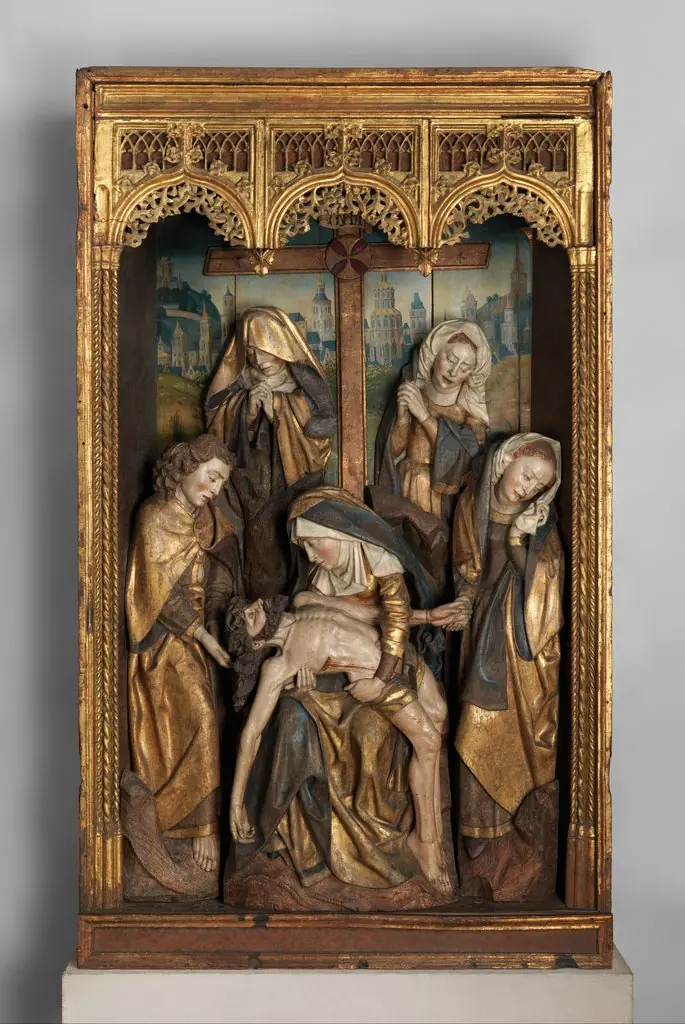
- The Lamentation
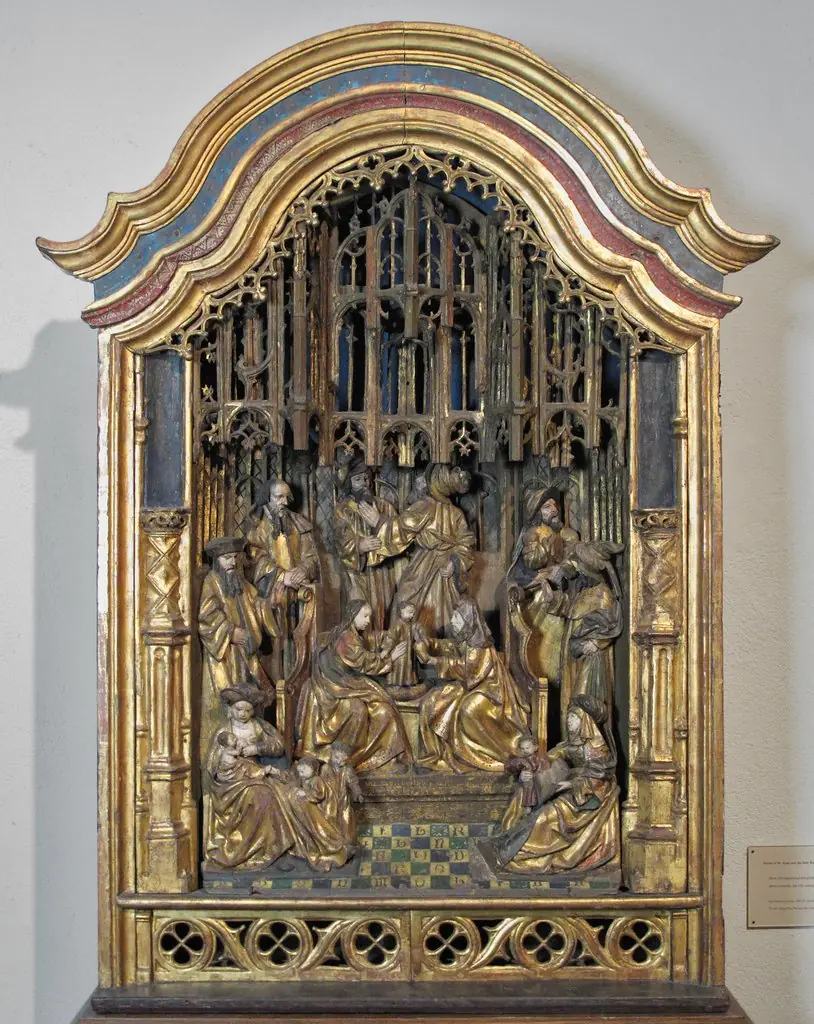 Shrine of Saint Anne and the Holy Kinship
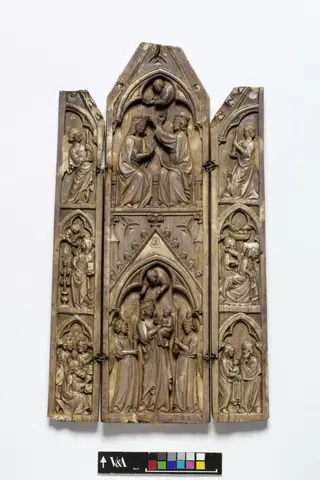 Virgin and Child, the Coronation of the Virgin and scenes from the Nativity
 Adormirea Maicii Domnului
 Dormition of the Virgin Relief
 Untitled
 Our Lady of the Seven Sorrows (grisaille)
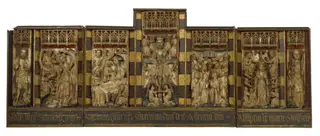 The Swansea Altarpiece
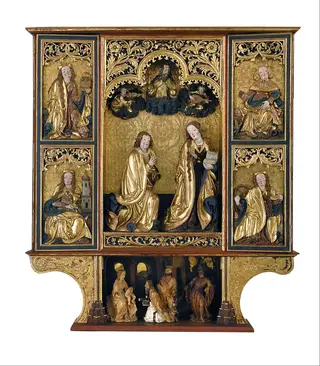 Altarpiece of the Annunciation from Kisszeben
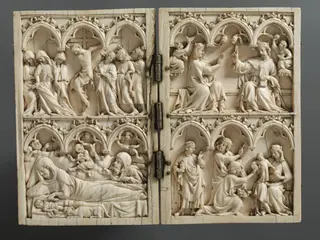 The Nativity, the Adoration of the Magi, the Crucifixion and the Coronation of the Virgin
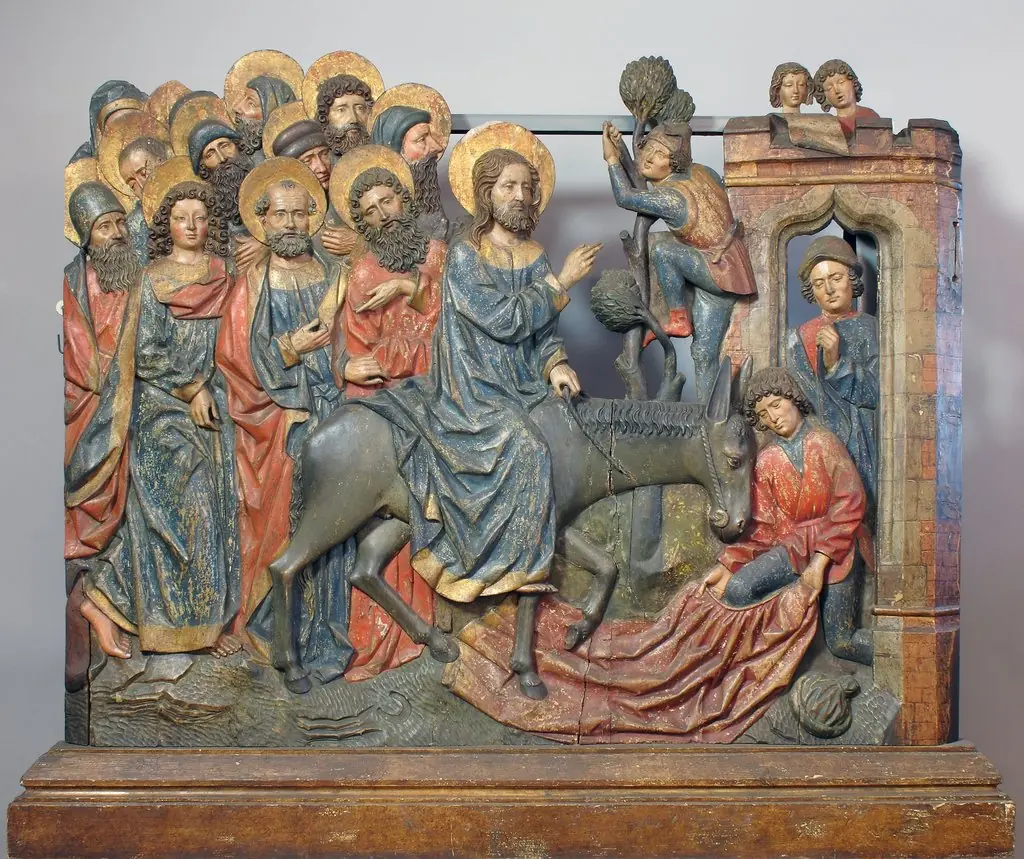 Entry into Jerusalem Relief
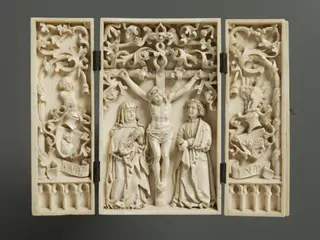 The Crucifixion