Artwork
The Trinity
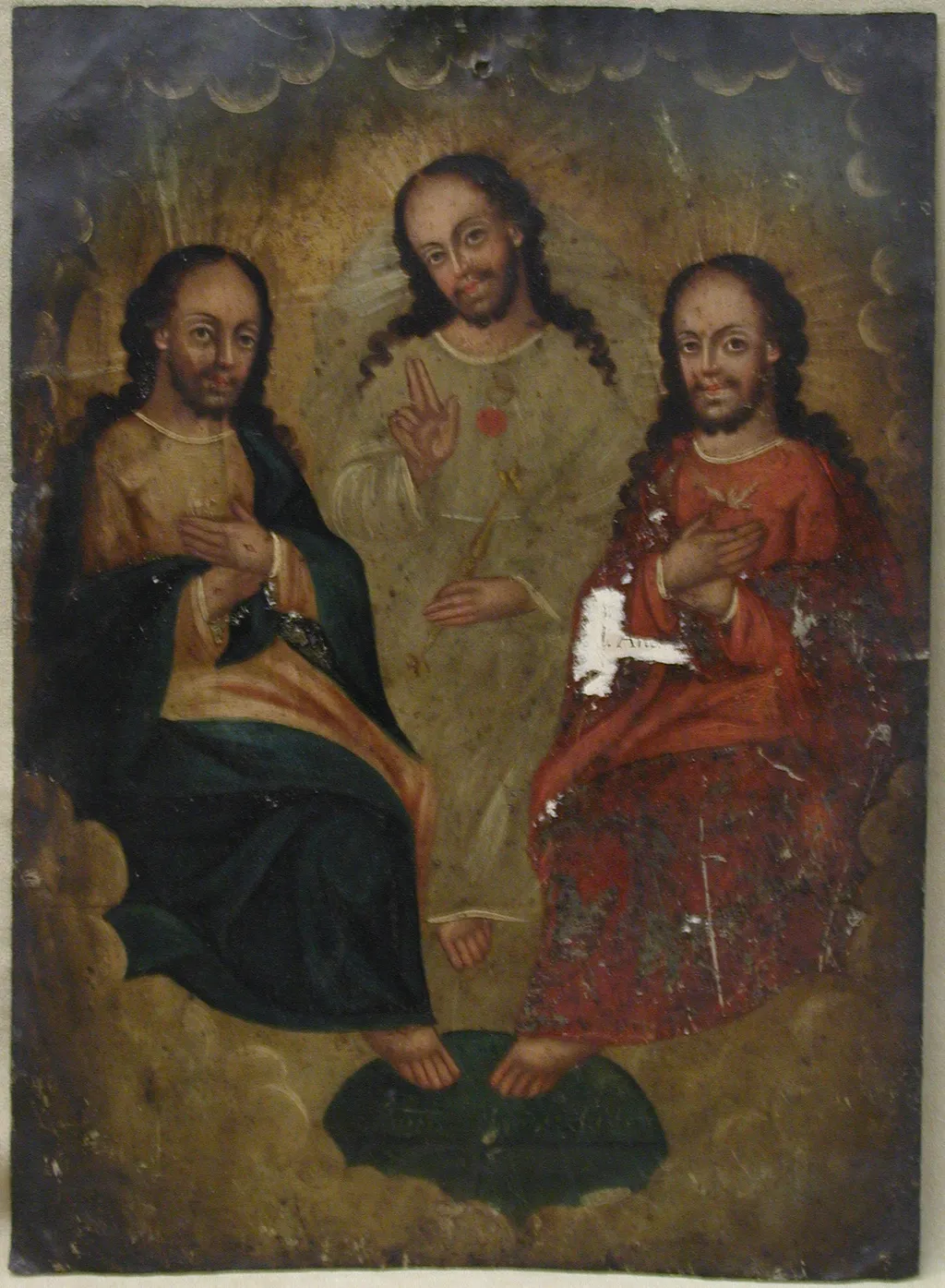
The Trinity is an unspecified painting. It dates from 1749 and is held in the collection of the Metropolitan Museum of Art.
About this work
The person on the left wears a dark cloak over a light tunic, while the one on the right has a red robe with white cuffs.
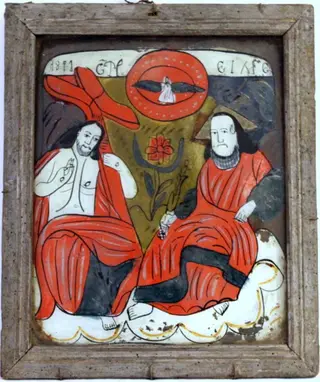
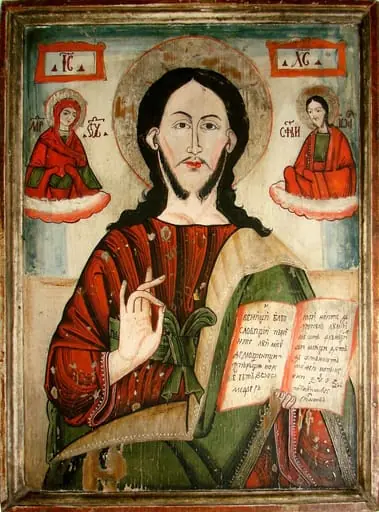
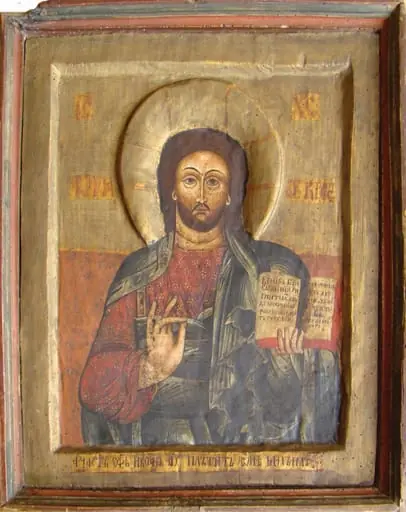
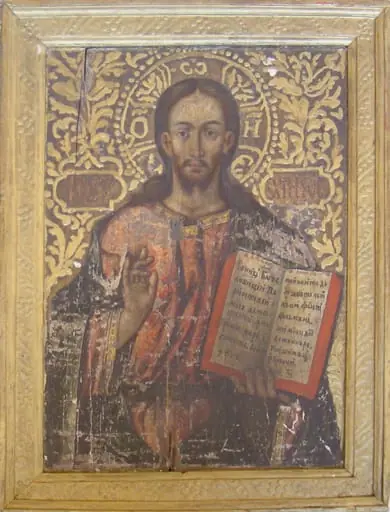
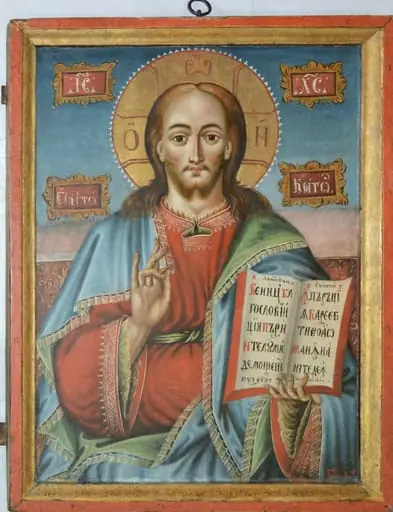
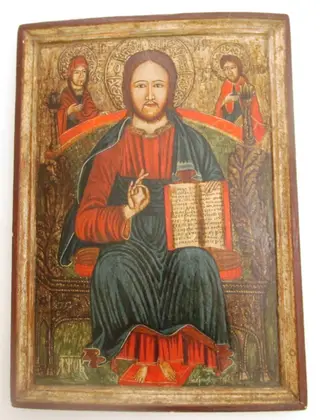
This painting shows three robed figures sitting on a cloudy background. The person in the middle has one hand raised and a red circle on their chest. The person on the left wears a dark cloak over a light tunic, while the one on the right has a red robe with white cuffs. Their faces look calm, and the colors are mostly earthy with some faded spots.
The red circle on the middle figure’s chest is a common symbol for divine presence. This painting is called The Trinity and was made in 1749.
Look up chiaroscuro to see how light and shadow create drama in paintings.
Subject & Meaning
Created in 1749, this religious painting visually articulates the doctrine of the Holy Trinity. The composition explicitly depicts God the Father and Christ, establishing the central divine figures of the Christian faith. As the main subject, the work serves as a theological representation of the triune nature of God, a core tenet of religious art.
The iconography focuses on the relationship between the Father and the Son, omitting other potential symbolic elements in favor of a direct portrayal of these two persons of the Trinity. The piece functions as a devotional object intended to convey complex spiritual concepts through figurative representation.
Technique & Style
The work titled The Trinity is recorded as a 1749 painting and measures 35.6 cm by 25.6 cm. Its classification as a painting and its genre as religious art are documented in the internal record. The piece depicts the Holy Trinity, featuring Christ and God the Father, and is part of the Metropolitan Museum of Art collection. The artist is listed as anonymous, and the work's formal composition centers on the divine figures, though specific stylistic descriptors are not provided in the sources.
History & Provenance
The Trinity is an anonymous painting dated to 1749, now in the collection of the Metropolitan Museum of Art. The work's provenance traces directly to the Met, with no earlier owners recorded in the available sources. Its creation is attributed to an unidentified artist, and the painting's inception is recorded as 1749.
It is a small religious work measuring 35.6 cm in height and 25.6 cm in width, depicting Christ and God the Father as part of the Holy Trinity.
The Trinity is held in the collection of the Metropolitan Museum of Art, where it is recorded as part of the museum's holdings. The painting has a measured height of 35.6 cm and a width of 25.6 cm. No specific accession number or inventory identifier is provided in the available sources, and no exhibition history is documented in the records consulted.
Overview
The painting titled The Trinity, completed in 1749, presents three robed figures positioned against a cloudy backdrop. The central figure is depicted with one hand raised, flanked by two companions. The artwork is characterized by a predominantly earthy color scheme, with certain areas appearing faded, contributing to a serene and contemplative visual experience.
Artist & collection