Artwork
Vishnu and Lakshmi
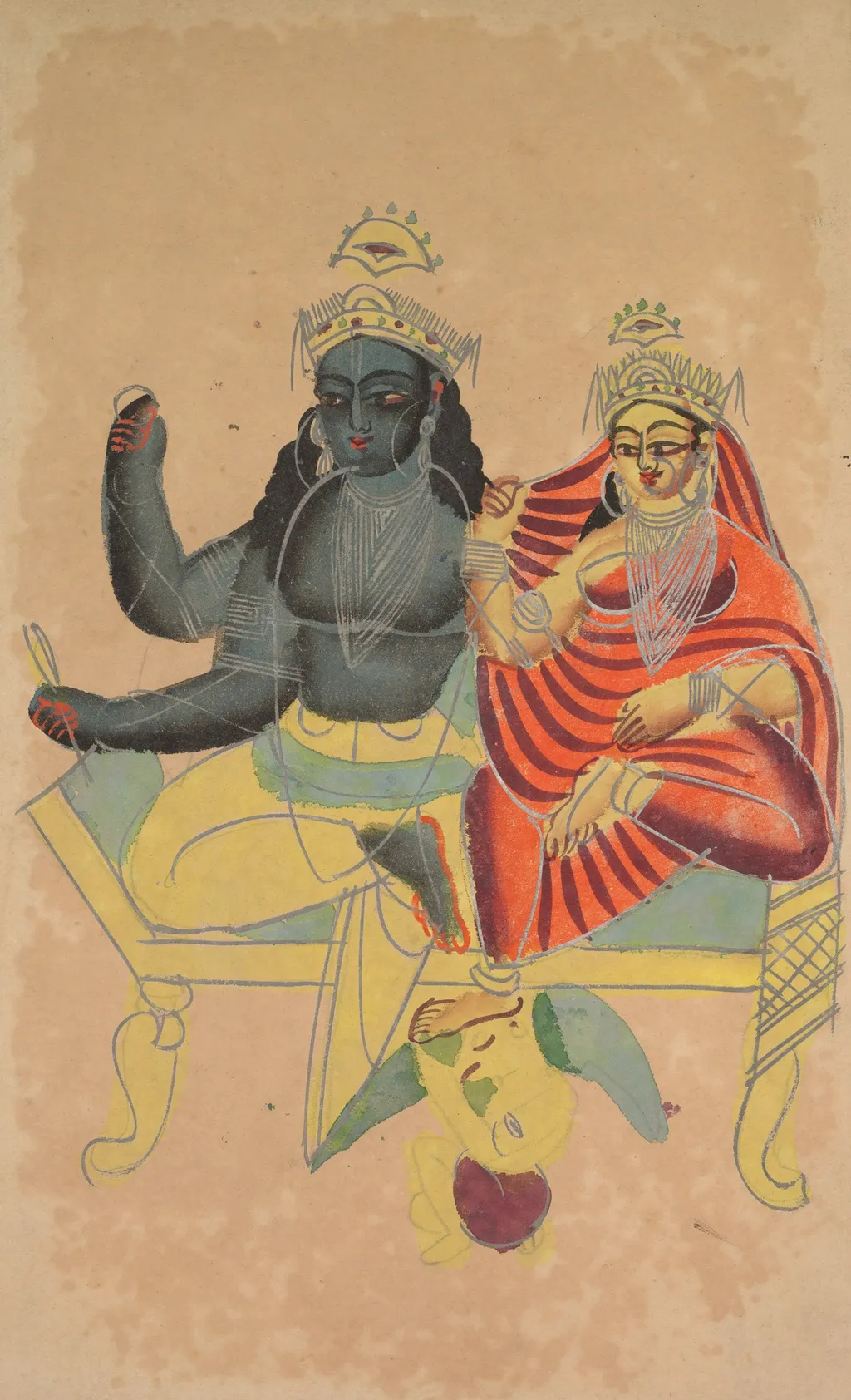
Vishnu and Lakshmi is an unspecified painting. It dates from 1896 and is held in the collection of the Cleveland Museum of Art.
About this work
Technique & Style
It is executed in the academic realist style characteristic of late 19th-century Indian art, with careful modeling of figures and balanced composition.
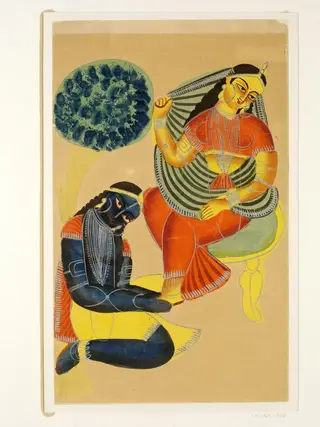
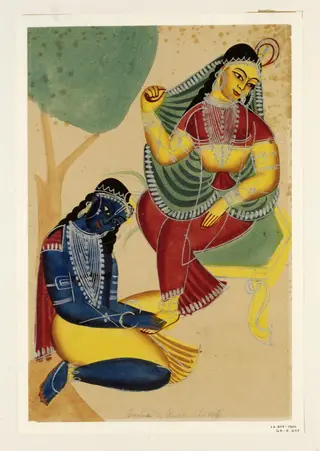
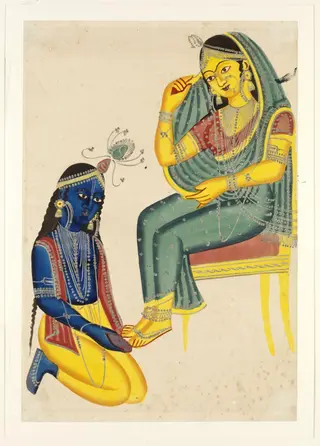
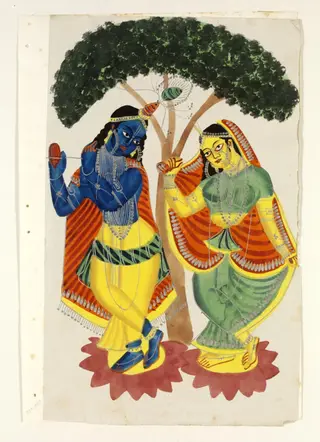
The painting depicts Vishnu and Lakshmi rendered in oil on canvas, created in Kolkata in 1890. It is executed in the academic realist style characteristic of late 19th-century Indian art, with careful modeling of figures and balanced composition. The work shows delicate handling of light on the divine couple, reflecting European influences adapted to local religious iconography.
Formal analysis notes the dignified poses, intricate drapery, and precise facial features that emphasize spiritual authority and conjugal harmony.
History & Provenance
Vishnu and Lakshmi was created in 1890 in Kolkata, according to the work's cataloguing data. It is classified as a painting and is held in the collection of the Cleveland Museum of Art, where it is recorded under the accession number 2003.132. The artist responsible for the work is not identified in the available records.
No further information about its commission, earlier ownership, or chain of custody prior to its acquisition by the Cleveland Museum of Art is documented in the provided sources.
The work is held in the collection of the Cleveland Museum of Art in Cleveland, Ohio. It entered the museum's holdings with the accession number 2003.132, recorded on January 1, 1890, and was made in Kolkata. The painting has been part of the museum's exhibition history, though specific exhibition details are not provided in the source material.
Context
The painting titled Vishnu and Lakshmi was created in 1890 in Kolkata and is classified as a painting. It is housed in the Cleveland Museum of Art, where it is cataloged under the identifier 2003.132. The work is associated with the religious figures Vishnu and Lakshmi, reflecting devotional themes common in Indian artistic traditions.
Scholarly attention to the piece remains limited, with minimal documentation in major art historical literature beyond its cataloging in museum records. Its attribution to an unknown artist underscores ongoing challenges in tracing the authorship of works from this period and region.
The painting’s provenance and stylistic context suggest engagement with colonial-era artistic production in Bengal, though specific connections to documented movements or figures have not been established in available sources.
Overview
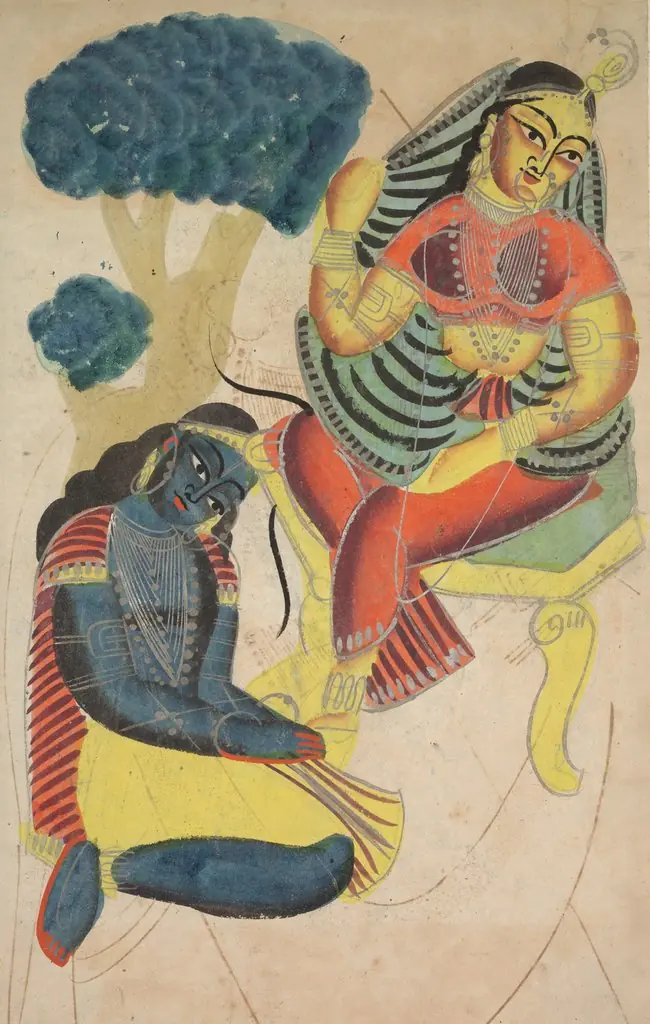
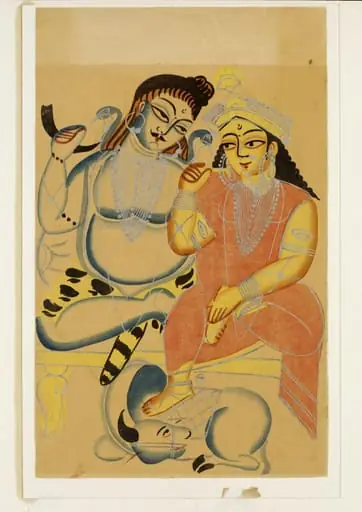
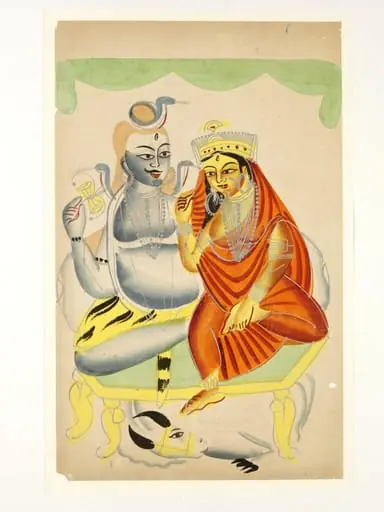
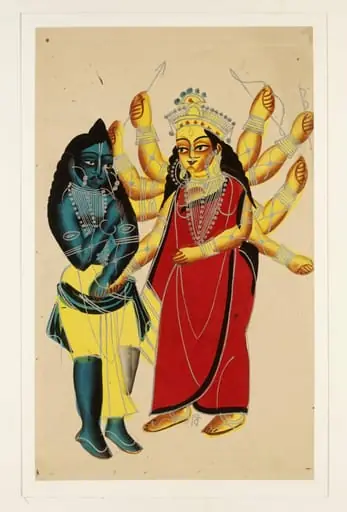
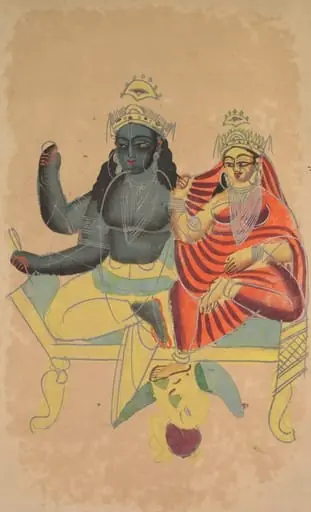
The work depicts a dark‑skinned, four‑armed figure seated cross‑legged on a yellow platform, accompanied by a woman in a striped sari and a small child. The deity holds a diminutive object in one hand while the other three are gesturing. The background is a uniform light‑brown, and the figures are adorned with modest gold ornaments.
Subject & Meaning
The central figure’s blue‑black complexion and multiple limbs identify it as a Hindu deity, most likely Vishnu, while the accompanying woman, dressed in a red‑and‑white striped sari, represents his consort Lakshmi. The child’s presence introduces a domestic, familial dimension, blending the sacred narrative with everyday life.
Legacy
Works of this genre influenced later Indian popular art, informing visual vocabularies in print media and folk traditions that continued to merge sacred narratives with quotidian life.
Artist & collection