Artwork
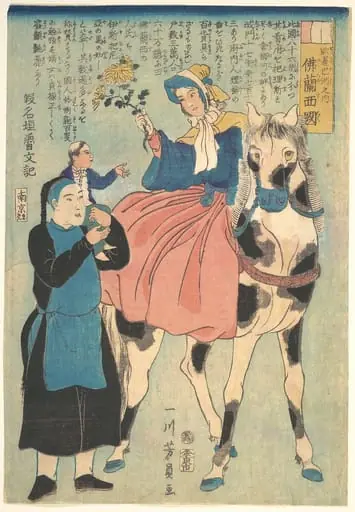
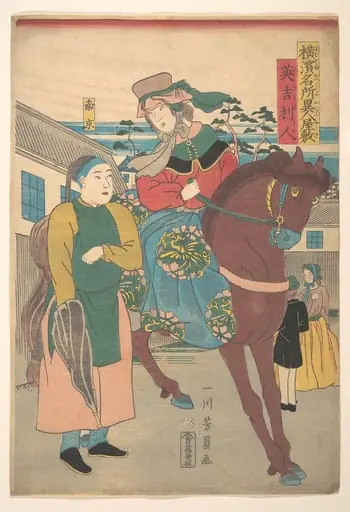
二代歌川広重画 『亜墨利加 横浜本村本牧道』|American Woman Riding Side-Saddle on the Road at Honmoku, Motomura, Yokohama (America Yokohama Motomura Honmoku michi)
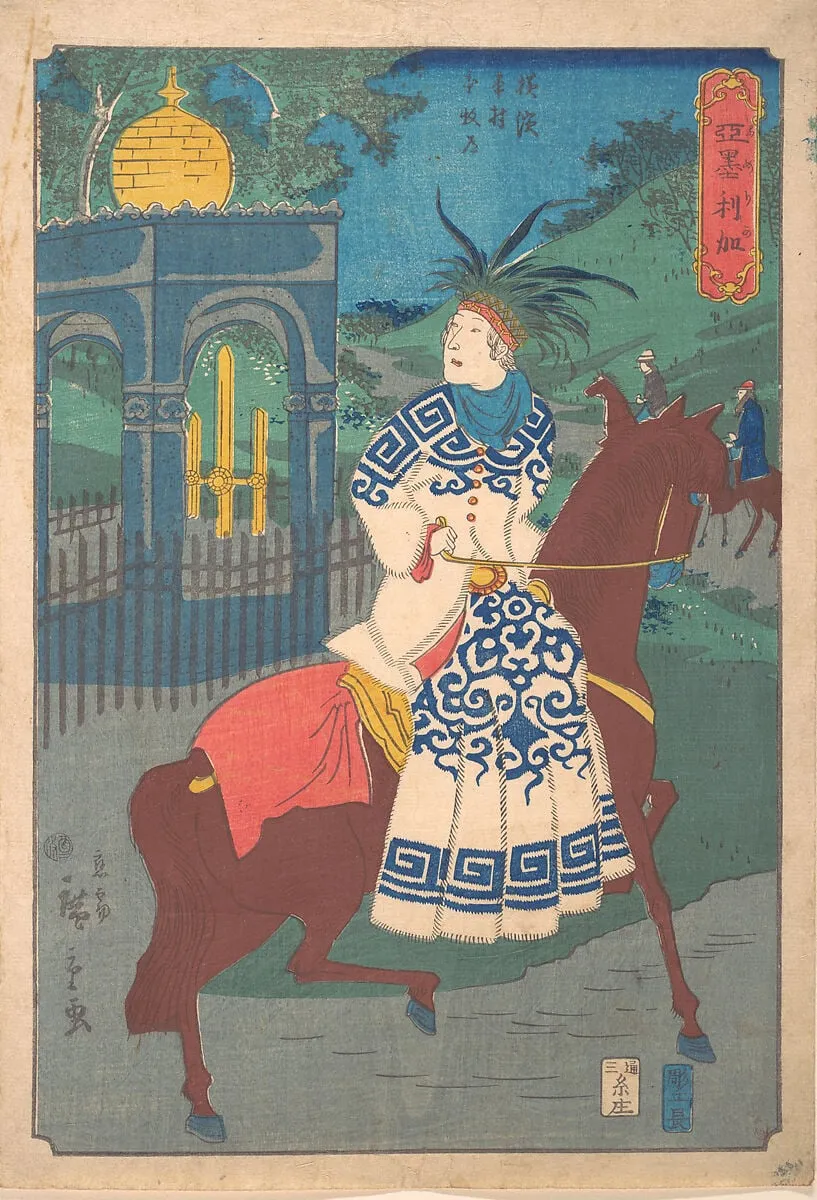
二代歌川広重画 『亜墨利加 横浜本村本牧道』|American Woman Riding Side-Saddle on the Road at Honmoku, Motomura, Yokohama (America Yokohama Motomura Honmoku michi) is an ink print by the Impressionist artist Utagawa Hiroshige II. It dates from 2 and is held in the collection of the Metropolitan Museum of Art.
About this work
Overview
The composition balances the figure, the animal, and a few onlookers, creating a serene snapshot of everyday life in a port town during the early Meiji period.
Utagawa Hiroshige II’s multicolored woodblock print, titled “American Woman Riding Side‑Saddle on the Road at Honmoku, Motomura, Yokohama,” portrays a lone rider on a white horse traveling along a quiet lane framed by blossoming cherry trees. The composition balances the figure, the animal, and a few onlookers, creating a serene snapshot of everyday life in a port town during the early Meiji period.
Subject & Meaning
The central figure is a Western woman dressed in a vivid blue garment, seated side‑saddle, a posture uncommon in Japanese equestrian art. Her presence reflects the brief window when Japan first opened its borders to foreign residents and travelers in the 1860s, offering a visual record of cultural encounter on a domestic road.
Technique & Style
Executed as a nishiki‑e (brocade‑type) woodblock, the print employs delicate ink lines and a restrained palette of soft blues, pinks, and earth tones. Hiroshige II’s handling of the horse’s barely touching hooves and the airy canopy of cherry blossoms conveys a sense of gentle motion without overcrowding the scene.
History & Provenance
Created in the early 1860s, the work belongs to a series documenting the environs of Yokohama, a treaty port that attracted many foreigners. The print has been held in several Japanese collections before entering the current museum’s holdings, where it serves as a rare example of Western figures in Hiroshige II’s oeuvre.
Context
Yokohama’s rapid development after the 1859 opening of its harbor introduced new fashions, technologies, and peoples to the region. This print captures that transitional moment, juxtaposing traditional Japanese rural life, villagers watching from the roadside, with the novelty of an American woman traveling on Japanese soil.
Artist & collection


 Untitled
 Untitled
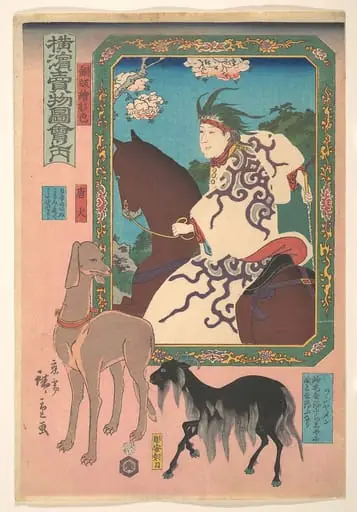 横浜賣物図会の内 唐犬|Copper Plate Engraving of a Woman Riding a Horse, a Goat and a Dog
 Untitled
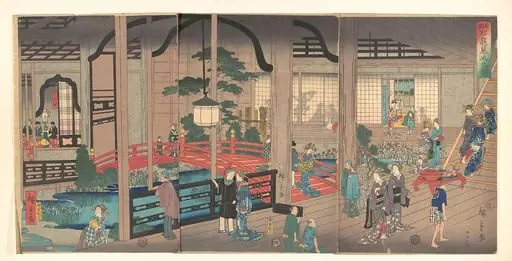 Yokohama Gankirō no zu|View of the Interior of the Gankirō Tea House in Yokohama
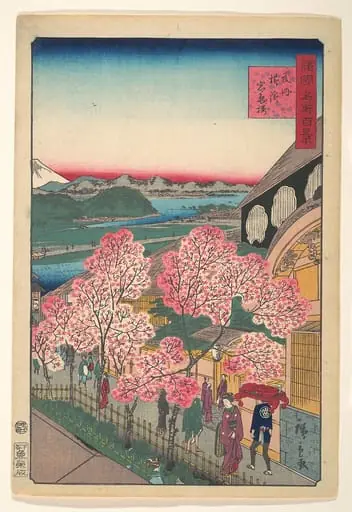 Bushu Yokohama Gankirō|諸国名所百景 武州横浜岩亀楼|Entrance to the Gankirō Tea House in the Miyozaki District, Yokohama, Bushu
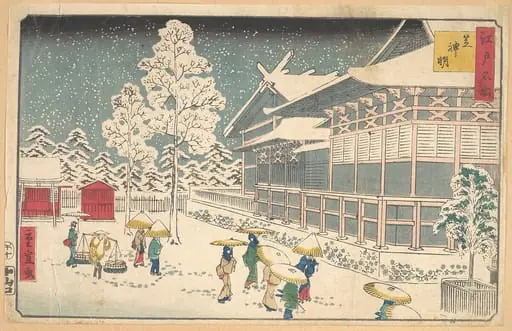 江戸名所 芝神明|Famous Places of Edo: Shiba Shinmei
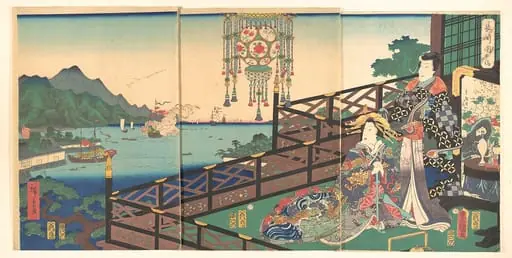 Untitled
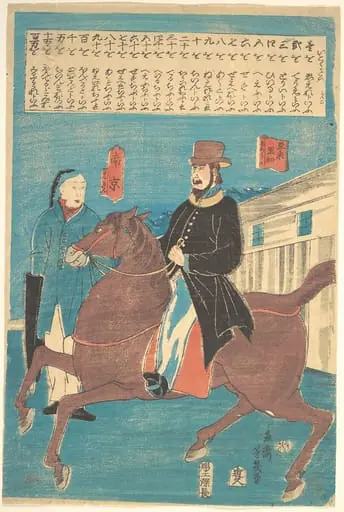
![歌川芳盛画 「五ケ国之内 アメリカ]|“America,” from the series Five Nations, by Utagawa Yoshimori](https://artifactworldgallery.com/img/utagawa-yoshimori--america-from-the-series-five-nations--cda6a88dd74d0da3-w320.webp)