Artwork
Evening Snow at Kambara (number sixteen of the series Fifty-three Stations of the Tokaido)
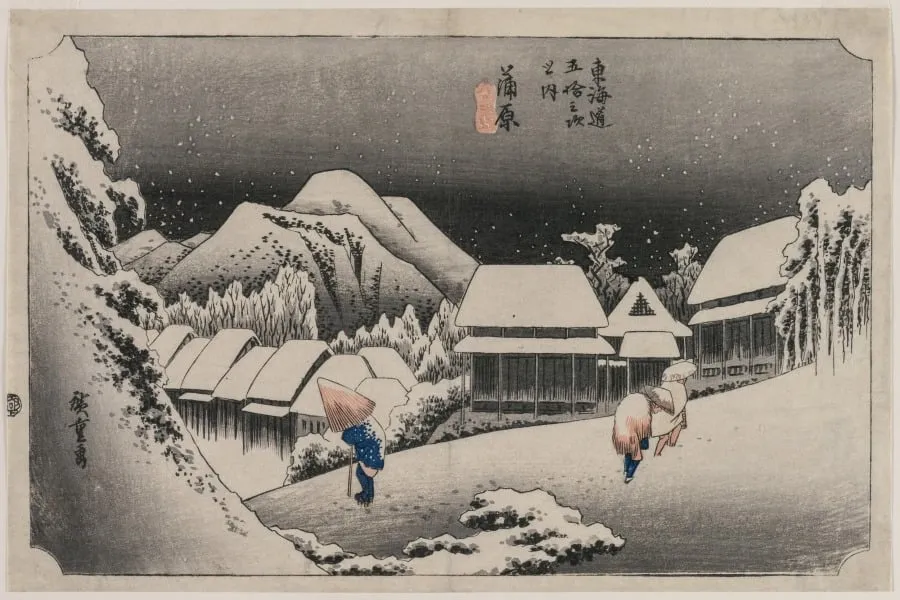
Evening Snow at Kambara (number sixteen of the series Fifty-three Stations of the Tokaido) is a print by the Romanticist artist Utagawa Hiroshige. It dates from 1833 and is held in the collection of the Cleveland Museum of Art. Evening Snow at Kambara is a woodblock print by Hiroshige, part of his Fifty-three Stations of the Tokaido series.
- Accession no.
- 1985.317
- Credit line
- The Kelvin Smith Collection, given by Mrs. Kelvin Smith
About this work
Kambara almost never gets snow, so Hiroshige carved each flake by hand, little shapes cut from the woodblock so the paper stays white.
A quiet road winds through a snowy village at dusk. Rooftops and trees wear thin white blankets, and tiny flakes drift down against a pale sky.
Kambara almost never gets snow, so Hiroshige carved each flake by hand, little shapes cut from the woodblock so the paper stays white. It’s one of his first prints to show falling snow this way.
To see how other artists painted winter, look up Utagawa Hiroshige (Japanese, 1797–1858).
Overview
Evening Snow at Kambara is a woodblock print by Hiroshige, part of his Fifty-three Stations of the Tokaido series. It depicts a serene winter scene in the coastal town of Kambara.
Subject & Meaning
The print shows a quiet village road at dusk, with snow-covered rooftops and trees, and gently falling snowflakes. Kambara rarely experiences snow, making the scene unusual and serene.
Technique & Style
Hiroshige achieved the effect of falling snow by carving individual snowflakes into the woodblock, leaving the corresponding areas of the paper unprinted and white. This technique allowed for a delicate representation of snowfall.
History & Provenance
This print may be one of Hiroshige's earliest depictions of falling snow, showcasing his innovative use of woodblock printing techniques.
Artist & collection
Artist
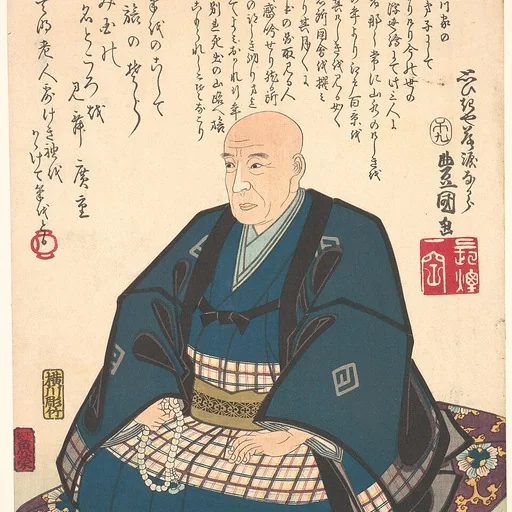
Utagawa Hiroshige (歌川 広重) or Andō Hiroshige (安藤 広重), born Andō Tokutarō (安藤 徳太郎; 1797 – 12 October 1858), was a Japanese ukiyo-e artist, considered the last great master of that tradition.

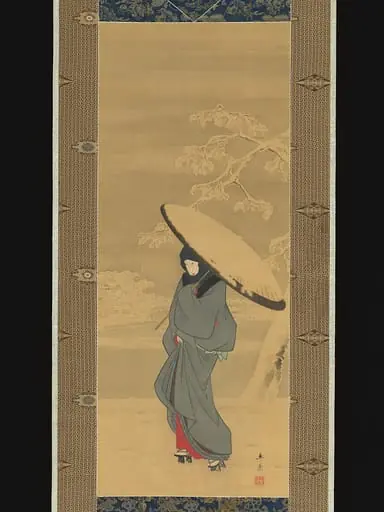
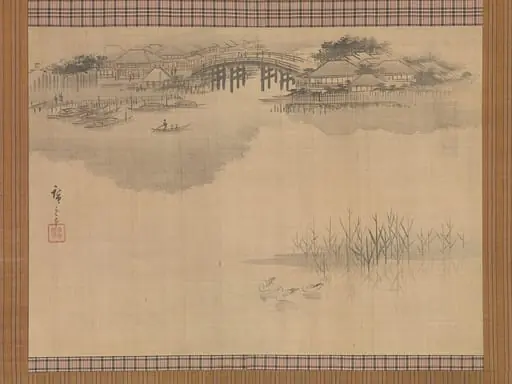
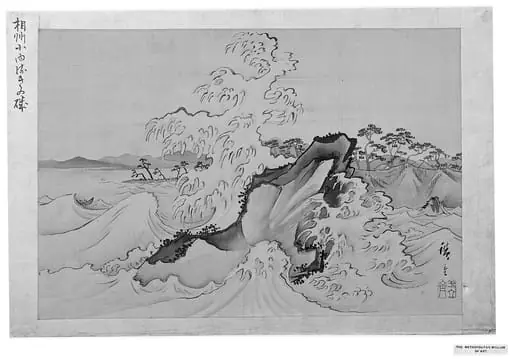
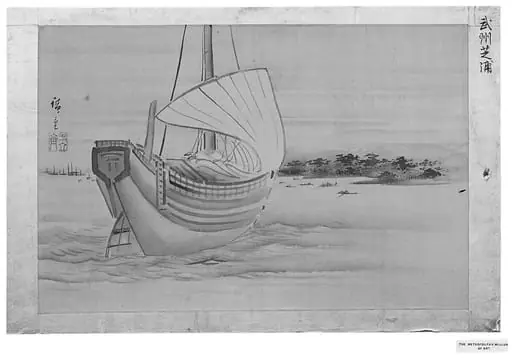
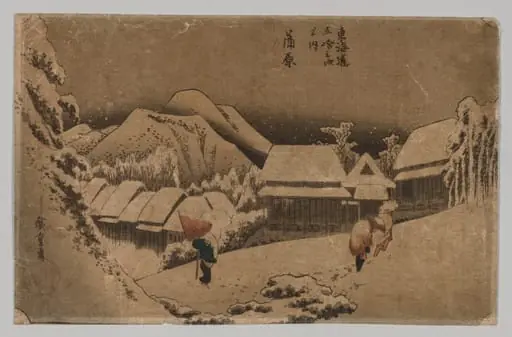 Kambara: Evening Snow
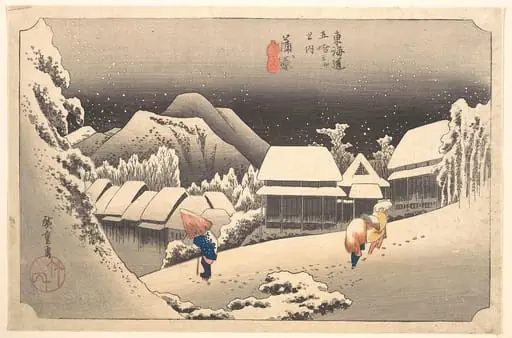 東海道五十三次之内 蒲原 夜の雪|Evening Snow
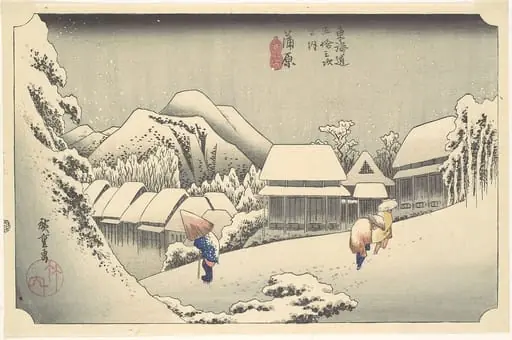 東海道五十三次之内 蒲原 夜の雪|Evening Snow at Kanbara, from the series "Fifty-three Stations of the Tōkaidō"
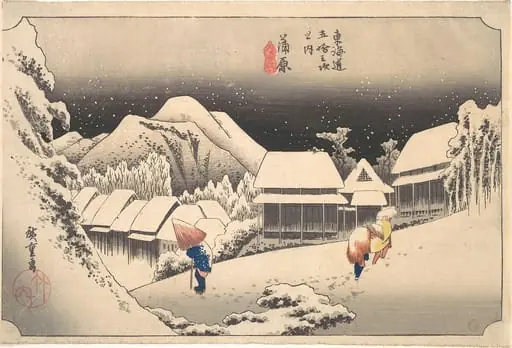 東海道五十三次之内 蒲原 夜の雪|A Snowy Evening at Kambara Station
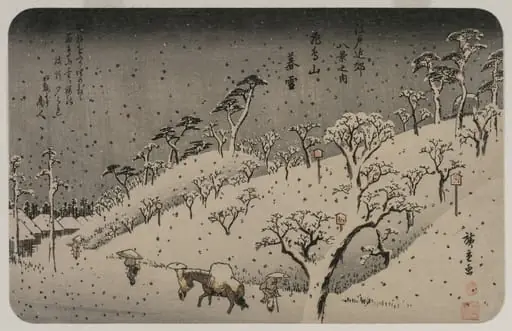 Evening Snow at Asuka Hill, from the series Eight Views of the Environs of Edo
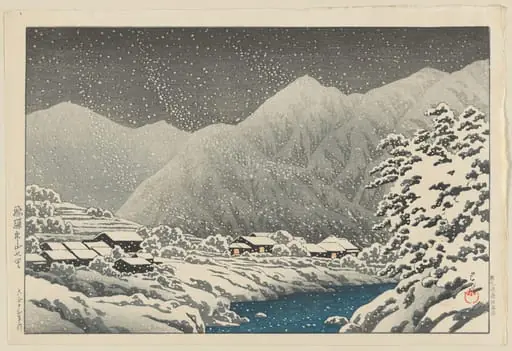 Untitled
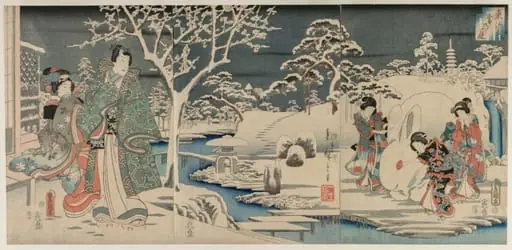 The Snowy Garden
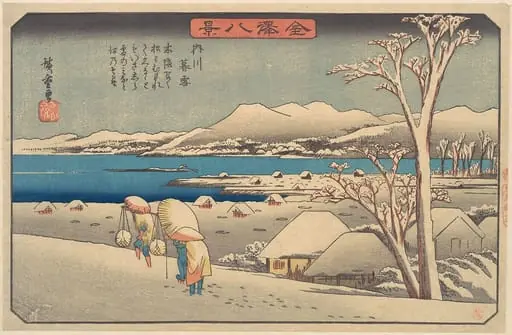 金沢八景 内川暮雪|Evening Snow at Uchikawa
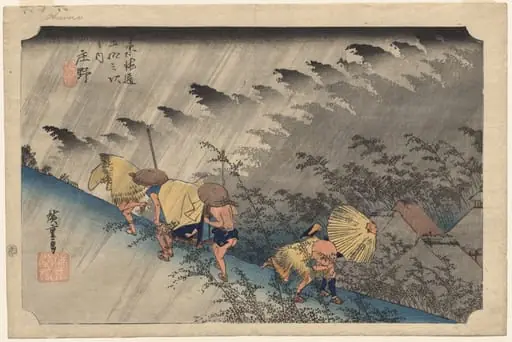 Driving Rain at Shōno, from Fifty-Three Stations of the Tokaidō
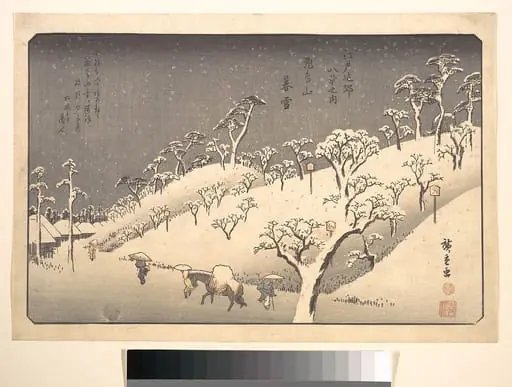 江戸近郊八景之内 飛鳥山暮雪|Asukayama in Evening Snow