Artwork
Nagakubo (Station 28) from the series Sixty-Nine Stations of the Kisokaido
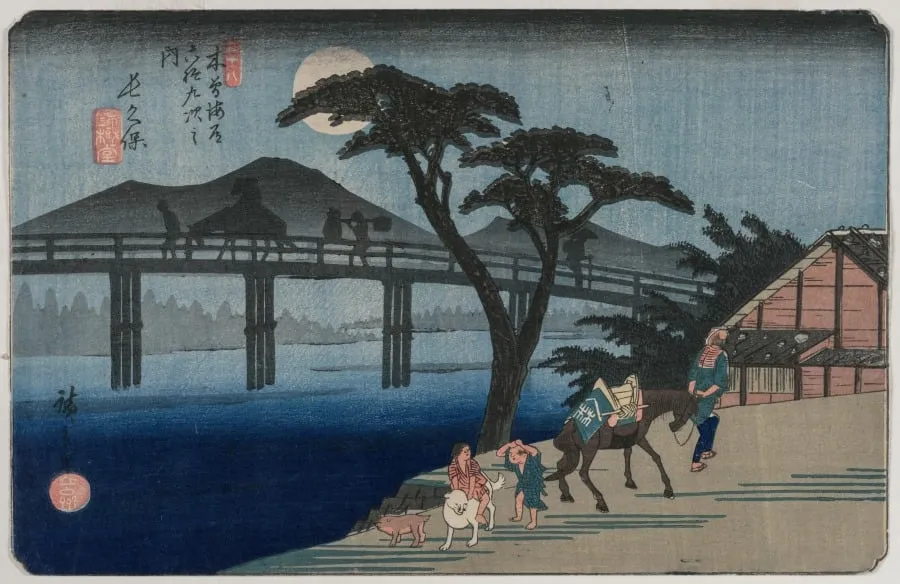
Nagakubo (Station 28) from the series Sixty-Nine Stations of the Kisokaido is a print by the Romanticist artist Utagawa Hiroshige. It dates from 1835 and is held in the collection of the Cleveland Museum of Art. This print is one of a series depicting the Sixty-Nine Stations of the Kisokaido, a historic route connecting Edo and Kyoto.
- Accession no.
- 1942.144
- Credit line
- Gift of Mrs. Henry S. Upson
About this work
The road shown here was like an old highway, 69 stops between Tokyo and Kyoto, each with inns and food.
A small village glows under a bright moon. Travelers cross a wooden bridge, while a man leads his tired horse by lantern light. Kids play near the roadside.
Hiroshige made this print for city people who wanted a taste of country life without the long trip. The road shown here was like an old highway, 69 stops between Tokyo and Kyoto, each with inns and food.
If you like this, look up Utagawa Hiroshige (Japanese, 1797–1858). His prints of everyday Japan feel like postcards from the past.
Overview
This print is one of a series depicting the Sixty-Nine Stations of the Kisokaido, a historic route connecting Edo and Kyoto. It shows the Nagakubo station under moonlight.
Subject & Meaning
The scene captures travelers and locals at Nagakubo station, with a man leading a tired horse and children playing with dogs. The Wada Bridge is a focal point, with figures crossing it in the moonlight.
Technique & Style
The print uses silhouettes and contrasting light to convey a serene nighttime atmosphere. The artist's use of composition and lighting creates a sense of depth and tranquility.
Context
The Kisokaido was an important inland route with 69 post stations, offering rest and amenities to travelers. This print, like others in the series, brought the experience of travel to urban audiences.
History & Provenance
The print was created by Utagawa Hiroshige, a Japanese artist active in the 19th century. It is part of a series that reflects the artist's interest in capturing everyday life and landscapes.
Artist & collection
Artist
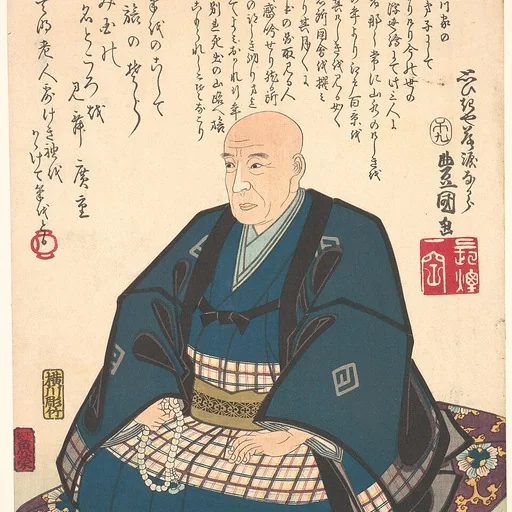
Utagawa Hiroshige (歌川 広重) or Andō Hiroshige (安藤 広重), born Andō Tokutarō (安藤 徳太郎; 1797 – 12 October 1858), was a Japanese ukiyo-e artist, considered the last great master of that tradition.

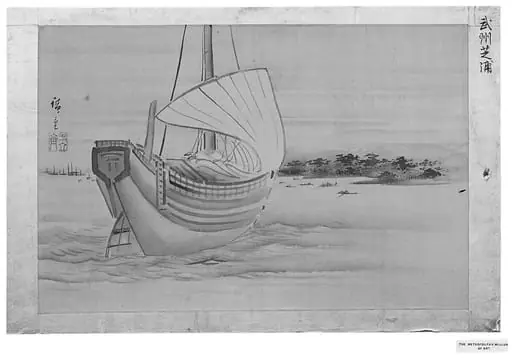
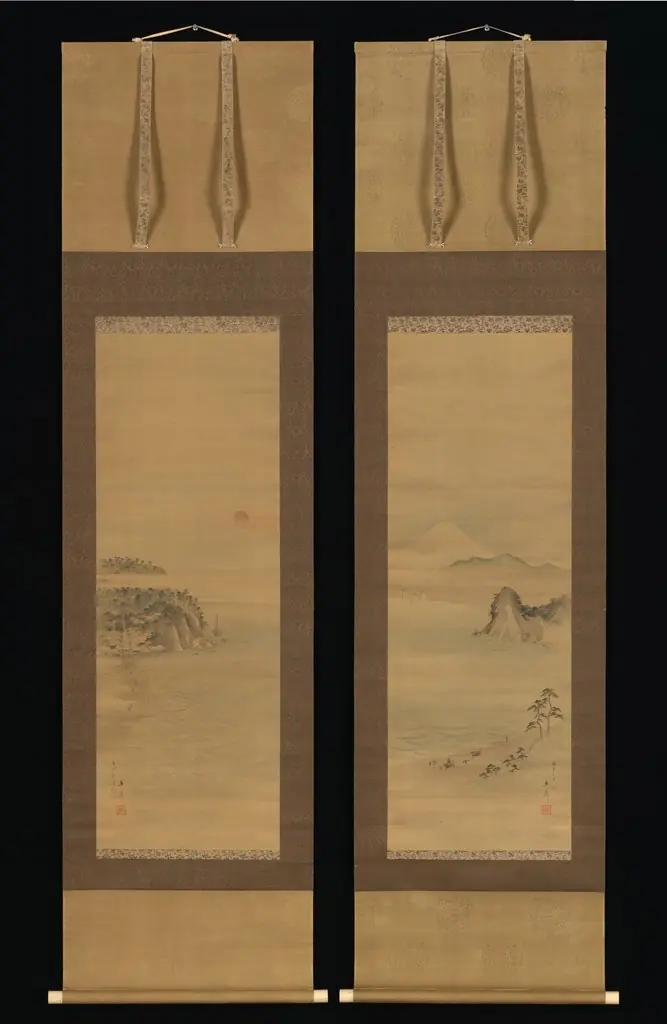
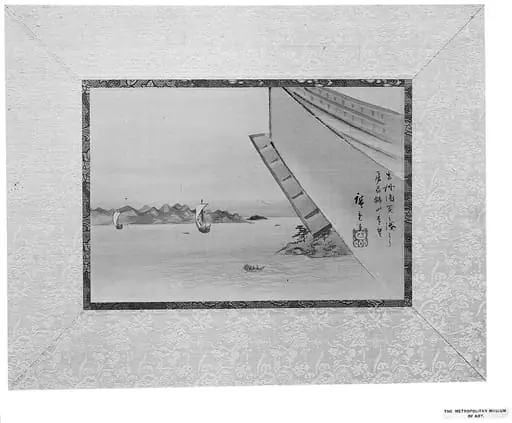
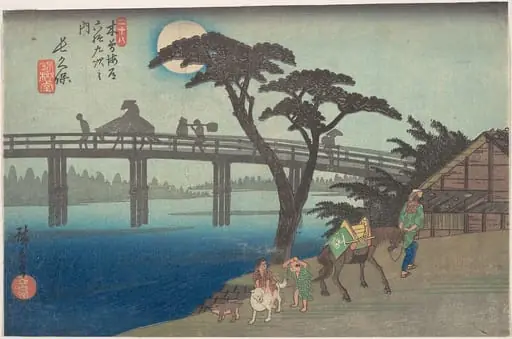
- 木曽海道六拾九次之内 長久保|Nagakubo, Station No. 28
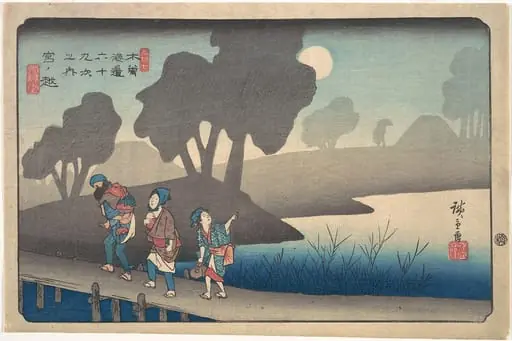 木曽海道六拾九次之内 宮ノ越|Moonlit Night at Miyanokoshi, from The Sixty-nine Stations of the Kisokaidō
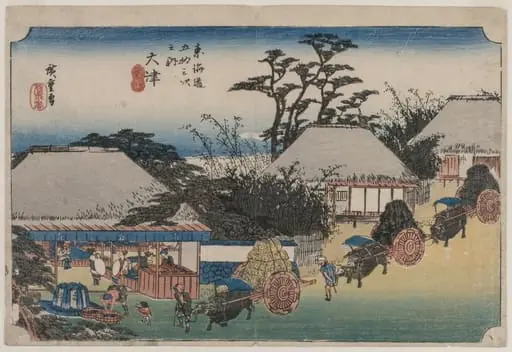 The Fifty-Three Stations of the Tokaido: Otsu
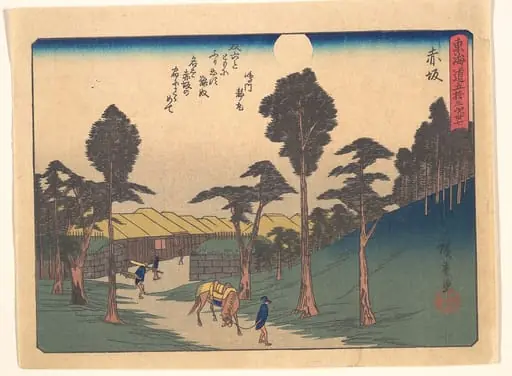 東海道五十三次 赤坂|Akasaka, from the series The Fifty-three Stations of the Tōkaidō Road
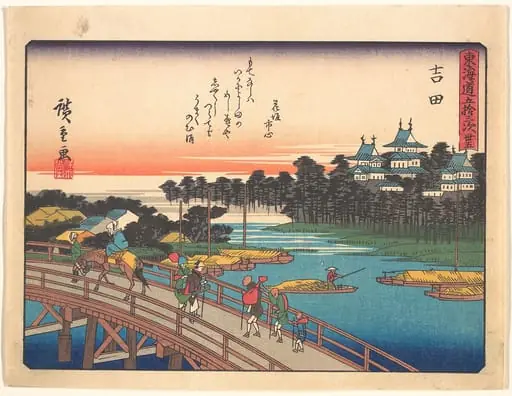 東海道五十三次 吉田|Yoshida, from the series The Fifty-three Stations of the Tōkaidō Road
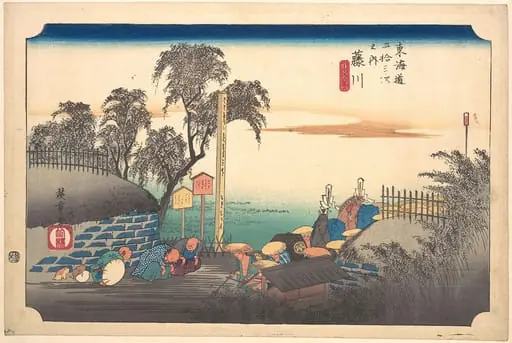 東海道五十三次之内 藤川 棒鼻の図|Station Thirty-Eight: Fujikawa, Scene at the Border, from the Fifty-Three Stations of the Tokaido
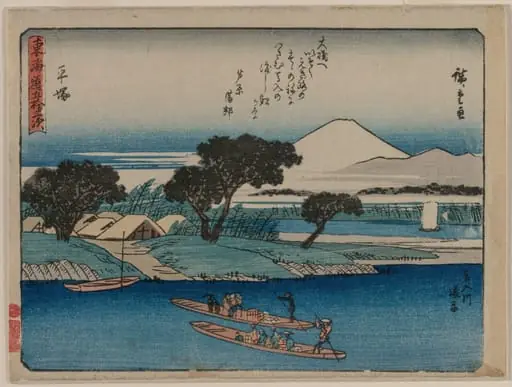 The Fifty-Three Stations of the Tokaido: Hiratsuka
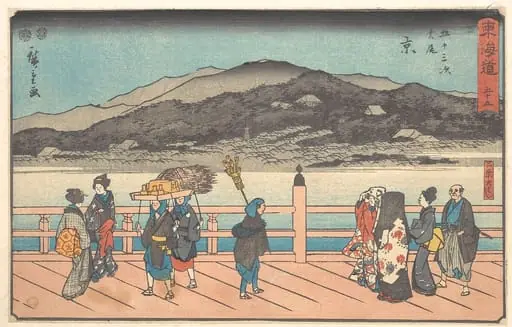 歌川広重画 「東海道 五十三次 大尾 京 三条大はし」|The Great Bridge at Sanjō (Taibi, Kyō, Sanjō Ōhashi), from the series The Tōkaidō Road: The Fifty-Three Stations (Tōkaidō: Gojūsan tsugi)
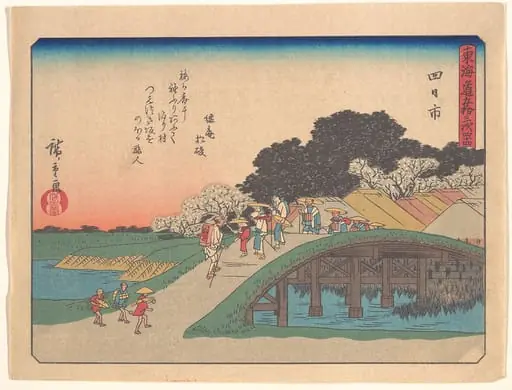 東海道五十三次 四日市|Yokkaichi, from the series The Fifty-three Stations of the Tōkaidō Road
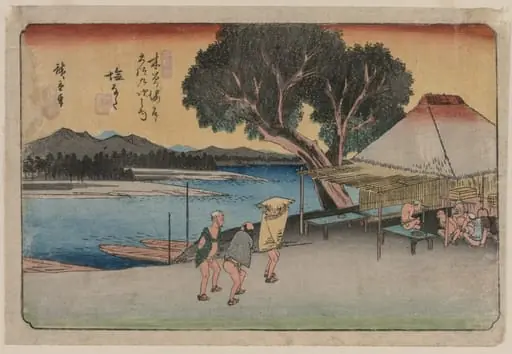 The Sixty-Nine Stations of the Kiso Highway: Shionata
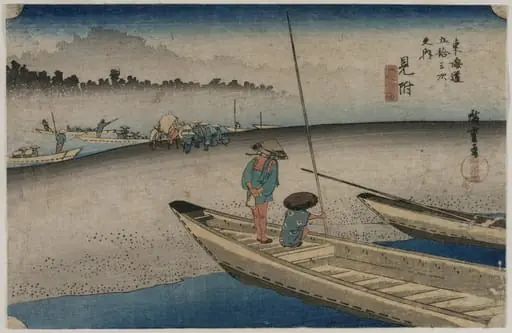 Picture of the Tenryu River near Mitsuke (Station 29), from the series Fifty-Three Stations of the Tokaido