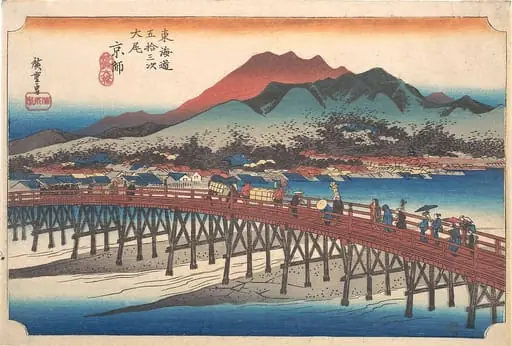
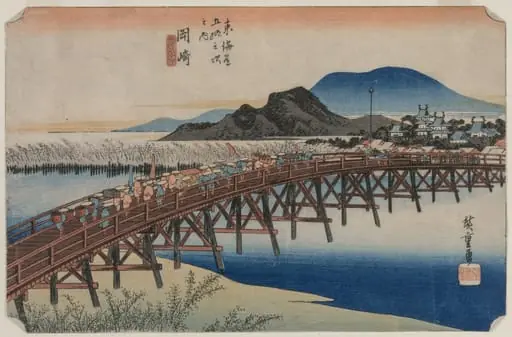
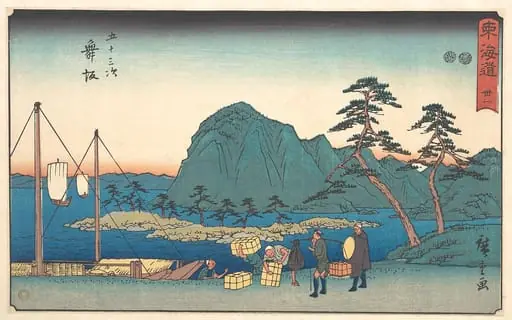
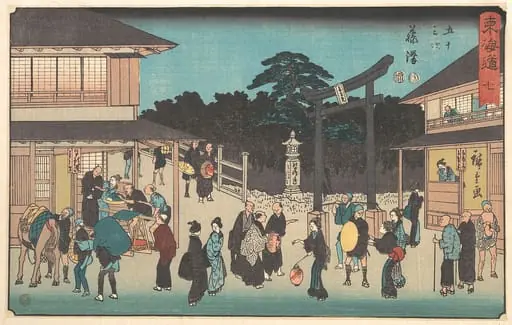
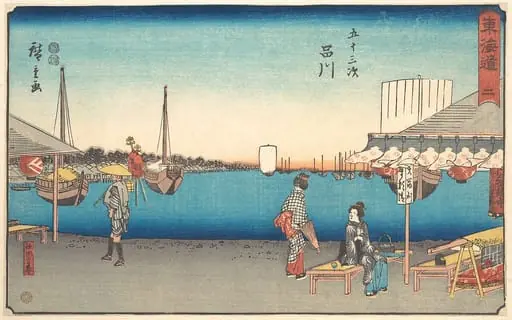
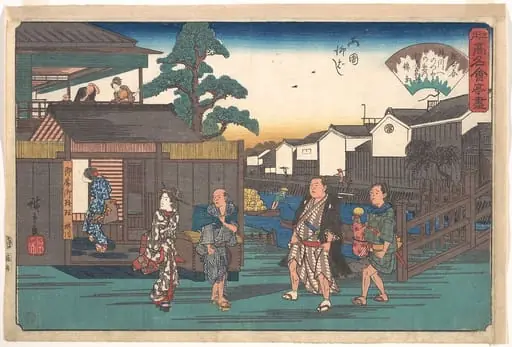
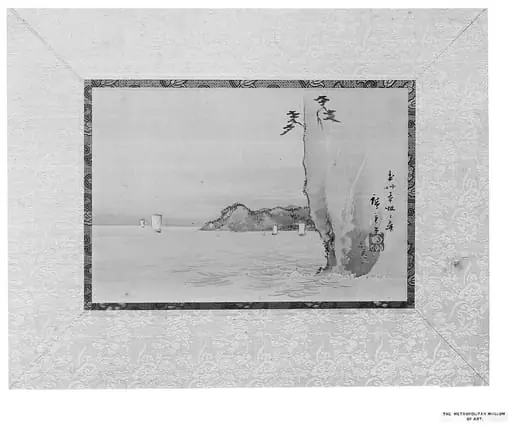
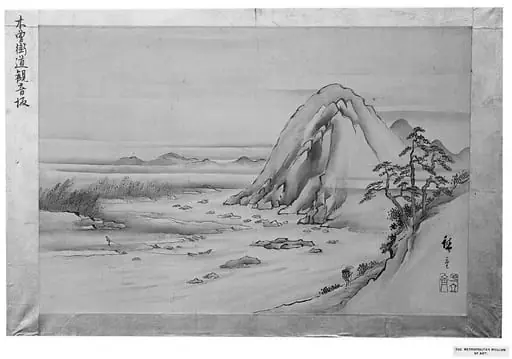
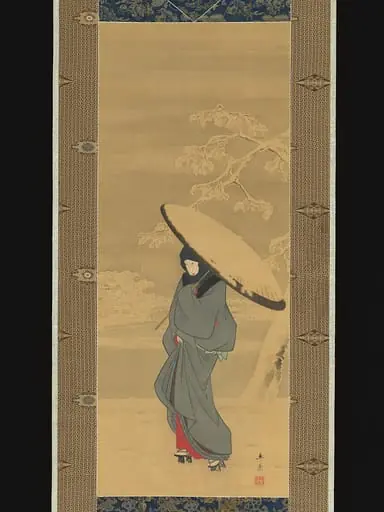
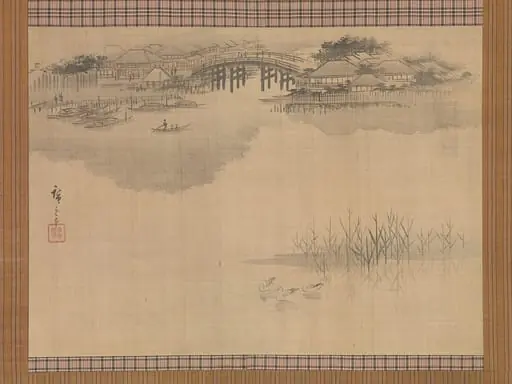
歌川広重画 「東海道 五十三次 大尾 京 三条大はし」|The Great Bridge at Sanjō (Taibi, Kyō, Sanjō Ōhashi), from the series The Tōkaidō Road: The Fifty-Three Stations (Tōkaidō: Gojūsan tsugi)
1850
ink
paper
From the collection of Metropolitan Museum of Art
1850
ink
paper
From the collection of Metropolitan Museum of Art
歌川広重画 「東海道 五十三次 大尾 京 三条大はし」|The Great Bridge at Sanjō (Taibi, Kyō, Sanjō Ōhashi), from the series The Tōkaidō Road: The Fifty-Three Stations (Tōkaidō: Gojūsan tsugi) is a 1850 ink by Utagawa Hiroshige, a Romanticism work, depicting Bridge, held at Metropolitan Museum of Art.
This painting shows a serene scene of people walking on a bridge over a river. The bridge is long and has a railing, and it stretches across the width of the painting. In the background, there are mountains and a blue sky. The people on the bridge are dressed in traditional Japanese clothing and are carrying various items such as baskets and umbrellas. The overall mood of the painting is one of tranquility and peacefulness. The painting is a beautiful representation of a moment in time, and it invites the viewer to step into the serene world of the artist. If you're interested in learning more about the artist behind this work, you might want to look up Utagawa Hiroshige.
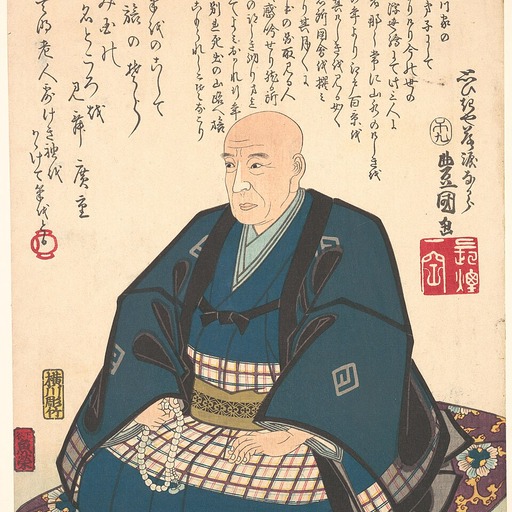
Utagawa Hiroshige (歌川 広重) or Andō Hiroshige (安藤 広重), born Andō Tokutarō (安藤 徳太郎; 1797 – 12 October 1858), was a Japanese ukiyo-e artist, considered the last great master of that tradition.
See the richer artist page