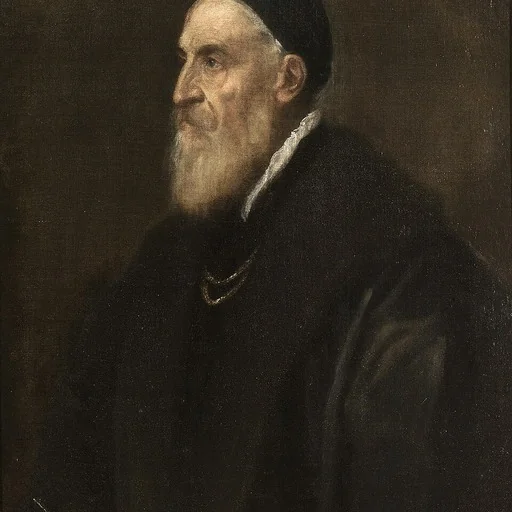
Subject
Mountain
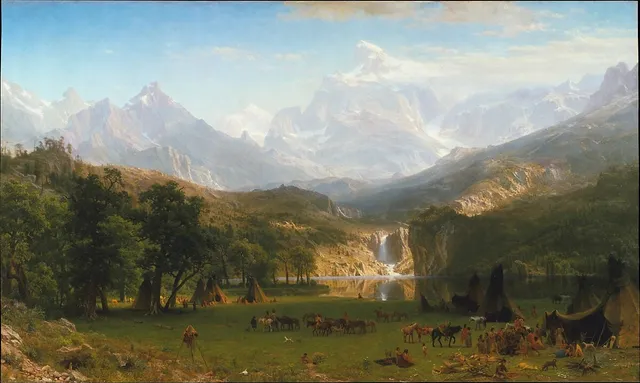
Mountain is a subject in art. The gallery holds 200 works in this subject in art, including works by Titian, Jean Baptiste Camille Corot and Thomas Cole.
Few natural forms have carried as much symbolic weight in art as the mountain, which across cultures has stood for the sacred, the eternal, and the limits of human scale. The earliest sustained tradition to make mountains a primary subject was Chinese landscape painting, known as shan shui (山水, literally "mountain-water"), which rose to prominence during the tenth and eleventh centuries of the Song dynasty. Steeped in Daoist and Neo-Confucian thought—mountains were believed to be close to heaven and home to immortals—painters such as Fan Kuan (c. 950–c. 1031) sought not a topographic record but a distillation of nature's order. His monumental hanging scroll Travelers among Mountains and Streams (c. 1000), built from layered "raindrop" texture strokes and a towering central cliff that dwarfs tiny human figures, set an ideal to which later masters returned for centuries.
In the West, the mountain remained a hostile backdrop until the eighteenth-century theory of the sublime reframed alpine vastness as a source of awe rather than dread. European Romanticism made the peak a vehicle for spiritual yearning: Caspar David Friedrich's Wanderer above the Sea of Fog (c. 1818), assembled in the studio from sketches of Saxony's Elbe Sandstone Mountains, became an emblem of the solitary self confronting the infinite, while J. M. W. Turner dissolved the Alps into storms of light and atmosphere.
The theme reached its grandest popular expression in nineteenth-century America. Thomas Cole, founder of the Hudson River School, fused topographic accuracy with moral and spiritual allegory, as in his panoramic View from Mount Holyoke, Northampton, Massachusetts, after a Thunderstorm—The Oxbow (1836). His successors carried the idiom westward: Albert Bierstadt, trained at Düsseldorf, produced theatrical, light-flooded canvases of the Rockies such as The Rocky Mountains, Lander's Peak (1863), while Jasper Francis Cropsey was celebrated for the blazing autumnal hues of works like Autumn—On the Hudson River. This Rocky Mountain offshoot tied the sublime peak to ideas of national destiny and untouched wilderness.
The mountain motif has remained continuously fertile—reworked by Cézanne's relentless studies of Mont Sainte-Victoire, by Hodler's crystalline Alps, and by modern photographers like Ansel Adams—linking the spiritual landscapes of Asia, the Romantic sublime, and American wilderness painting into one of art's most enduring conversations.
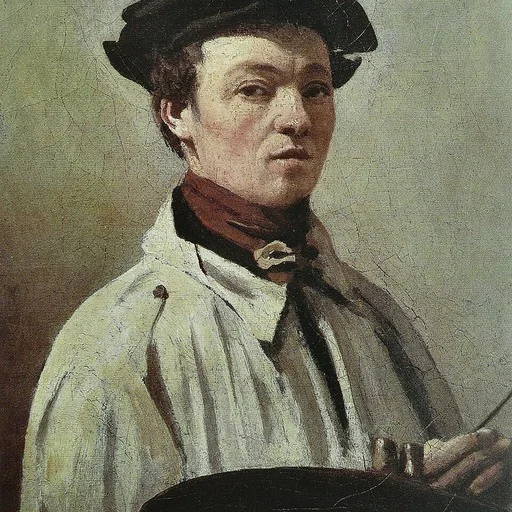
Key artists
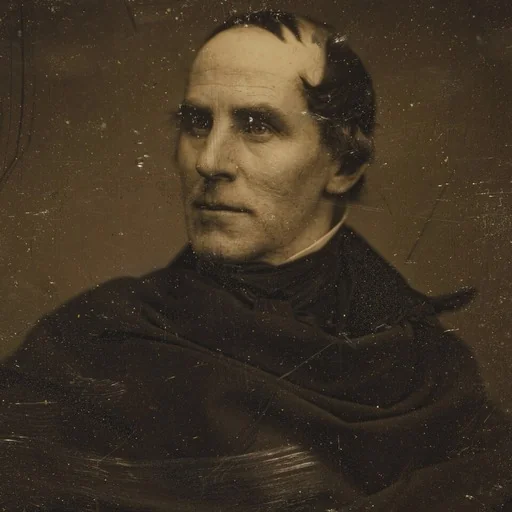
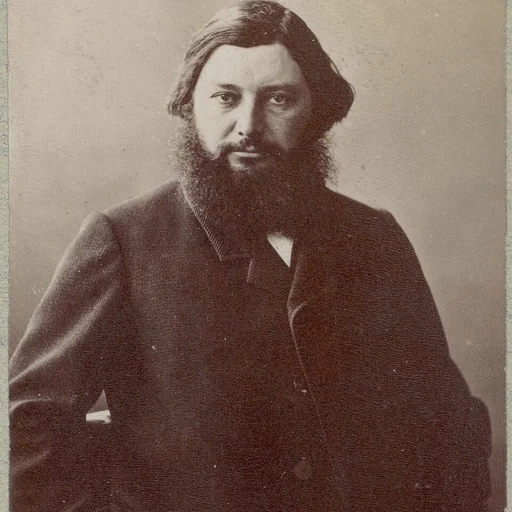
Overview
The mountain is an elevated landform with steep sides and significant exposed bedrock, generally considered higher than a hill, though no universal definition exists. As a motif in art, the mountain recurs with extraordinary frequency because it concentrates multiple tensions: between earth and sky, human scale and geological time, the known and the inaccessible. Mountains appear in 1,014 works in this collection alone, ranging from Lake Lucerne and The Oxbow to The Rocky Mountains, Lander's Peak and Isola Bella in Lago Maggiore. Their visual dominance in landscape composition, their capacity to carry symbolic weight, and their role in shaping light, atmosphere, and narrative perspective have made them indispensable to artists across cultures and centuries.
Iconography & meaning
Mountains have served as multivalent symbols in visual art. They have represented divine power and the threshold between earthly and celestial realms, as in Friedrich's Romantic works where peaks become sites of spiritual revelation. They function as emblems of the sublime, overwhelming human viewers with scale and danger. In other contexts, mountains signify continuity and permanence, or conversely, obstacles to be overcome. Snow-covered peaks provide stark chromatic contrast to lush valleys, creating dramatic pictorial structure. In Chinese landscape tradition, mountains embody cosmic order and invite contemplation. The French source notes that mountains were long feared as dwellings of deities and remained largely unknown until serious scientific study began in the eighteenth century, after which artistic representation grew more naturalistic. Mountains also carry national and imperial connotations, particularly in American art where they became bound to Manifest Destiny and the ideology of westward expansion.
Across movements & periods
The treatment of mountains has shifted dramatically across periods. Before the eighteenth century, mountains were often depicted with symbolic rather than naturalistic intent, or avoided as aesthetically displeasing. The French source notes that serious scientific study from the eighteenth century onward enabled more realistic representation. Romanticism transformed the mountain into a primary vehicle for the sublime, with Caspar David Friedrich and J.M.W. Turner using peaks to express emotional and spiritual extremity. The Hudson River School, including Thomas Cole and Frederic Edwin Church, made mountains central to a national American art, embedding them in narratives of divine providence and continental destiny. Albert Bierstadt's theatrical panoramas of the American West exemplified this tendency. In the later nineteenth century, Paul Cézanne's repeated studies of Mont Sainte-Victoire shifted focus from symbolic content to formal analysis, reducing the mountain to planes of color and geometric structure. This trajectory from Romantic transcendence to modernist abstraction marks a fundamental reorientation in how artists approached the motif. Japanese ukiyo-e, particularly Katsushika Hokusai's series depicting Mount Fuji, developed parallel but distinct conventions, treating the mountain as both national icon and formal subject for serial variation.
Notable depictions
Several mountain depictions have achieved canonical status. Caspar David Friedrich's The Wanderer above the Sea of Fog (1818) presents a solitary figure on a rocky outcrop overlooking fog-enshrouded peaks, embodying Romantic individualism and the sublime. Friedrich also painted The Watzmann (1824-1825), treating the Bavarian Alps as a domain of revelation. Albert Bierstadt's Looking Down the Yosemite Valley (1865) and Among the Sierra Nevada Mountains, California (1868) exemplify the Hudson River School's grandiose vision, with theatrical lighting and panoramic scale. Frederic Edwin Church's The Heart of the Andes (1859) offers a cinematic view of South American terrain with cascading waterfalls and imposing peaks. J.M.W. Turner's Snow Storm: Hannibal and His Army Crossing the Alps (1812) uses the mountain as an emblem of nature's indifference to human ambition. In a different register, Paul Cézanne painted dozens of versions of Mont Sainte-Victoire between 1902 and 1906, using analytical brushwork to study the interplay of permanence and change. Katsushika Hokusai's South Wind, Clear Dawn (Red Fuji) (1832) from his Thirty-six Views of Mount Fuji series captures the mountain's distinctive coloration at dawn. Thomas Cole's The Oxbow (1836) and The Mountain Ford (1846) anchor the American tradition. Chinese painter Huang Gongwang's fourteenth-century Dwelling in the Fuchun Mountains represents an earlier, contemplative approach to mountainous terrain.
Legacy
The mountain motif has exerted lasting influence on subsequent art and culture. The Romantic conception of mountains as sites of spiritual and emotional experience established conventions that persist in landscape photography and cinema. Cézanne's analytical approach to Mont Sainte-Victoire proved foundational for Cubism and modernist abstraction, demonstrating that a single motif could sustain decades of formal investigation. The Hudson River School's monumental landscapes shaped American visual identity and informed conservation movements, with Bierstadt's images contributing to the establishment of Yosemite as a National Park in 1890. Hokusai's Mount Fuji series influenced European Impressionism and subsequent Japanese modernism. Beyond fine art, mountains have become central to recreation and tourism, with the nineteenth-century discovery of mountains as "sport equipment" for alpinism expanding to skiing and contemporary adventure culture. The Forest Service collection's documentation of mountain management, ski equipment, and technologies like the Sno-Cat traces this practical legacy. Scientific understanding of mountain formation through plate tectonics, developed in the twentieth century, has paralleled continued artistic engagement with geological time and scale.
Works
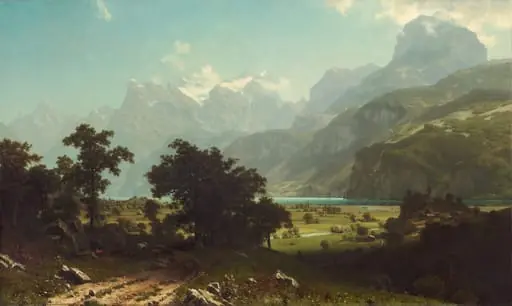 Lake Lucerne
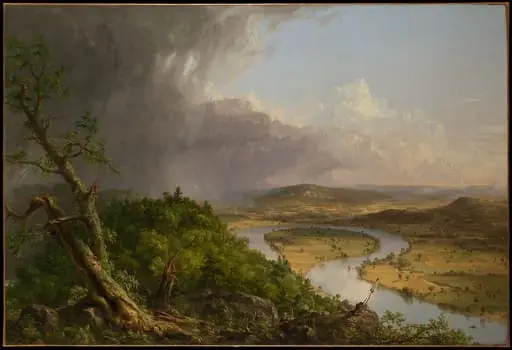 View from Mount Holyoke, Northampton, Massachusetts, after a Thunderstorm—The Oxbow
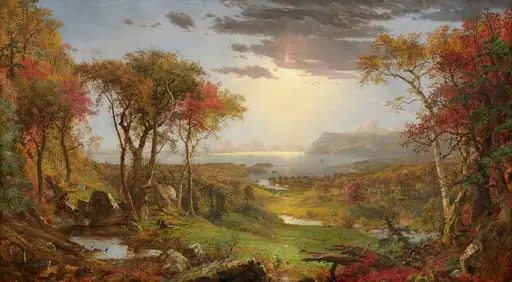 Autumn - On the Hudson River
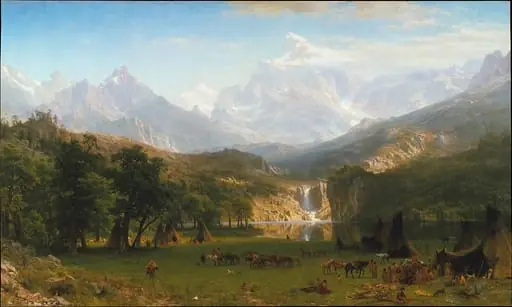 The Rocky Mountains, Lander's Peak
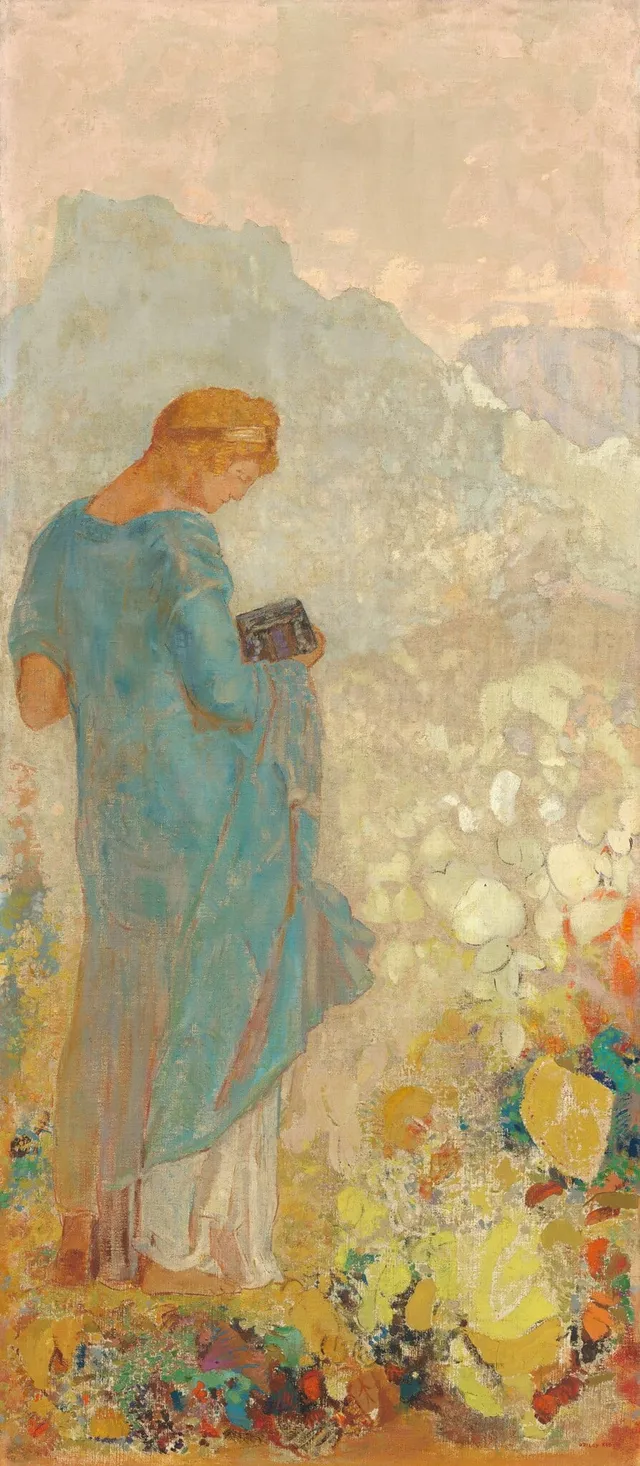
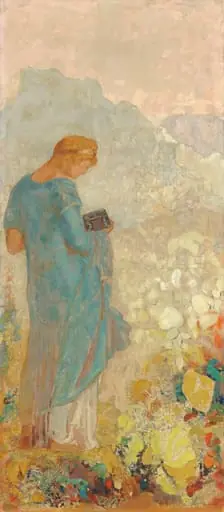 Pandora
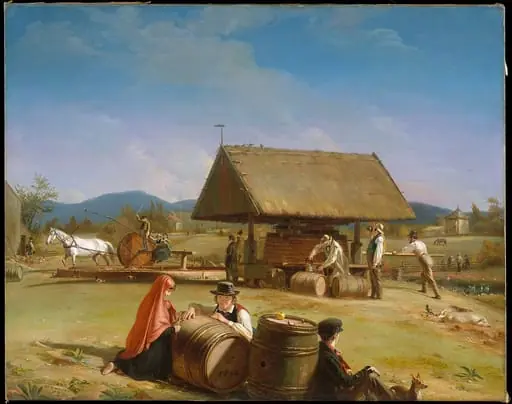 Cider Making
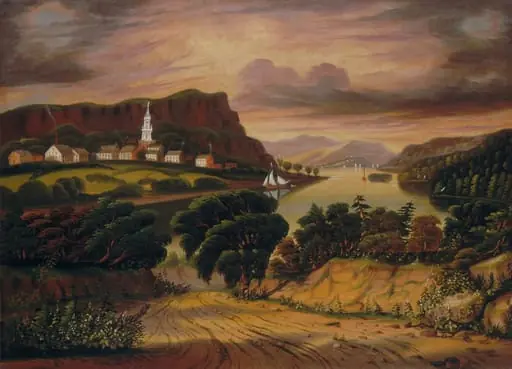 Lake George and the Village of Caldwell
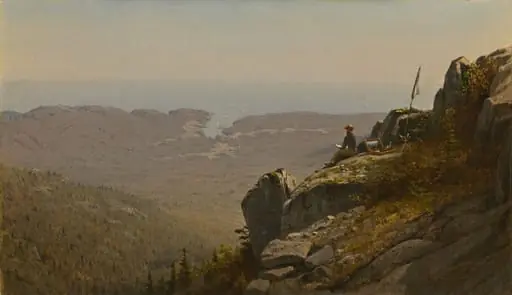 The Artist Sketching at Mount Desert, Maine
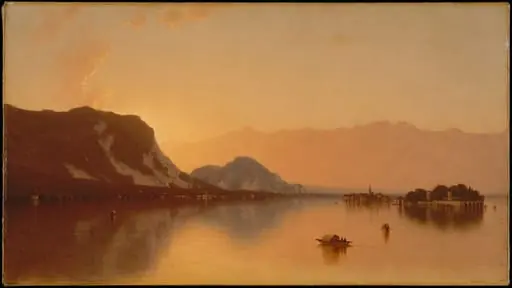 Isola Bella in Lago Maggiore
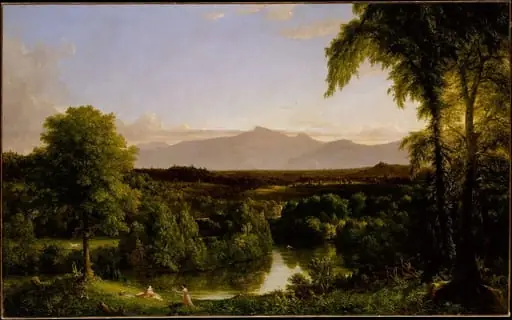 View on the Catskill—Early Autumn
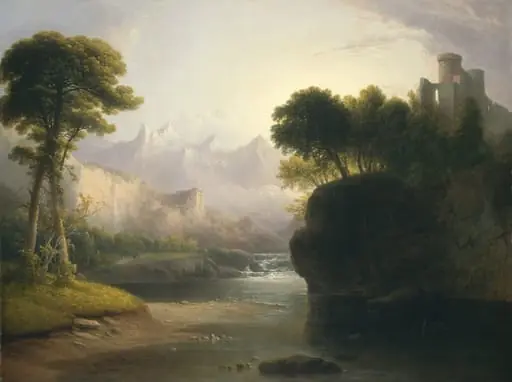 Fanciful Landscape
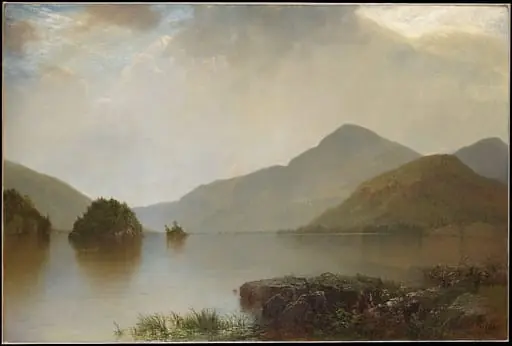 Lake George
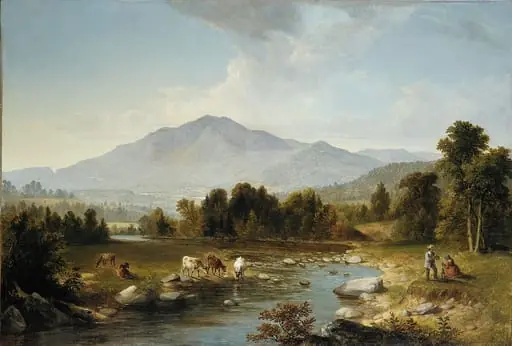 High Point: Shandaken Mountains
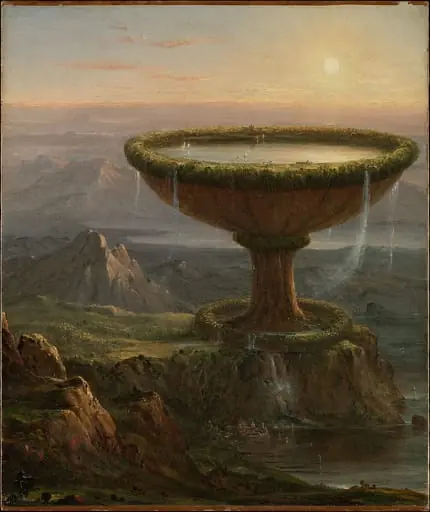 The Titan's Goblet
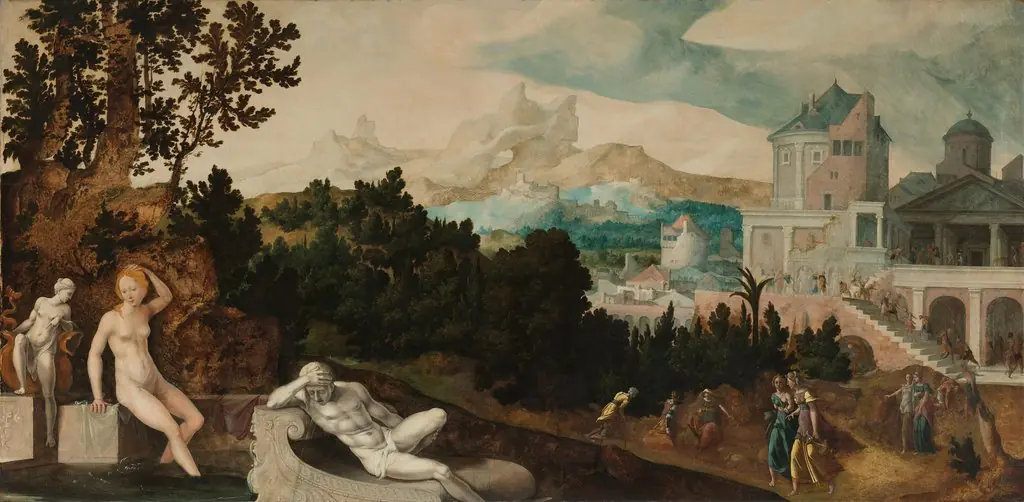 Landscape with Bathsheba
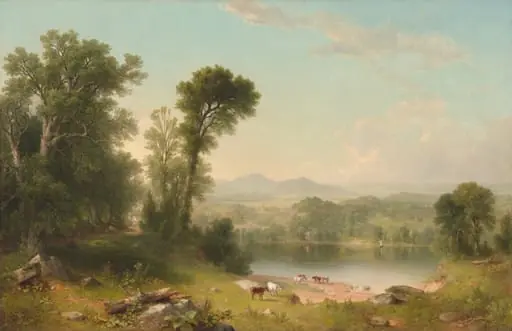 Pastoral Landscape
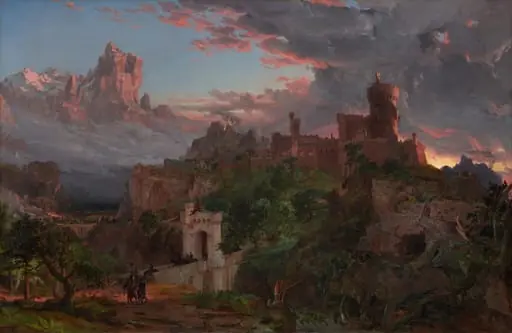 The Spirit of War
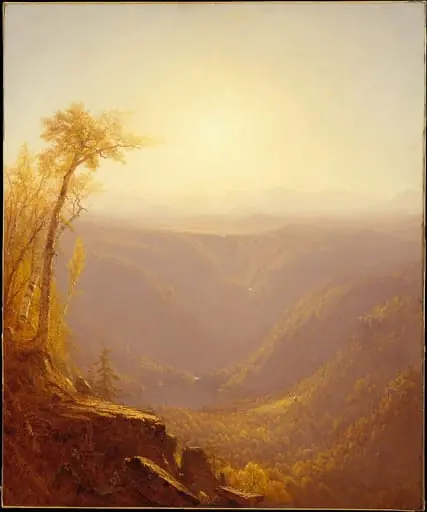 A Gorge in the Mountains (Kauterskill Clove)
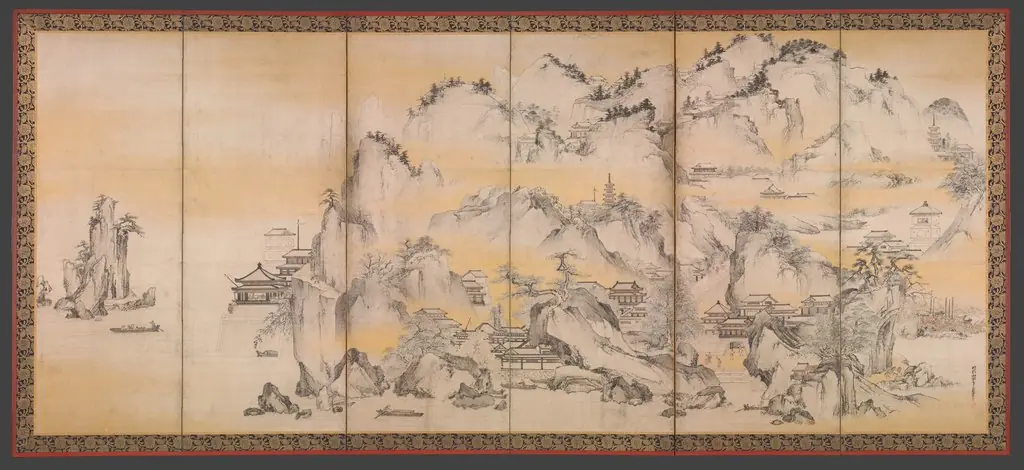 Jinshan Island and West Lake
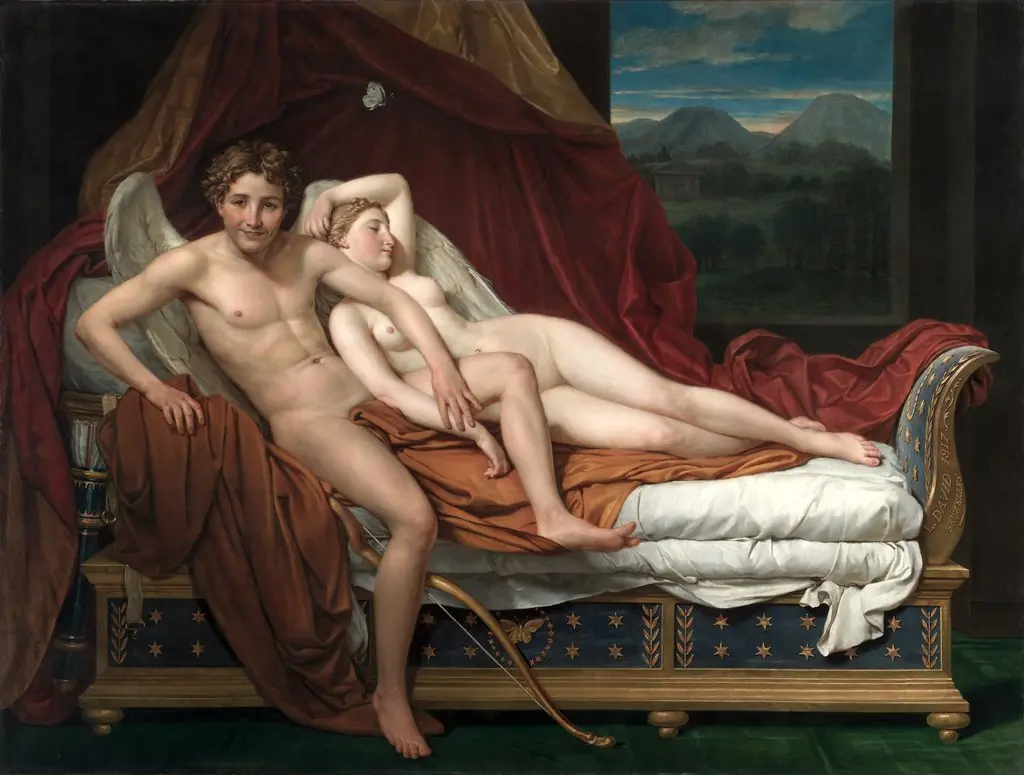 Cupid and Psyche
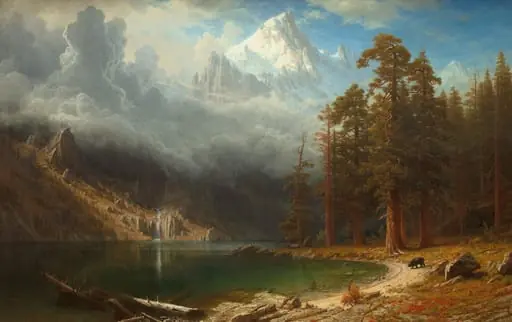 Mount Corcoran
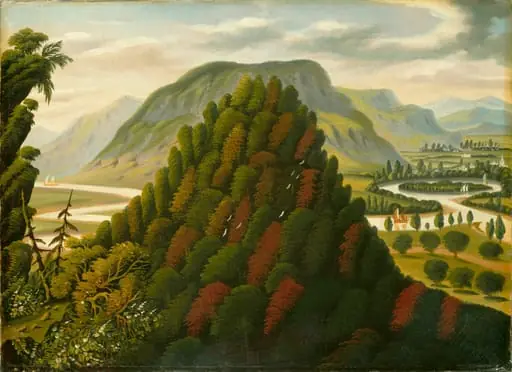 The Connecticut Valley
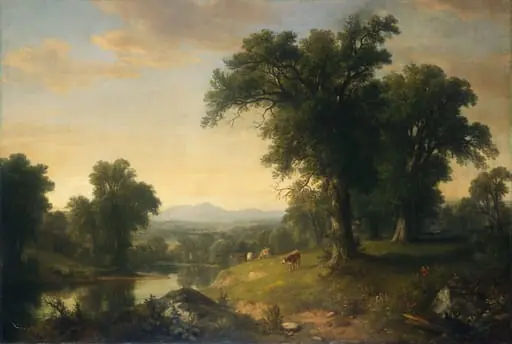 A Pastoral Scene
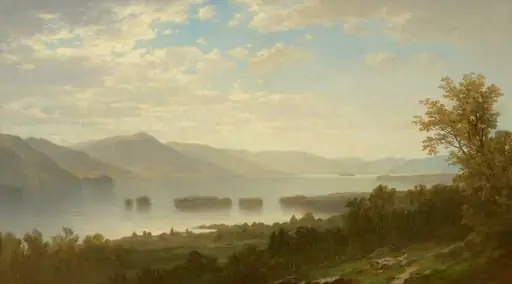 Lake George
 September Morn
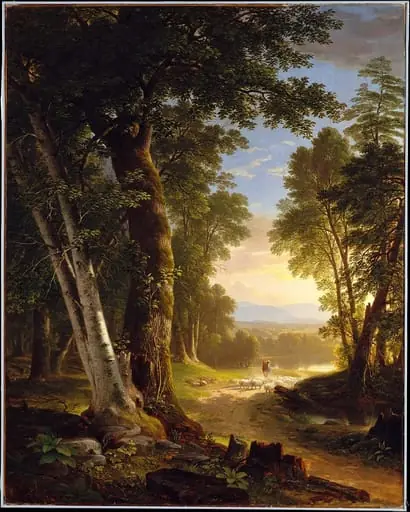 The Beeches
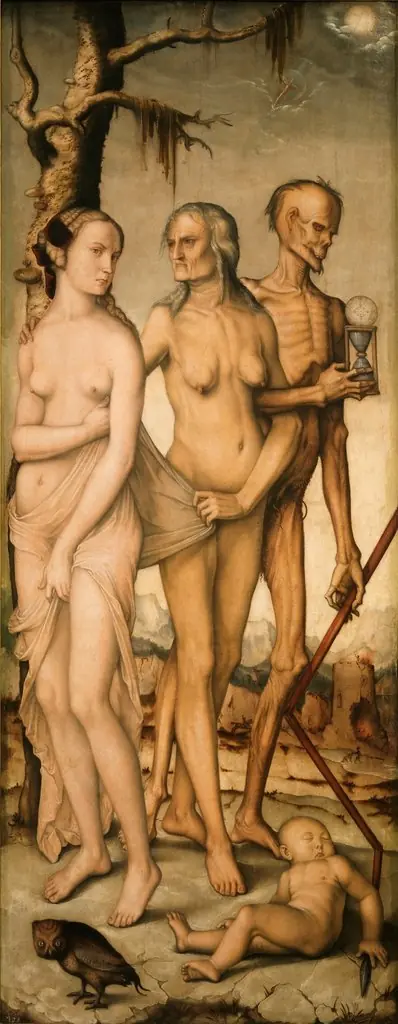 The Ages and Death
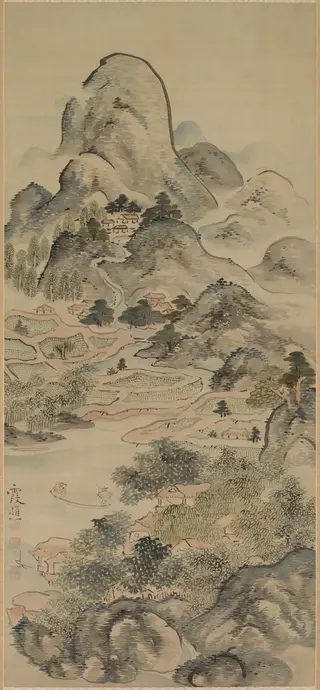 Fishing in Springtime
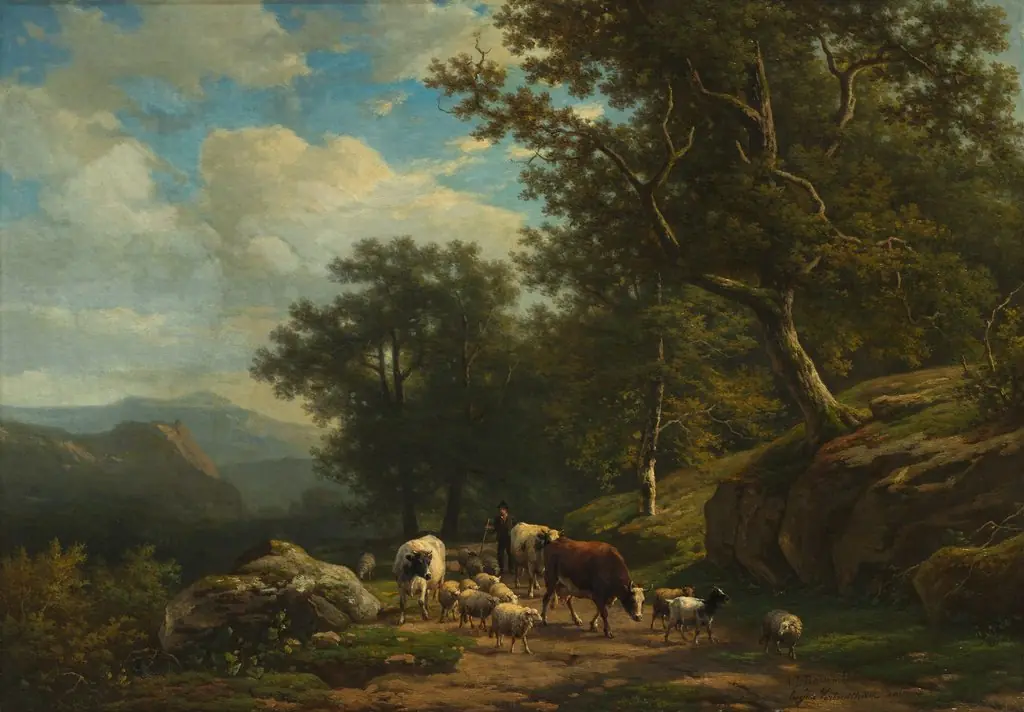 Landscape with a Peasant and His Flock
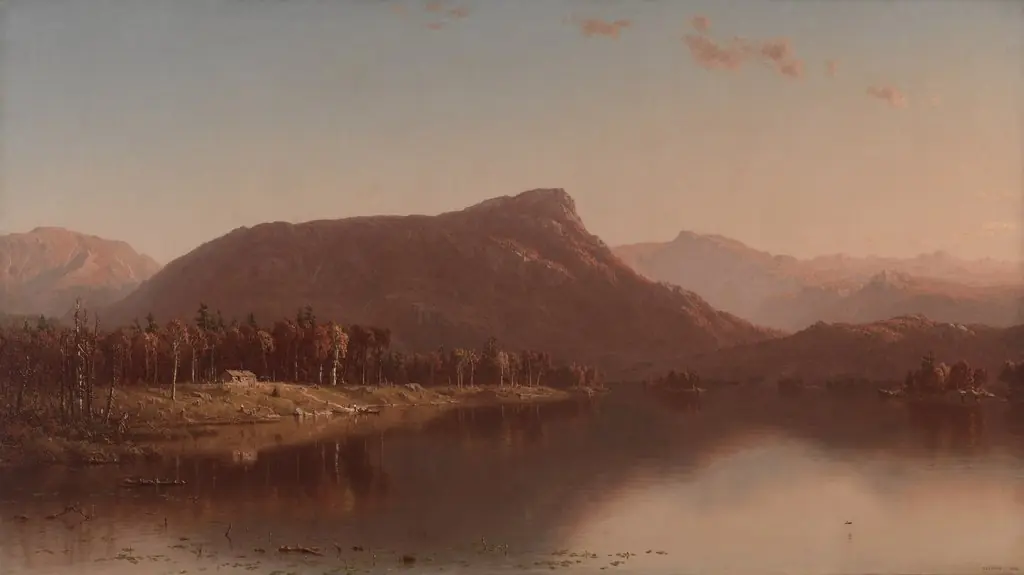 A Home in the Wilderness
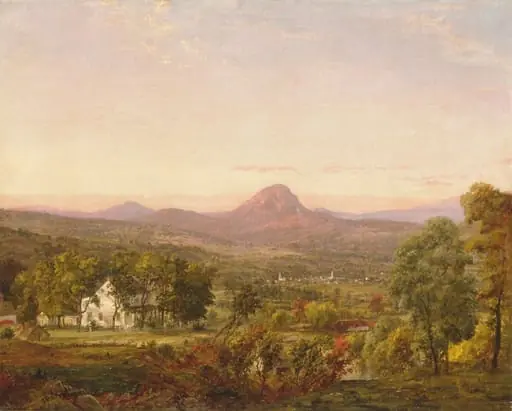 Autumn Landscape, Sugar Loaf Mountain, Orange County, New York
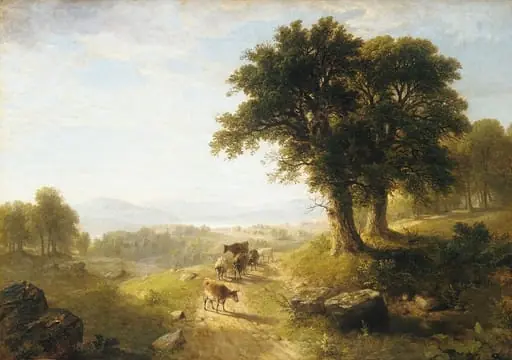 River Scene
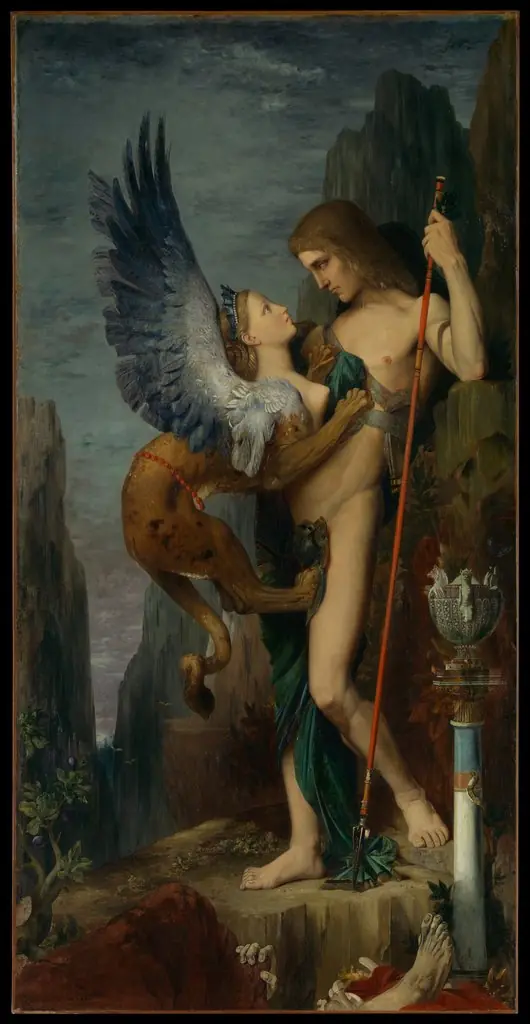 Oedipus and the Sphinx
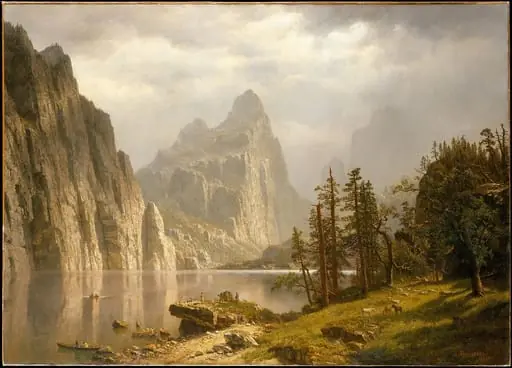 Merced River, Yosemite Valley
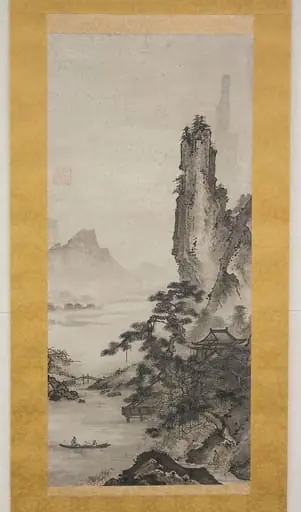
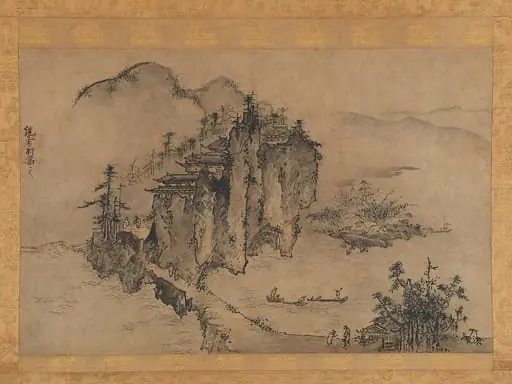 雪村周継筆 山水図|Landscape with Rocky Precipice
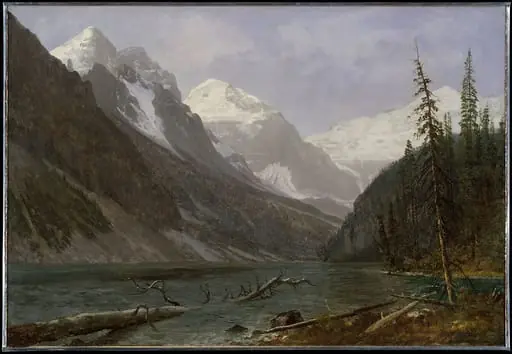 Canadian Rockies (Lake Louise)
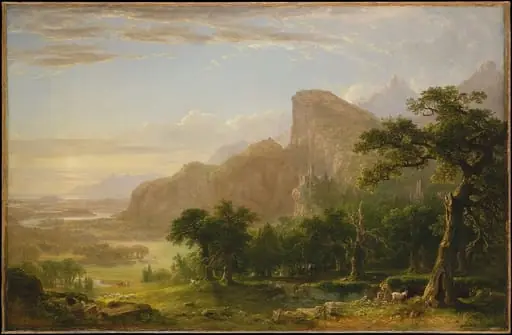 Landscape—Scene from "Thanatopsis"
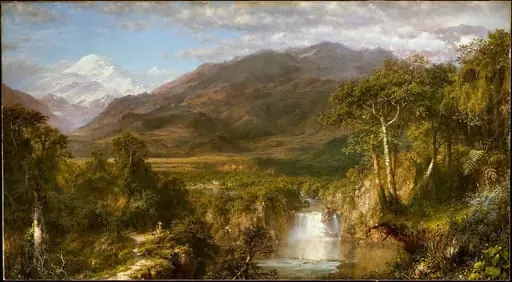 Heart of the Andes
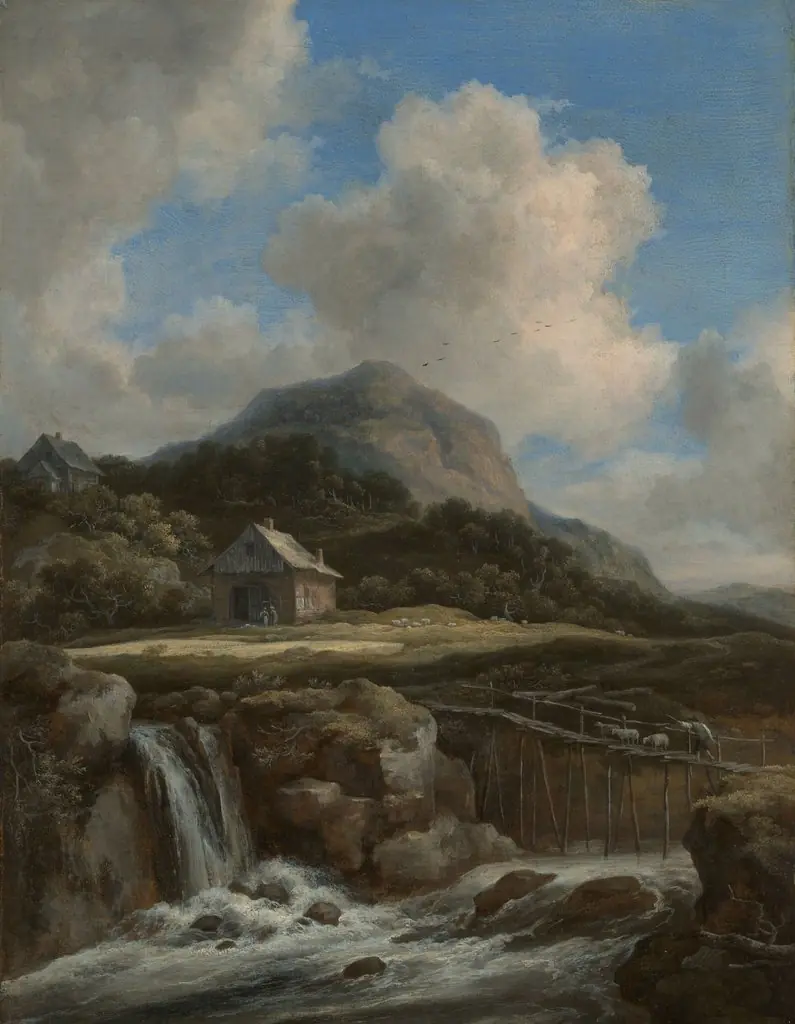 Mountain Torrent
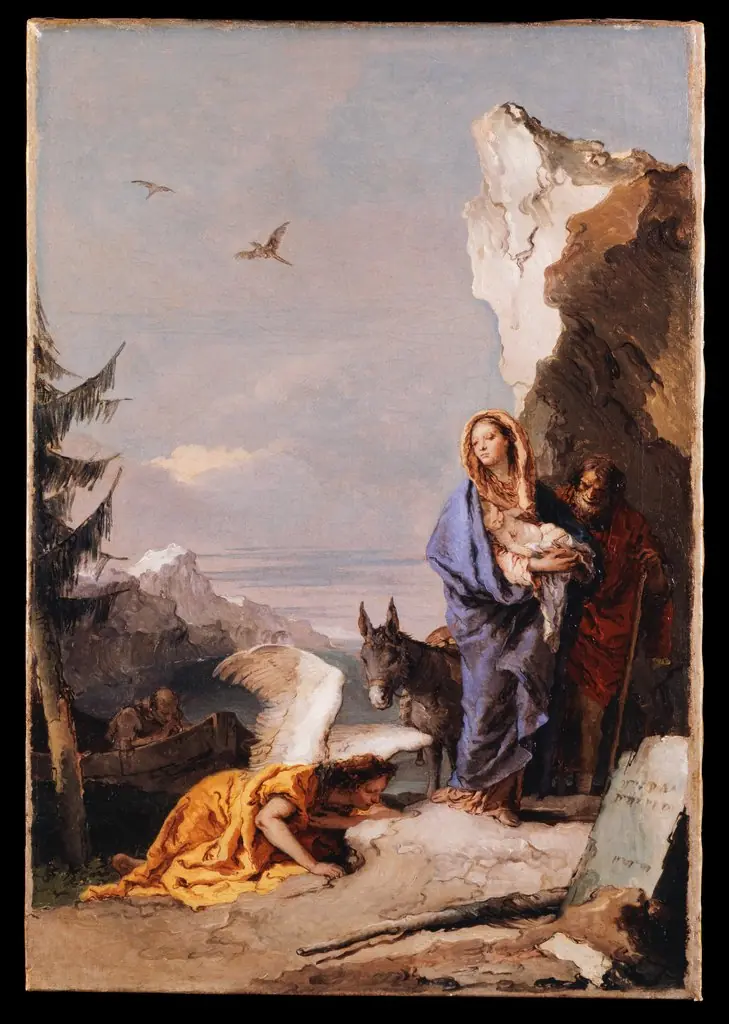 The Flight into Egypt
 The Hunters in the Snow
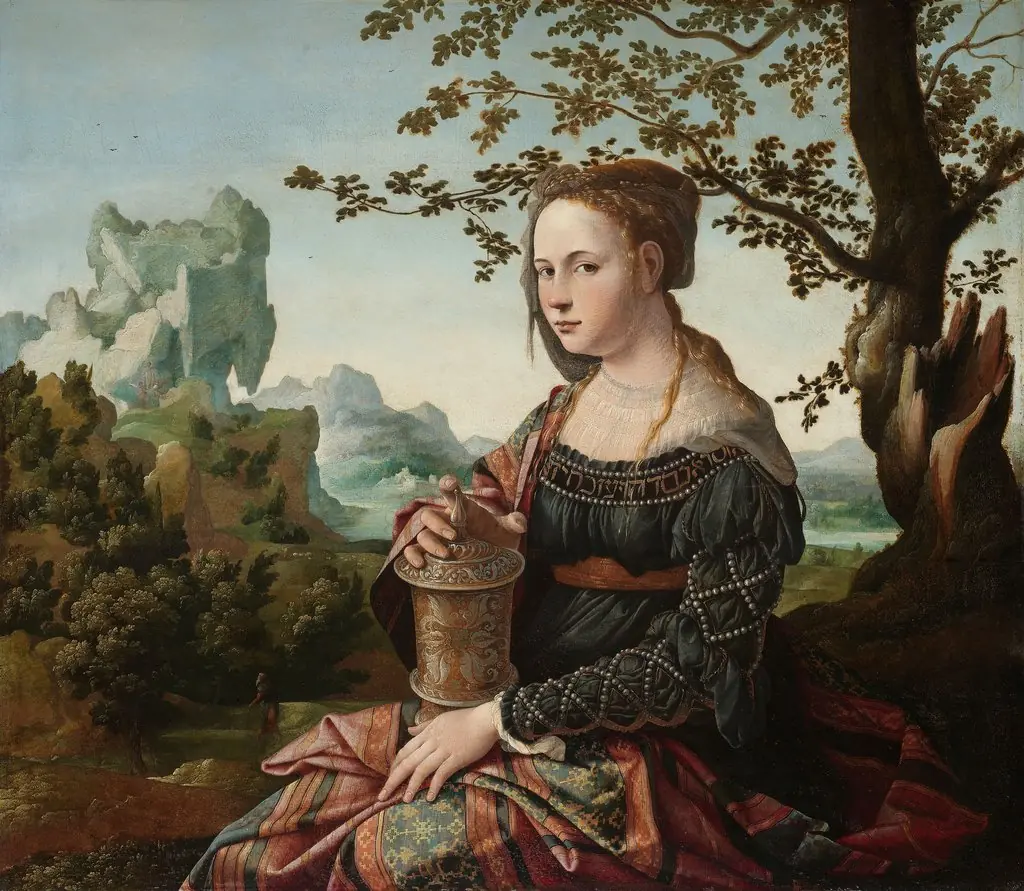 Mary Magdalene
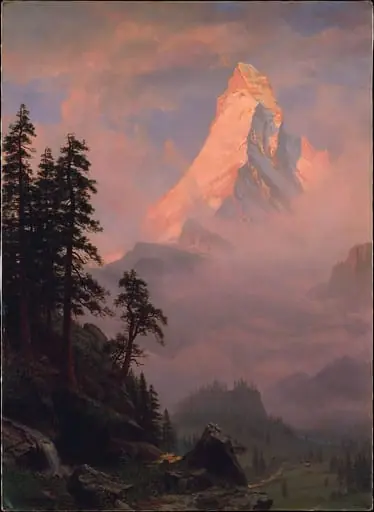 Sunrise on the Matterhorn
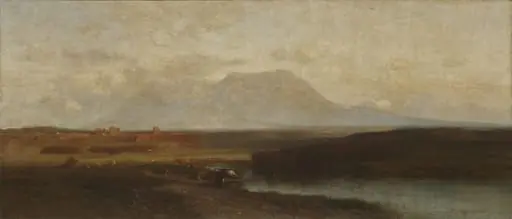 Spanish Peaks, Southern Colorado, Late Afternoon
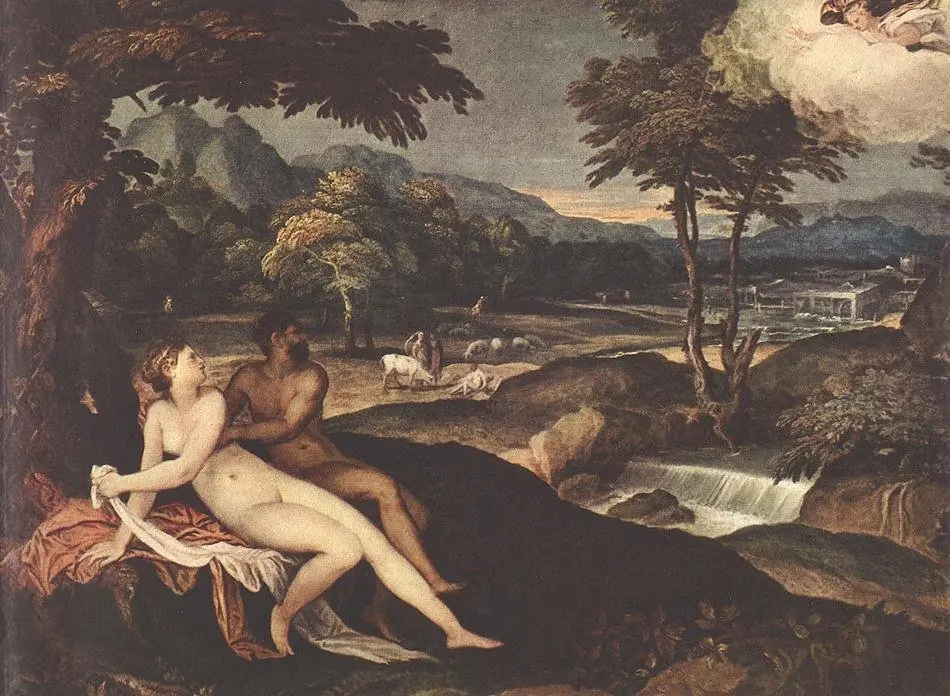 Landscape with Jupiter and Io
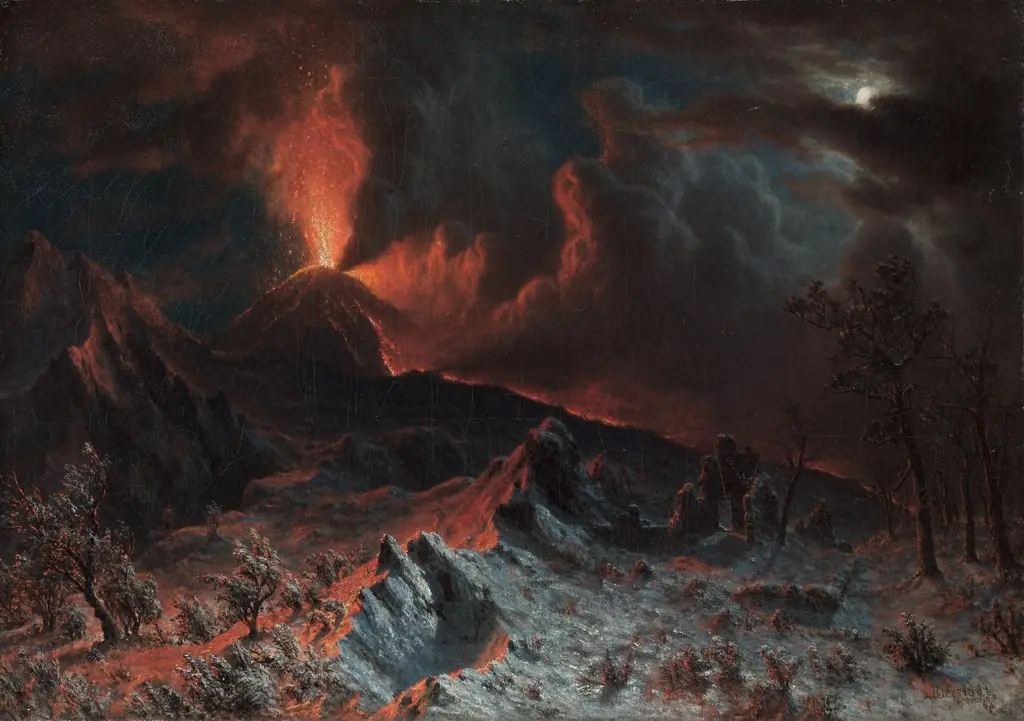 Mount Vesuvius at Midnight
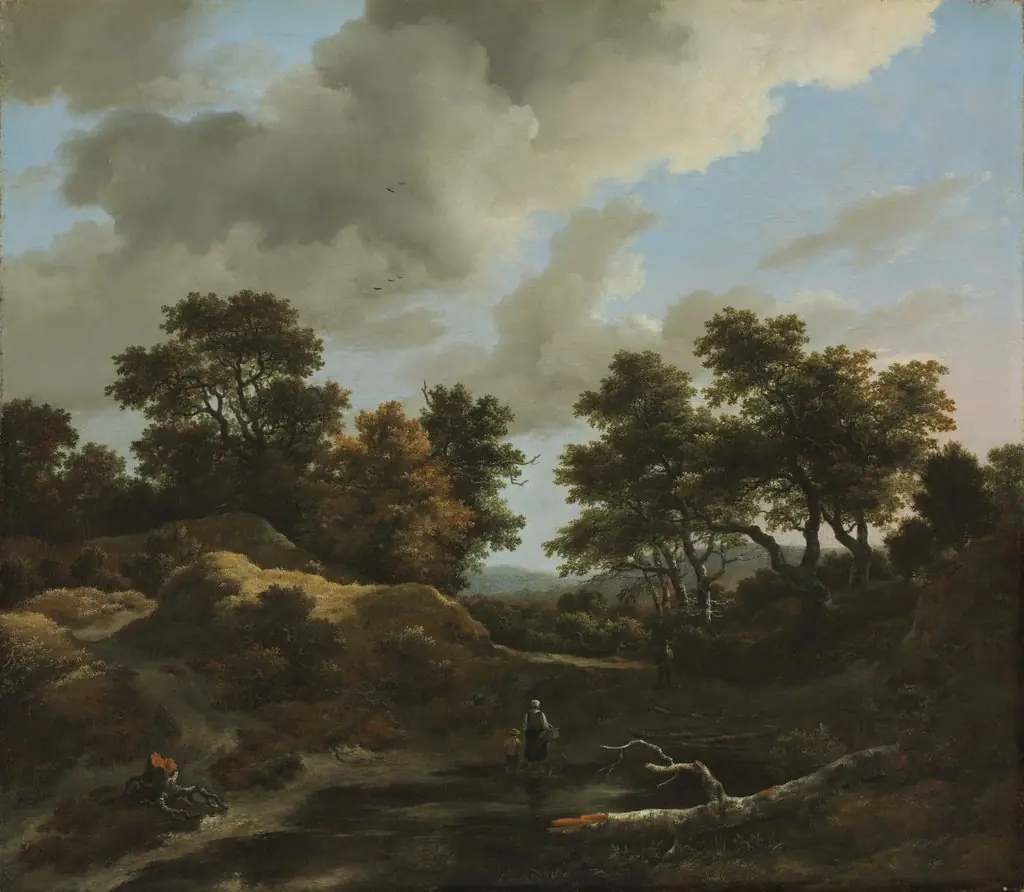 Wooded and Hilly Landscape
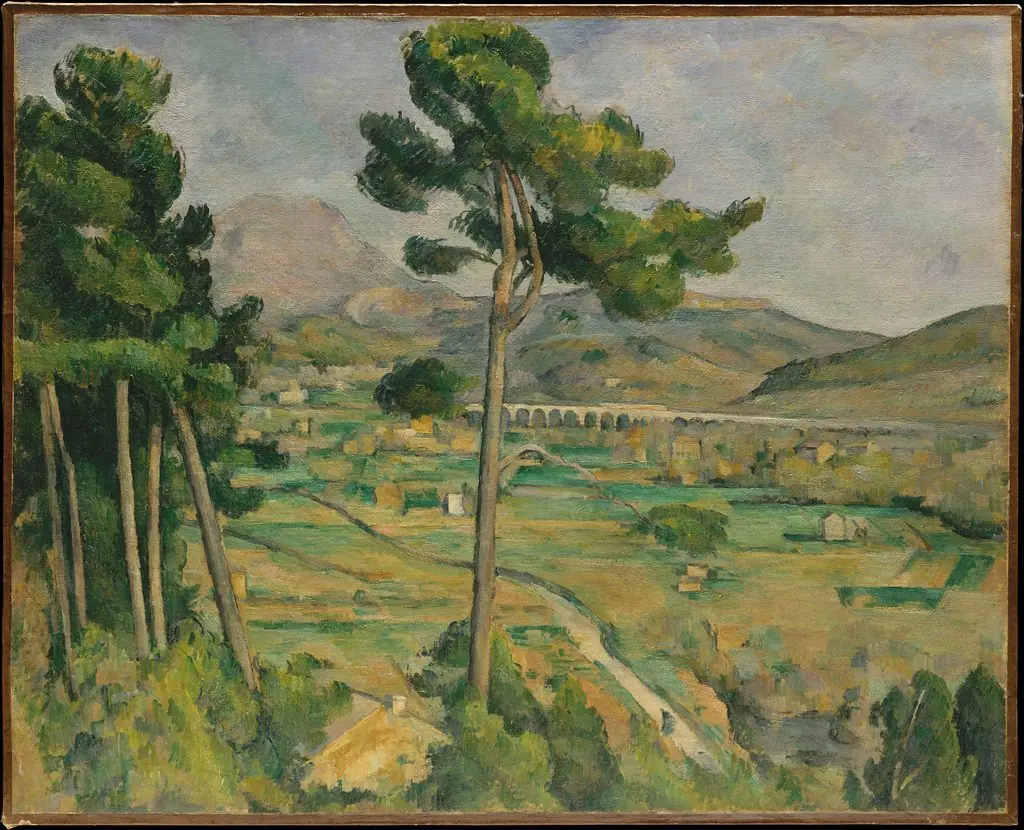 Mont Sainte-Victoire and the Viaduct of the Arc River Valley
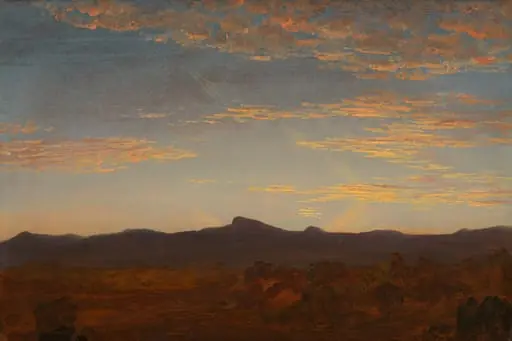 Study for "Catskill Creek"
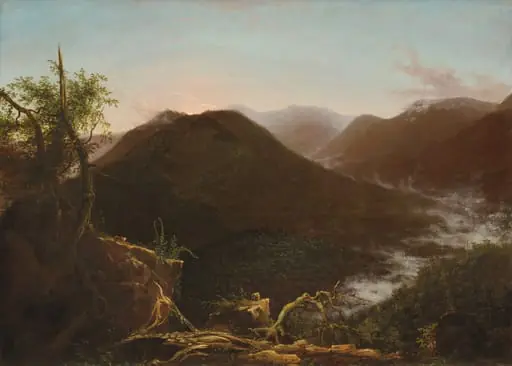 Sunrise in the Catskills
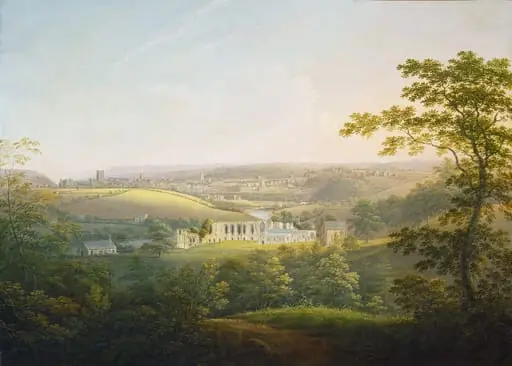 Easby Abbey, near Richmond
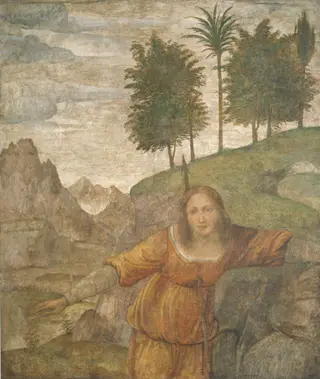 Procris Pierced by Cephalus' Javelin
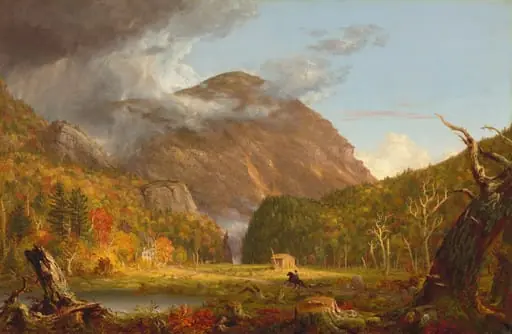 A View of the Mountain Pass Called the Notch of the White Mountains (Crawford Notch)
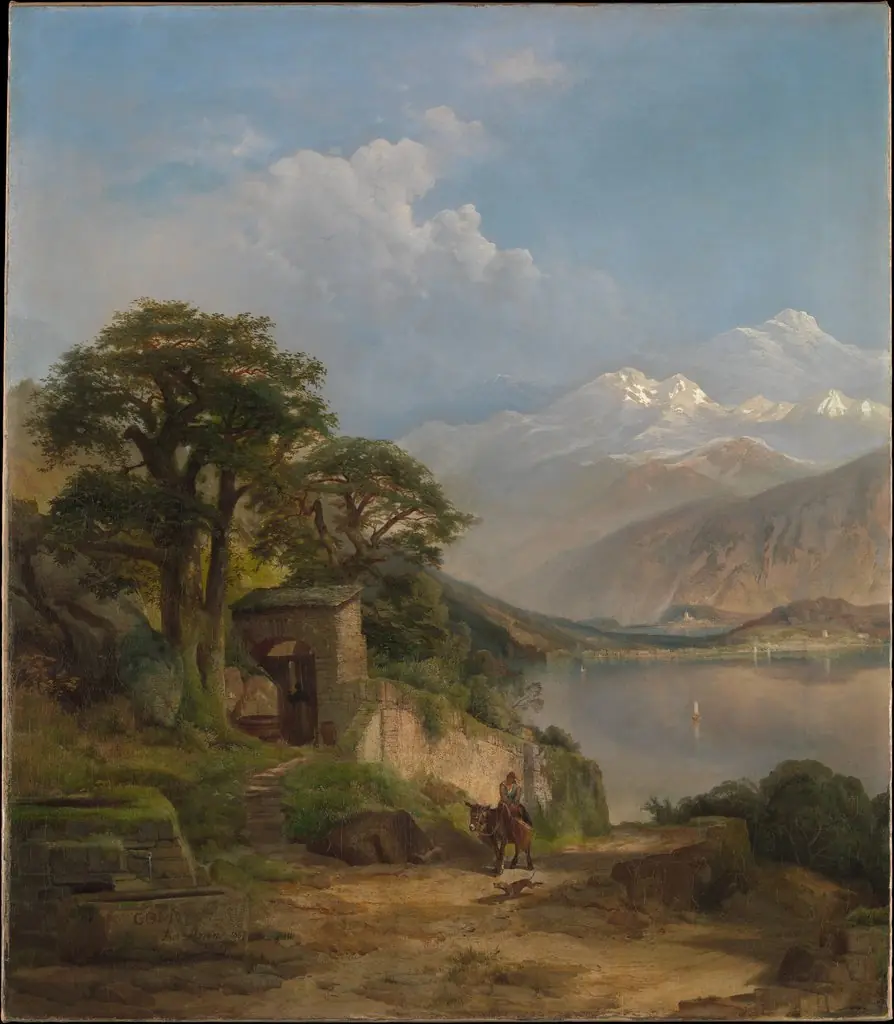 Lierna
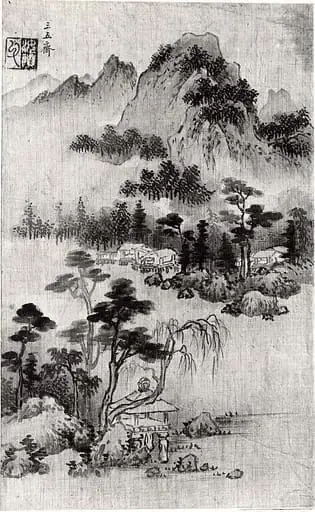 Untitled
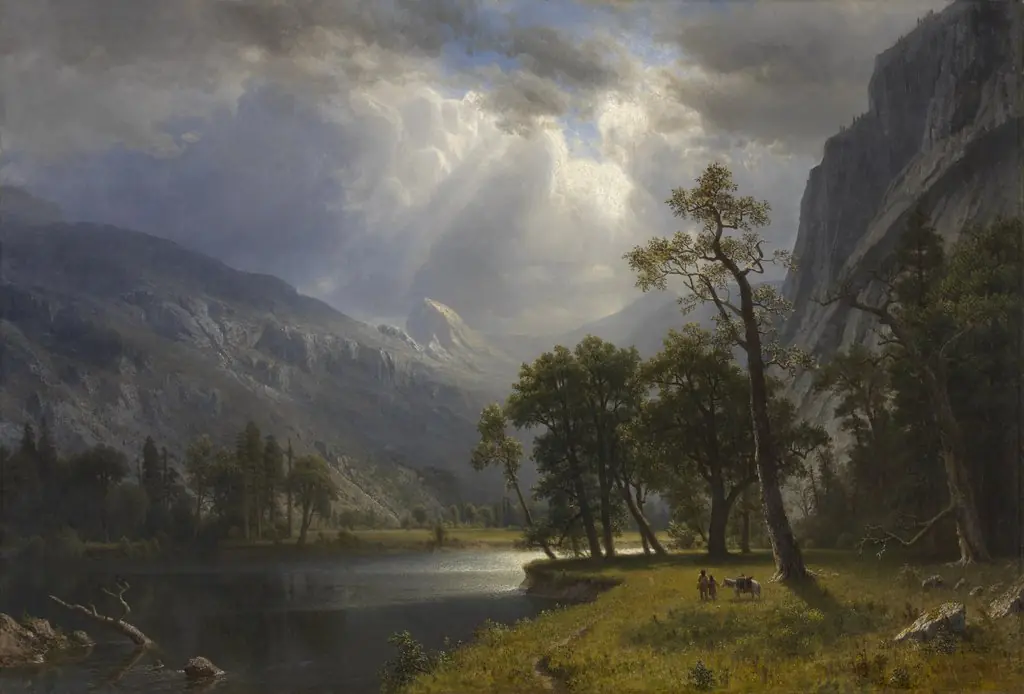 Mount Starr King, Yosemite
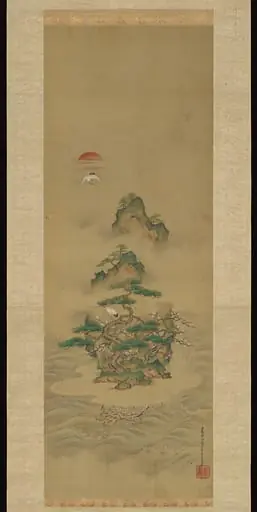 狩野探水守常筆 蓬莱山・瀟湘八景図|Mount Penglai with Eight Views of Xiao and Xiang
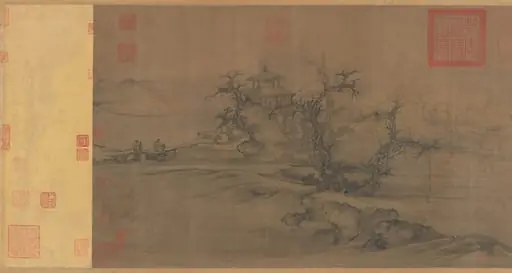 北宋 郭熙 樹色平遠圖 卷 |Old Trees, Level Distance
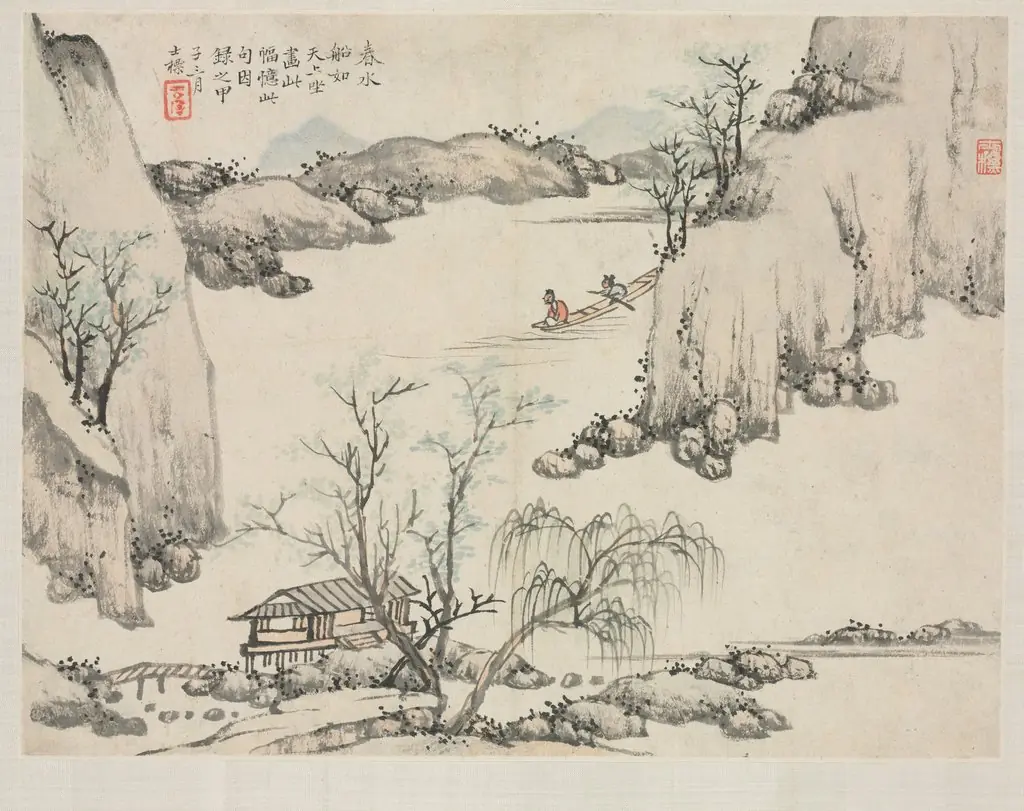 Landscape Album in Various Styles: Boating in Spring Water
 Panoramic Landscape near the River Moselle
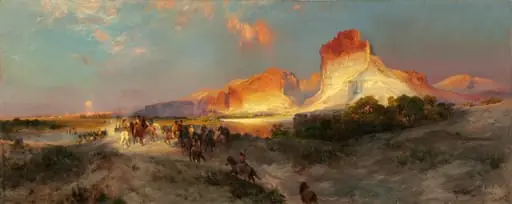 Green River Cliffs, Wyoming
 Siout, Egypt
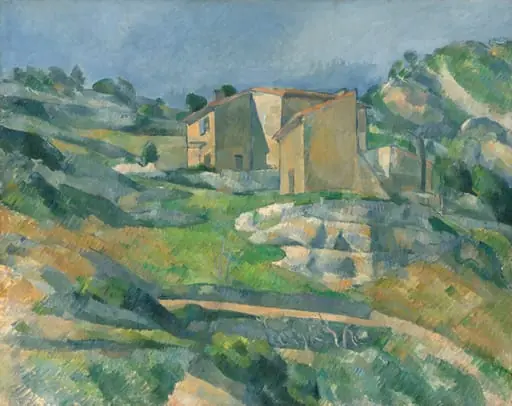 Houses in Provence: The Riaux Valley near L'Estaque
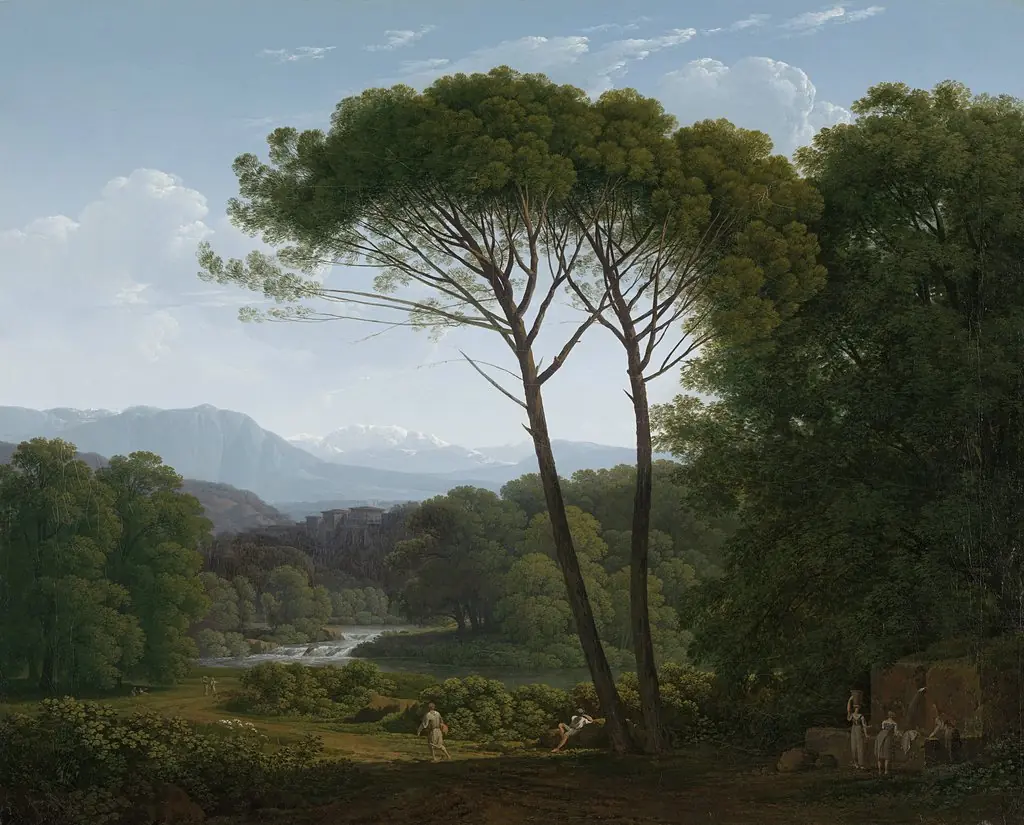 Italianate Landscape with Pines
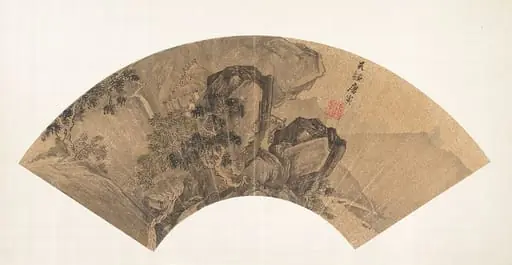 Untitled
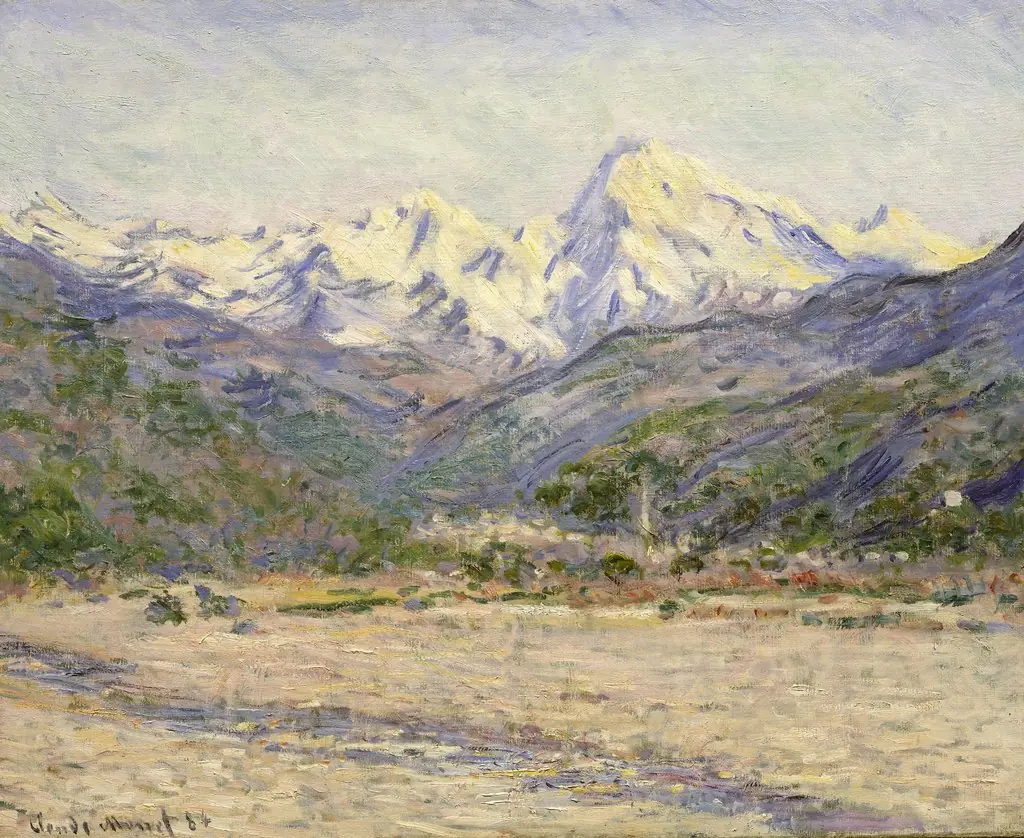 The Valley of the Nervia
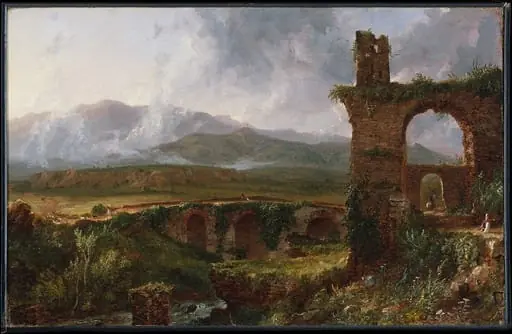 A View near Tivoli (Morning)
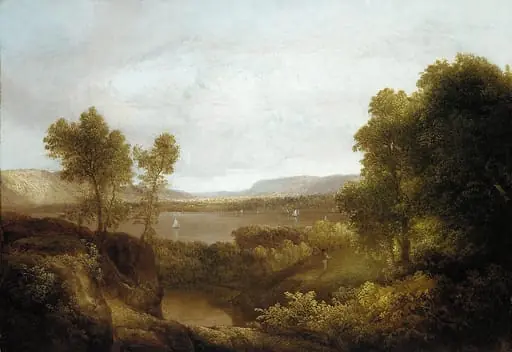 On the Hudson
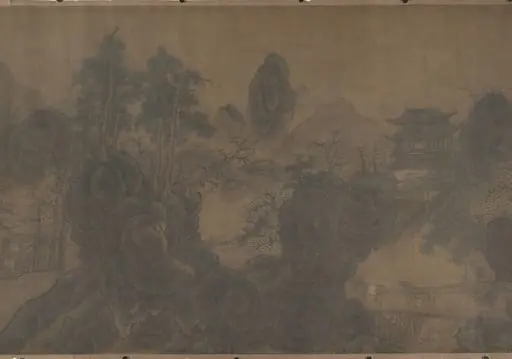 明/清 佚名 舊傳郭煕 關山行旅圖 卷|Traveling amid Mountains
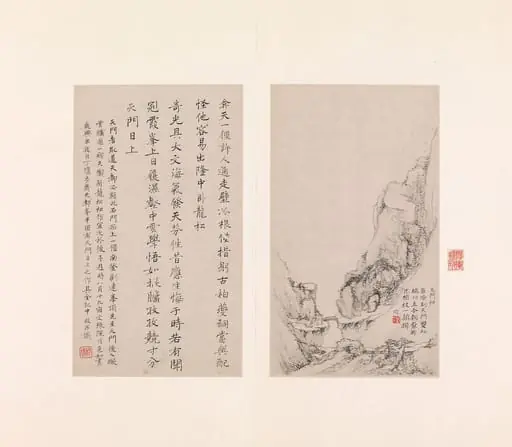 鄭旼 黃山八景 水墨紙本 九開冊|Eight views of the Yellow Mountains
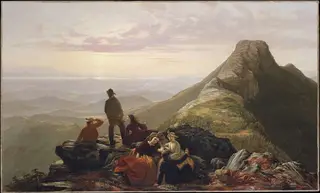 The Belated Party on Mansfield Mountain
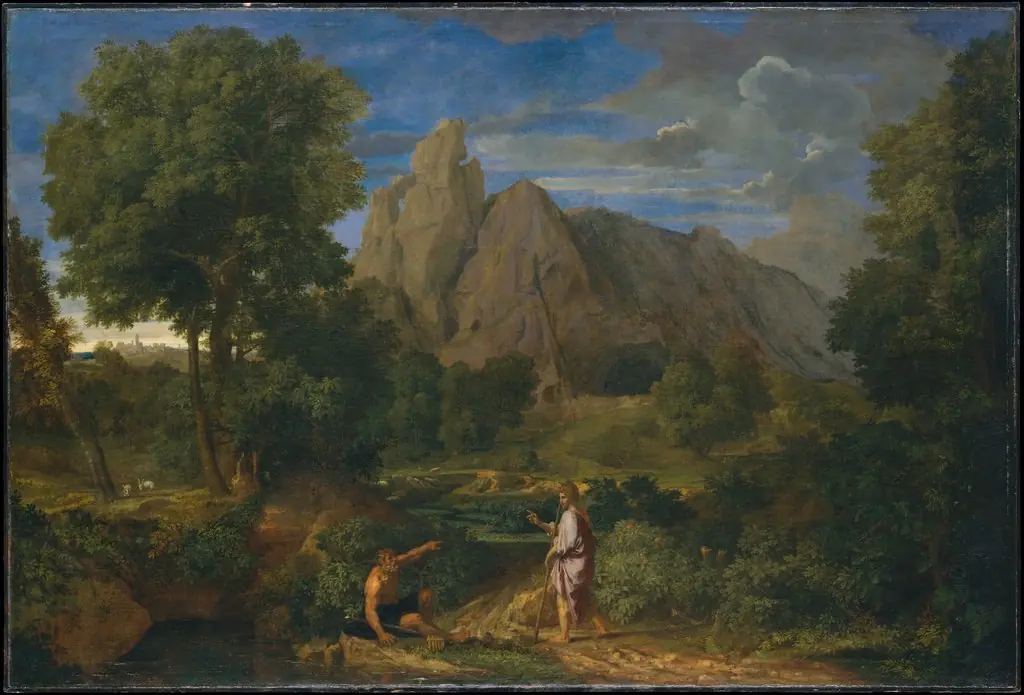 Mercury and Battus
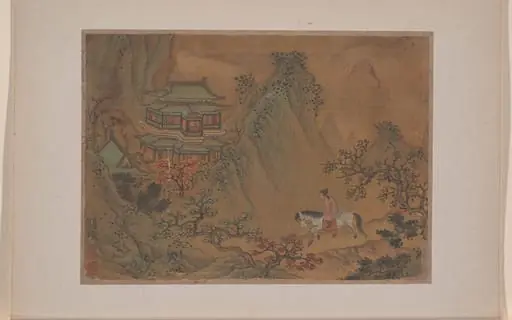 Untitled
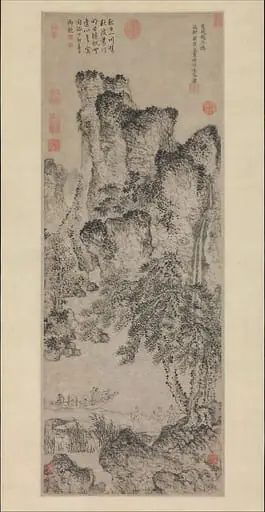 元 趙原 (元) 晴川送客圖 軸|Farewell by a Stream on a Clear Day
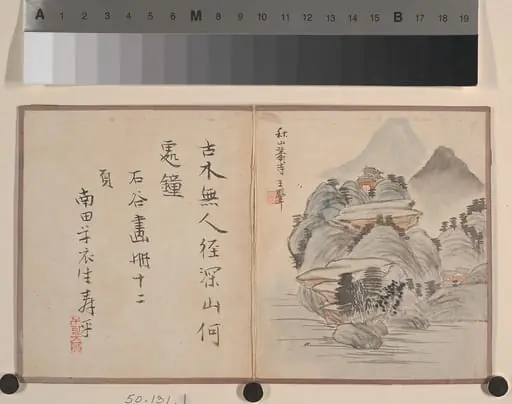 Untitled
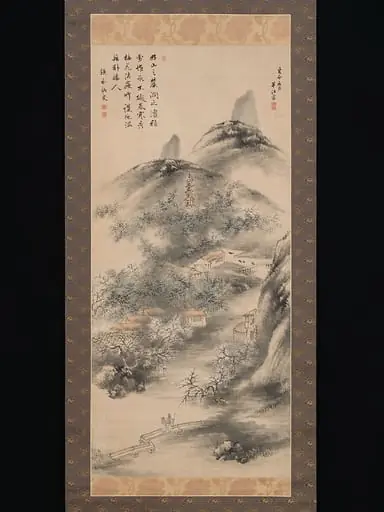 Untitled
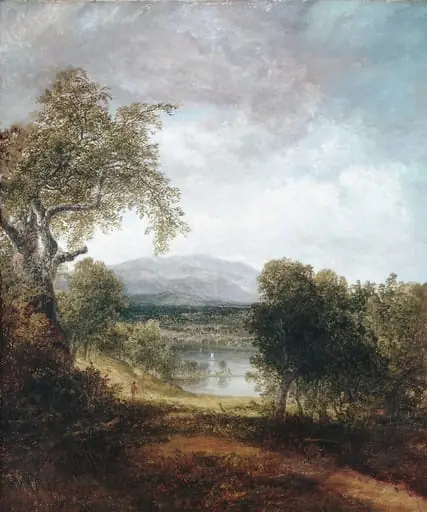 A River Glimpse
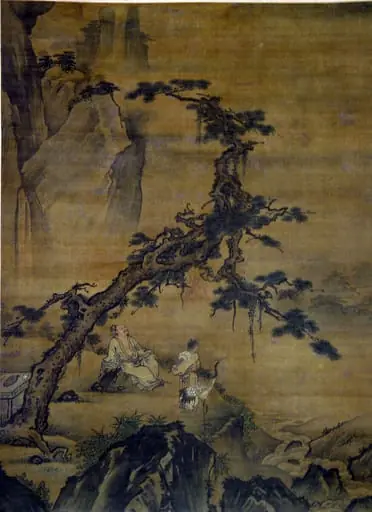 明 佚名 松鶴圖 軸|Scholar and Attendant in Mountain Retreat
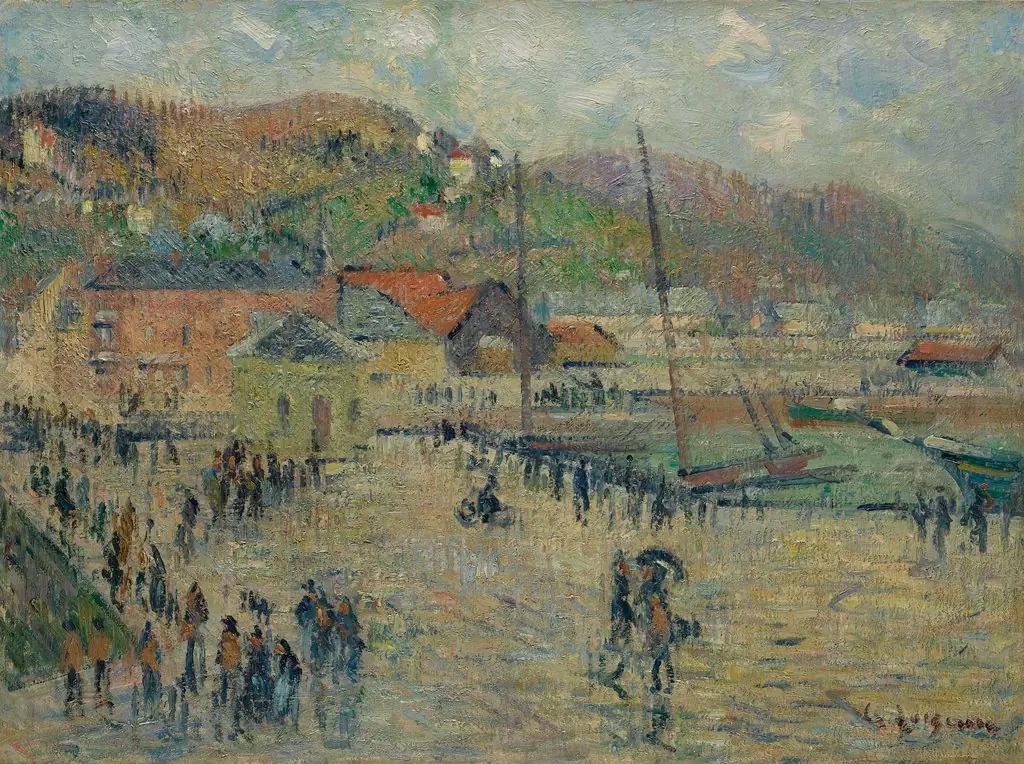 Le Grand Quai, Fécamp
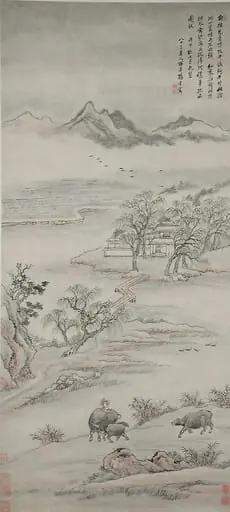 清 楊晉 滄洲牧牛圖 軸|Landscape with Figures
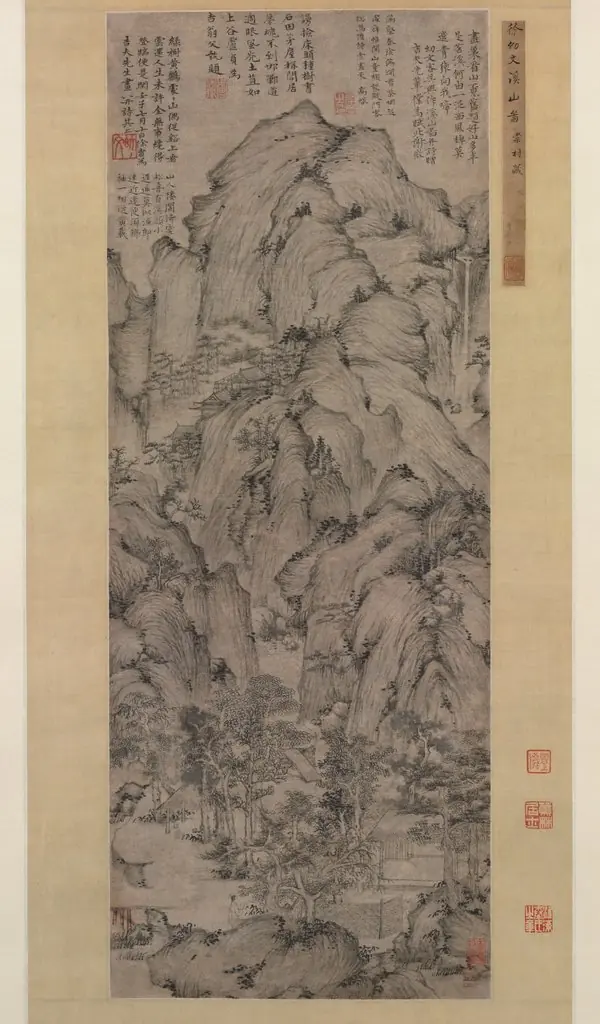 Streams and Mountains
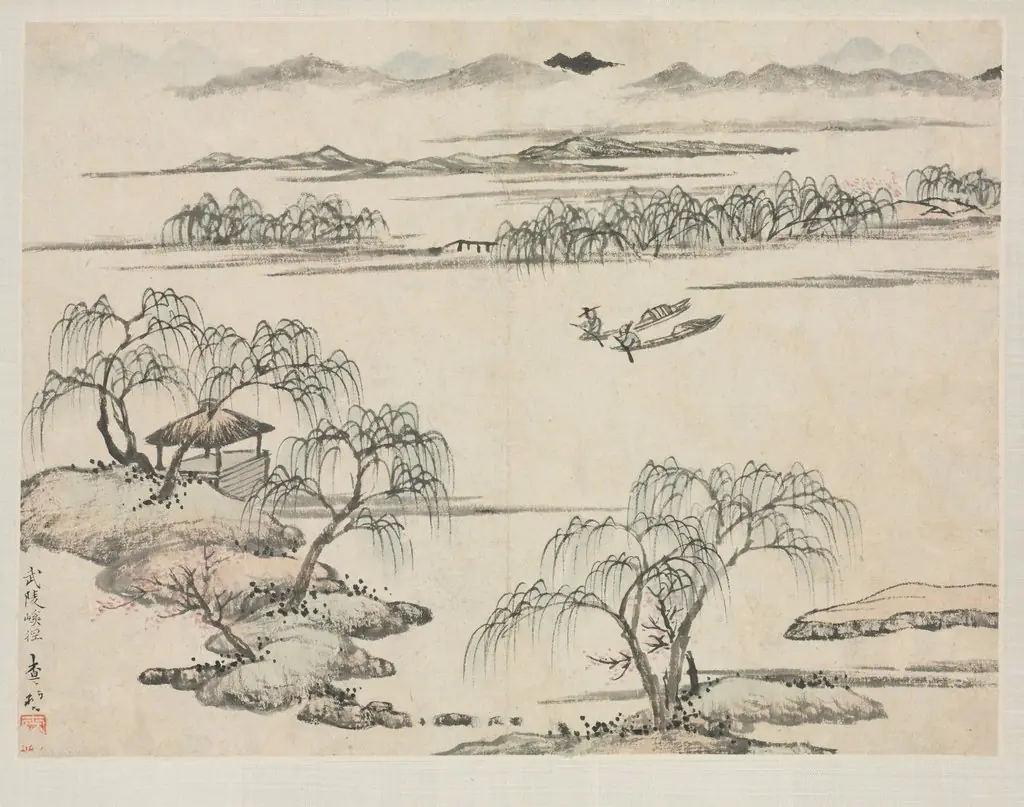 Landscape Album in Various Styles: The Stream of Wuling
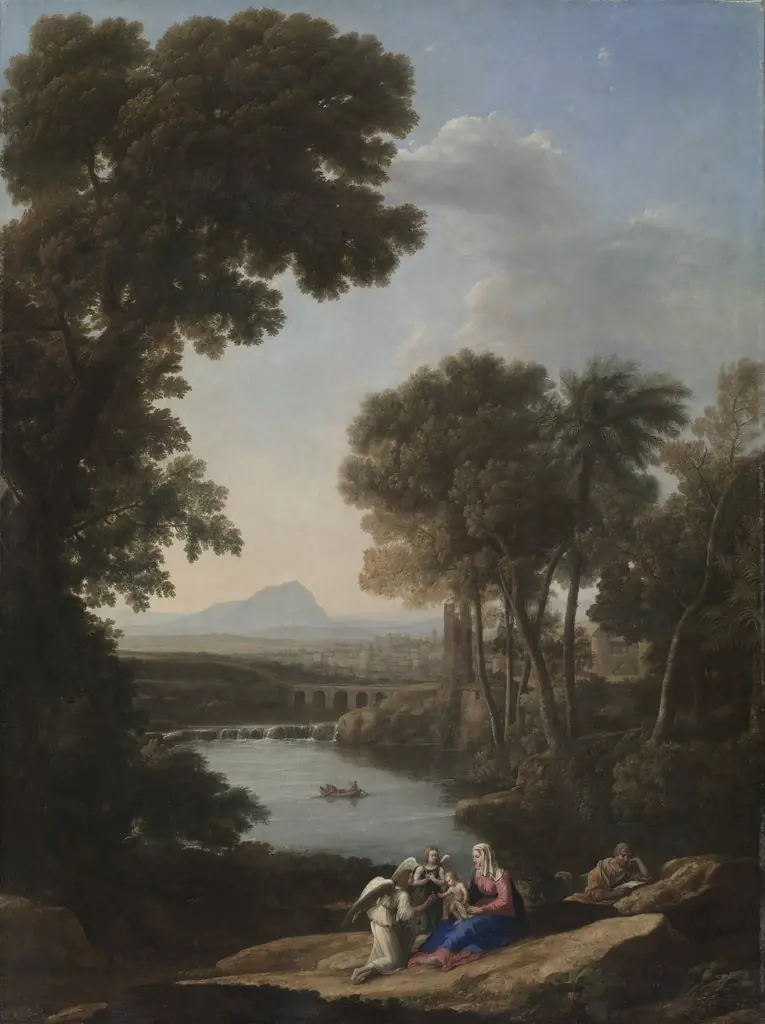 Rest on the Flight into Egypt
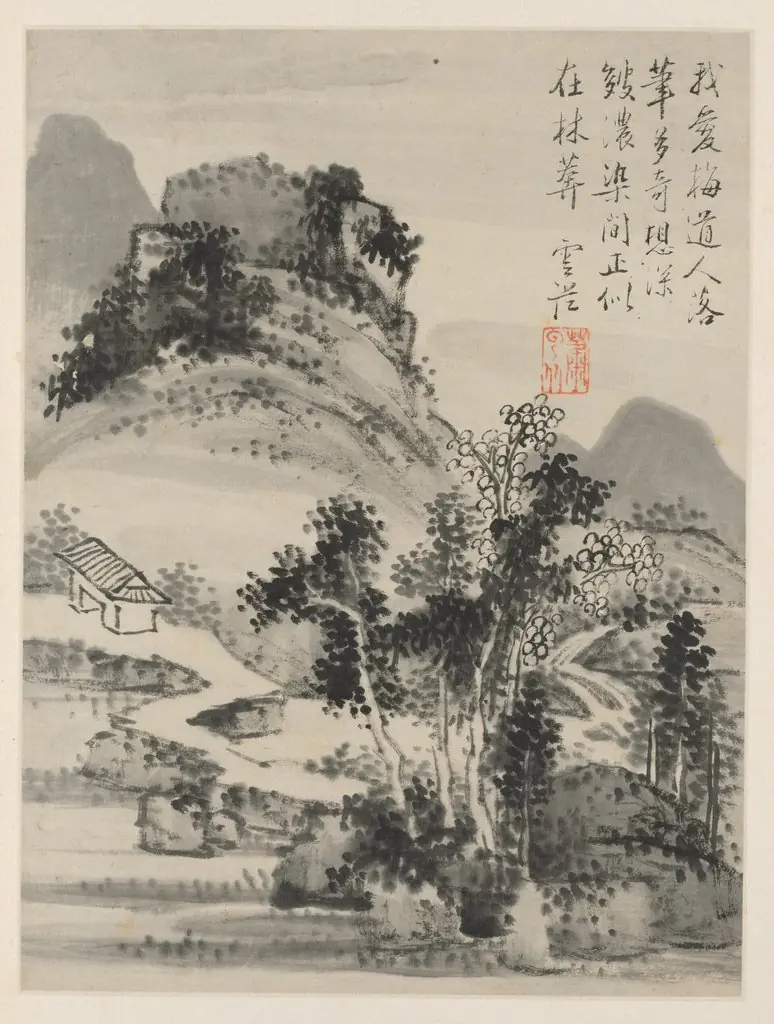 Album of Seasonal Landscapes, Leaf D (previous leaf 2)
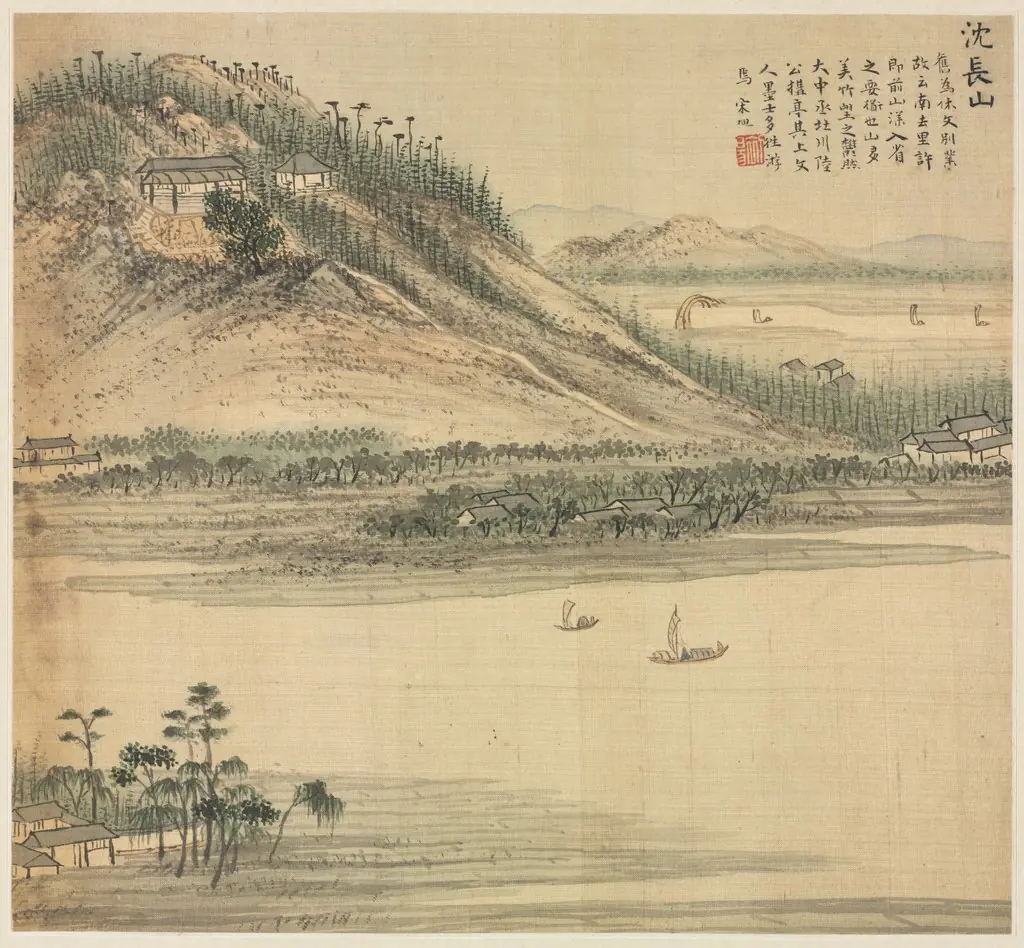 Mt. Shenchang
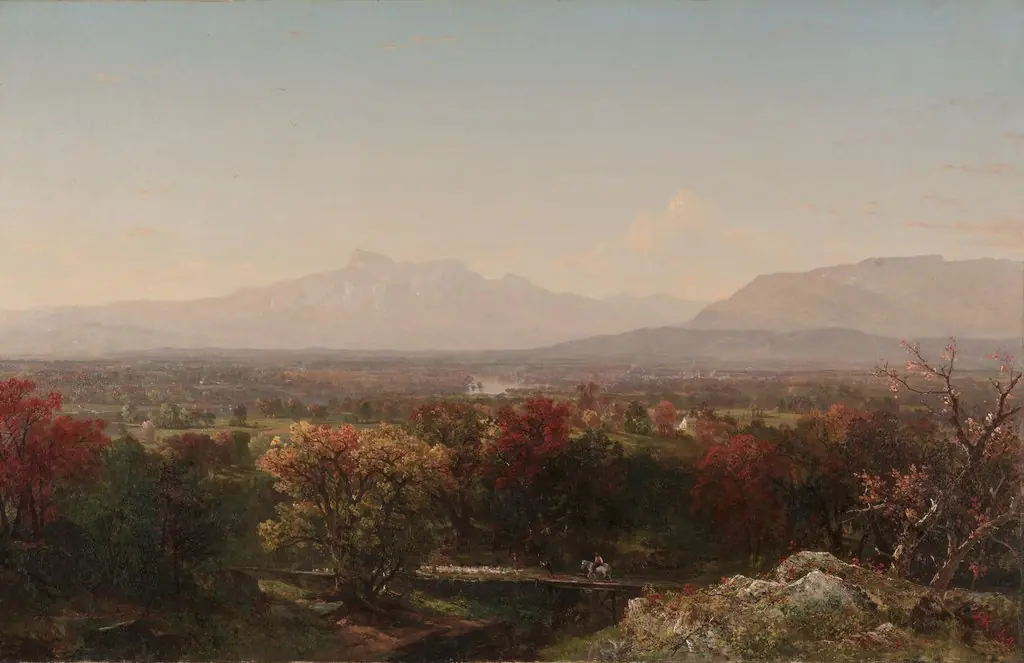 An October Day in the White Mountains
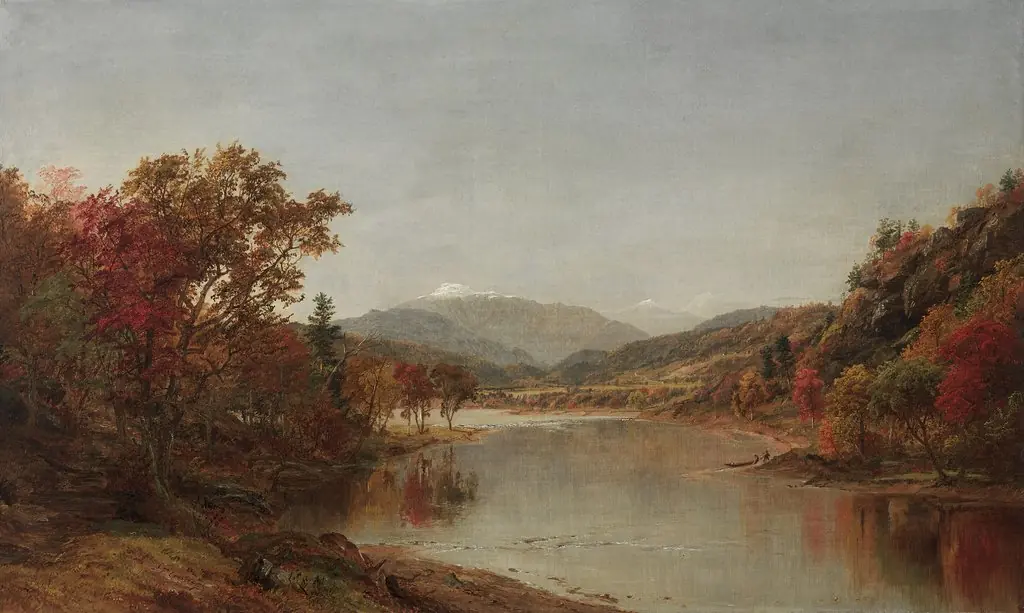 Mount Washington, New Hampshire
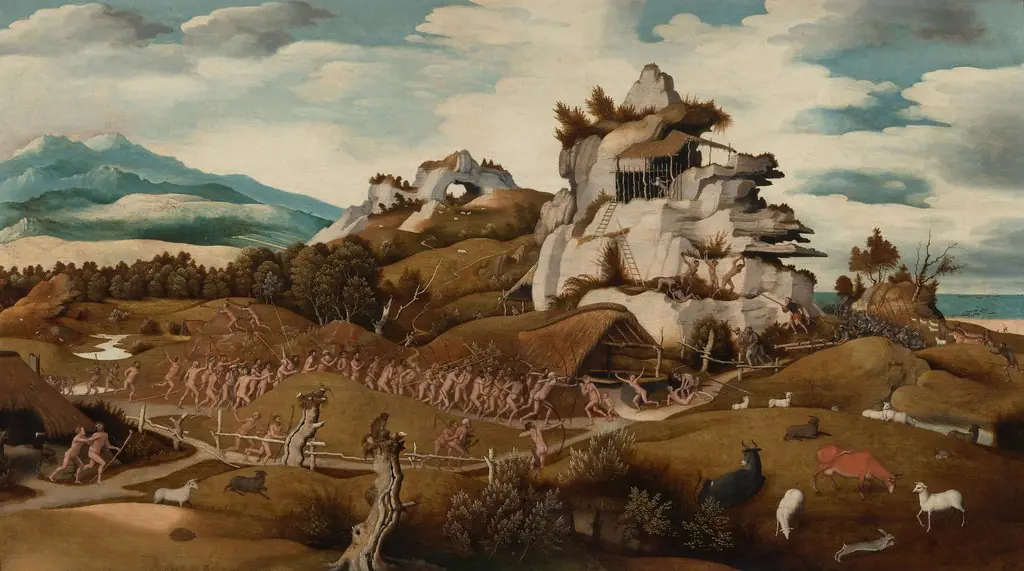 Landscape with a Scene of the Conquest of America
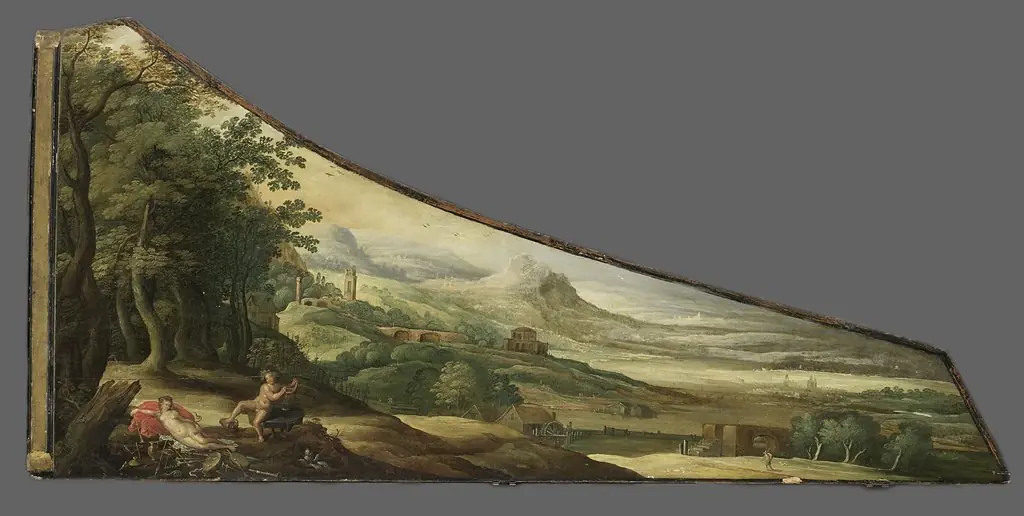 Death of Euridice
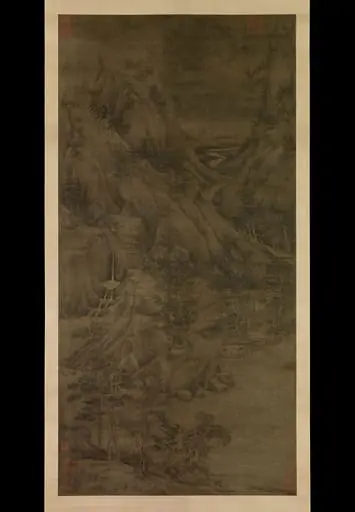 五代 傳董元 溪岸圖 軸|Riverbank
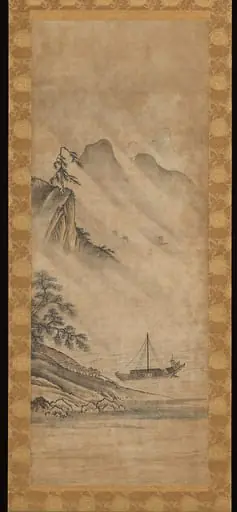 瀟湘八景図|Eight Views of the Xiao and Xiang Rivers
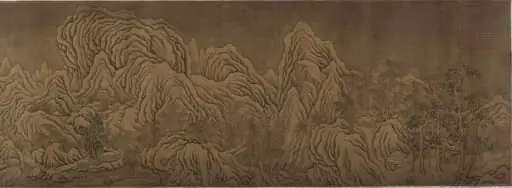 Untitled
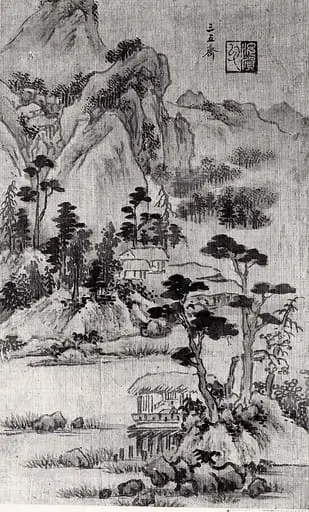 Untitled
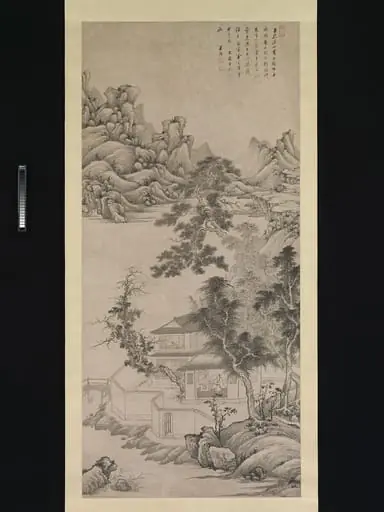 清 王鑑 倣巨然《溪山高士圖》 軸|Lofty Scholar among Streams and Mountains, in the manner of Juran
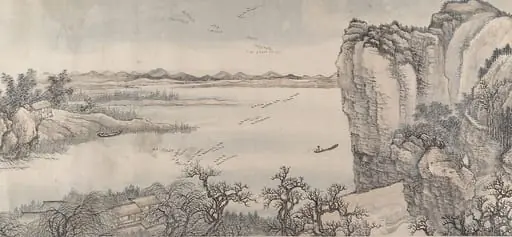 清 王翬 倣巨然燕文貴山水圖 卷|Landscape in the Style of Juran and Yan Wengui
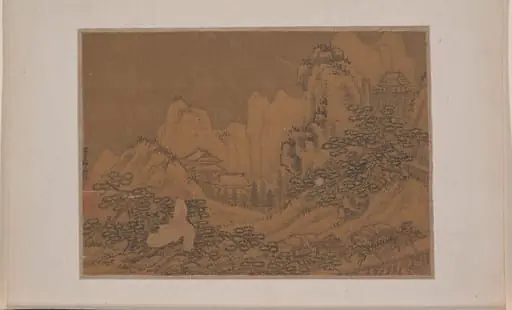 Untitled
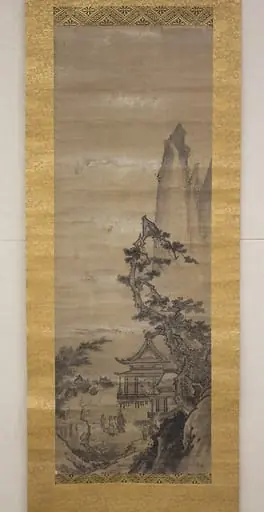 Untitled
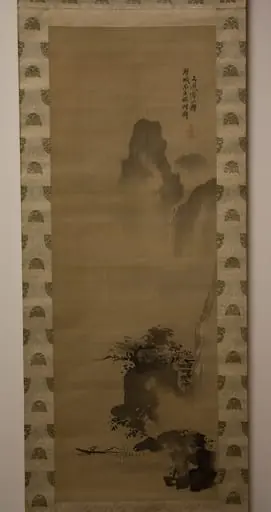 Untitled
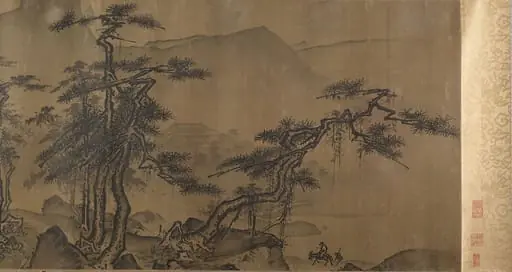 明/清 佚名 李遠(僞款) 仿夏珪江山清遠圖 卷|Landscape
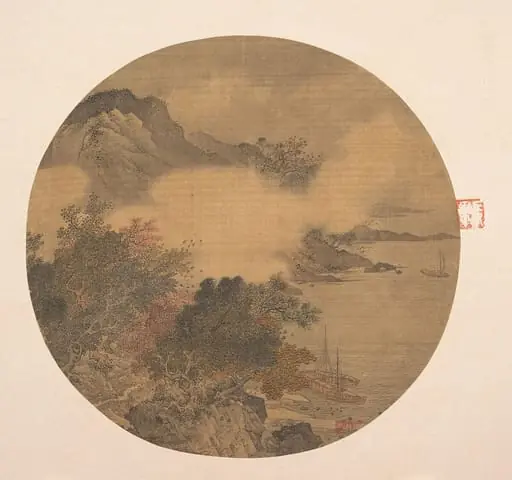 明 佚名 風雨艤舟圖 團扇|Misty Landscape
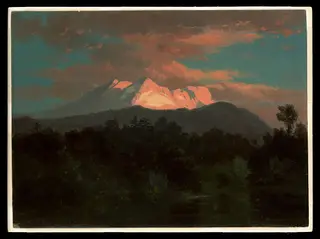 Mountain Range
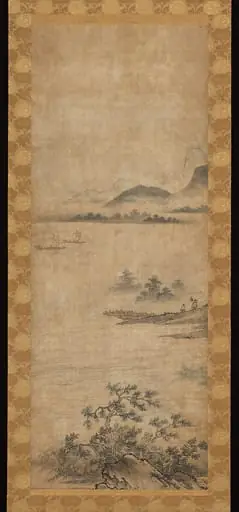 瀟湘八景図|Eight Views of the Xiao and Xiang Rivers
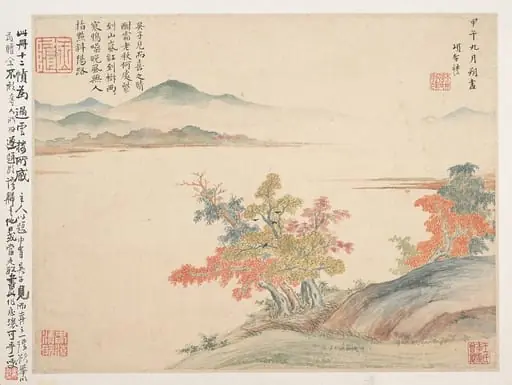 明/清 項聖謨 秋景圖 冊頁|Autumn Landscape, leaf from Album for Zhou Lianggong
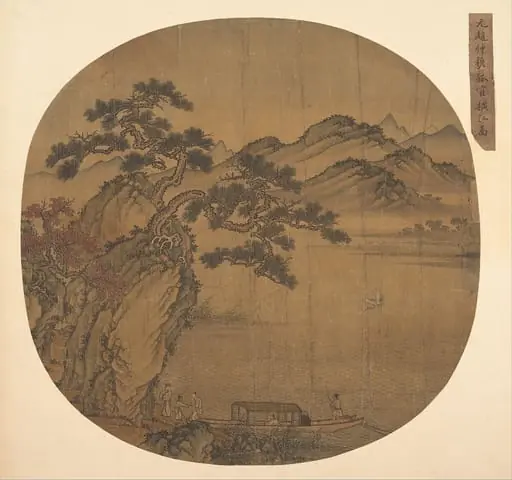 元/明 佚名 舊傳趙雍 倣盛懋 蘇軾後赤壁賦圖 團扇|元/明 佚名 後赤壁賦圖 扇|Illustration of Su Shi's "Second Ode on the Red Cliff"
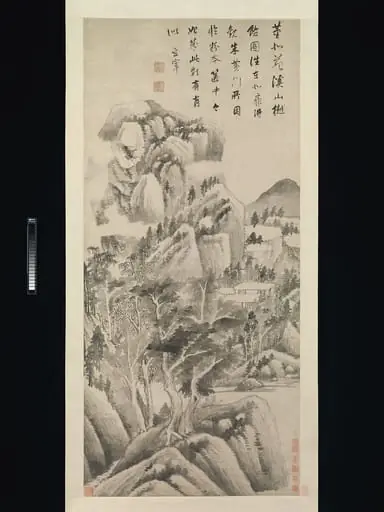 明 董其昌 溪山樾館圖 軸|Shaded Dwellings among Streams and Mountains
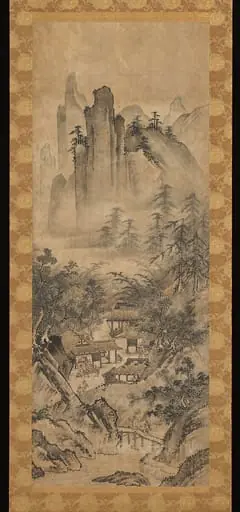 瀟湘八景図|Eight Views of the Xiao and Xiang Rivers
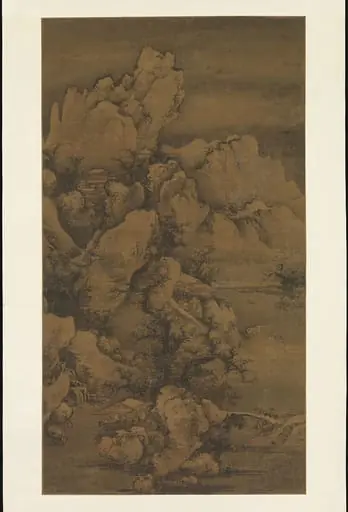 元 姚彥卿 (廷美) 雪山行旅圖 軸|요언경, 눈 덮인 산 속 나그네 중국 원|Traveling through Snow-Covered Mountains
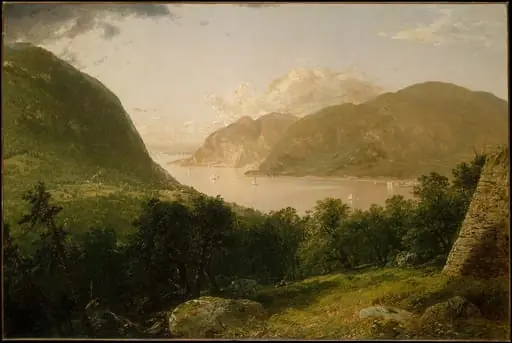 Hudson River Scene
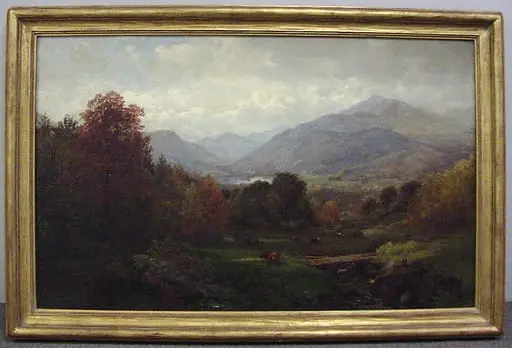 Bouquet Valley, Adirondack Mountains
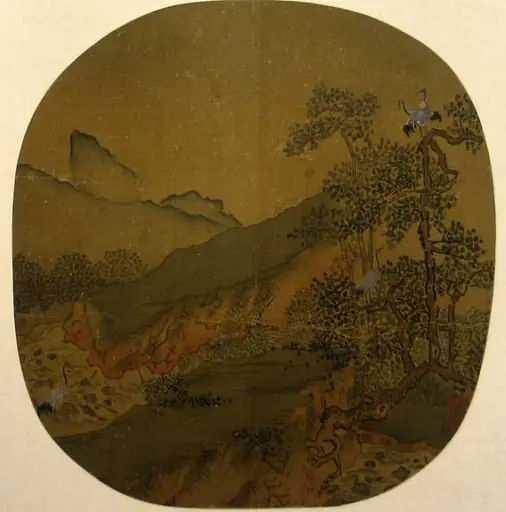 Untitled
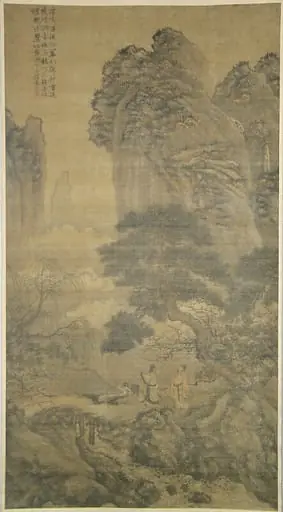 明 謝時臣 谿山春曉圖 軸|Spring Morning in the Mountains
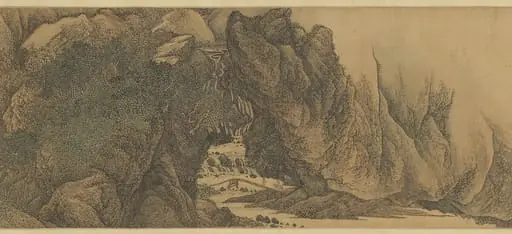 清 王翬 太行山色圖 卷|The Colors of Mount Taihang
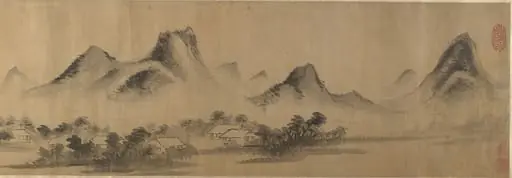 清 佚名 倣董其昌 倣米氏雲山圖 卷|Cloudy Mountain in the Style of Mi Fu (1052–1107)
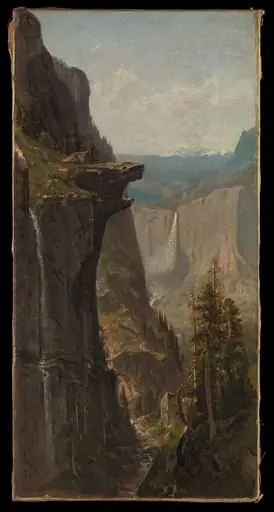 Yosemite Falls, from Glacier Point
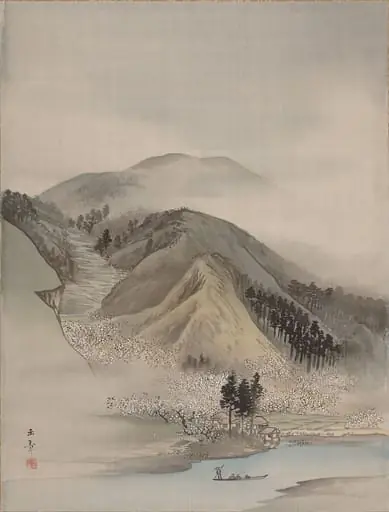 Untitled
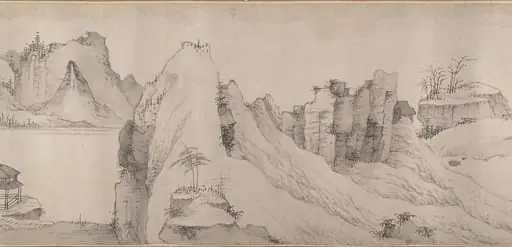 清 傳弘仁 寺橋山色圖 卷|River Scene in Winter
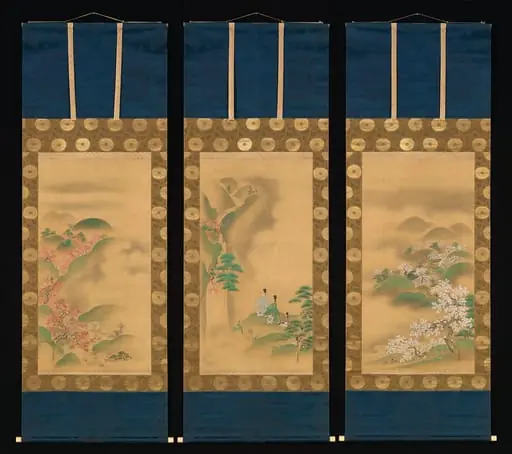 狩野常信筆 滝見業平図|Nunobiki Waterfall, Mount Yoshino, and Tatsuta River
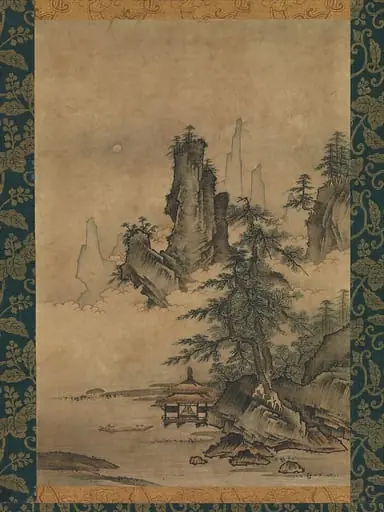 山水図|Landscape
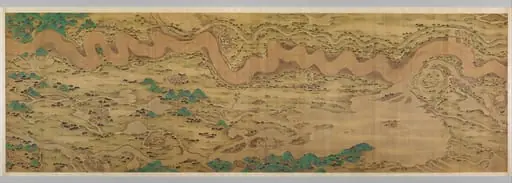 清 佚名 黃河萬里圖 卷|Ten Thousand Miles along the Yellow River
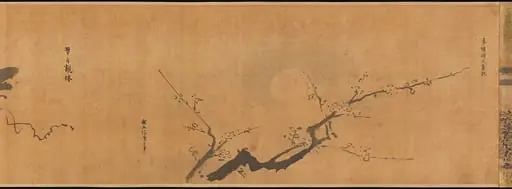 狩野探幽筆 『画苑』|Famous Themes for Painting Study Known as “The Garden of Painting” (Gaen)
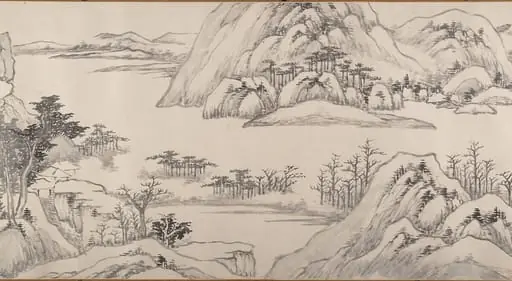 Untitled
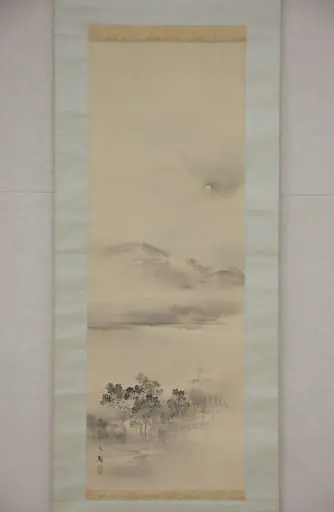 Untitled
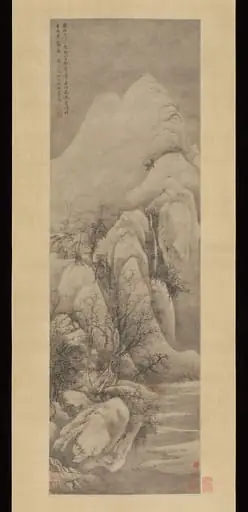 清 王翬 倣李成雪霽圖 軸|Snow Clearing: Landscape after Li Cheng
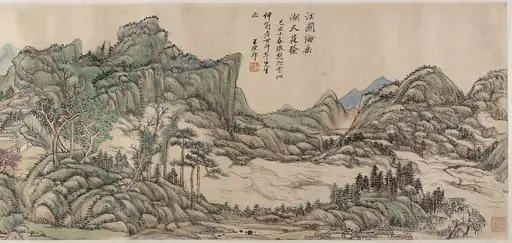 清 王原祁 江國垂綸圖 卷|Fishing in River Country at Blossom Time
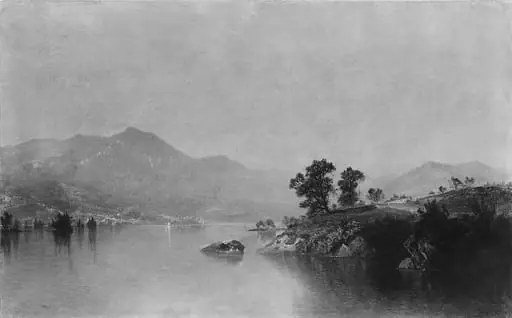 Lake George, New York
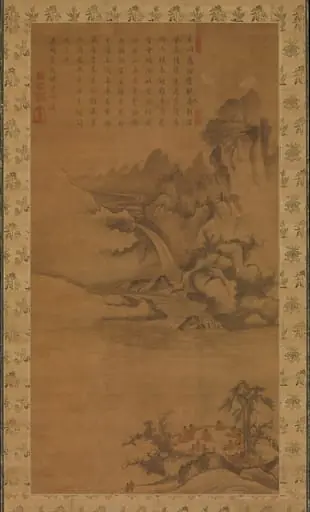 같은 해에 태어난 관리들의 친목 모임 조선|同庚契會圖 朝鮮|Gathering of government officials
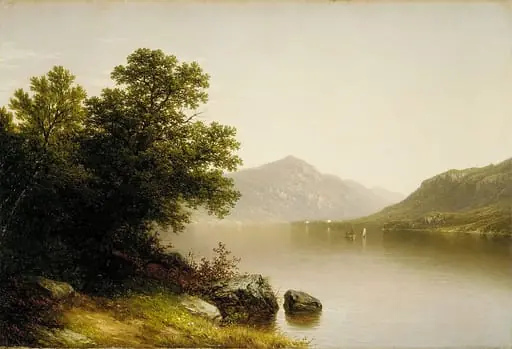 Lake George
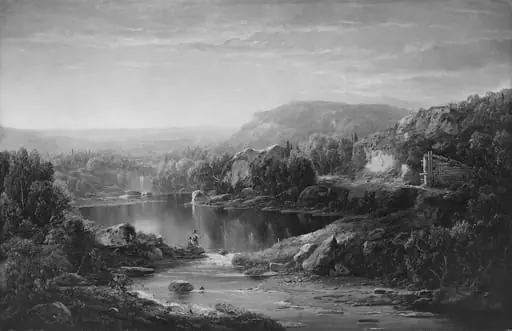 Landscape with Waterfall and Figures
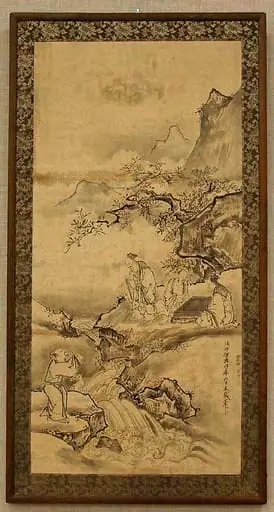 Untitled
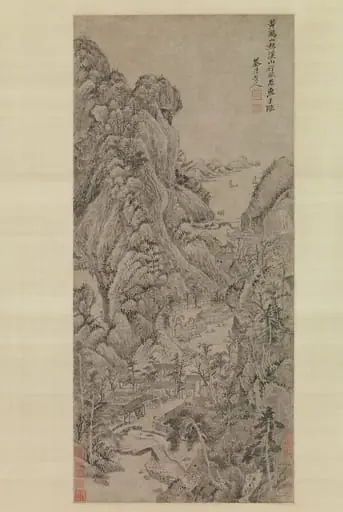 清 吳歷 倣王蒙溪山行旅圖 軸|Travelers among Streams and Mountains
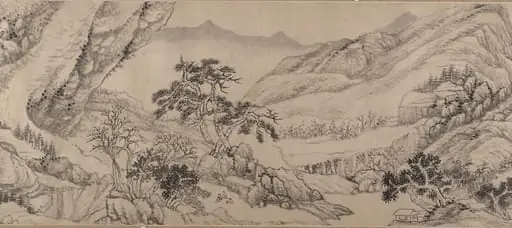 清 柳堉 山水圖 卷|Traveling Amid Streams and Mountains
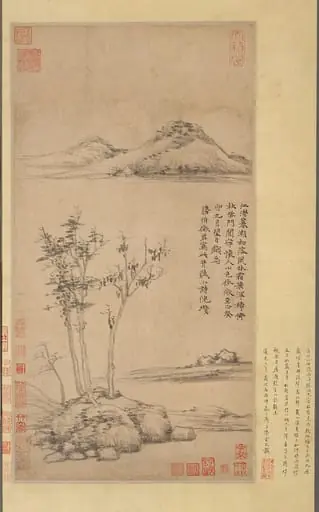 元 倪瓚 江渚風林圖 軸|Wind among the Trees on the Riverbank
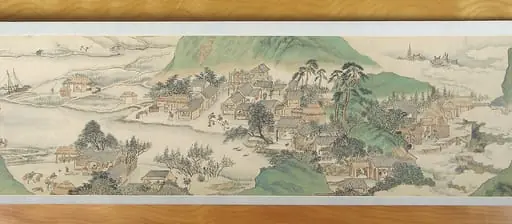 明/清 張宏 桃源勝概圖 卷|Peach Blossom Spring
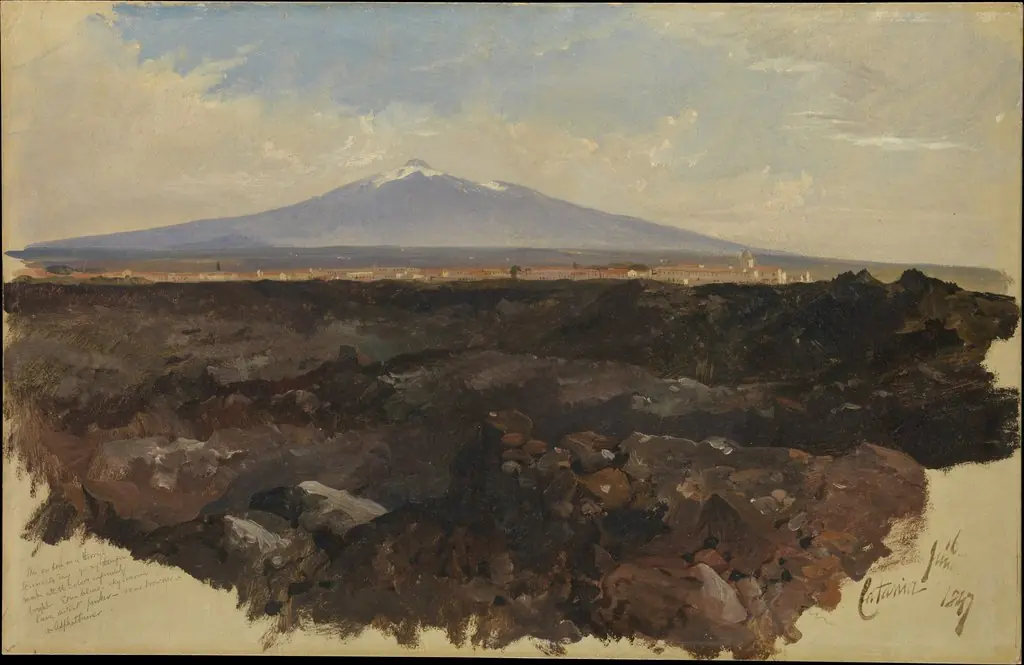 Catania and Mount Etna
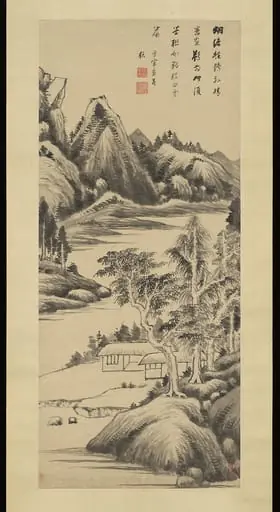 Untitled
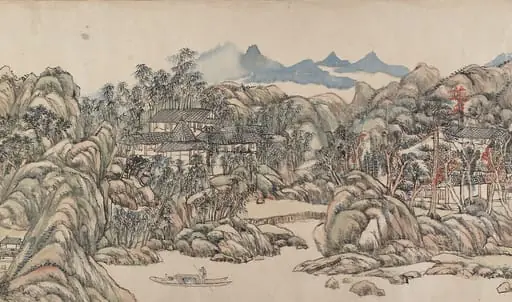 清 王原祁 輞川圖 卷|Wangchuan Villa
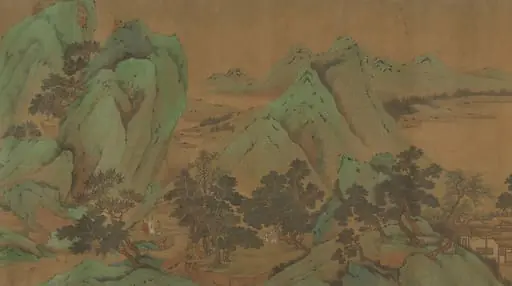 明/清 佚名 劉松年 偽款 山水人物圖|Garden estate
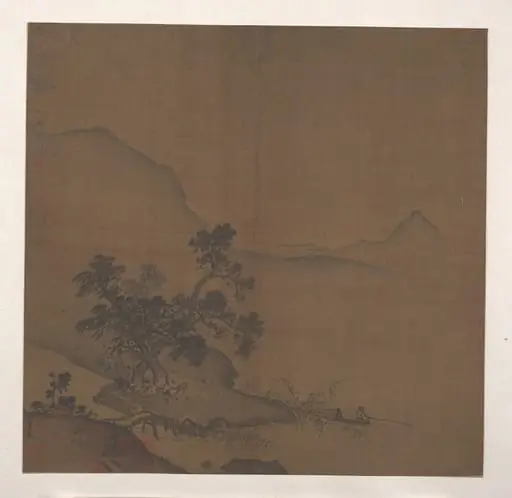 Untitled
 明/清 佚名 趙伯駒(僞款) 漢宮春曉圖 卷|Spring Morning at the Palace of the Han Emperors
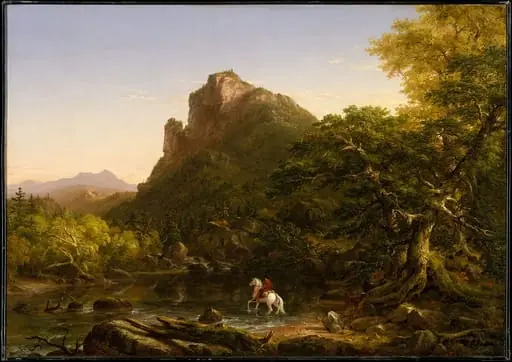 The Mountain Ford
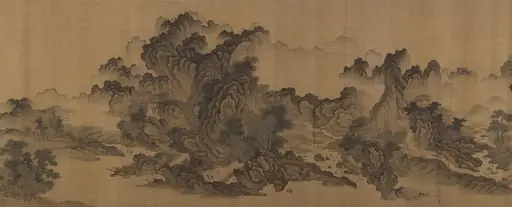 清 佚名 倣郭熙 溪山無盡圖 卷|Streams and Mountains Without End
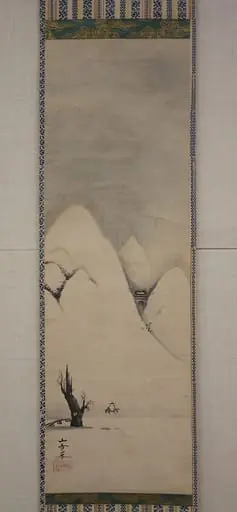 雪中山水図|Winter Landscape
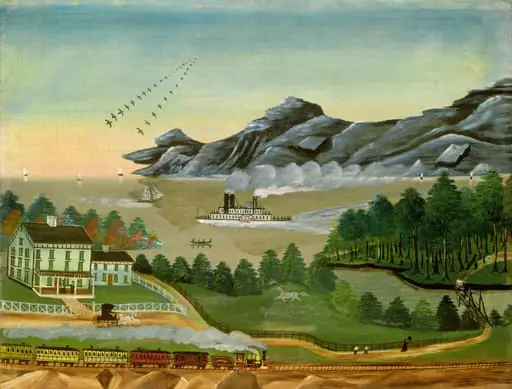 Geese in Flight
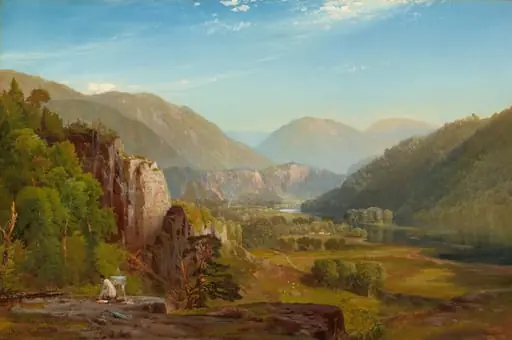 The Juniata, Evening
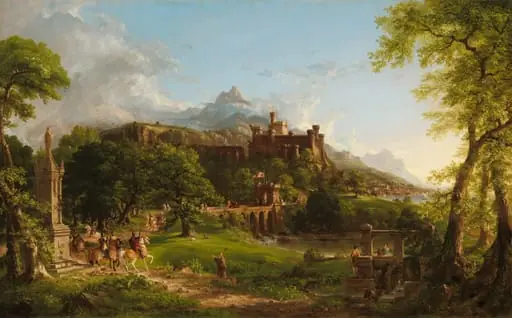 The Departure
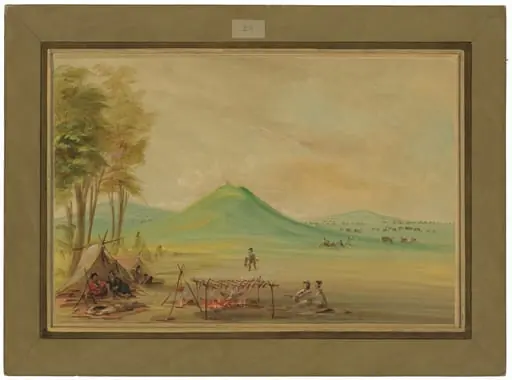 Expedition Encamped on a Texas Prairie. April 1686
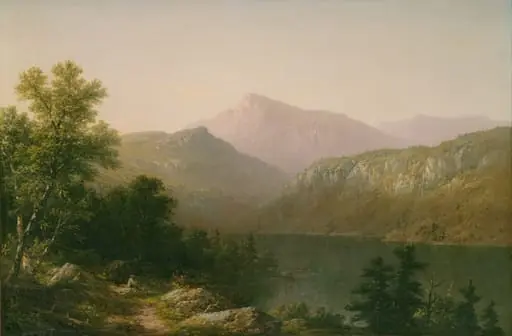 View on Lake George
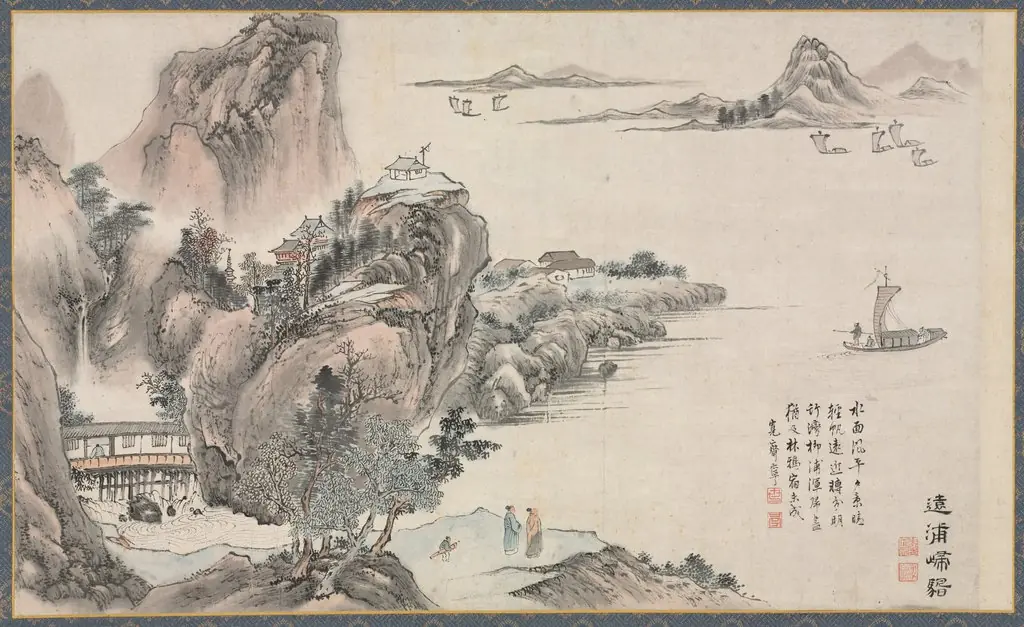 Returning Sails off a Distant Shores, from Eight Views of Xiao-Xiang
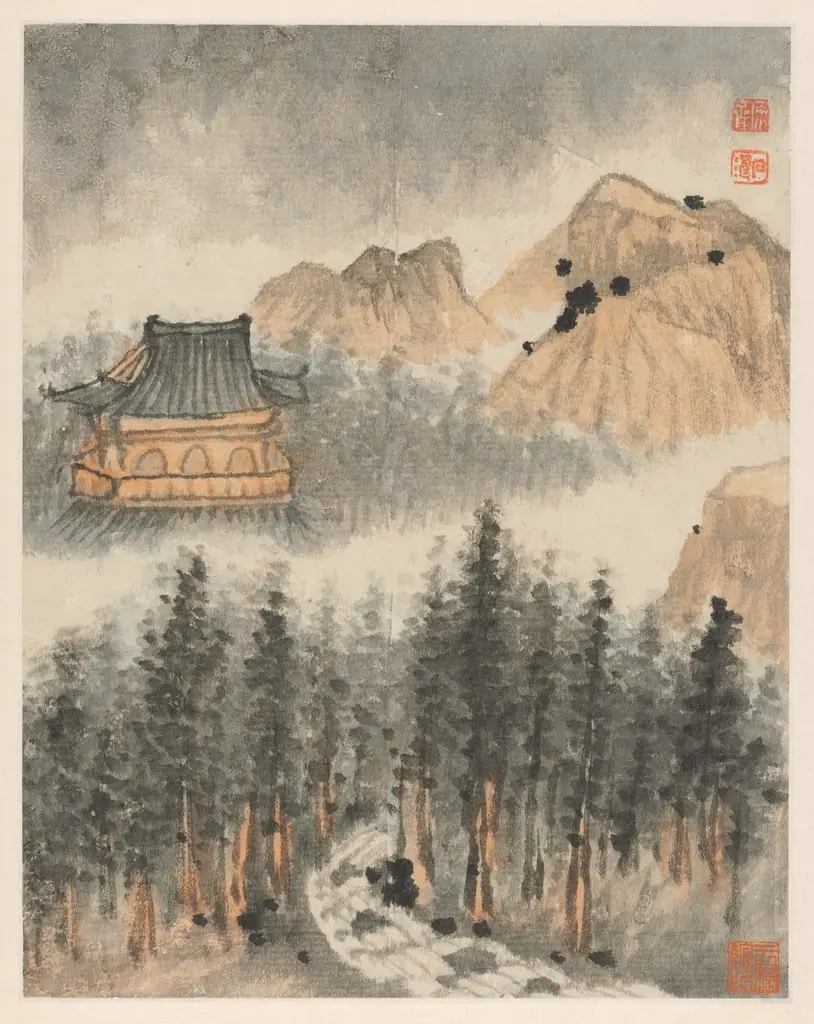 Reminiscences of Qinhuai River
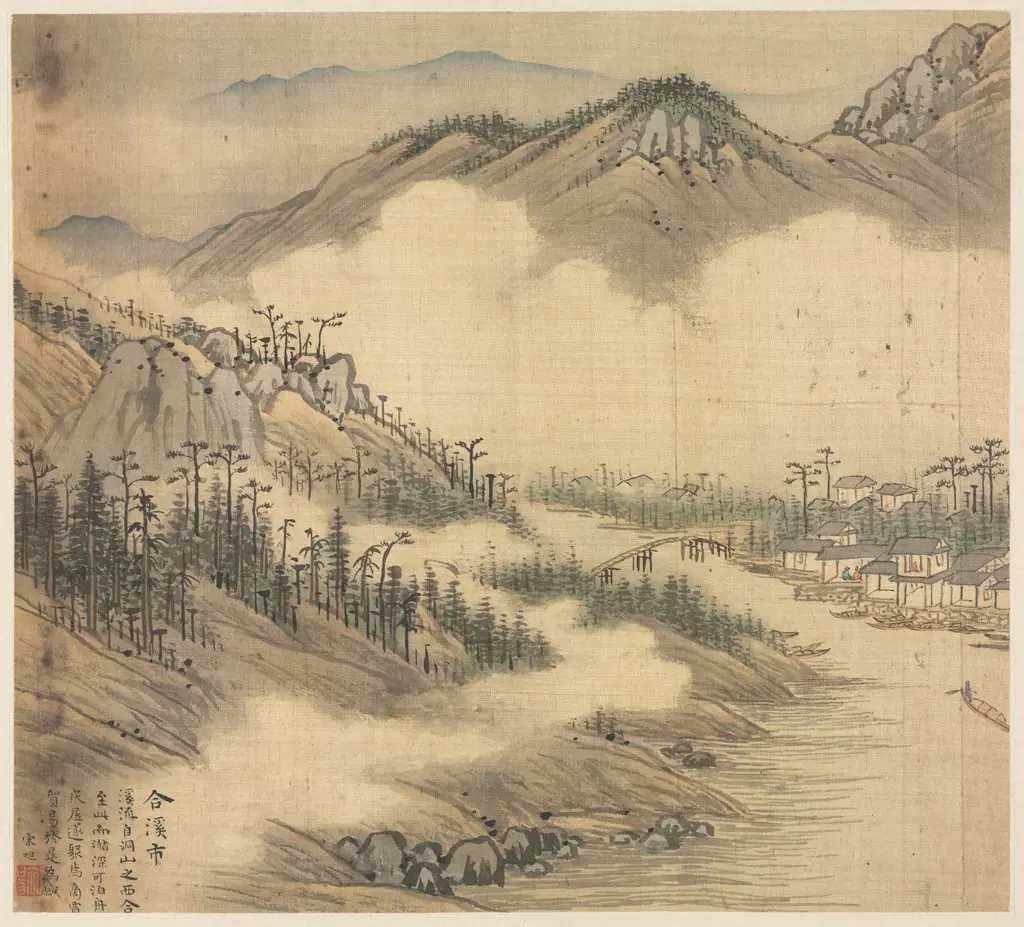 Hexi
Hexi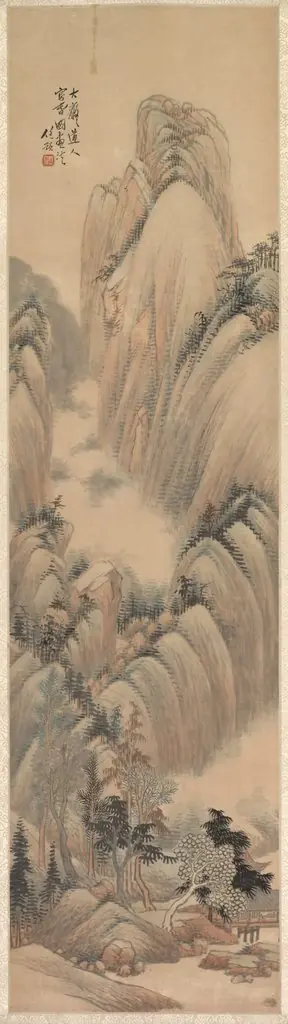 Landscape
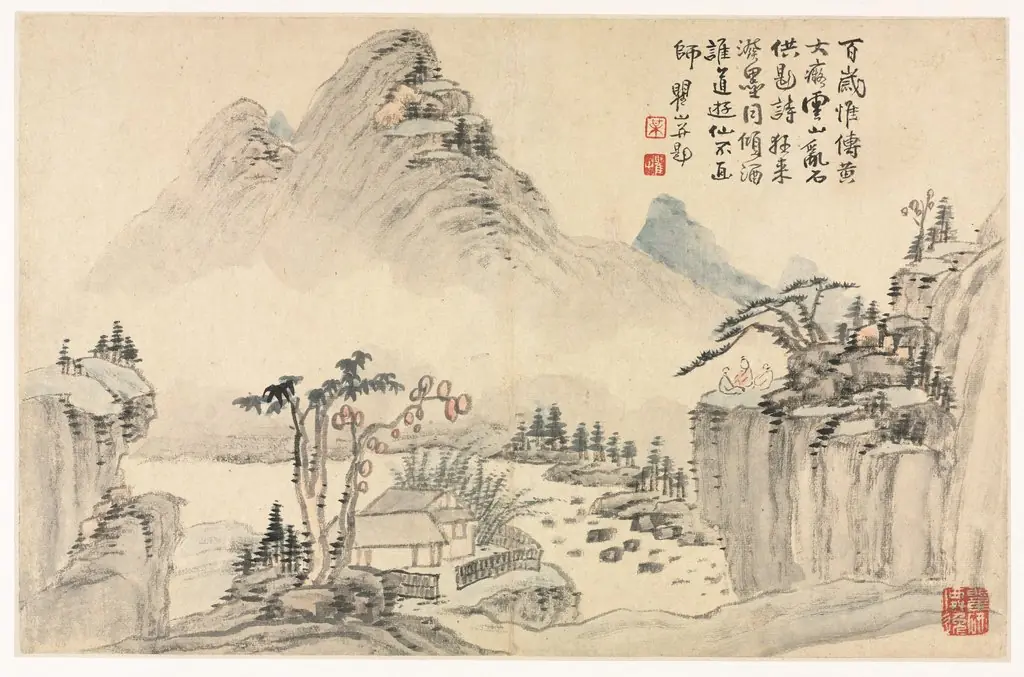 Landscapes in Various Styles after Old Masters
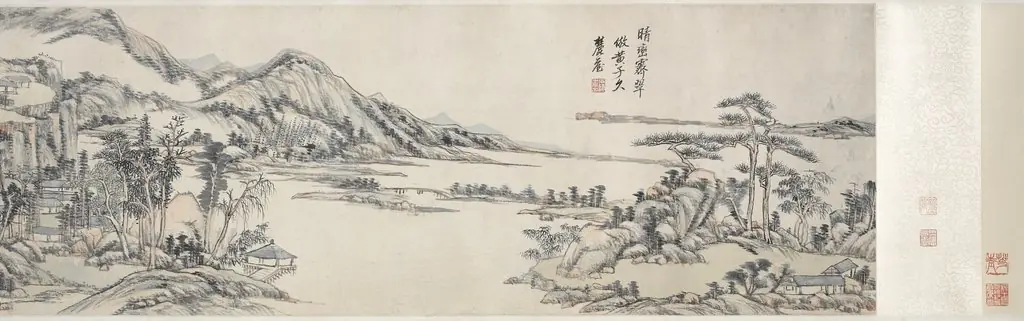 Green Peaks under Clear Sky: After Huang Gongwang
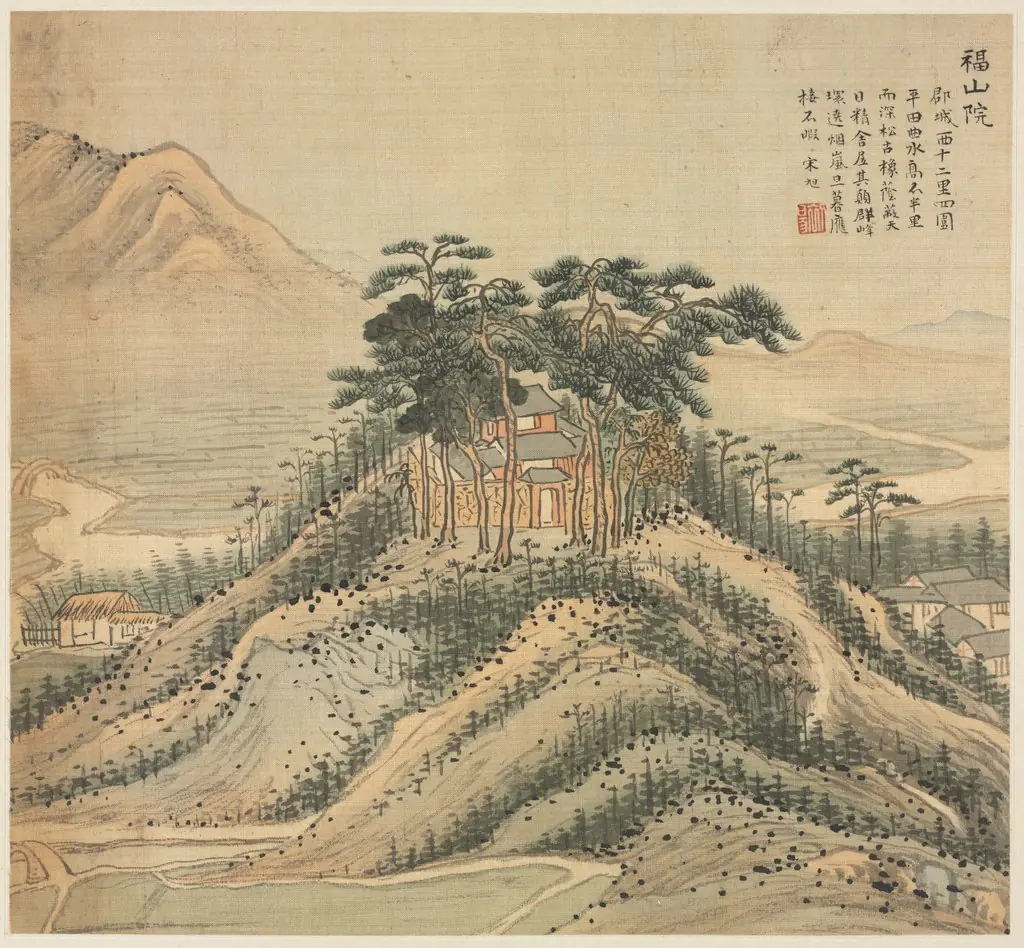 Fushan Monastery
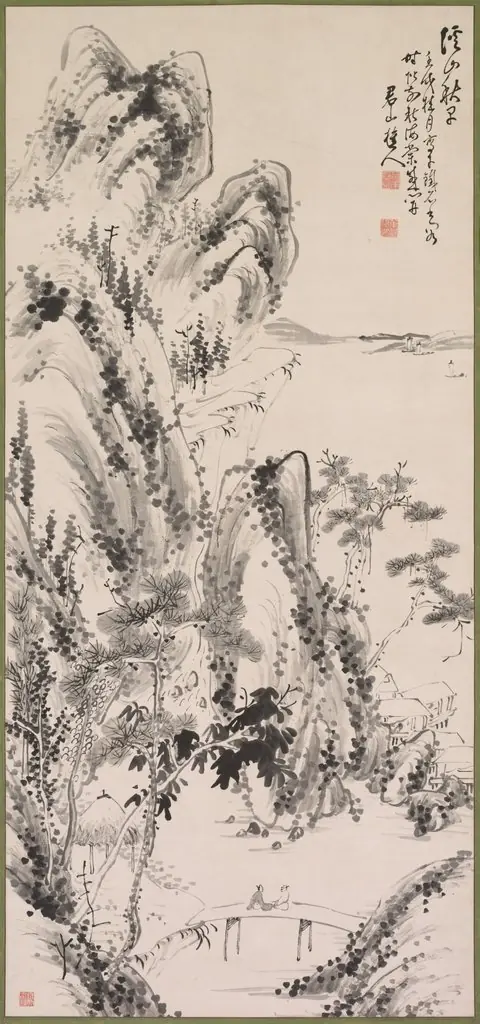 Landscape with Figures
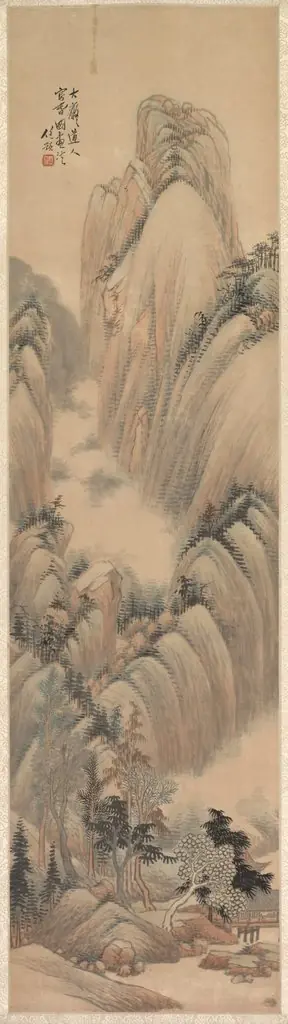 Landscapes
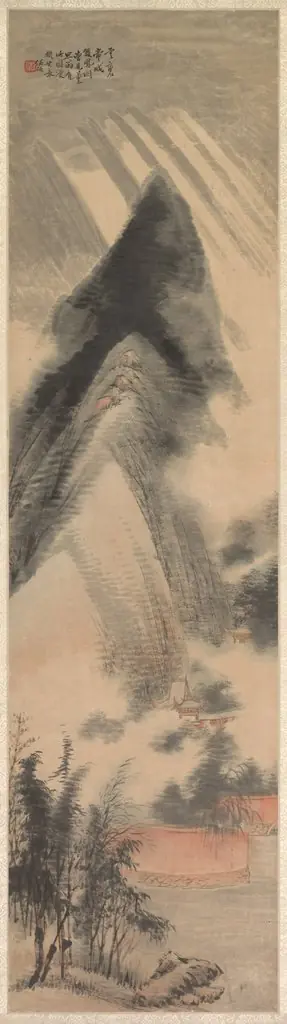 Landscape
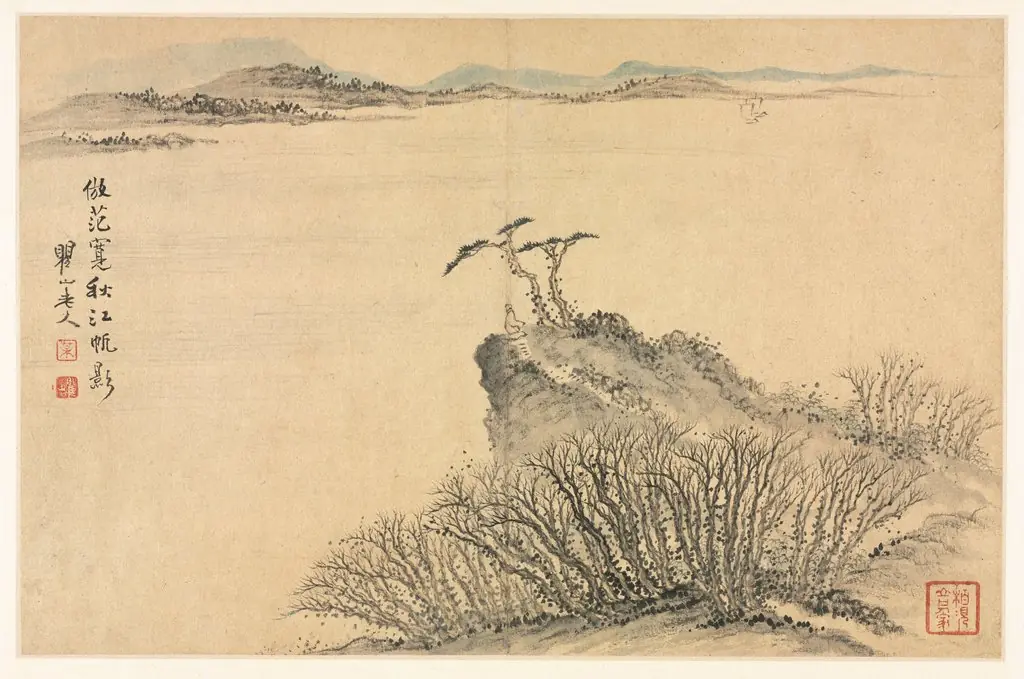 Landscapes in Various Styles after Old Masters
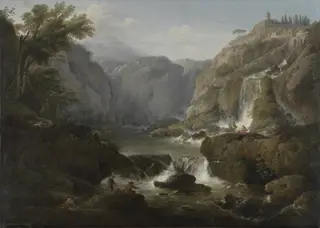 The Waterfalls at Tivoli
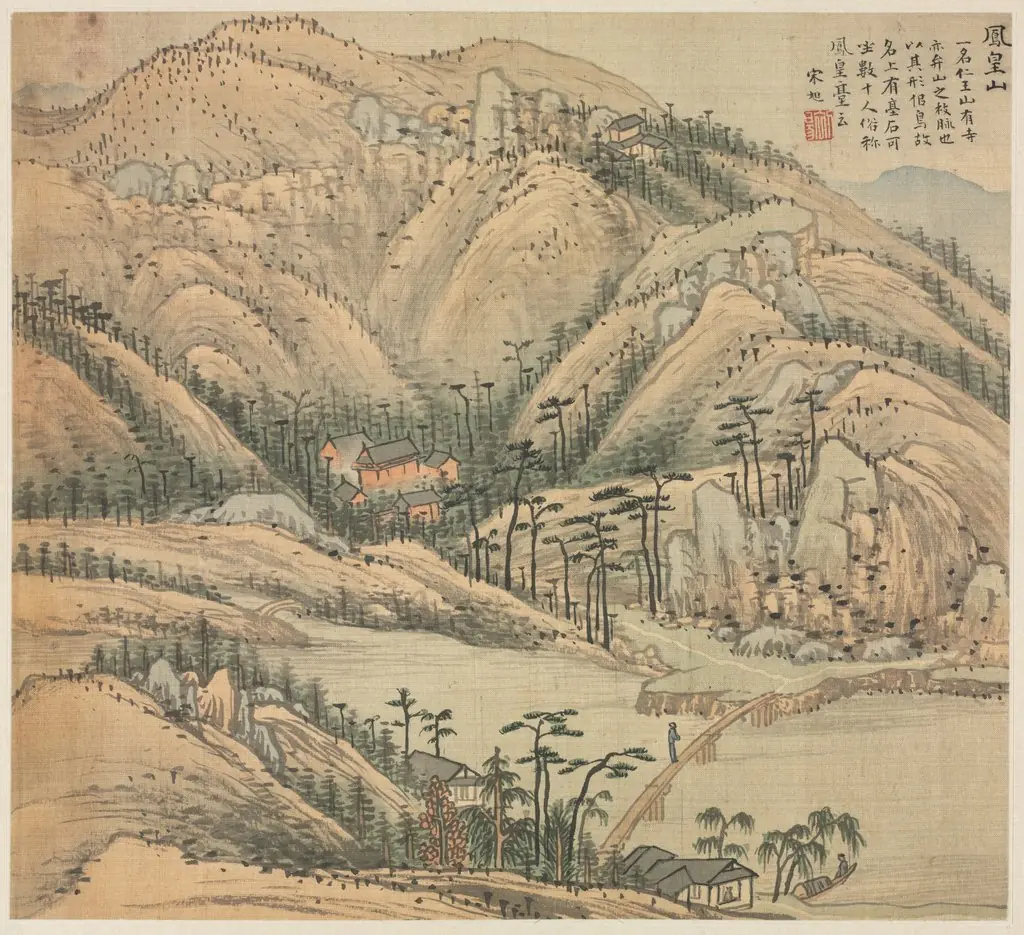 Mt. Fenghuang (Mt. Phoenix)
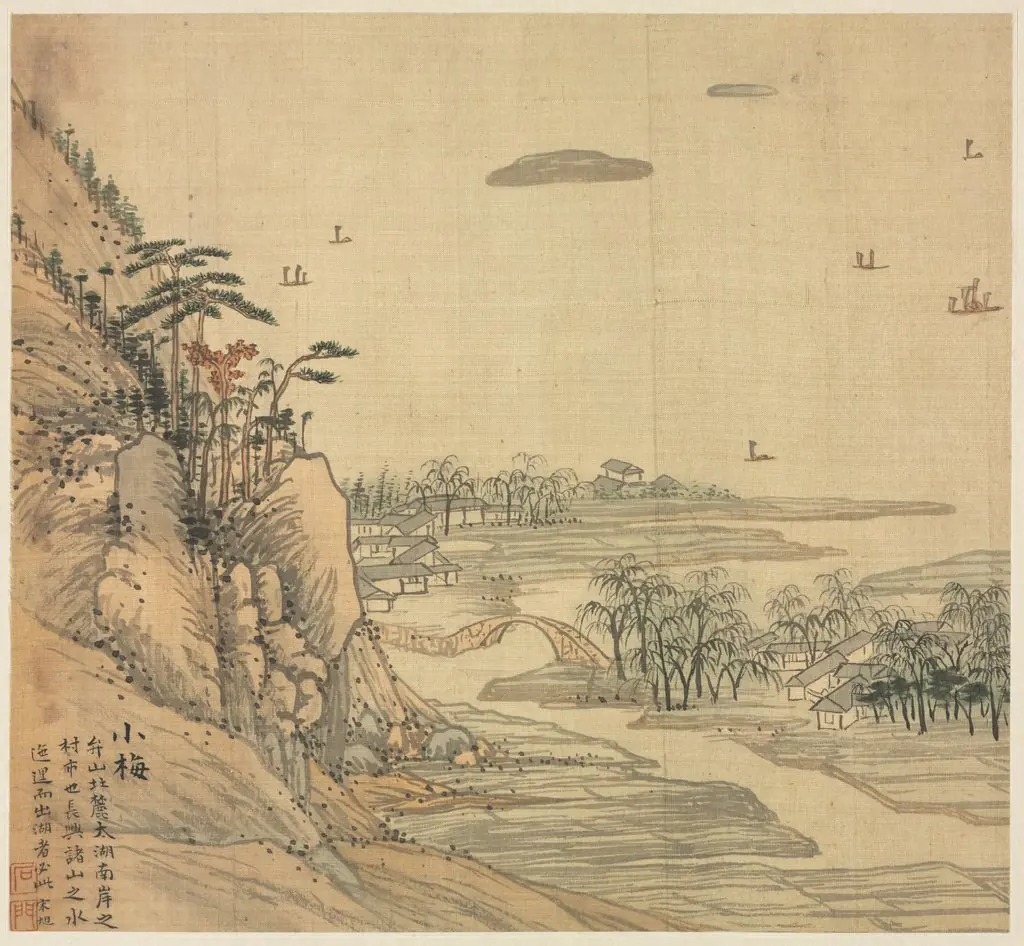 Xiaomei
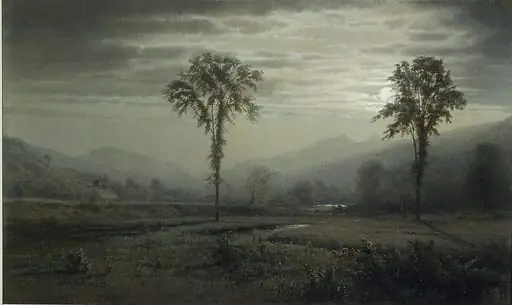 Moonlight on Mount Lafayette, New Hampshire
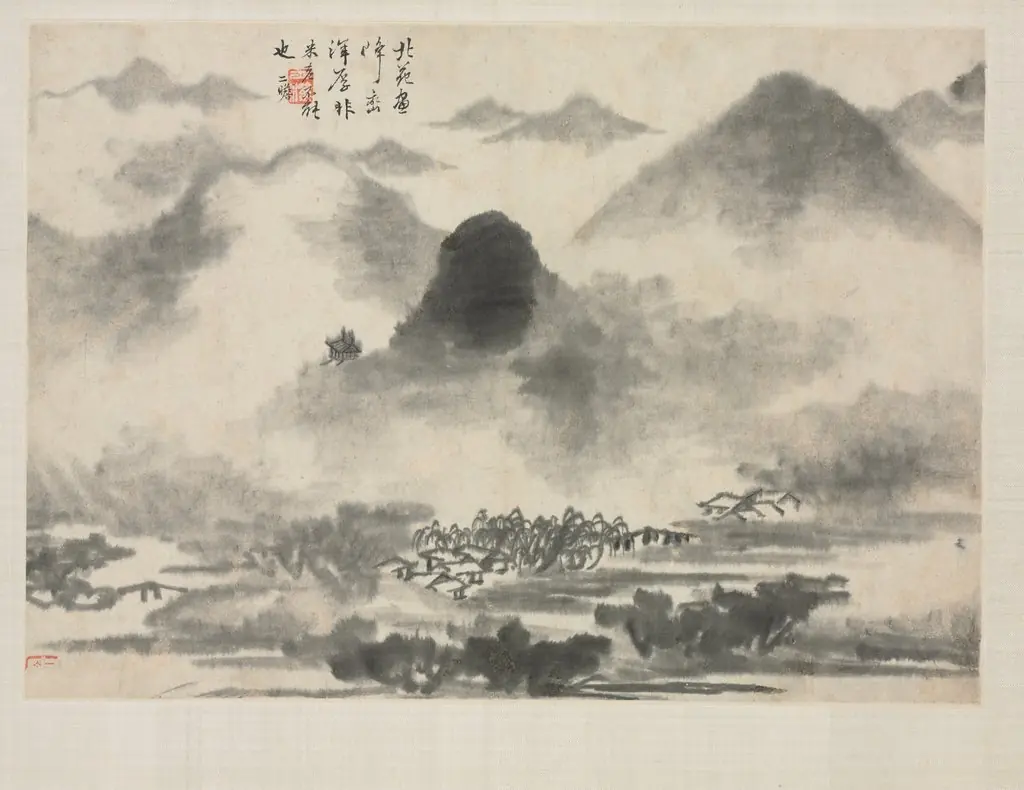 Landscape Album in Various Styles: Landscape after Mi Fei
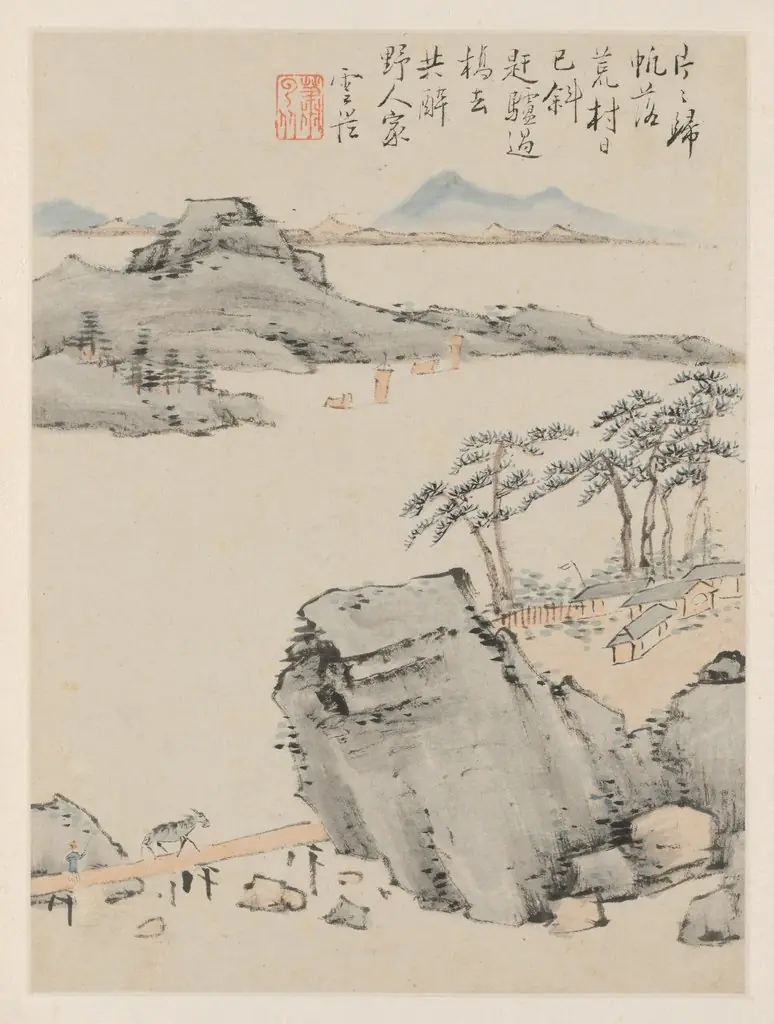 Album of Seasonal Landscapes, Leaf C (previous leaf 6)
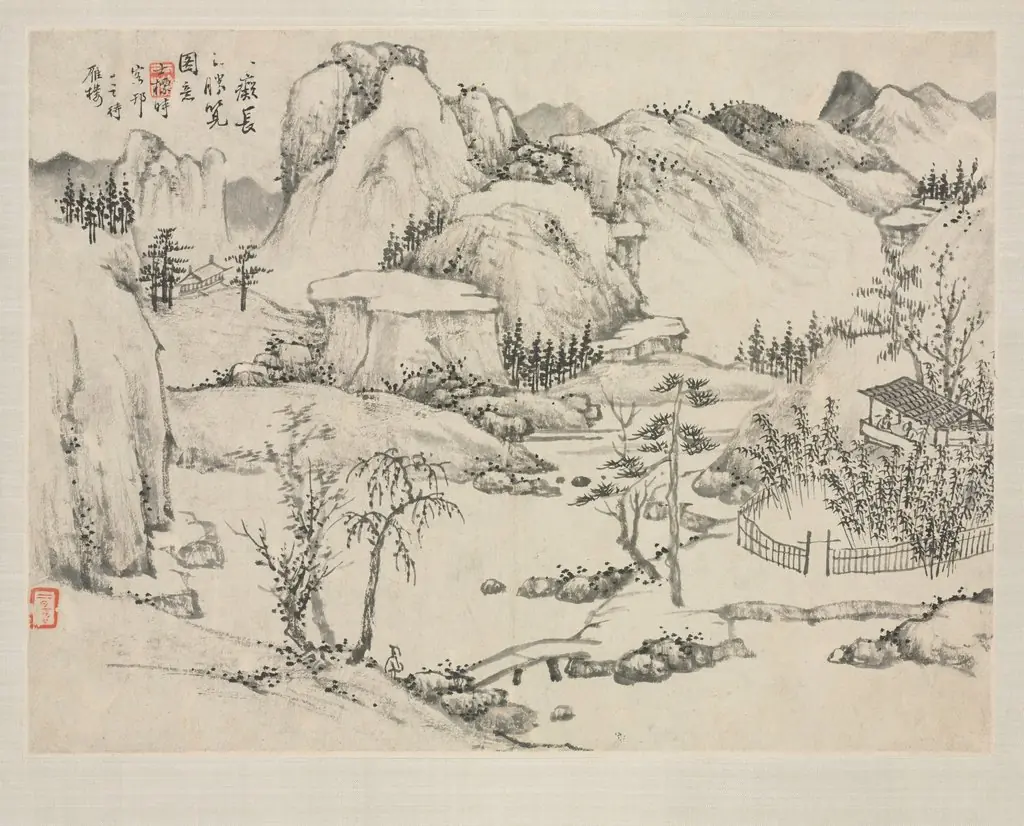 Landscape Album in Various Styles: Scenery of Mt. Changbai after Huang Gongwang
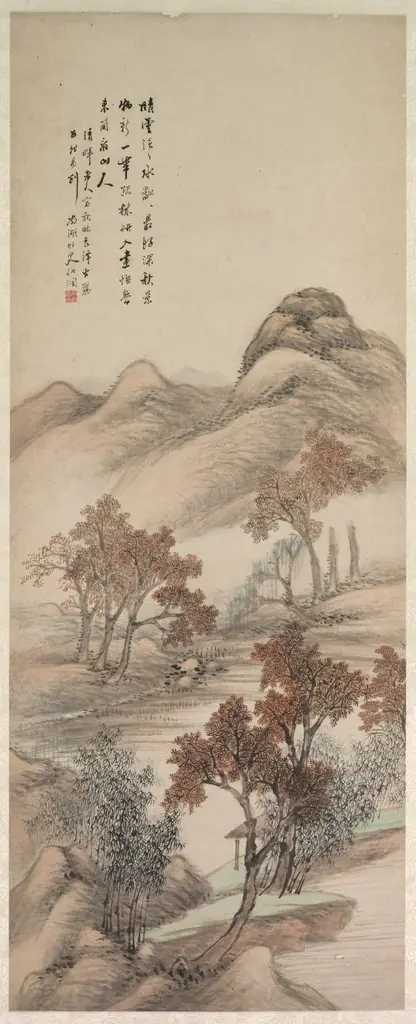 Autumn Landscape
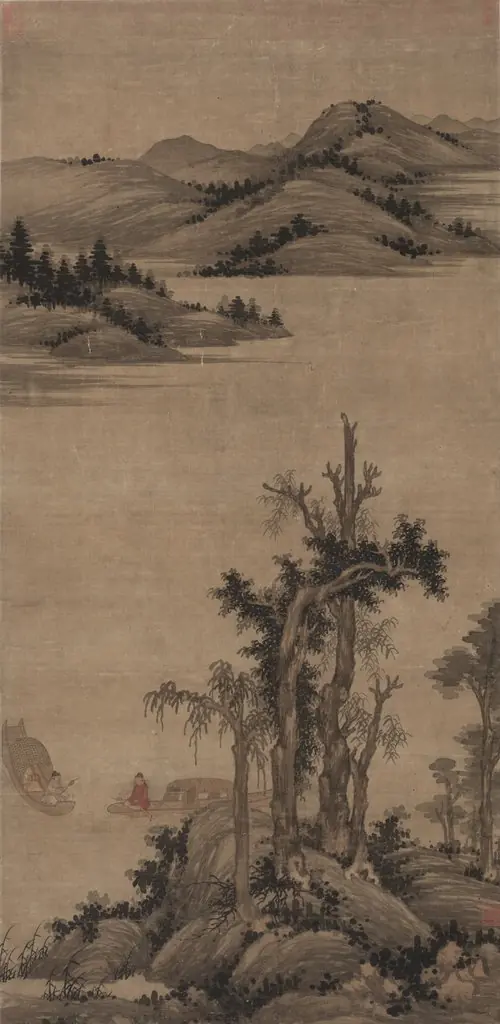 Fishermen-Hermits in Stream and Mountain
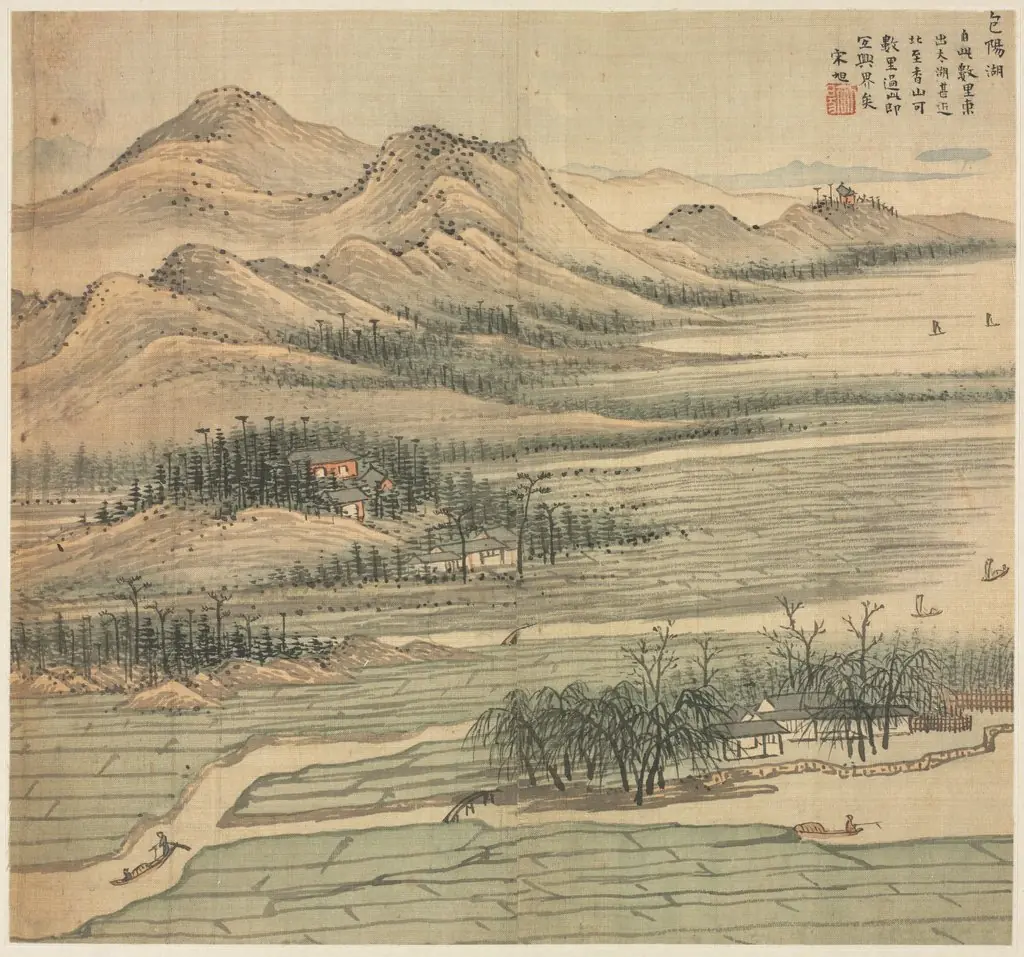 Baoyang Lake
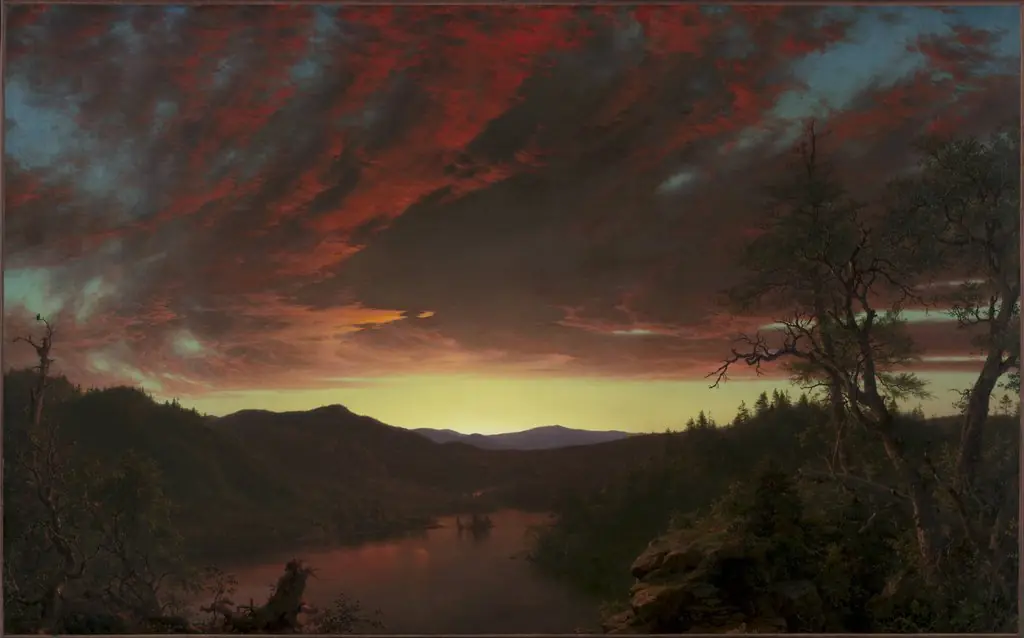 Twilight in the Wilderness
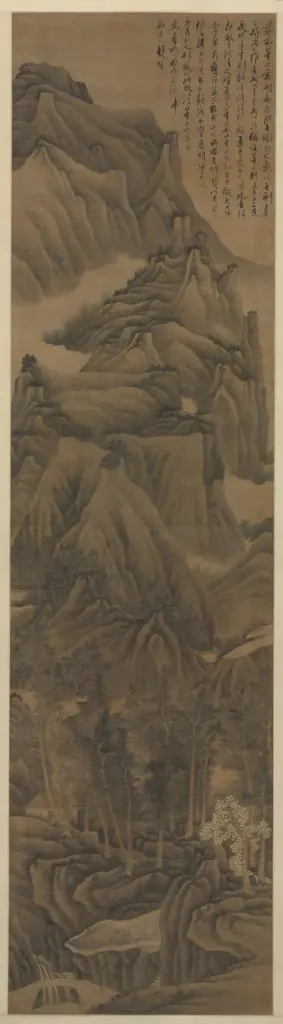 Landscape in the Style of Dong Yuan and Juran
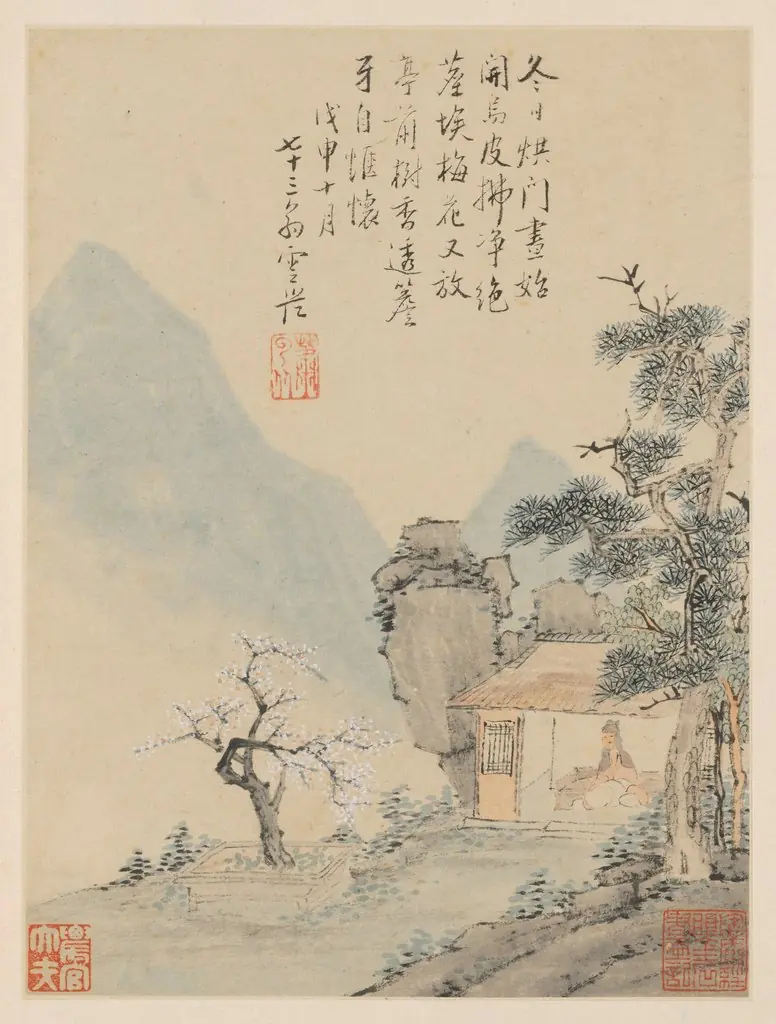 Album of Seasonal Landscapes, Leaf H (previous leaf 8)
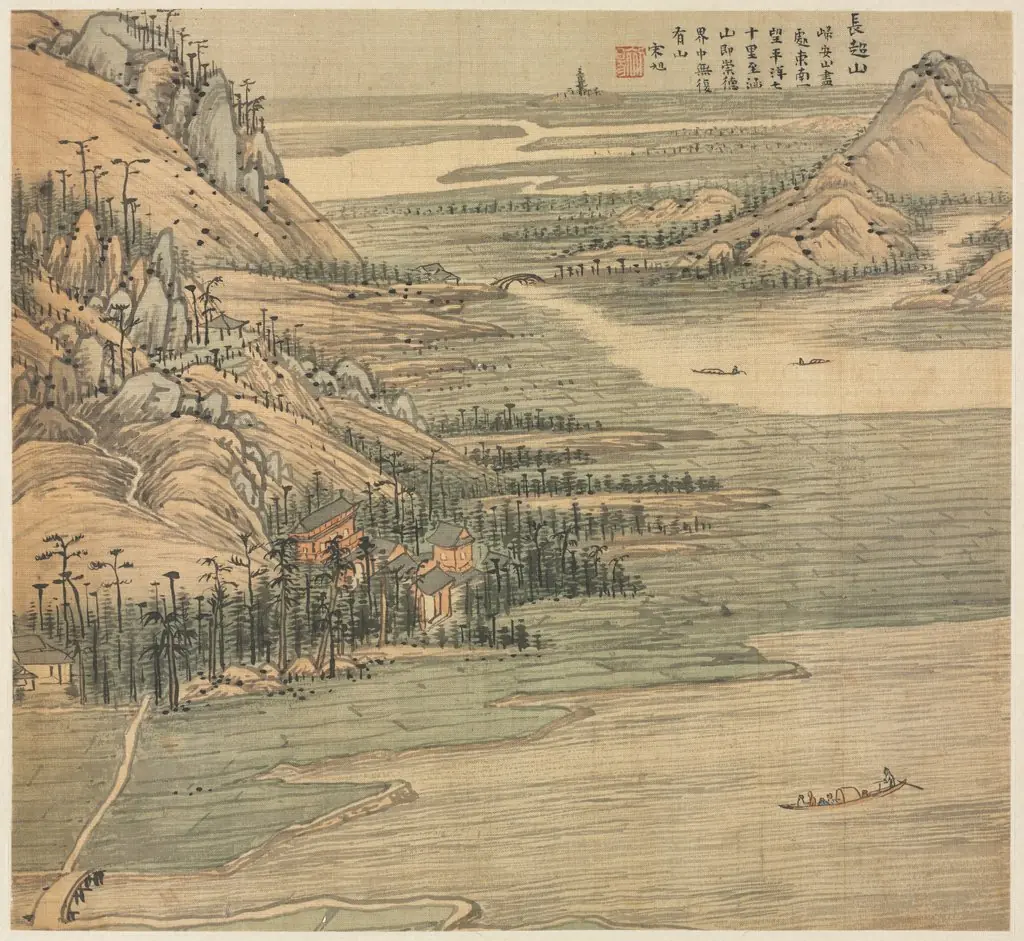 Mt. Changchao
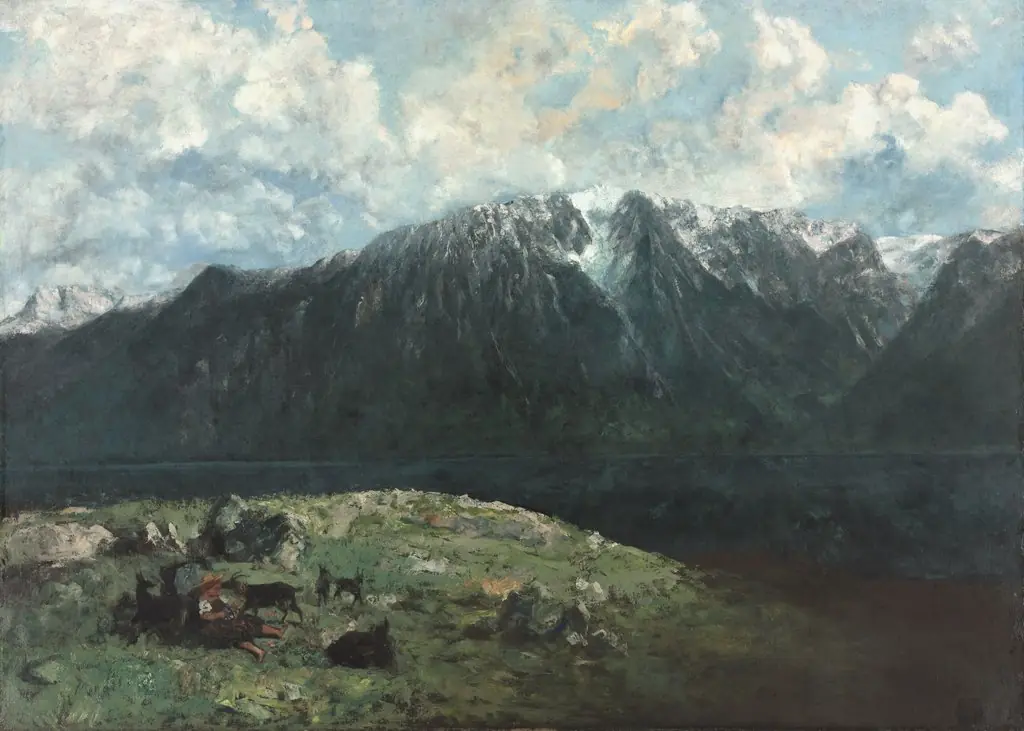 Panoramic View of the Alps, Les Dents du Midi
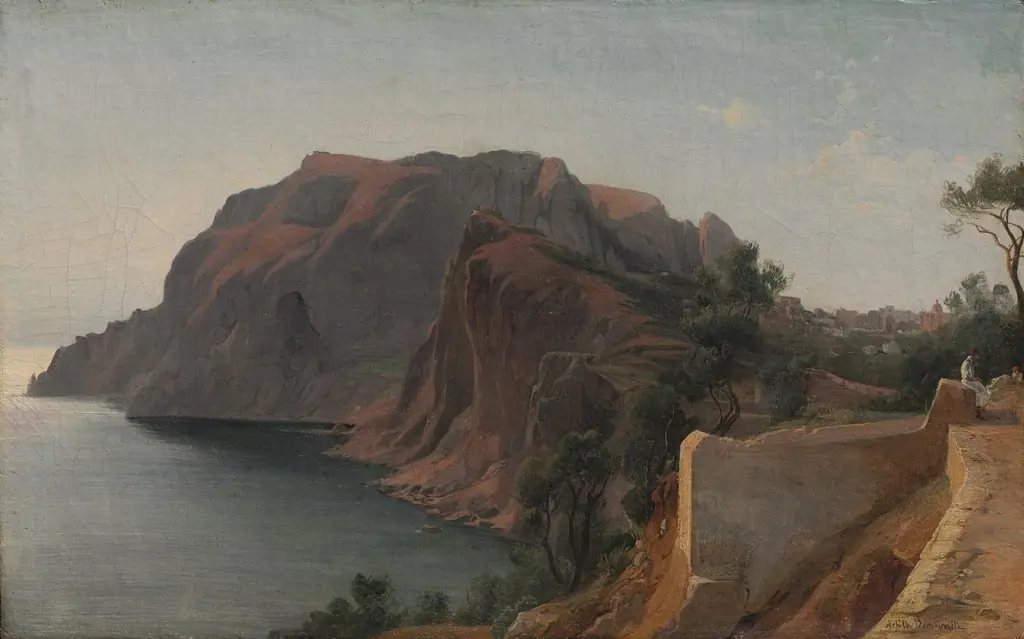 Capri
Capri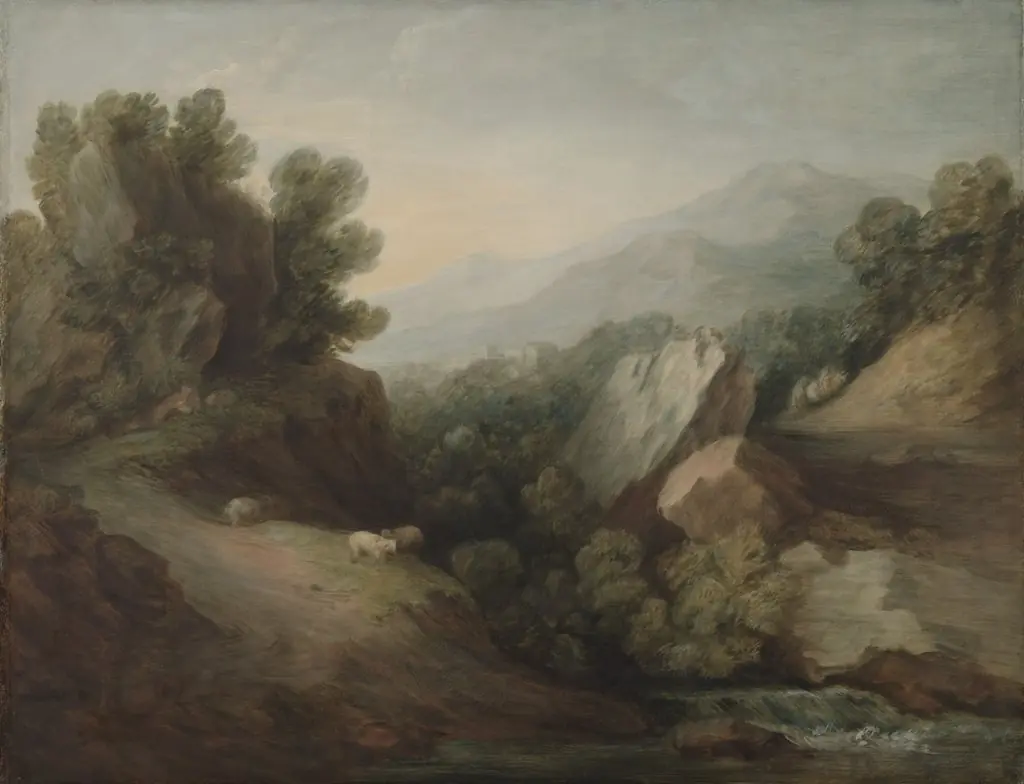 Rocky, Wooded Landscape with a Dell and Weir
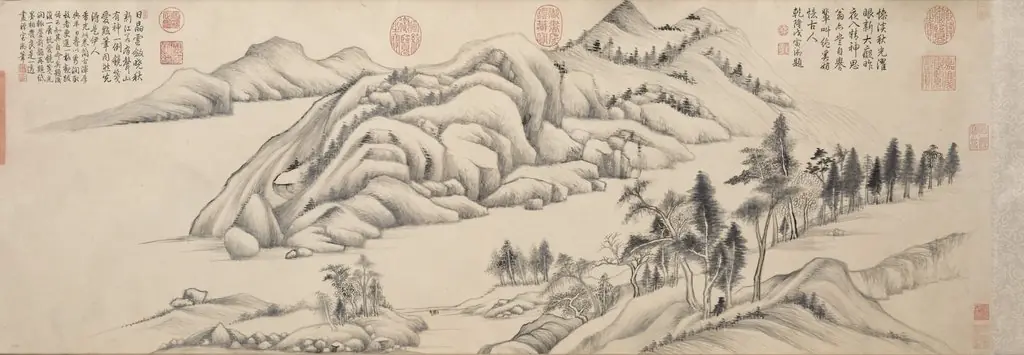 River and Mountains on a Clear Autumn Day
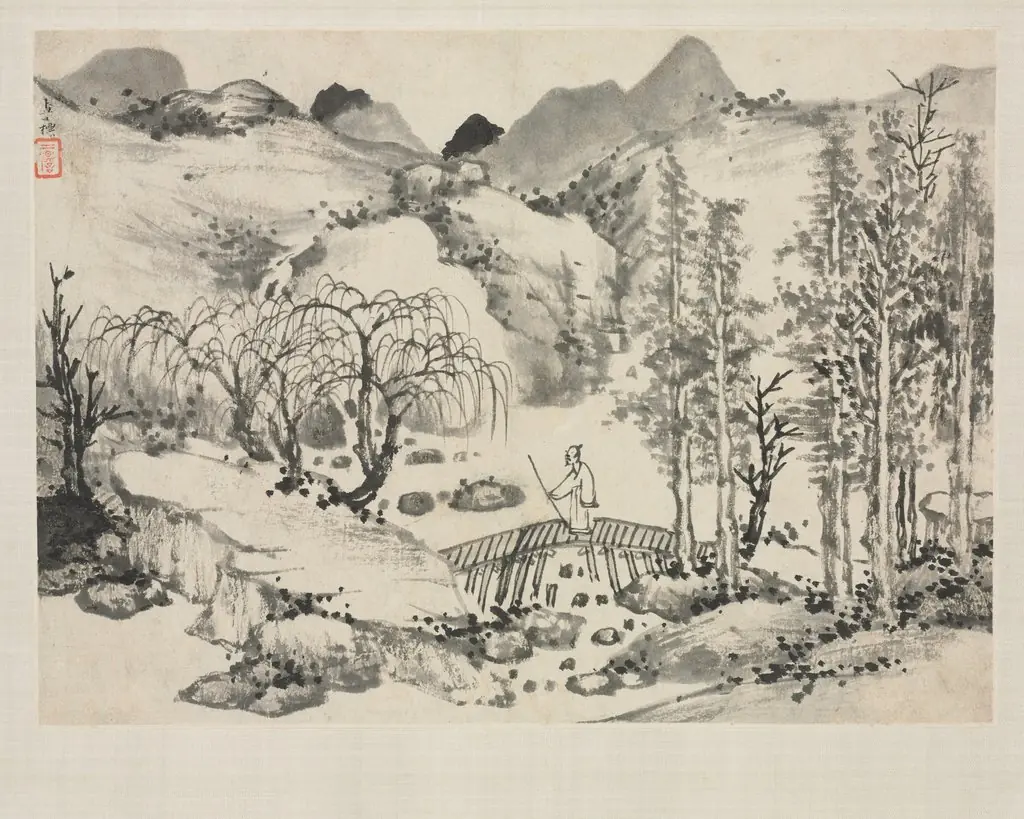 Landscape Album in Various Styles: Landscape with Artist on a Bridge
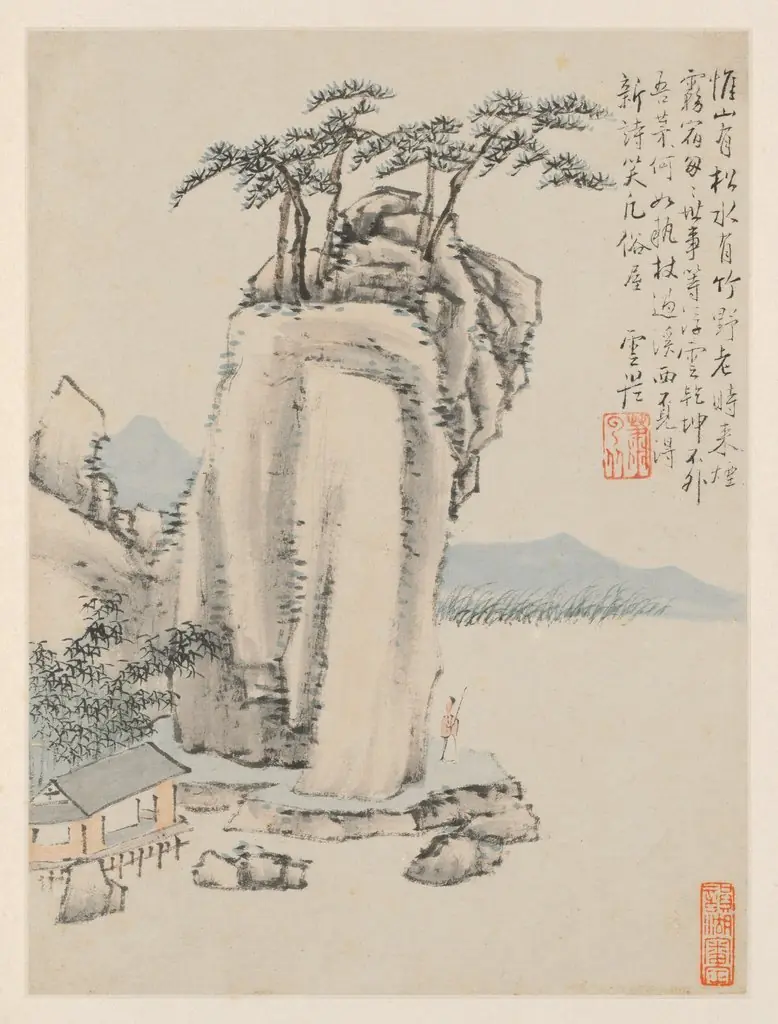 Album of Seasonal Landscapes, Leaf G (previous leaf 7)
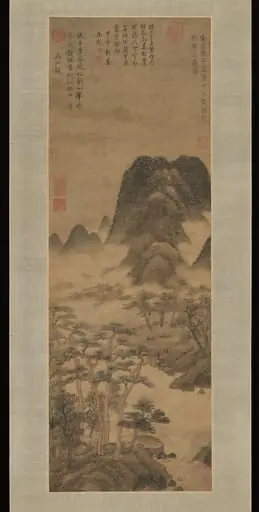 元 張羽 松軒春靄圖 軸|Spring Clouds at the Pine Studio
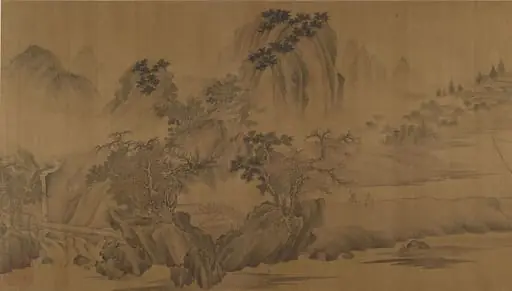 Untitled
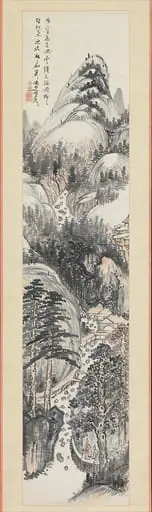 Untitled
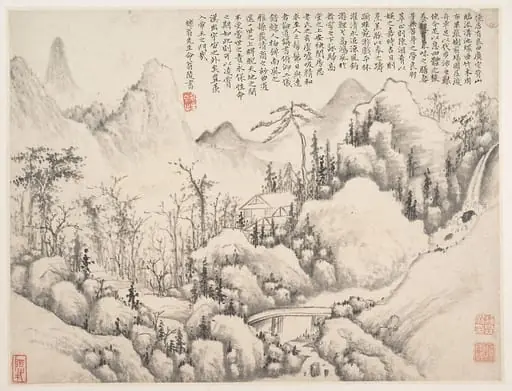 清 施霖 山莊圖 冊頁|Mountain Retreat, leaf from Album for Zhou Lianggong
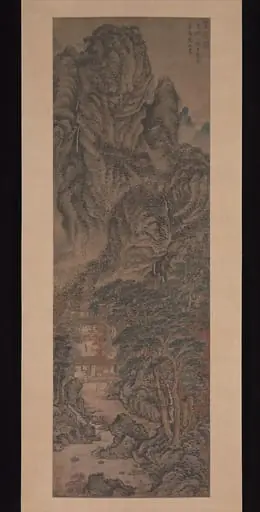 元 王蒙 素庵圖 軸|Simple Retreat
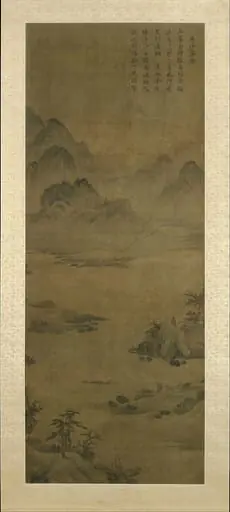 모래밭에 내려앉는 기러기 조선|平沙落雁圖 朝鮮|Wild geese descending to sandbar
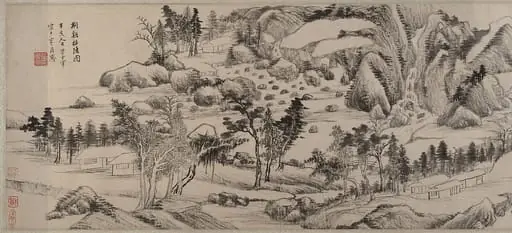 明 董其昌 荊谿招隱圖 卷|Invitation to Reclusion at Jingxi
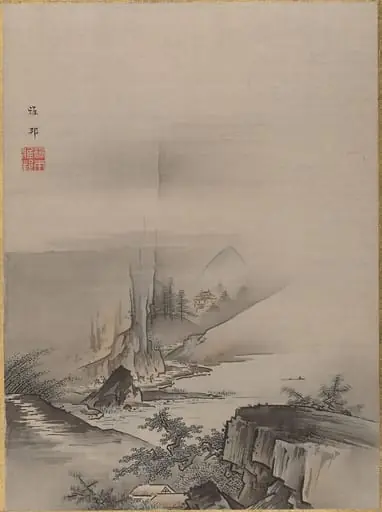 Untitled
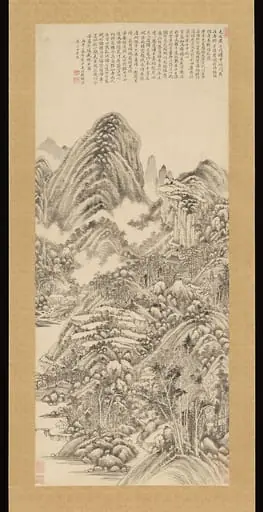 清 王時敏 仿黃公望山水圖 軸 絹本|Landscape in the style of Huang Gongwang
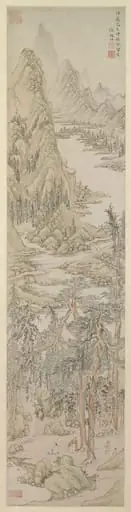 明 侯懋功 高山圖 軸 |High Mountains
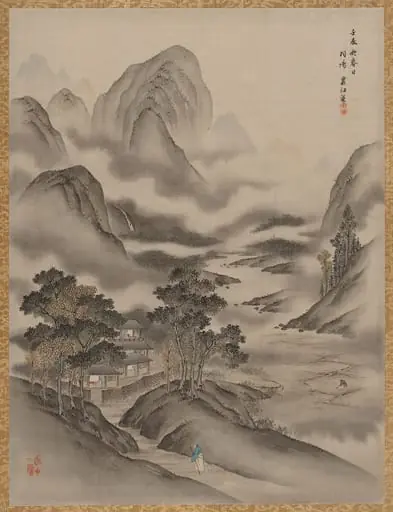 Untitled
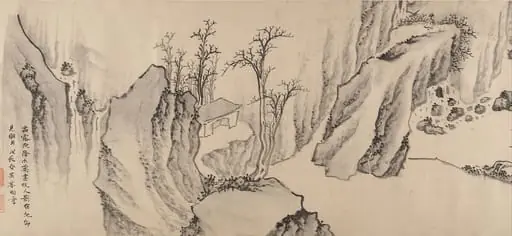 明 張瑞圖 後赤壁賦圖 卷|Illustration of Su Shi’s “Second Ode on Red Cliff”
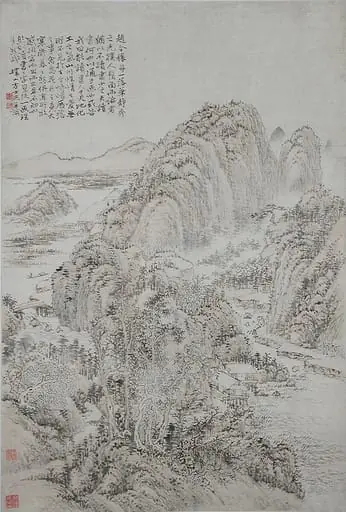 清 方士庶 山水圖 軸|Landscape
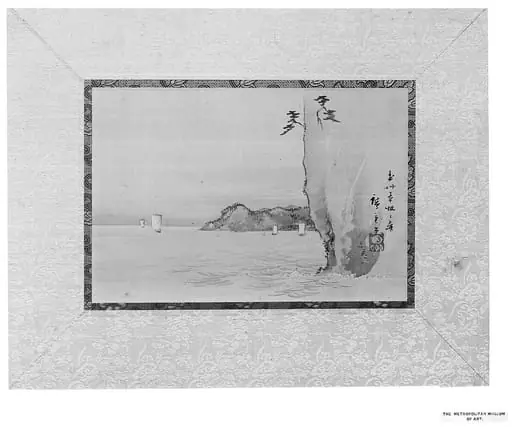 Untitled
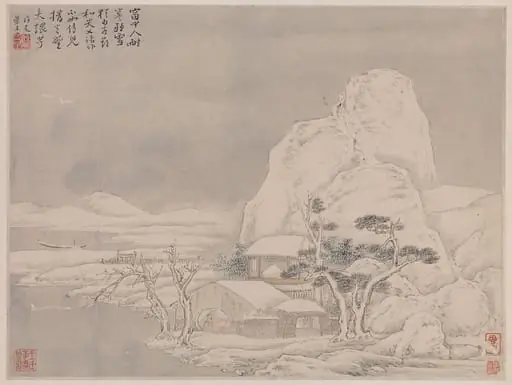 清 葉欣 聼雪圖 冊頁|Snowscape, leaf from Album for Zhou Lianggong
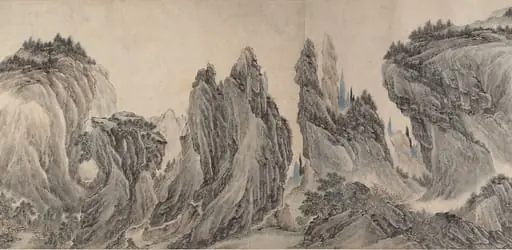 明/清 李在 董巨馬夏合風山水圖 卷|Landscape after Dong Yuan, Juran, Ma Yuan, and Xia Gui
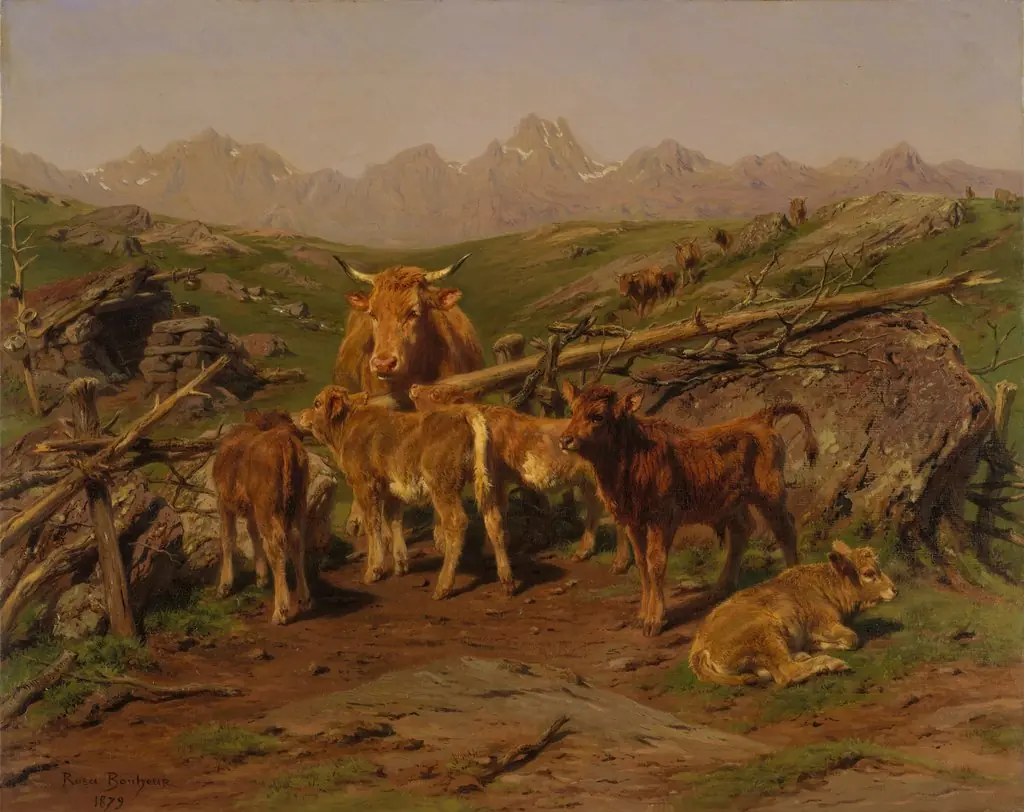 Weaning the Calves
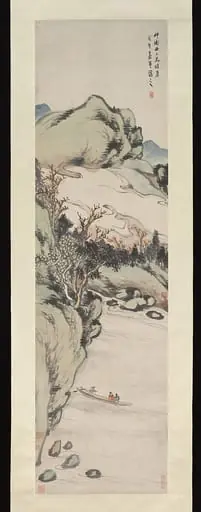 清 吳熙載 山水 軸|Landscape
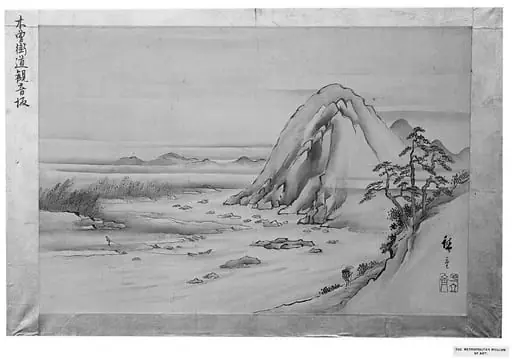 Untitled
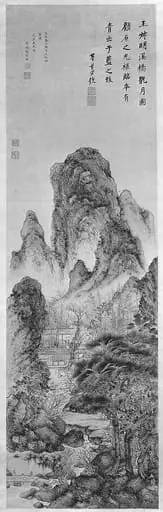 明 顧懿德 倣王蒙玩月圖 軸|Enjoying the Moon: Landscape in the Manner of Wang Meng
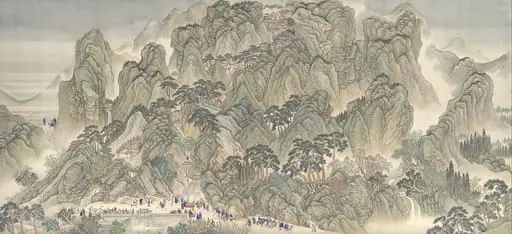 清 王翬等 康熙南巡圖 (卷三: 濟南至泰山) 卷|The Kangxi Emperor's Southern Inspection Tour, Scroll Three: Ji'nan to Mount Tai
 Untitled
Frequently asked questions
What is Mountain?
Mountain is a subject in art. A mountain is an elevated portion of the surface of a planet, generally with steep sides that show significant exposed bedrock.
How many Mountain works does Artifact World Gallery have?
Artifact World Gallery holds 200 public-domain Mountain works, all free to view and download.
Who are the key Mountain artists?
Key Mountain artists in the collection include Titian, Jean Baptiste Camille Corot and Thomas Cole.
Where can I see Mountain works?
Mountain works in the collection are held by Metropolitan Museum of Art, Cleveland Museum of Art and National Gallery of Art.