Artwork
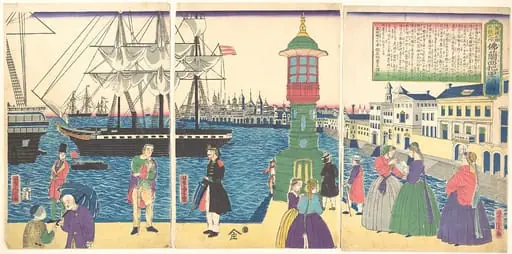
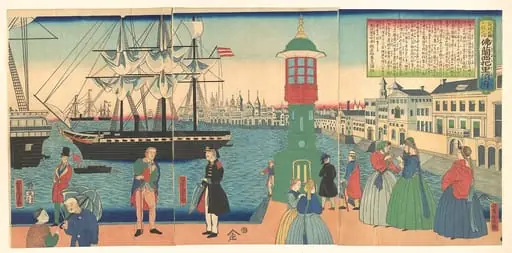
英吉利国|England (Igirisukoku)
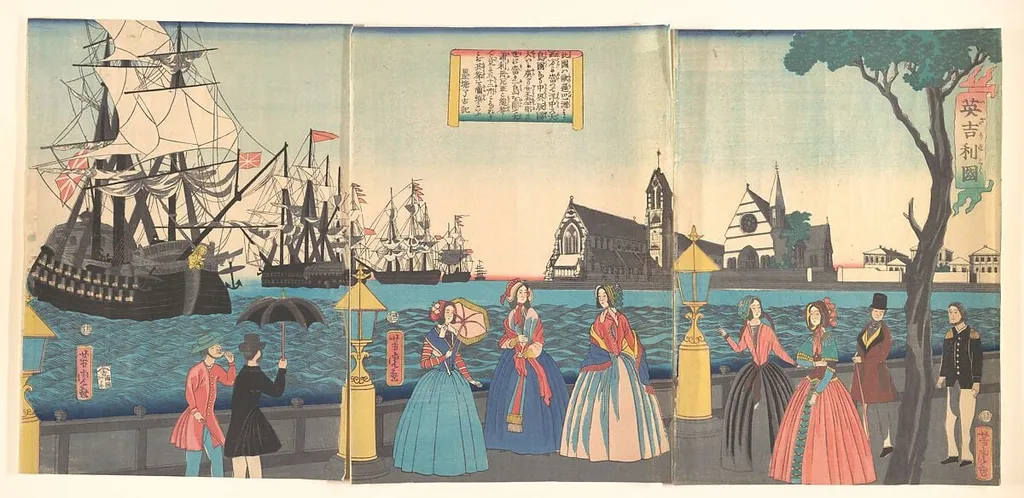
英吉利国|England (Igirisukoku) is an ink print by the Impressionist artist Utagawa Yoshitora. It dates from 2 and is held in the collection of the Metropolitan Museum of Art.
About this work
Overview
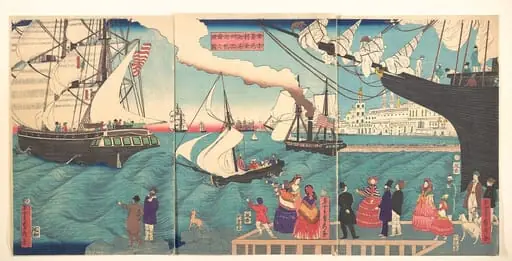
This triptych by Utagawa Yoshitora depicts a harbor scene in Japan during the mid-19th century, capturing the arrival of Western ships.
This triptych by Utagawa Yoshitora depicts a harbor scene in Japan during the mid-19th century, capturing the arrival of Western ships. Each panel contributes to a panoramic view of the waterfront, where foreign vessels anchor beside local infrastructure. The composition emphasizes the physical and cultural proximity of two distinct worlds, Japan and the West, through detailed rendering of architecture, clothing, and vessels.
Subject & Meaning
The scene portrays a moment of cultural convergence: Western-style ships with tall masts and national flags rest in Japanese waters, while figures on shore wear both Western attire and traditional kimonos. Buildings in the distance suggest European architecture, likely representing imagined or unfamiliar foreign structures. The juxtaposition reflects Japan’s growing exposure to foreign powers during a period of limited international contact.
Technique & Style
Executed in woodblock print technique, the work uses bold outlines and vivid, flat areas of color typical of ukiyo-e. The clarity of forms and strong contrasts serve visual legibility, aiding the viewer’s navigation of the complex scene. Details such as fabric folds, ship rigging, and architectural elements are rendered with precision, balancing decorative flair with documentary intent.
History & Provenance
Created around 1858–1860, the print emerged during Japan’s transition from isolation to limited foreign engagement following the Treaty of Kanagawa. Yoshitora, known for his topical subjects, responded to public fascination with Westerners and ships. The triptych was likely mass-produced for urban audiences, serving as both news and entertainment in a society rapidly absorbing new imagery.
Context
This print reflects Japan’s shifting relationship with the outside world after centuries of sakoku policy. Foreign ships, once feared or forbidden, now appeared in domestic art as symbols of change. Yoshitora’s depiction does not idealize or condemn but records the visual dissonance of the moment, foreign vessels anchored in familiar landscapes, observed by curious onlookers.
Legacy
Yoshitora’s triptych remains a significant example of how Japanese artists interpreted foreign presence during the Bakumatsu era. It contributed to a visual vocabulary that documented Japan’s encounter with globalization before full modernization. The work is now studied for its cultural documentation, offering insight into public perception amid political transformation.
Artist & collection

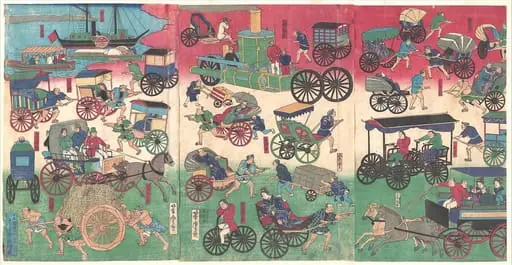 Untitled
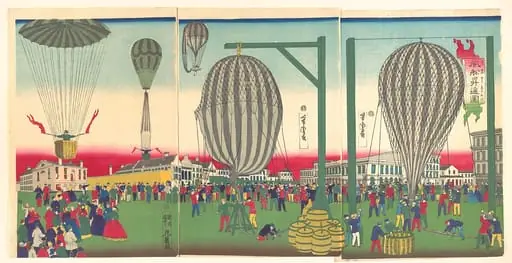 風船昇遥図|Illustration of a Balloon Ascending (Fūsen shōyō no zu)
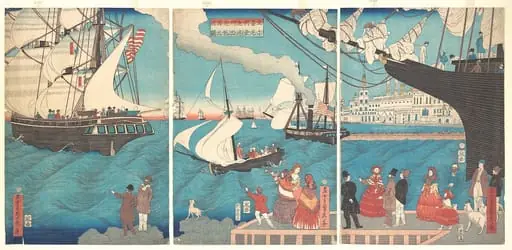
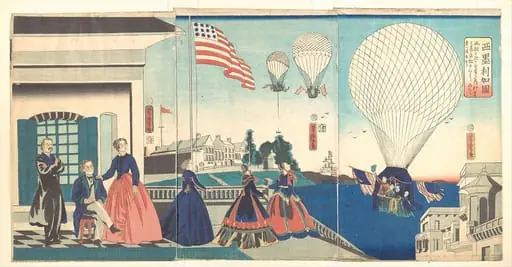 「亜墨利加國」|“America”: Enjoying Hot Air Balloons
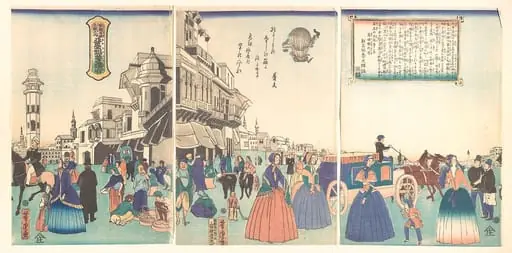
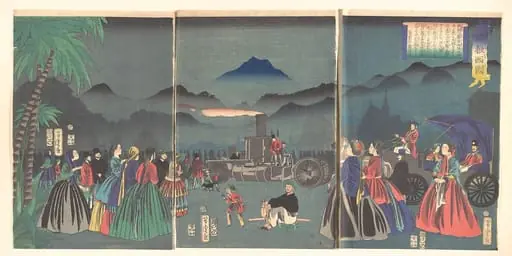 仏蘭西国|France (furansukoku)
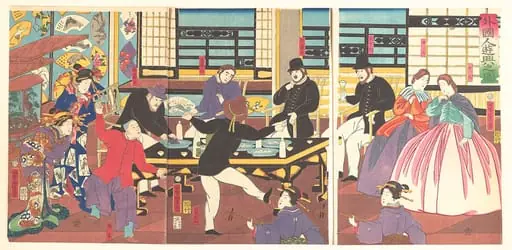 歌川義虎画 『外国人遊興之図』|Foreigners Enjoying a Party (Gaikokujin yūkyō no zu)
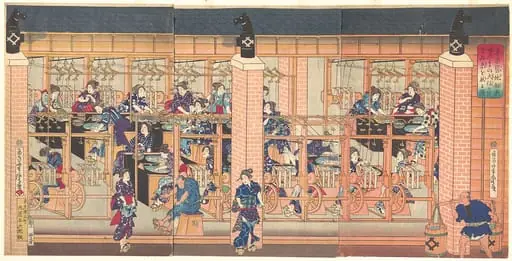 『東京築地舶来ぜんま い大仕かけきぬ糸をとる図』|Imported Silk Reeling Machine at Tsukiji in Tokyo
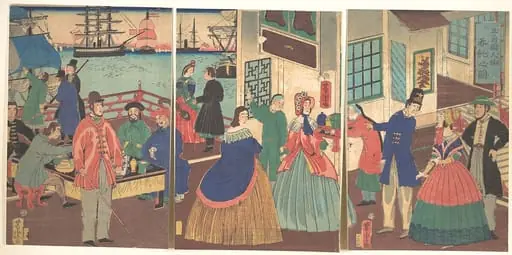 歌川芳虎画 『五箇国人物 呑飥之図』|People of the Five Nations Drinking and Eating (Gokakoku jinbutsu dontaku no zu)
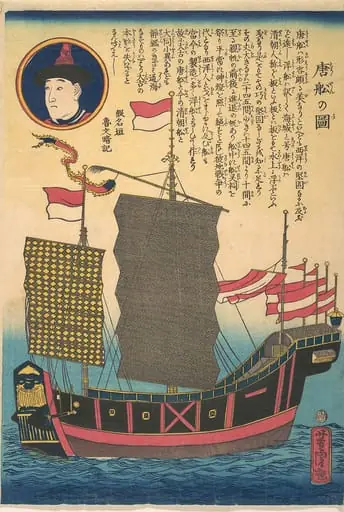 Tōsen no zu|Chinese Junk