Artwork
Últimos momentos de Cervantes
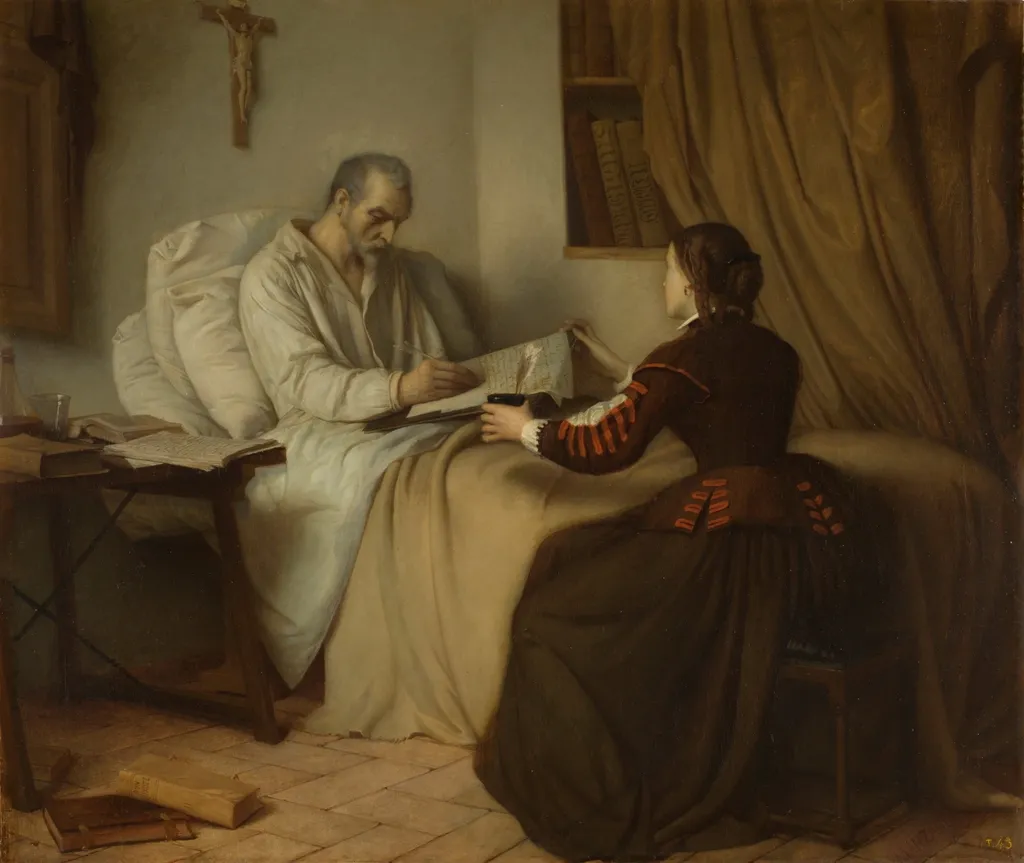
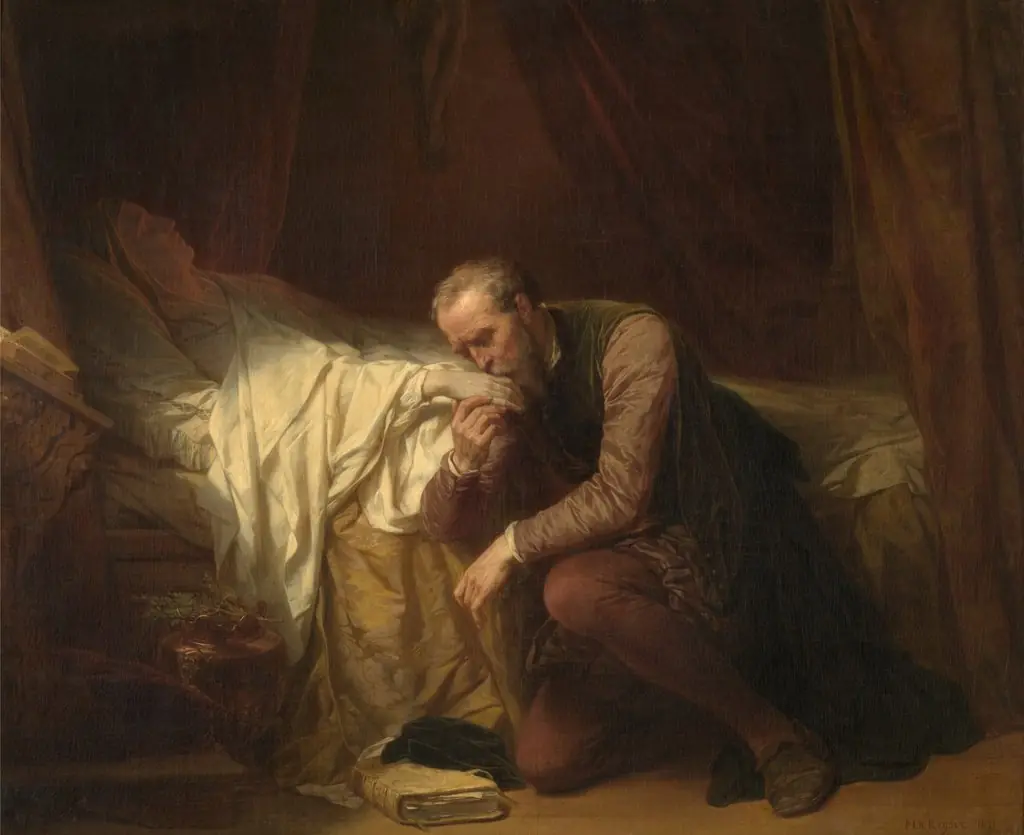
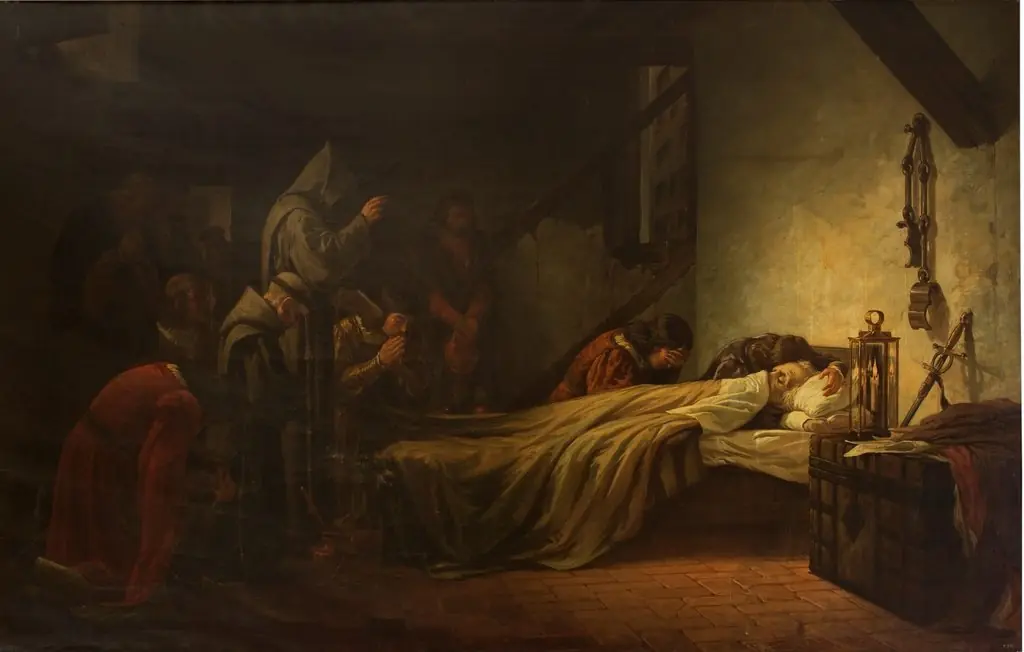
Últimos momentos de Cervantes is an oil painting by the Realist artist Víctor Manzano y Mejorada. It dates from 1856 and is held in the collection of the Museo del Prado.
About this work
Subject & Meaning
The work is part of the collections of the Museo del Prado and the Museo de la Trinidad, currently housed in the Museo del Prado.
Últimos momentos de Cervantes portrays the final hours of writer Miguel de Cervantes, rendered through symbolic objects such as a scientific instrument, book, and office supplies that reference his literary legacy and bureaucratic roles. The composition emphasizes mortality and reflection, aligning with 19th-century Romantic interest in literary figures. The painting measures 95.5 cm × 114 cm and is executed in oil on canvas.
The work is part of the collections of the Museo del Prado and the Museo de la Trinidad, currently housed in the Museo del Prado.
Subject & Meaning
Technique & Style
The work was executed in oil on canvas, a conventional support for easel painting in mid-19th‑century Spain. Its formal qualities are defined by a restrained palette and precise rendering of everyday objects such as a book and scientific instrument, which occupy the central plane with a balanced composition. The brushwork remains controlled yet expressive, reflecting the academic tradition of the period while allowing subtle tonal shifts that model the forms.
The painting’s surface condition shows typical craquelure for an oil work of its age, but no significant damage is recorded. These stylistic elements contribute to its classification as a realist genre scene within the broader Spanish academic output of the 1850s.
History & Provenance
Últimos momentos de Cervantes is an oil painting on canvas created in 1856 by Víctor Manzano y Mejorada. According to the sources, the work entered the collection of the Museo del Prado and was also held by the Museo de la Trinidad, indicating its provenance within Spanish institutions after its creation.
The painting was produced during the mid-19th century and exemplifies the academic genre of historical subjects favored by Spanish artists of the period. Its dimensions, recorded as 95.5 cm in height and 114 cm in width, were documented at the time of cataloguing within the museum collections.
The work was initially commissioned or acquired by the Museo del Prado as part of its early acquisitions, later being transferred to the Museo de la Trinidad, reflecting a documented ownership chain tied to these two Spanish cultural institutions.
The painting is held in the Museo del Prado, listed in its collection as part of the Museo de la Trinidad holdings. It was created in 1856 and measures 95.5 cm by 114 cm. The work has been exhibited at the Prado as part of displays focusing on 19th-century Spanish art and has appeared in exhibitions highlighting the artist’s role in the costumbrista movement.
Overview
Últimos momentos de Cervantes is an 1856 oil painting by Víctor Manzano y Mejorada, housed in the Museo del Prado. The work portrays a poignant, intimate scene of a seated man in a white robe and a standing woman in a dark, red-trimmed dress, set within a dimly lit room.
Context
The work reflects 19th-century Spanish artistic tendencies, blending historical and literary themes with traditional painting techniques. The focus on a potentially literary figure aligns with the era's cultural values.
Legacy
While not widely discussed in broad art historical narratives, 'Últimos momentos de Cervantes' contributes to the Prado's collection of 19th-century Spanish art, offering insight into the period's artistic and intellectual preoccupations.
Own this work as a print
Artist & collection
Artist
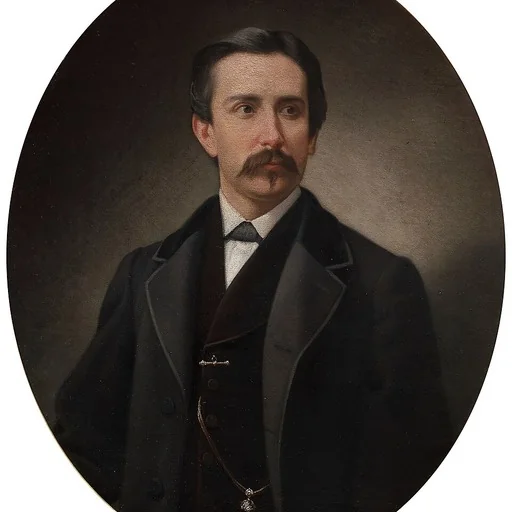
Víctor Manzano y Mejorada (1831–1865) was an artist, born in Madrid.