Artwork
Wet Snow, Auvergne
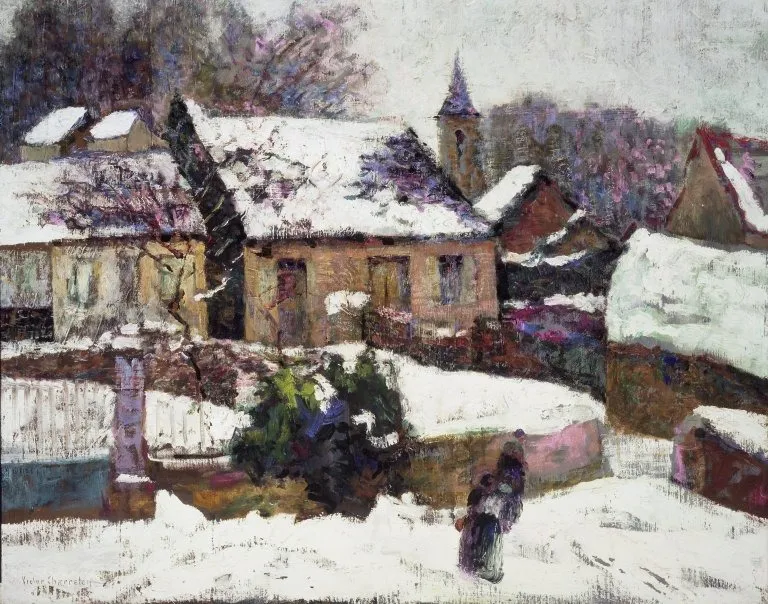
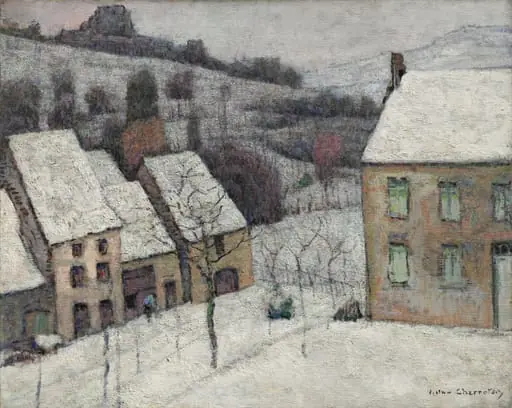
Wet Snow, Auvergne is an oil painting by the Post-Impressionist artist Victor Charreton. It dates from 1900 and is held in the collection of the Brooklyn Museum.
About this work
Subject & Meaning
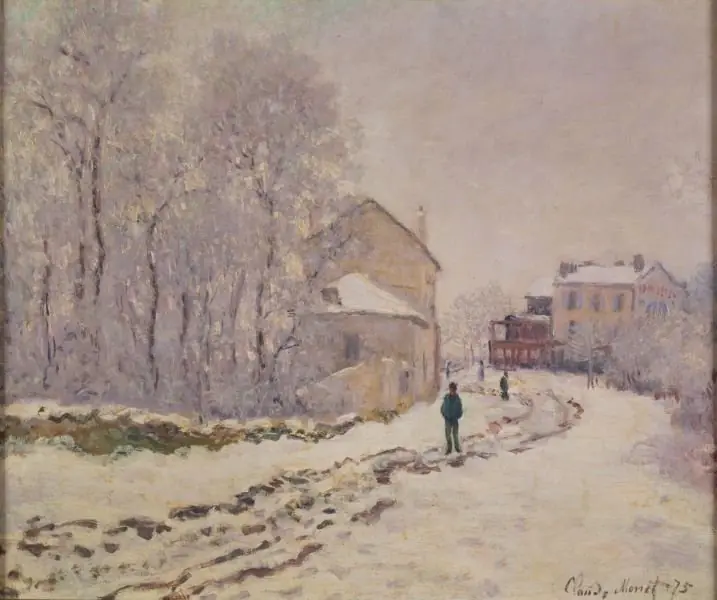
Wet Snow, Auvergne depicts a winter scene in the rural Auvergne region of central France, rendered as a landscape painting.
Wet Snow, Auvergne depicts a winter scene in the rural Auvergne region of central France, rendered as a landscape painting. The composition portrays the snow-covered terrain of the area together with a church building, a house, and human figures, situating everyday rural life within a snowy environment. By combining the regional topography with vernacular architecture and human presence, the work represents the Auvergne countryside under wintry conditions rather than functioning as an allegory or symbolic image. The painting is classified as a landscape and was produced by Victor Charreton in 1899.
The subject matter aligns with Charreton's broader interest in the rural French landscape, and the inclusion of a church and house anchors the scene in the lived environment of the Auvergne rather than in any narrative or mythological tradition. The depiction of wet snow suggests a transitional, thawing moment, lending the scene a quiet, atmospheric character typical of post-Impressionist landscape practice.
Technique & Style
Executed in oil on canvas in 1899, the work measures 64.5 cm in height by 80.5 cm in width.
Technically, the handling is consistent with late nineteenth-century French plein-air practice: thin, fluid scumbling and delicate broken touches build up a softly modulated, snow-laden atmosphere. The palette is restricted to cold greys, pale blues, and off-whites to convey the diffuse light of a winter day, punctuated by darker accents in the architecture and foreground.
Stylistically, the composition aligns with Charreton’s characteristic approach to landscape during the 1890s, quiet, topographically specific scenes rendered with a restrained, atmospheric naturalism rather than overt stylization. The low horizon and central placement of the modest church and clustered houses emphasize the quietude of the snowbound village.
History & Provenance
Victor Charreton painted Wet Snow, Auvergne in 1899, an oil on canvas work measuring 64.5 cm by 80.5 cm that depicts the snow-covered landscape of the Auvergne region. The painting entered the collection of the Brooklyn Museum and remains part of its holdings, reflecting a continuous ownership chain from its creation to the present.
Wet Snow, Auvergne, painted by Victor Charreton in 1899, is part of the Brooklyn Museum's collection and is cataloged under an accession number recorded in the museum's holdings. The work has been featured in exhibitions at the Brooklyn Museum, including a showcase of French landscape painting that highlighted Charreton's contributions to early 20th-century art. Its dimensions, as documented, measure 64.5 cm in height and 80.5 cm in width.
Overview
Victor Charreton’s 1900 oil painting titled “Wet Snow, Auvergne” presents a winter landscape in the French region of Auvergne. The composition centers on a snow‑laden village scene, with a modest church and a cluster of houses receding into the distance. A solitary figure trudges across the foreground, emphasizing the quiet stillness of the setting.
Artist & collection