Artwork
Untitled
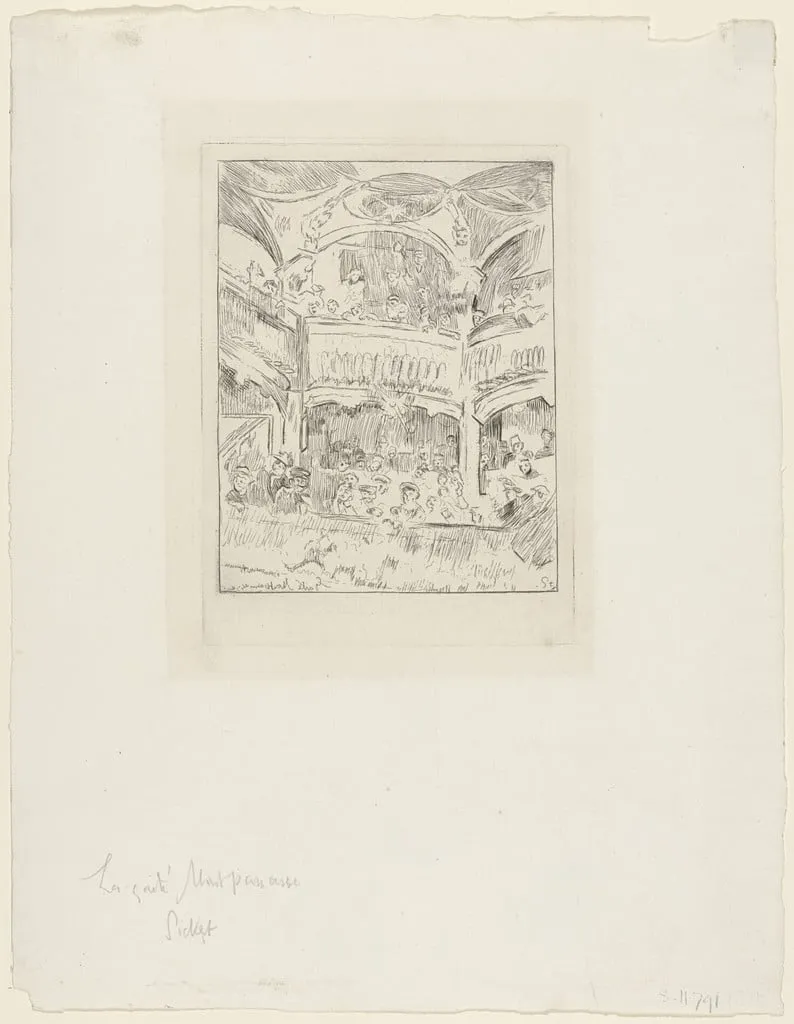
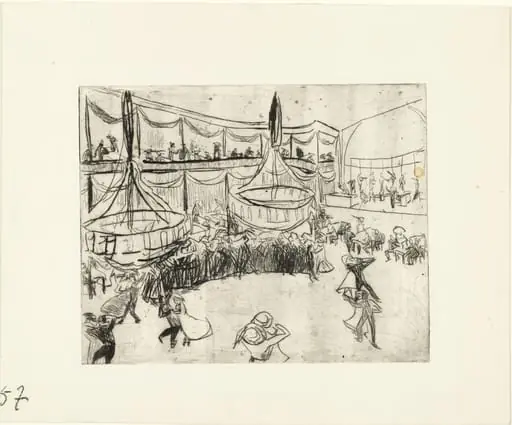
Untitled is an ink print by Walter Richard Sickert. It dates from 1919 and is held in the collection of the Museum of Modern Art.
About this work
Overview
Created in 1919, this etching by Walter Richard Sickert captures a crowded theater interior with rapid, expressive lines.
Created in 1919, this etching by Walter Richard Sickert captures a crowded theater interior with rapid, expressive lines. As a print made through the etching process, it reflects the artist’s interest in transient urban moments. The work belongs to The Museum of Modern Art’s collection and exemplifies Sickert’s shift from painterly observation to the more direct medium of printmaking during the post-war period.
Subject & Meaning
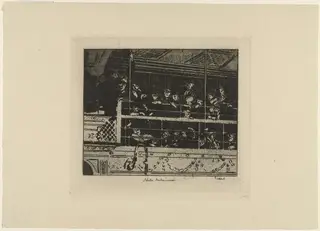
The scene depicts a stage crowded with figures, possibly performers, facing an equally dense audience in the seats. There is no clear narrative, but the compression of bodies suggests the anonymity and collective energy of public performance. Sickert avoids idealization, instead focusing on the physical proximity and quiet tension of spectators and performers sharing a confined space.
Technique & Style
Sickert employed etching to achieve a sketchlike immediacy, using loose, angular lines and varied ink tones to suggest depth and movement. The shading is uneven and textured, mimicking the flicker of stage lighting and the roughness of a hurried drawing. The absence of fine detail reinforces the sense of a fleeting glance, aligning the technique with the subject’s ephemeral nature.
History & Provenance
This print was made in 1919, during a period when Sickert was increasingly engaged with printmaking after years focused on painting. It entered The Museum of Modern Art’s collection in the 20th century, likely through acquisitions emphasizing modern British art. Its preservation reflects institutional interest in Sickert’s role in bridging British realism and emerging modernist approaches.
Context
Sickert was associated with the Camden Town Group, which sought to portray everyday urban life with psychological nuance. In the aftermath of World War I, public spaces like theaters became sites of collective reflection. This etching aligns with broader cultural interests in documenting ordinary experiences, using the intimacy of print to convey the quiet drama of shared environments.
Legacy
The work contributes to Sickert’s reputation for transforming mundane scenes into quiet studies of human presence. Its emphasis on immediacy and informal composition influenced later British artists exploring printmaking as a vehicle for social observation. Though not widely exhibited, it remains a key example of how etching could convey the rhythms of modern life without grandeur or sentiment.
Artist & collection

Artist
Walter Richard Sickert (31 May 1860 – 22 January 1942) was a German-born British painter and printmaker who was a member of the Camden Town Group of Post-Impressionist artists in early 20th-century London.