Artwork
Cleopatras Needle as it now Stands on the Site of the Old Town at Alexandria in Egypt
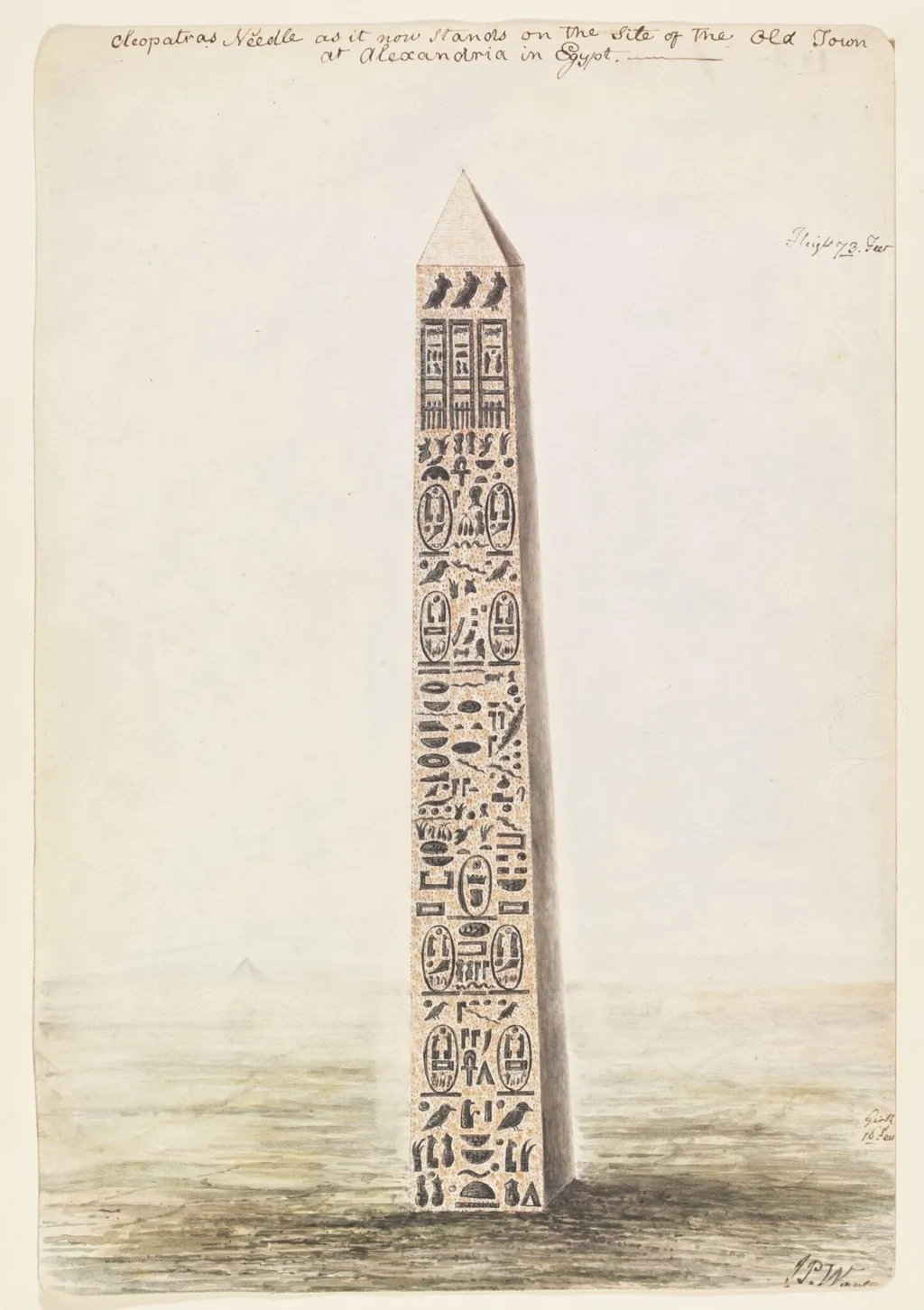
Cleopatras Needle as it now Stands on the Site of the Old Town at Alexandria in Egypt is a watercolor work on paper by the Orientalist artist Joseph Pitt Warton. It dates from 1807 and is held in the collection of the Victoria and Albert Museum.
About this work
Overview
This watercolour, created in 1807 by Lieutenant Joseph Pitt Warton, records Cleopatra's Needle as it appeared in Alexandria before its removal to New York.
This watercolour, created in 1807 by Lieutenant Joseph Pitt Warton, records Cleopatra's Needle as it appeared in Alexandria before its removal to New York. The work captures the obelisk in its original location near the old town, surrounded by open, arid terrain. Rendered in a restrained, precise style, the piece serves as a topographical record rather than a dramatic composition, emphasizing the monument’s solitary presence against a pale sky and sandy ground.
Subject & Meaning
The obelisk depicted is one of three ancient Egyptian monuments later known collectively as Cleopatra's Needles, though it predates Cleopatra by centuries. Its hieroglyphic carvings, depicting birds, figures, and symbolic objects, were originally inscribed to honor pharaonic rulers and deities. In Warton’s time, the structure stood as a silent relic of a distant past, its cultural significance largely uninterpreted by contemporary viewers, yet still recognized as an emblem of Egypt’s ancient heritage.
Technique & Style
Warton employed a delicate watercolour technique, using thin washes to suggest texture and light without heavy detail. The obelisk’s surface is rendered with careful line work to define the hieroglyphs, while the surrounding landscape is minimized to focus attention on the monument. The composition is austere, with no architectural or human elements to distract, reflecting a documentary intent rather than romanticized embellishment.
History & Provenance
Painted during Warton’s service in Egypt, the watercolour was later acquired by the Victoria and Albert Museum in August 1967 from collector W.T. Spencer for £8, as documented by Rodney Searight. Its journey from a military officer’s sketch to a museum-held artifact underscores its value as a rare visual record of the obelisk’s pre-movement condition, offering insight into its original context before translocation.
Context
In 1807, European interest in Egyptian antiquities was growing, spurred by Napoleon’s campaign and the subsequent wave of archaeological fascination. Warton’s depiction aligns with a broader trend of military and amateur artists documenting ancient sites before they were altered or removed. The obelisk’s isolation in the painting reflects its neglect in Alexandria’s urban landscape at the time, prior to its 19th-century relocation.
Legacy
The watercolour remains one of the few contemporary visual records of Cleopatra’s Needle in its original setting. It contributes to the historical understanding of how ancient monuments were perceived and recorded before modern conservation practices. Its preservation in a major museum collection ensures its continued role as a reference for scholars studying the movement and reception of Egyptian artifacts in the modern era.
Own this work as a print
Artist & collection
Artist
Joseph Pitt Warton painted a single watercolour in 1807, Cleopatra’s Needle as it now Stands on the Site of the Old Town at Alexandria in Egypt.

 Egypt and Nubia, Volume II: Obelisk of Heliopolis
 An illustration showing the ancient columns and the Egyptian oblelisk
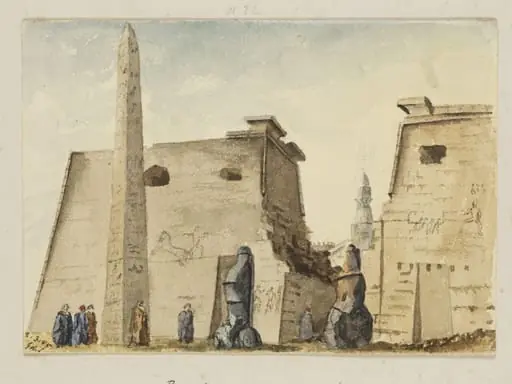 `Propyla of Great Temple. Luxor, Thebaid'
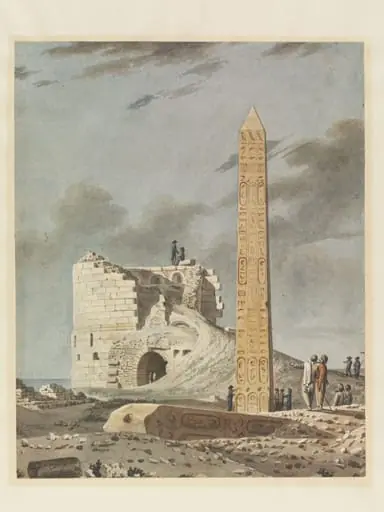 Vue de Obélisque dite de Cléopatre à Alexandrie
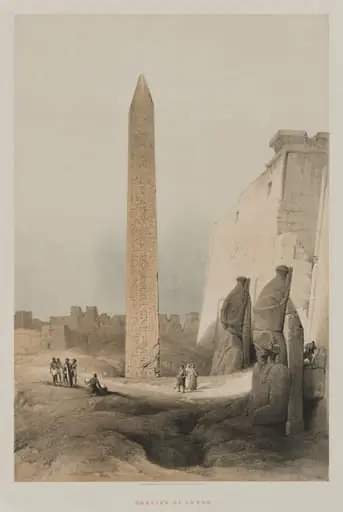 Egypt and Nubia, Volume I: Luxor
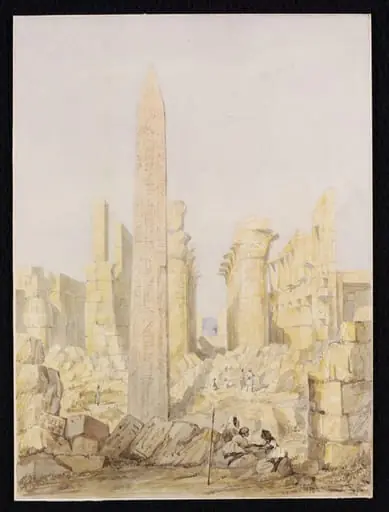 Great Temple. Karnac. Thebes
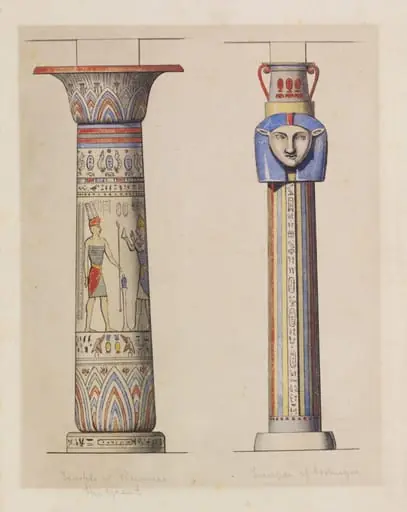 Temple of Ramses the Great B.C.1420. Temple of Sedingar B.C.1490
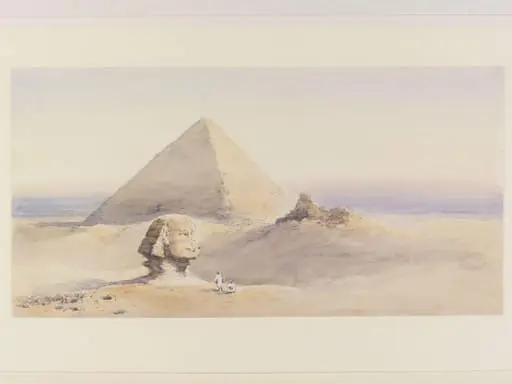 Sphinx & Great Pyramid
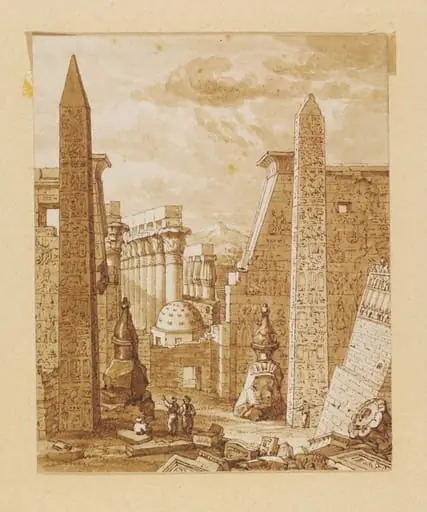 Entry of Palace of Luxor, formerly Thebes
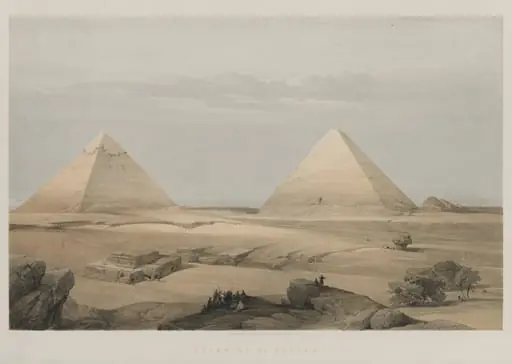 Egypt and Nubia, Volume II: Pyramids of Geezeh
 Egypt and Nubia, Volume I: The Great Sphinx, Pyramids of Gezeeh
- Cleopatra's Needle, Alexandria, Egypt