Artwork
Egypt and Nubia, Volume II: Pyramids of Geezeh
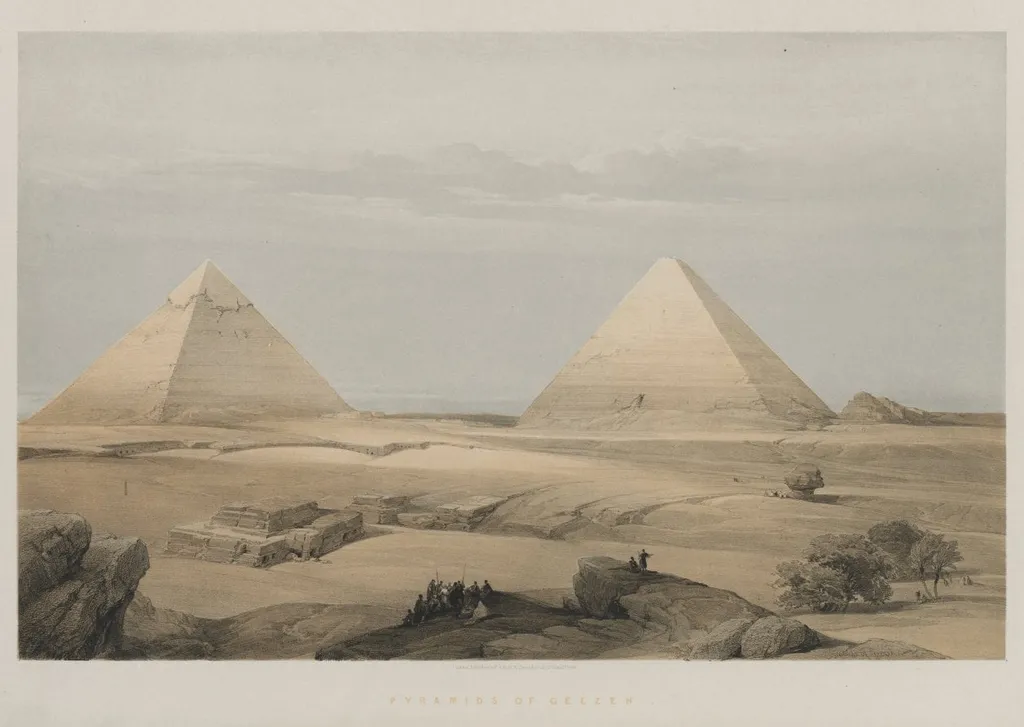
Egypt and Nubia, Volume II: Pyramids of Geezeh is a print by the Romanticist artist Louis Haghe. It dates from 1848 and is held in the collection of the Cleveland Museum of Art.
- Accession no.
- 2012.155
- Credit line
- Bequest of John Bonebrake
About this work
If you like how travel pictures shaped 19th-century taste, look up the subject “england, 19th century.
You see three sandy pyramids under a pale sky, camels resting, and tiny figures in robes.
This print is from a travel book that helped spark Europe’s Egypt craze. People back home bought these images to decorate their parlors and tombs. The pyramids look almost like stage props, clean, dramatic, and a little too perfect.
If you like how travel pictures shaped 19th-century taste, look up the subject “england, 19th century.”
Overview
Egypt and Nubia, Volume II: Pyramids of Geezeh is a print from a 19th-century travel book that contributed to the widespread European fascination with ancient Egyptian culture, known as Egyptomania. The image depicts the Pyramids of Giza in a serene, idealized setting.
Subject & Meaning
The print showcases three pyramids set against a pale sky, with camels and diminutive robed figures in the foreground. While aesthetically pleasing, the pyramids' rendition as 'clean, dramatic, and somewhat overly perfect' suggests a romanticized rather than strictly accurate representation of the ancient monuments.
Technique & Style
The print's style, characterized by its idealized and slightly theatrical portrayal of the pyramids, reflects the artistic conventions of 19th-century travel literature illustrations, which often prioritized evocative and marketable images over strict realism.
History & Provenance
Created by Louis Haghe as part of the Egypt and Nubia series, this print was part of a broader collection of artworks and photographs brought back from Egypt, influencing Western artistic, architectural, and design practices during the 19th and early 20th centuries.
Context
The print's popularity contributed to the Egyptomania phenomenon, evident in the incorporation of Egyptian motifs in Western architecture, interiors of aristocratic homes, and even funerary monuments in cities like Washington, D.C., and Cleveland, Ohio.
Legacy
Beyond its aesthetic impact, the print raises questions about cultural interpretation and appropriation, providing a historical backdrop for discussions on the rights and responsibilities of interpreting and emulating ancient Egyptian styles in Western contexts.
Artist & collection

Artist
Louis Haghe (17 March 1806 – 9 March 1885) was a lithographer and watercolourist from the Netherlands and then the United Kingdom.

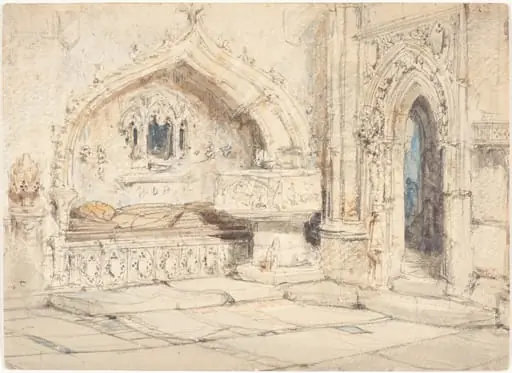 Interior of a Church with a Wall Tomb and Medieval Font
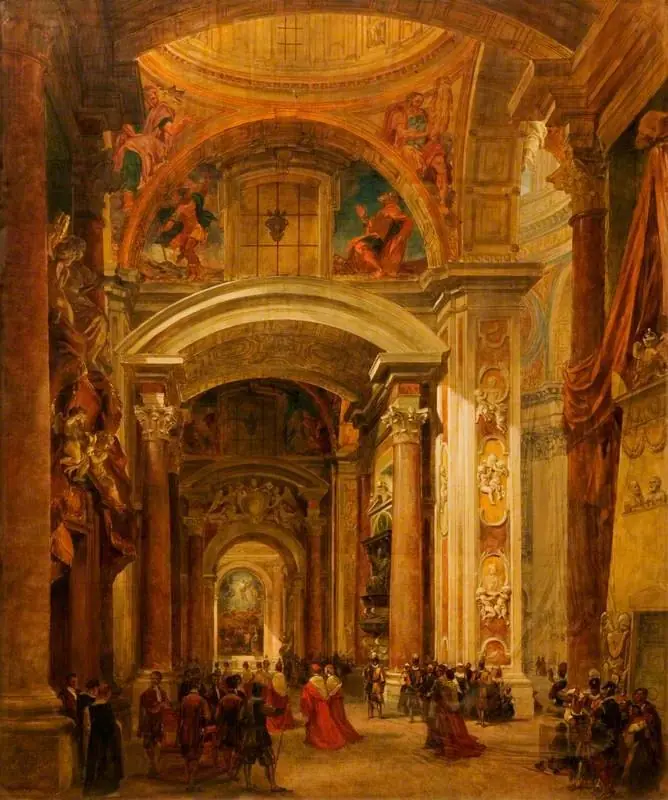 Interior of St Peter's, Rome
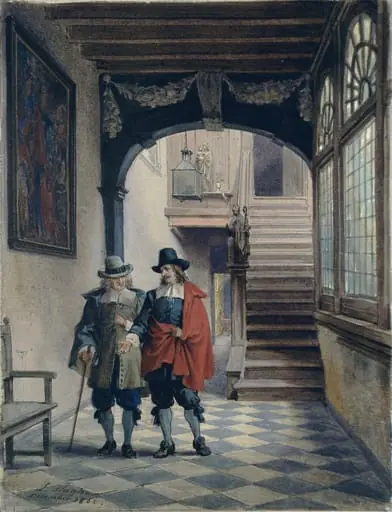 The Corridor, Brewer's Hall, Antwerp
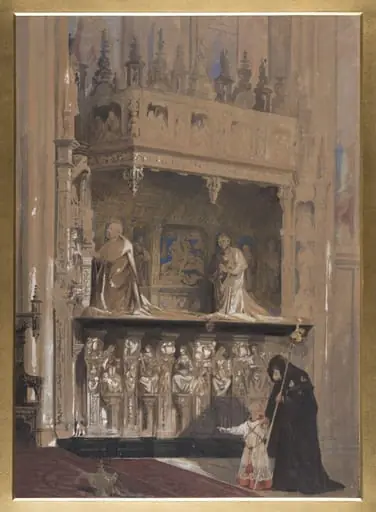 Monument of the Cardinald D'Amboise in Rouen Cathedral
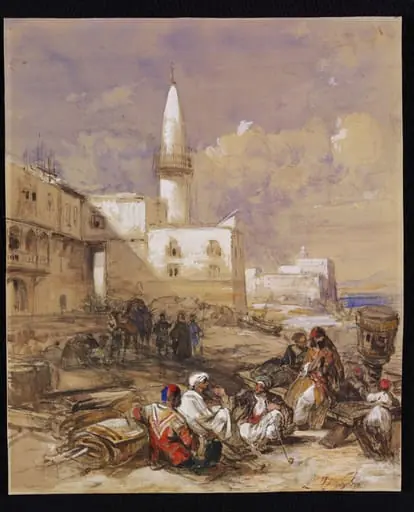 The Quay at Suez
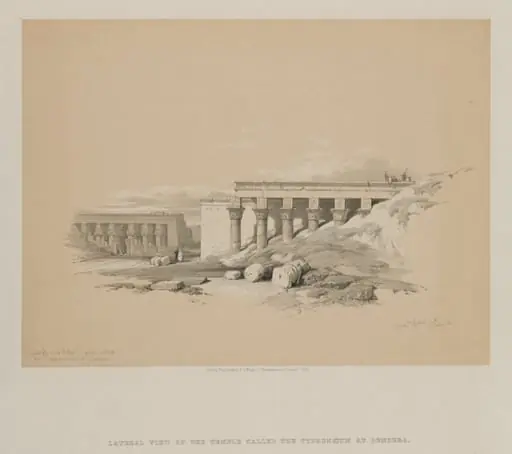 Egypt and Nubia, Volume II: Lateral View of the Temple called The Typhonoeum at Dendera
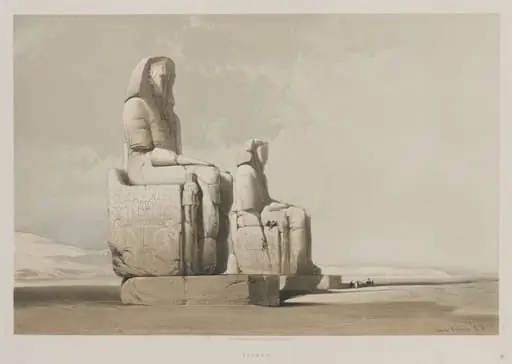 Egypt and Nubia, Volume I: Thebes
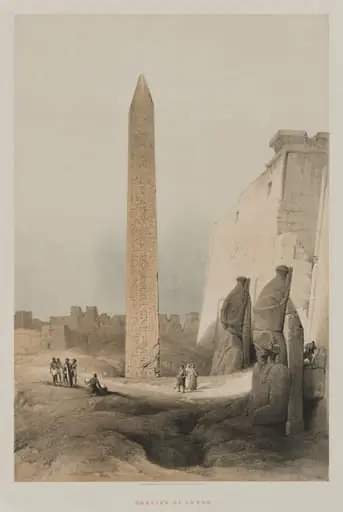 Egypt and Nubia, Volume I: Luxor
- Egypt and Nubia: Volume I - No. 3, Pyramids of Gizeh
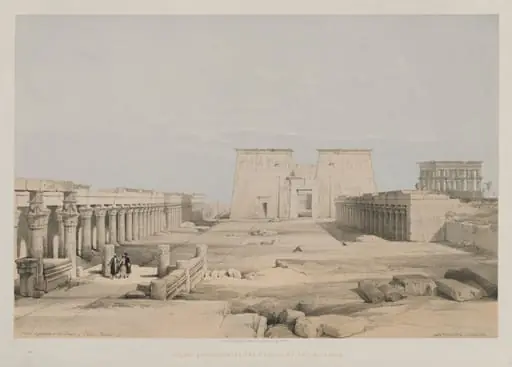 Egypt and Nubia, Volume I: Grand Approach to the Temple of Philae, Nubia
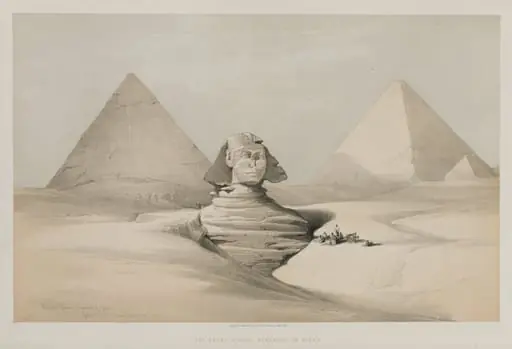 Egypt and Nubia, Volume I: The Great Sphinx, Pyramids of Gezeeh
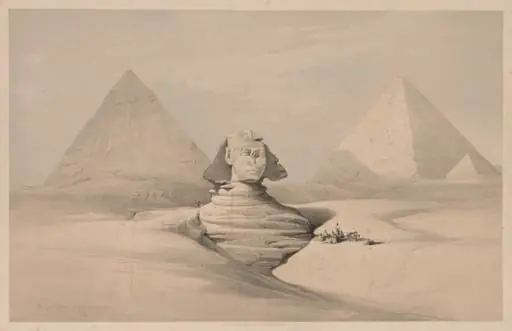 Egypt and Nubia: Volume I - No. 18, The Great Sphinx, Pyramids of Gizeh, Front View
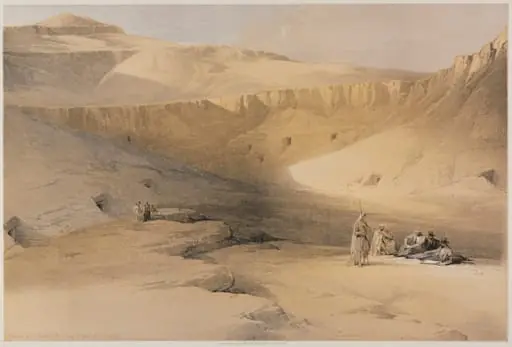 Egypt and Nubia, Volume II: Entrance to the Tombs of the Kings of Thebes, Bab-El-Malouk
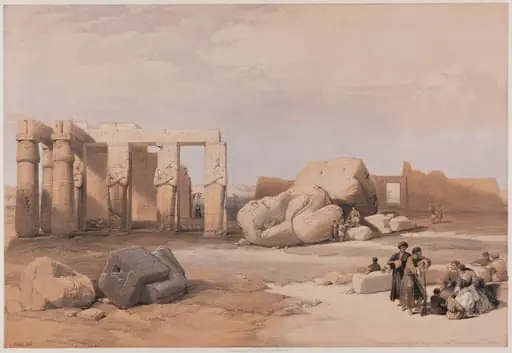 Egypt and Nubia, Volume II: Fragments of the Great Colossi at the Memnonium, Thebes
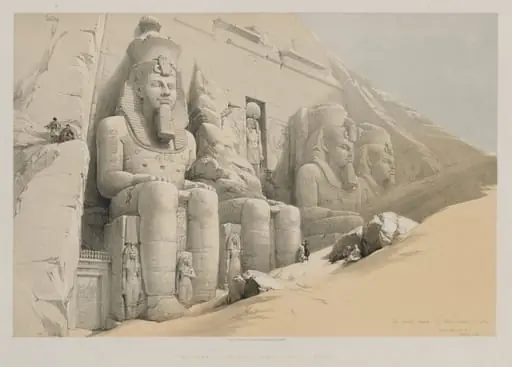 Egypt and Nubia, Volume I: The Great Temple of Aboo-Simble, Nubia
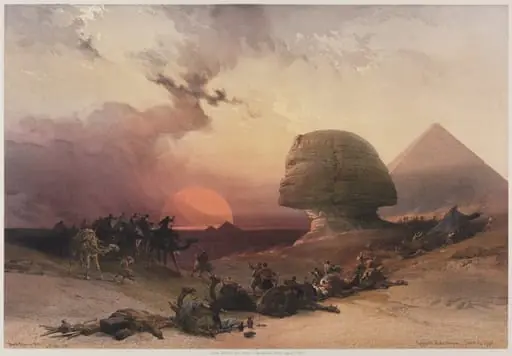 Egypt and Nubia, Volume III: Approach of the Simoon-Desert at Gizeh
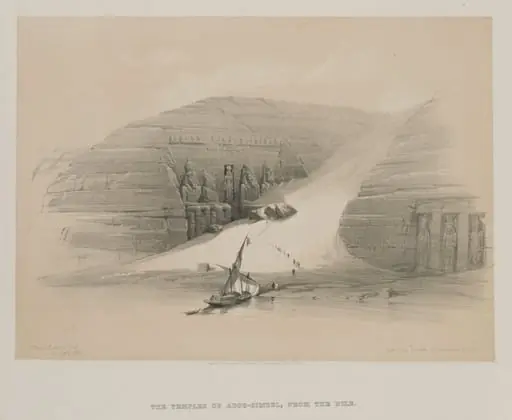 Egypt and Nubia, Volume II: Excavated Temples of Abo Simble, Nubia
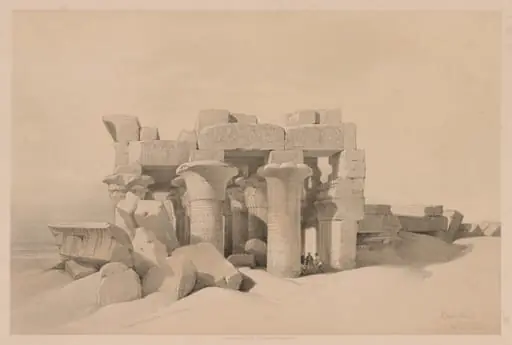 Egypt and Nubia: Volume II - No. 42, Ruins of Kom Ombo