Artwork
Keats's Grave
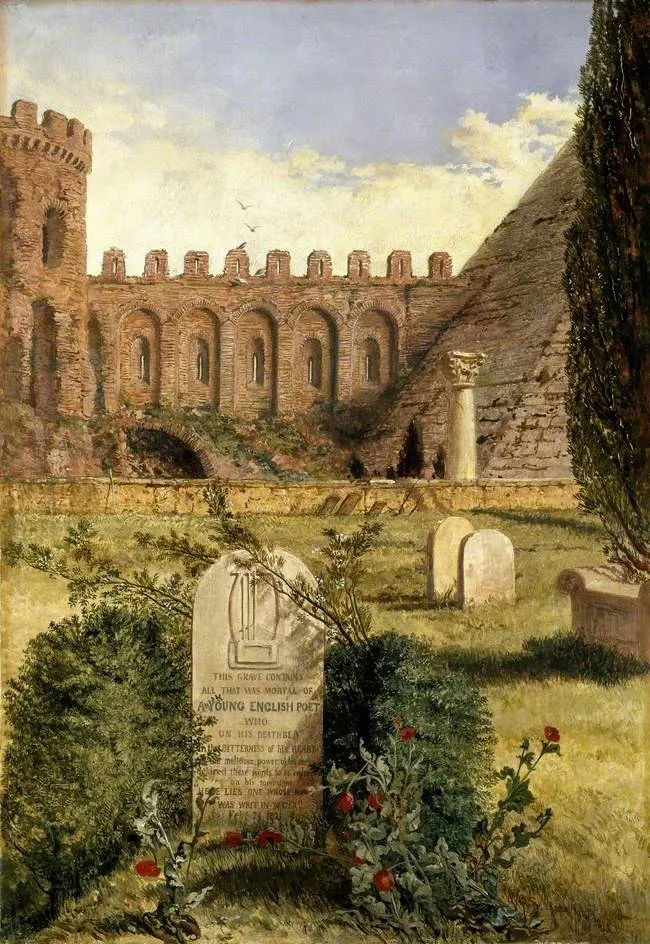
Keats's Grave is an oil painting by the Pre-Raphaelite artist William Bell Scott. It dates from 1873 and is held in the collection of the Ashmolean Museum.
About this work
Overview
William Bell Scott’s 1873 oil canvas entitled Keats’s Grave presents a quiet burial ground centred on a solitary headstone. The stone bears an unreadable inscription, while a substantial stone building with arched windows and a tower looms in the distance, framed by trees and verdant grass under a pale blue sky.
Subject & Meaning
The work memorialises the resting place of Romantic poet John Keats, inviting contemplation of his legacy through a tranquil, natural setting. A modest bush bearing red blossoms near the grave adds a subtle note of vitality, suggesting renewal amid remembrance.
Technique & Style
Executed in the Pre‑Raphaelite manner, the painting employs careful modelling of light and shadow to achieve chiaroscuro, giving the scene depth and a three‑dimensional quality. The palette remains restrained, dominated by muted earth tones, with the red flowers providing a focal accent.
History & Provenance
Scott, a Scottish painter who also taught art and wrote poetry, was closely associated with the Pre‑Raphaelite circle, especially Dante Gabriel Rossetti.
Scott, a Scottish painter who also taught art and wrote poetry, was closely associated with the Pre‑Raphaelite circle, especially Dante Gabriel Rossetti. After early training in Edinburgh and a period in London, he directed the Newcastle School of Art from 1843 to 1864, during which he broadened his subjects to include industrial and historical themes, culminating in works such as this homage to Keats.
Artist & collection
Artist
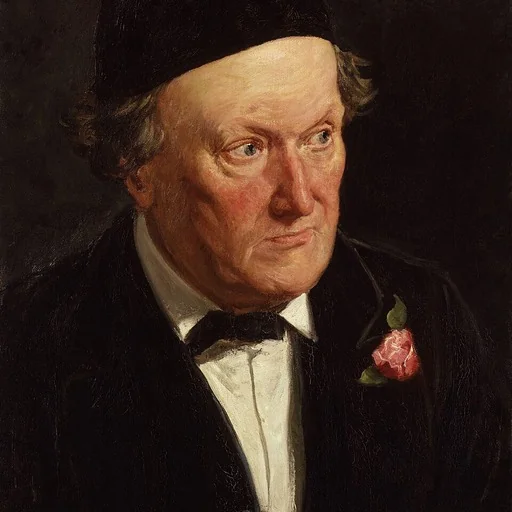
William Bell Scott (12 September 1811 – 22 November 1890) was a Scottish artist in oils and watercolour and occasionally printmaking.

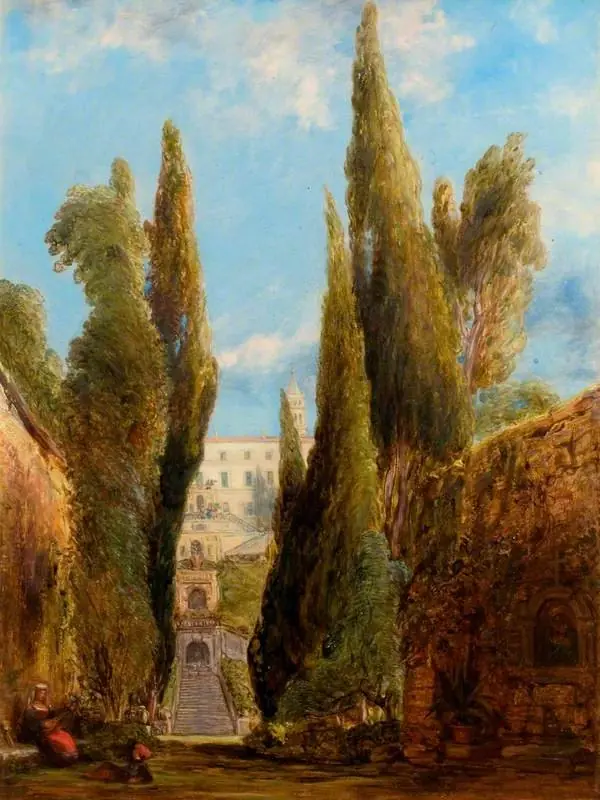 The Villa d'Este, Tivoli
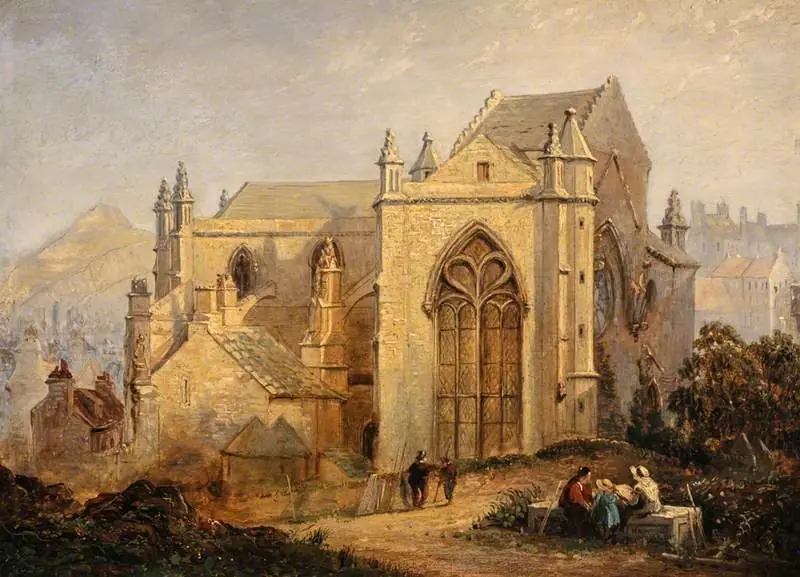 Old Trinity Church, Edinburgh
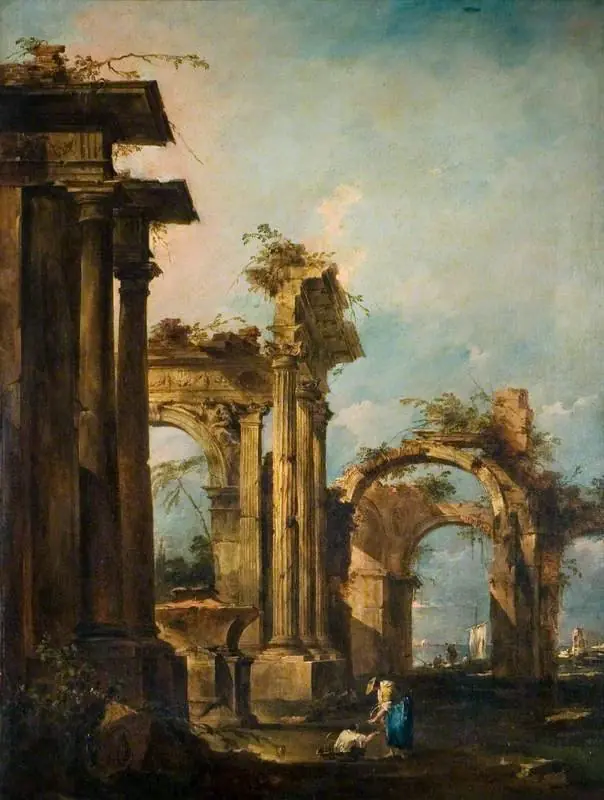 Capriccio with Ruins and Figures
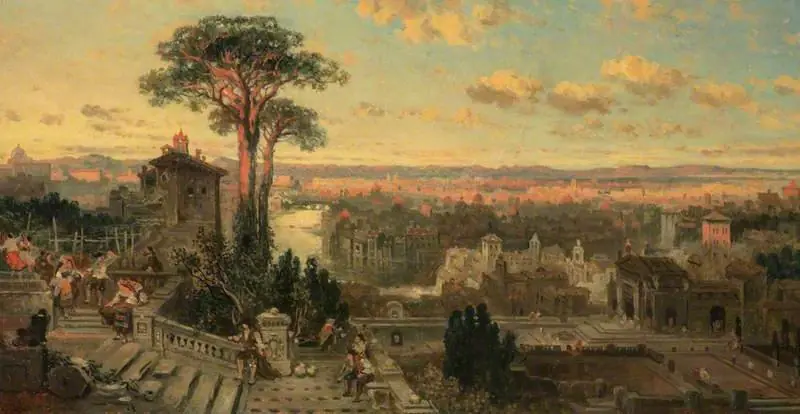 A Study for 'Rome: Sunset from the Convent of Sant' Onofrio on the Janiculum'
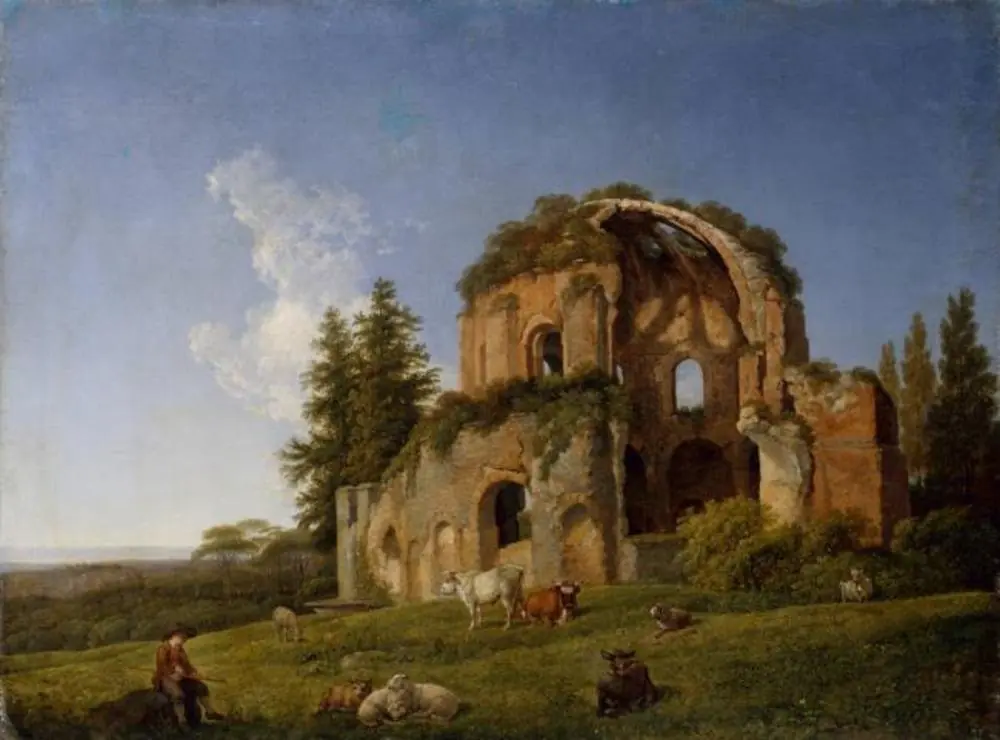 Landscape with the Minerva Medica ruin near Rome
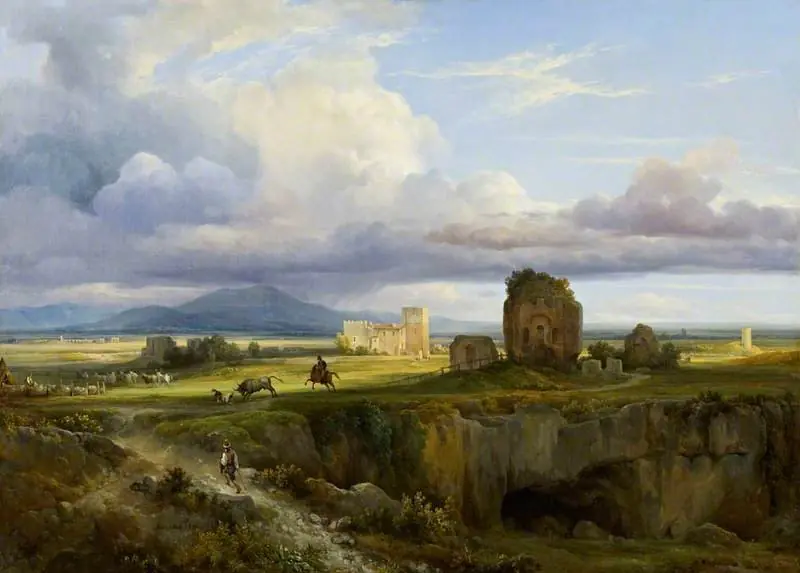 La Via Appia
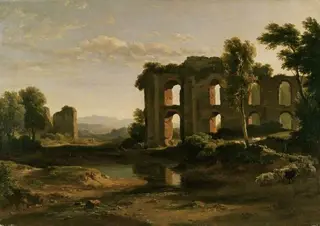 Landscape near Tivoli, with part of the Claudian Aqueduct
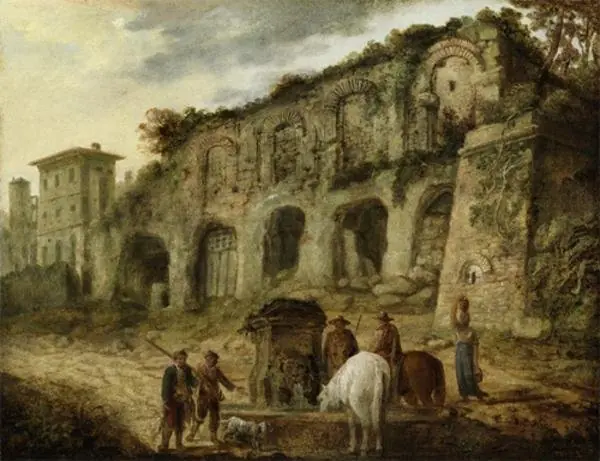 Peasants and Horses Standing By A Fountain: The Curia Ostilia and the Basilica Porzia on the Palatine Hill Beyond
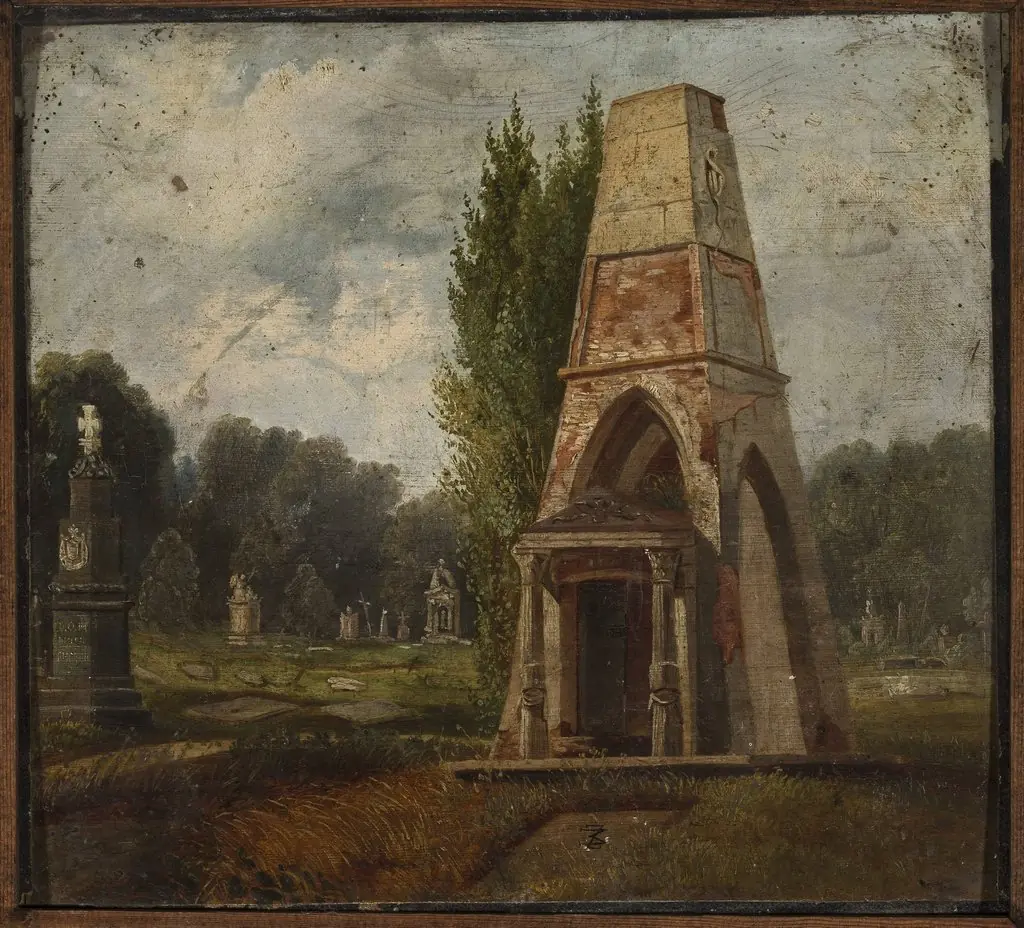 Kochanowski tomb at the Powązki cemetery
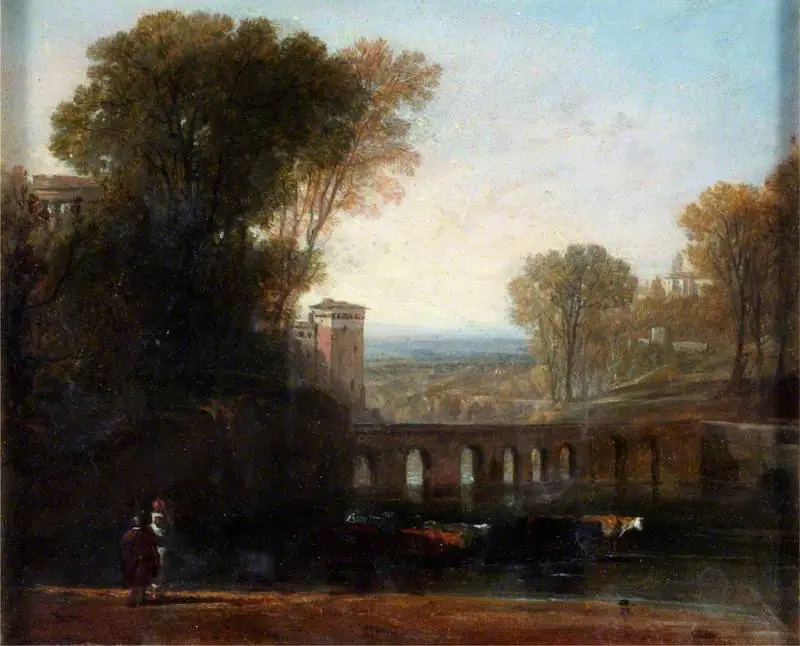 Italian Landscape with Cows Watering
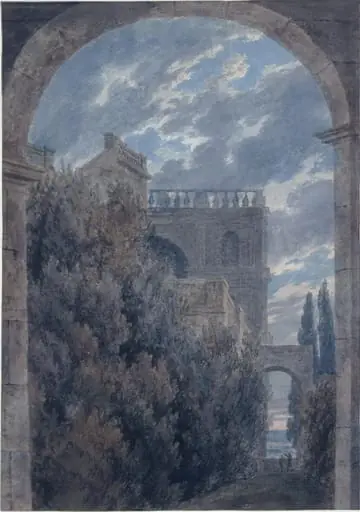 Villa Dracone at Frascati
- Shelley's Grave