Movement
Nazarene movement

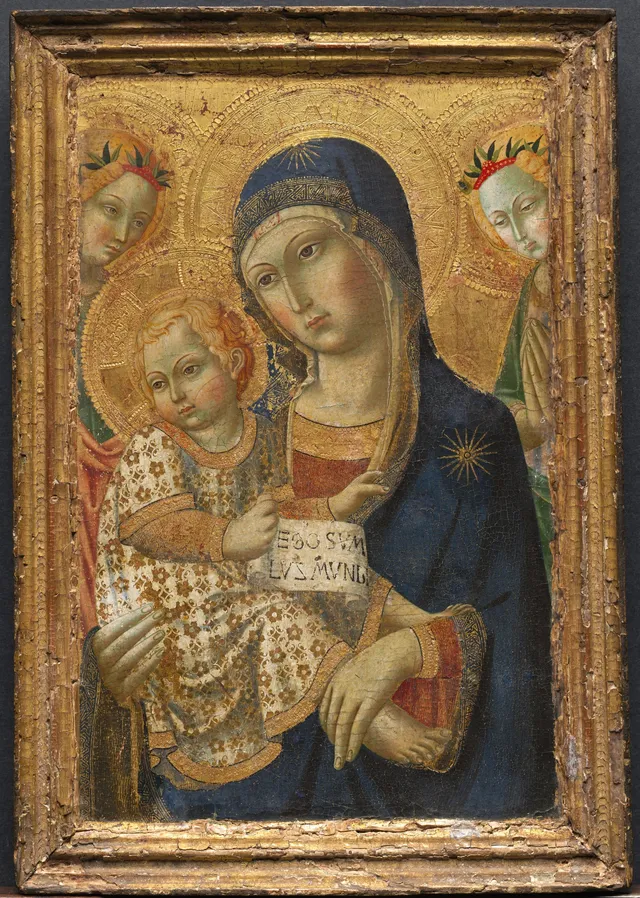
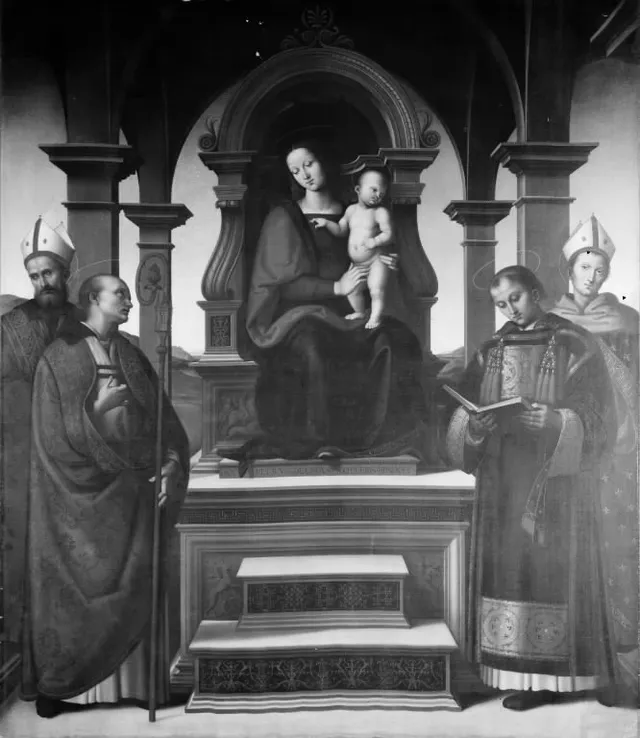
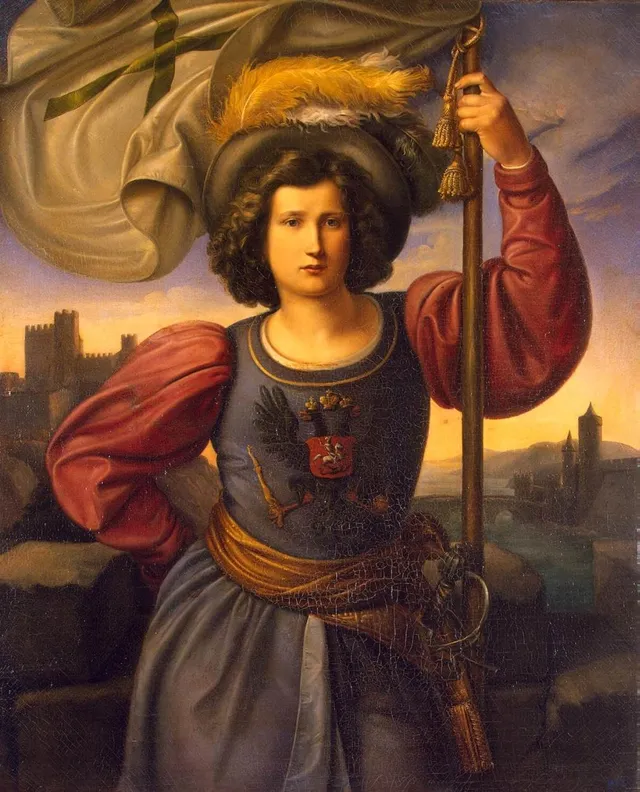
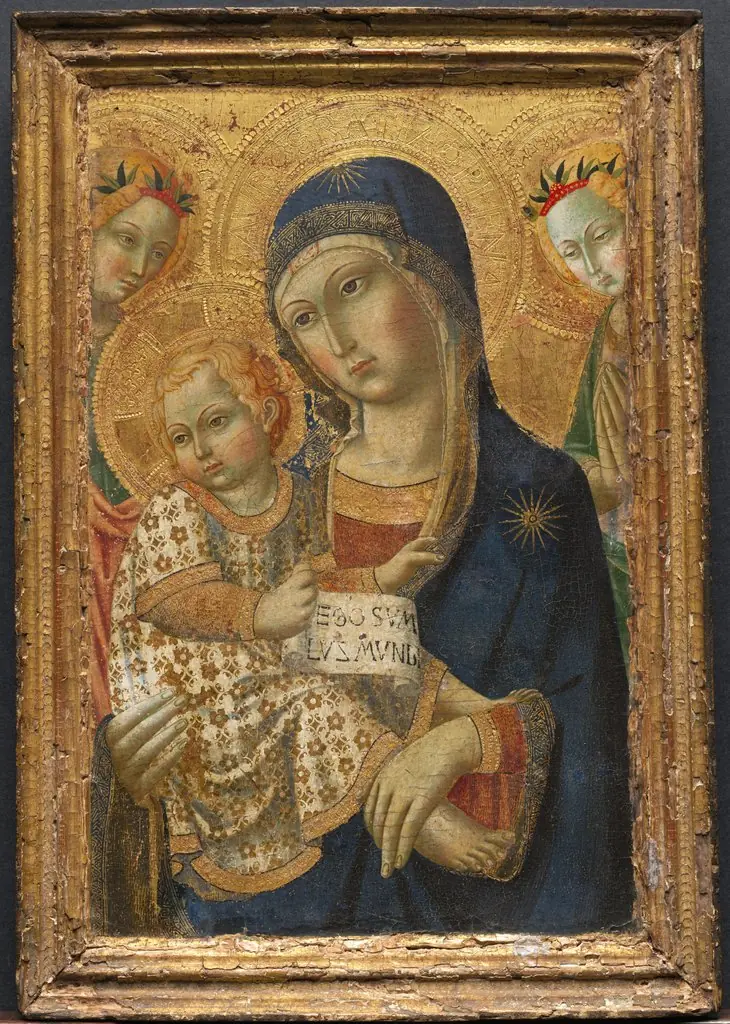
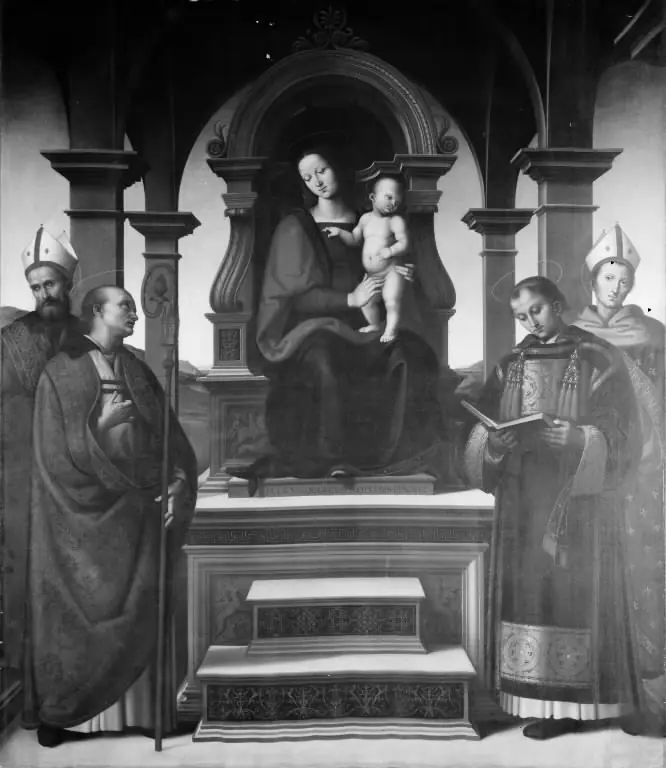
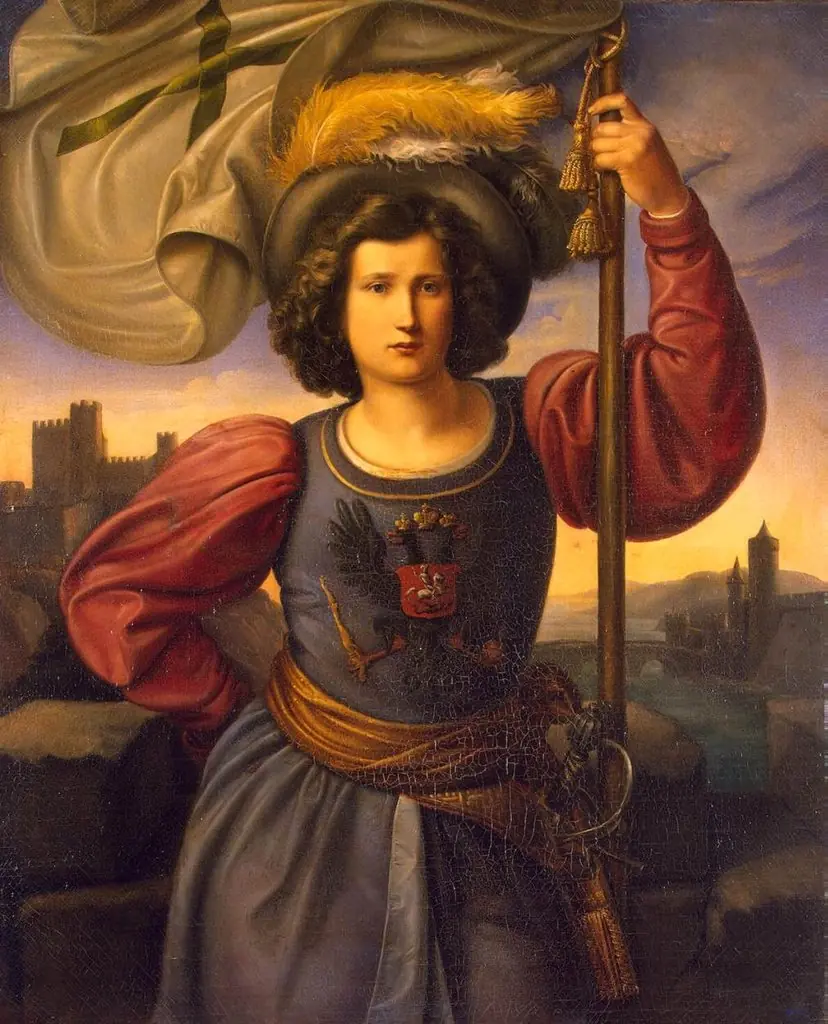
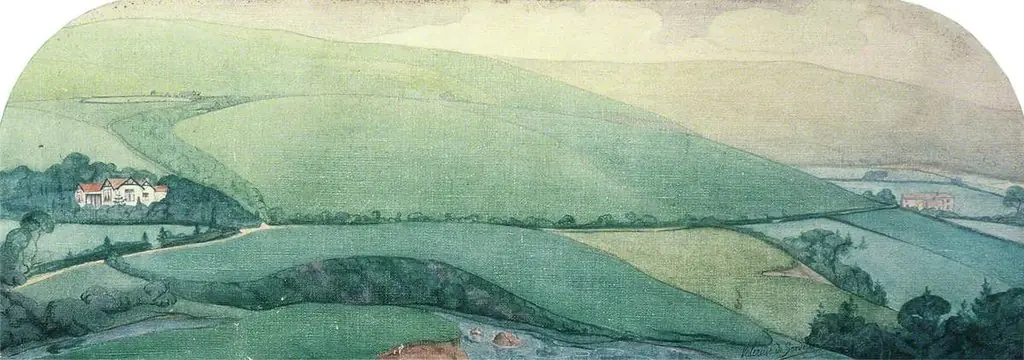
Nazarene movement is an art movement of the 1800–1830 period. The gallery holds 10 works in this movement, including works by Valerius de Saedeleer, Philipp Veit and Johann Friedrich Overbeck. Browse Nazarene movement paintings, portraits, pictures and artworks from the world's public-domain museum collections.
The Nazarene movement was a brotherhood of early nineteenth-century German Romantic painters who set out to restore the sincerity and Christian faith they admired in medieval and early Renaissance art. It began in 1809, when six students at the Vienna Academy—led by Friedrich Overbeck (1789–1869) and Franz Pforr (1788–1812)—rebelled against their rigid neoclassical training and formed a cooperative called the Brotherhood of St. Luke (Lukasbund), named for the patron saint of painters' guilds. In 1810 the founders moved to Rome and settled in the abandoned monastery of Sant'Isidoro on the Pincian Hill, living almost monastically. Their devout manner and long hair earned them the mocking nickname "Nazarenes," which had become their accepted name by 1817.
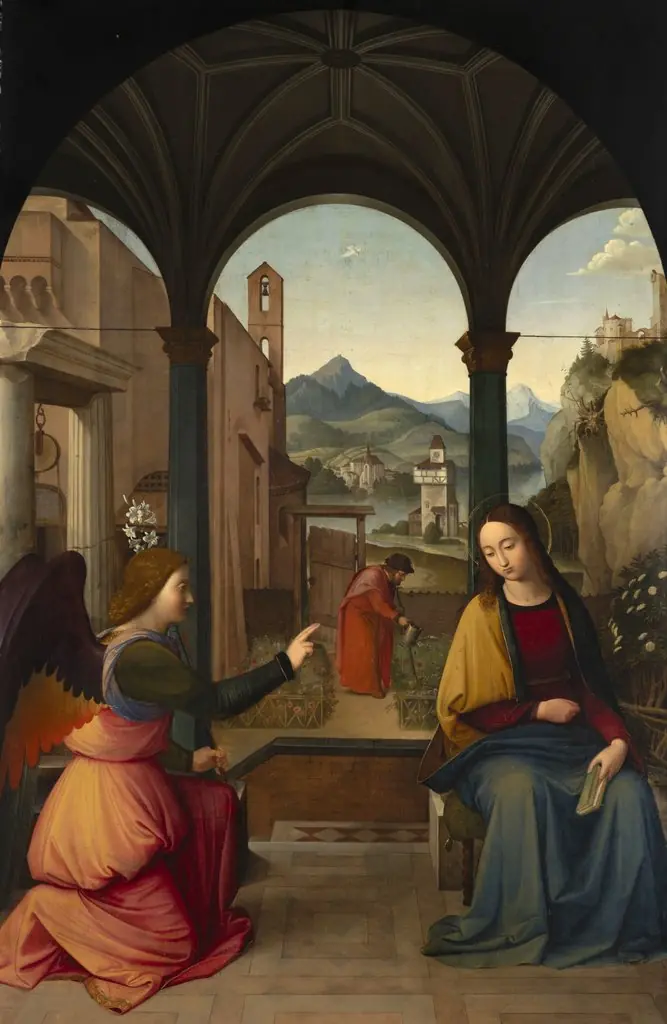
Reacting against academic convention and the cult of Raphael's maturity, the Nazarenes looked instead to Perugino, the young Raphael, Fra Angelico, and Dürer. Their style favored clear, firm outlines, lucid local color, balanced symmetrical compositions, and an earnest devotional tone in place of Baroque drama. Above all they sought to revive fresco, then a nearly lost craft, as the noblest and most public form of Christian art.
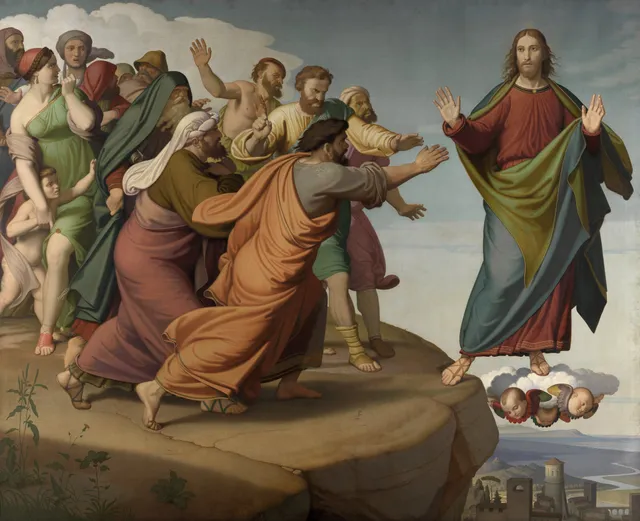
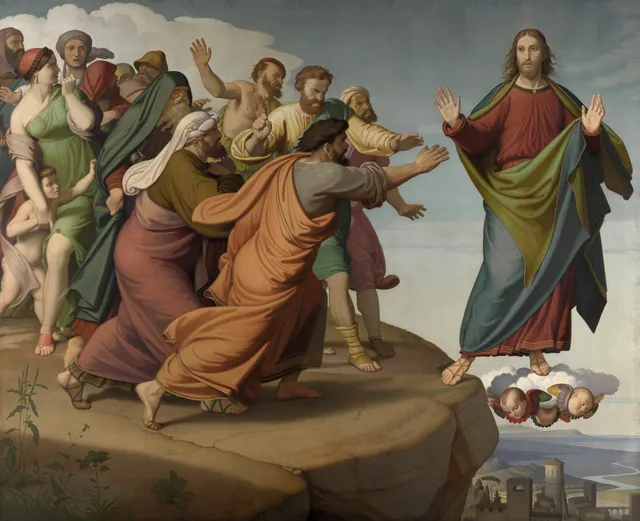
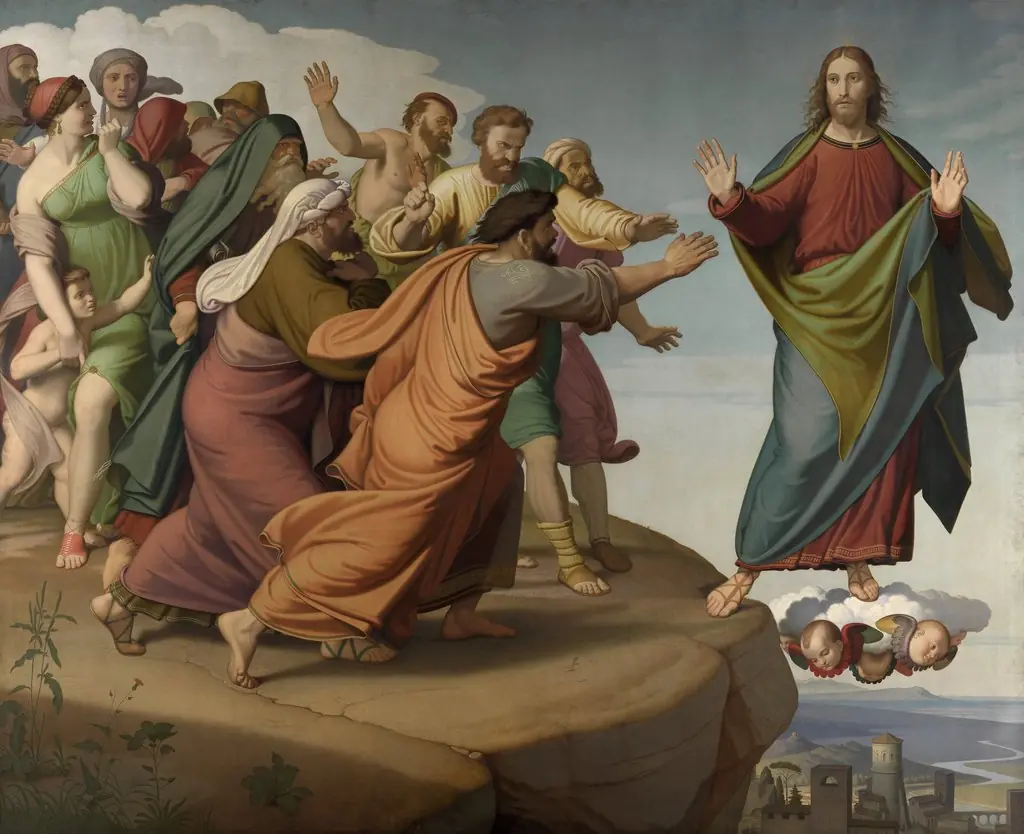
The circle grew to include Peter von Cornelius, Philipp Veit, Julius Schnorr von Carolsfeld, and Wilhelm von Schadow. Two Roman commissions brought them international attention: the Joseph cycle for the Casa Bartholdy (1816–17), now in Berlin's Alte Nationalgalerie, and the Dante, Ariosto, and Tasso frescoes of the Casino Massimo (1817–29). Overbeck remained the movement's spiritual anchor; his religious panels—works such as Christ Escapes the Pharisees and The Banishment of Hagar, both in this collection—epitomize the group's reverent clarity, as does Veit's allegorical painting.
The Nazarenes' influence outlasted the brotherhood itself. Returning north, Cornelius, Veit, and Schadow became powerful directors of the academies at Munich, Frankfurt, and Düsseldorf, shaping a generation of German religious and history painting. Their program of "truth to nature" and pre-Raphael inspiration crossed the Channel and helped model the English Pre-Raphaelite Brotherhood, founded in 1848, which shared their love of sharp detail, medieval subjects, and spiritual sincerity.
Key artists

Works


Frequently asked questions
What is Nazarene movement?
Nazarene movement is an art movement. A group of early 19th-century German painters who moved to Rome to revive the honesty and faith of medieval and early Renaissance art.
How many Nazarene movement works does Artifact World Gallery have?
Artifact World Gallery holds 10 public-domain Nazarene movement works, all free to view and download.
Who are the key Nazarene movement artists?
Key Nazarene movement artists in the collection include Valerius de Saedeleer, Philipp Veit and Johann Friedrich Overbeck.
When did Nazarene movement take place?
Nazarene movement dates from 1800–1830.
Where can I see Nazarene movement works?
Nazarene movement works in the collection are held by Kunsthaus Zürich, Statens Museum for Kunst and National Library of Wales.