Movement
Pre-romanticism
Pre-romanticism is an art movement of the 1750–1800 period. The gallery holds 1 work in this movement, including works by Hubert Robert, Antoine-Jean Gros and Jean-Charles Tardieu. Browse Pre-romanticism paintings, portraits, pictures and artworks from the world's public-domain museum collections.
Pre-Romanticism (sometimes called Préromantisme) was a broad European cultural current of roughly the last third of the eighteenth century that anticipated and prepared the way for Romanticism proper. Although it began in literature—the "graveyard" poets of 1740s England, Samuel Richardson's sentimental novel Pamela (1740), the mid-century cult of sensibility, and above all the German Sturm und Drang ("Storm and Stress") of about 1770–1785—its values quickly migrated into painting. Against the Enlightenment's confidence in reason, Pre-Romantic artists and writers exalted feeling, intuition, individual genius, and the untamed power of nature. The decisive theoretical spur was Edmund Burke's A Philosophical Enquiry into the Origin of Our Ideas of the Sublime and Beautiful (1757), which argued that terror, vastness, and obscurity could stir emotions more profound than mere beauty.
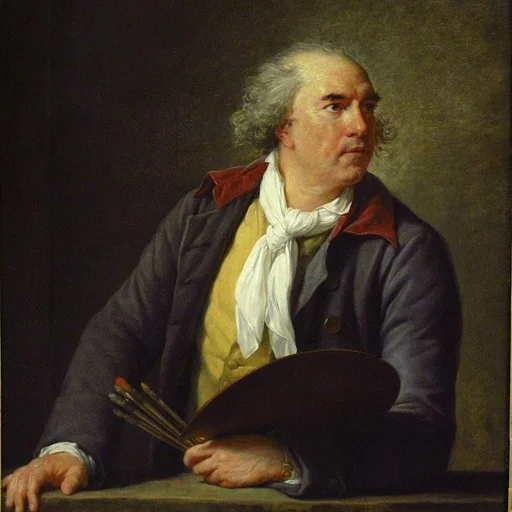
In the visual arts this translated into subject matter and effects designed to overwhelm the viewer rather than instruct or please. Painters favoured storms, shipwrecks, moonlit nights, volcanic eruptions, and crumbling Gothic and antique ruins, deploying dramatic chiaroscuro—stark oppositions of light and dark—to heighten emotional charge. The marine catastrophes of Claude-Joseph Vernet, the architectural reveries of Hubert Robert (1733–1808), nicknamed "Robert des Ruines" for his melancholy capricci of Roman ruins, and the scientific wonder and candlelit drama of Joseph Wright of Derby (1734–1797) all belong to this sensibility, as do George Stubbs's confrontations of horse and predator.
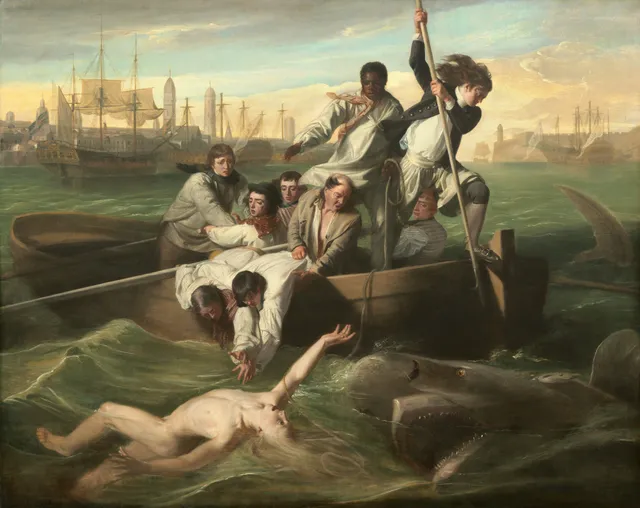
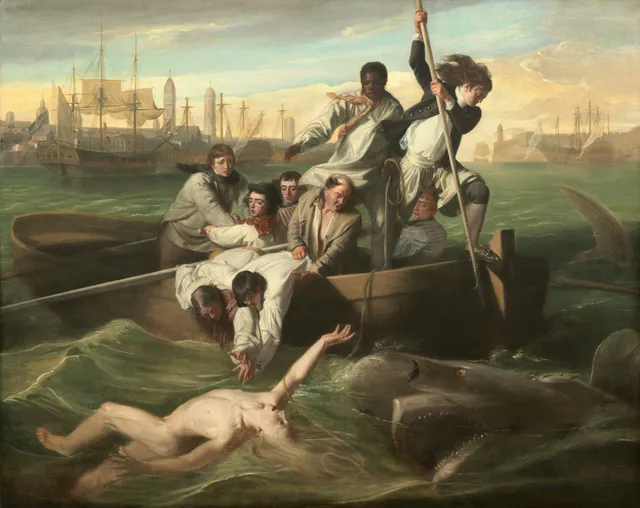
Its most emblematic image is The Nightmare (1781) by the Swiss-born Henry Fuseli, a veteran of the Sturm und Drang circle: an incubus crouches on a sleeping woman while a spectral horse looms from the shadows—one of the first paintings to depict an intangible psychological state rather than a narrated event. John Singleton Copley's Watson and the Shark (1778), held in this collection, distils the new fascination with man pitted against a violent, indifferent nature.
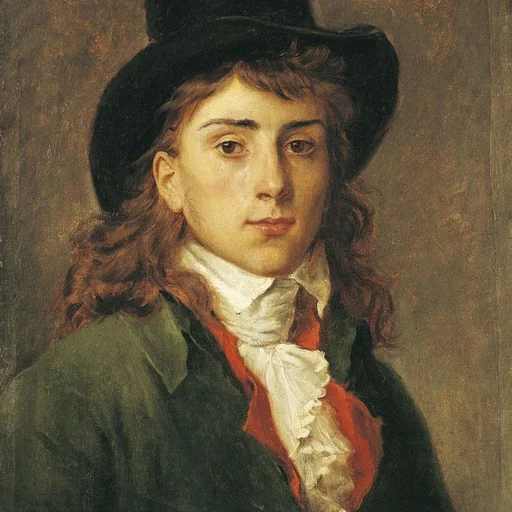
Pre-Romanticism flows directly into Romanticism. Antoine-Jean Gros (1771–1835), trained under the Neoclassicist David, charged his Napoleonic epics such as Bonaparte Visiting the Plague Victims of Jaffa (1804) with warm colour, exotic setting, and emotional turbulence, becoming the crucial bridge to Théodore Géricault and Eugène Delacroix. What began as a counter-current to Neoclassical restraint thus matured into the dominant artistic language of the early nineteenth century.
Key artists
Works
Frequently asked questions
What is Pre-romanticism?
Pre-romanticism is an art movement. The transitional currents in European art and literature in the second half of the 18th century that prepared the ground for Romanticism — the taste for the sublime, the Gothic, and the 'primitive,' most visible in the paintings of Johann Heinrich Füssli and the landscape poetry…
Who are the key Pre-romanticism artists?
Key Pre-romanticism artists in the collection include Hubert Robert, Antoine-Jean Gros and Jean-Charles Tardieu.
When did Pre-romanticism take place?
Pre-romanticism dates from 1750–1800.
Where can I see Pre-romanticism works?
Pre-romanticism works in the collection are held by Museum of Fine Arts Boston.