Movement
Scuola degli Albanesi
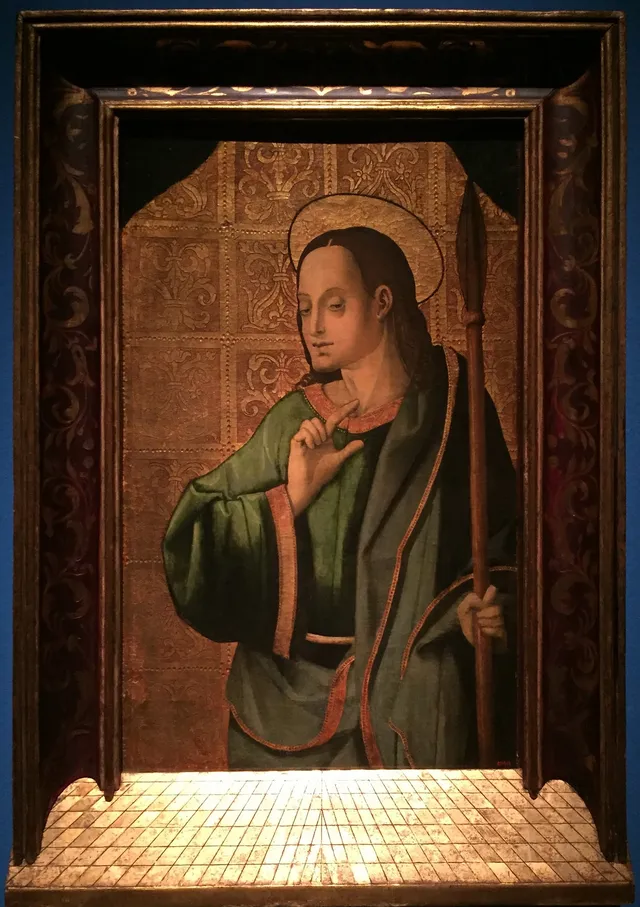
Scuola degli Albanesi is an art movement dating from 1500. The gallery holds 1 work in this movement, including works by Pedro Romana. Browse Scuola degli Albanesi paintings, portraits, pictures and artworks from the world's public-domain museum collections.
The Scuola degli Albanesi — formally the Scuola di Santa Maria e di San Gallo — was a Venetian devotional confraternity founded in 1442 to serve the city's growing community of Catholic Albanians. Like Venice's other "scuole" of foreign nations, it offered mutual aid, burial rites, and a shared religious focus to immigrants far from home. Its ranks swelled in the later fifteenth century as refugees fled the Ottoman advance into the Balkans, above all after the fall of Scutari (Shkodër) to Mehmed II in 1479. By 1447 the brotherhood had settled into a modest meeting house near the church of San Maurizio, in the sestiere of San Marco, which remained its seat for centuries.
The Scuola's enduring fame rests on a single commission: a cycle of large canvases on the Life of the Virgin, joint patron of the confraternity alongside Saint Gall. Painted by Vittore Carpaccio between roughly 1504 and 1508 — overlapping with his celebrated cycle for the Dalmatians at San Giorgio degli Schiavoni — the six scenes comprised the Birth of the Virgin, the Presentation at the Temple, the Marriage (or Miracle of the Flowering Rod), the Annunciation, the Visitation, and the Death of the Virgin. They display Carpaccio's hallmark virtues: lucid architectural settings, narrative calm, crisp light, and the patient accumulation of domestic and ceremonial detail. Scholars generally regard the cycle as a lesser, workshop-assisted effort beside his Schiavoni masterpieces, the master having delegated much of the execution.
The building's exterior was later enriched with marble reliefs from the Lombardo workshop around 1531, depicting the Virgin and Child with Saints Gall and Maurice and, strikingly, Mehmed II besieging Scutari — a rare civic memorial to the homeland the brethren had lost.
Napoleonic suppression in 1808 dissolved the Scuola and scattered its furnishings. Carpaccio's cycle was broken up and dispersed: the Annunciation, Visitation, and Death of the Virgin hang today in the Galleria Franchetti at the Ca' d'Oro in Venice; the Presentation and the Marriage are in the Pinacoteca di Brera, Milan; and the Birth of the Virgin is held by the Accademia Carrara in Bergamo. The Scuola thus survives less as a place than as a dispersed monument of Venetian narrative painting at the height of Carpaccio's career.
Key artists
Works
Frequently asked questions
What is Scuola degli Albanesi?
Scuola degli Albanesi is an art movement. A Venetian Renaissance confraternity, remembered for an early-16th-century painting cycle on the life of the Virgin.
Who are the key Scuola degli Albanesi artists?
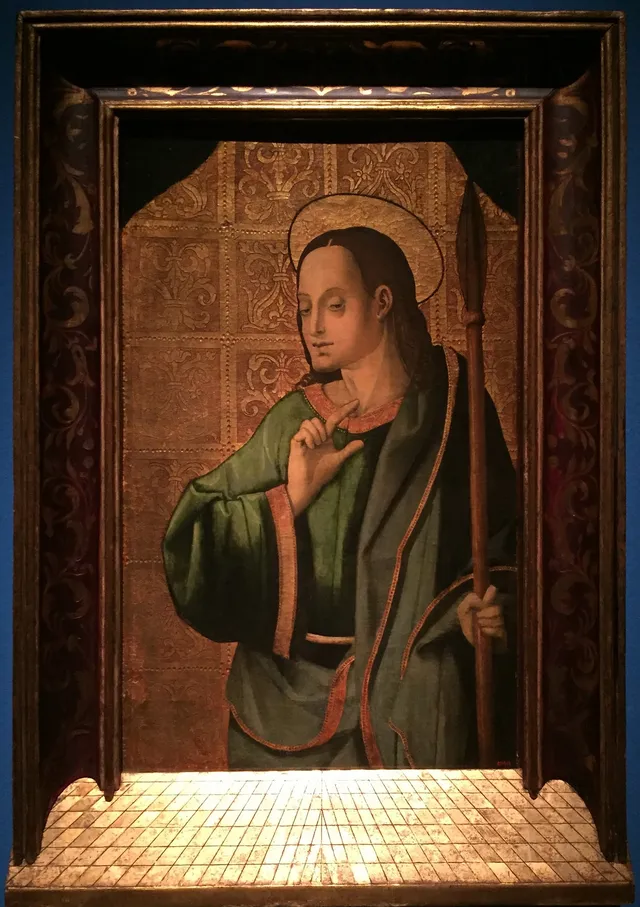
Key Scuola degli Albanesi artists in the collection include Pedro Romana.
When did Scuola degli Albanesi take place?
Scuola degli Albanesi dates from around 1500.
Where can I see Scuola degli Albanesi works?
Scuola degli Albanesi works in the collection are held by Museu Nacional d'Art de Catalunya.