February 17 in Art History
8 real events recorded on February 17, the earliest from 1774. 2 artists were born on this date.
The day's biggest moments
Born on this day 2
- 1774 Born
Born this day: Raphaelle Peale
Raphaelle Peale was an American still-life painter, born on February 17, 1774. He is known for his detailed and realistic depictions of food and drink, often arranged in intricate compositions. His work reflects the emerging American art scene of the 18th and 19th centuries.
Raphaelle Peale is considered one of the first professional American still-life painters.
- 1837 Born
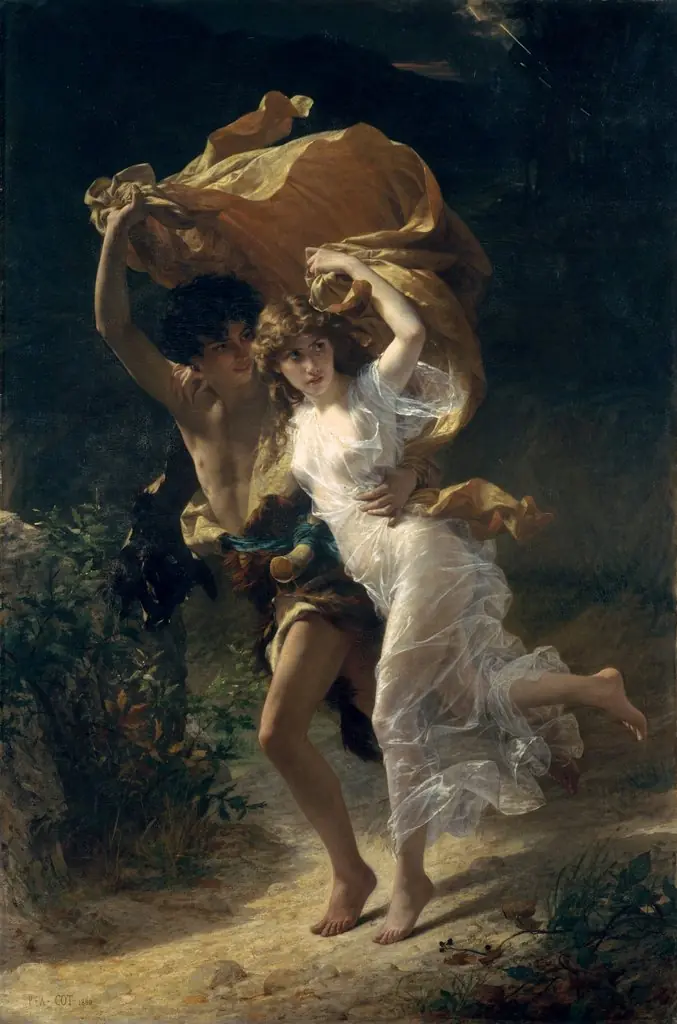
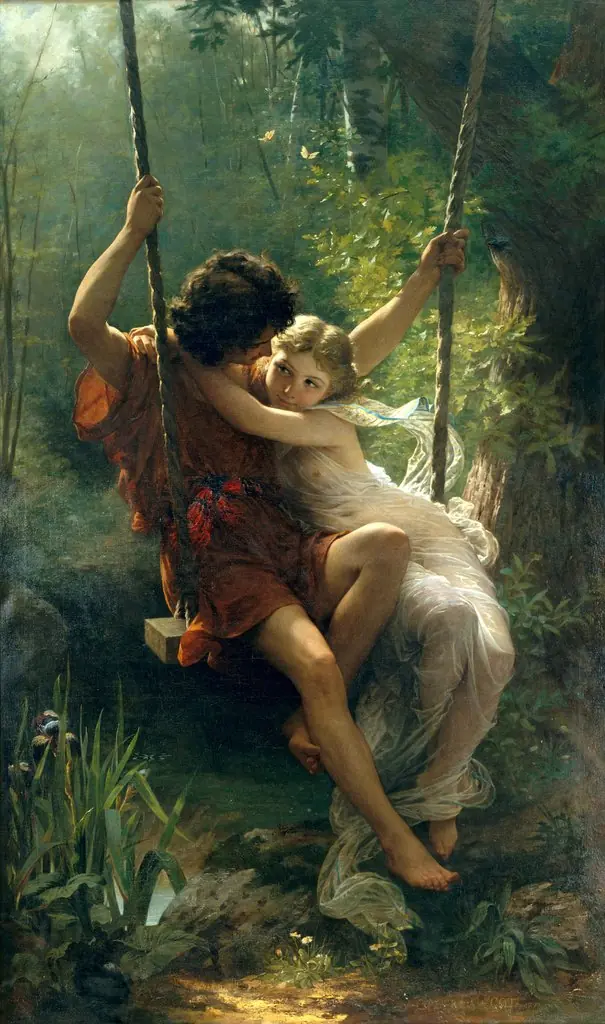
Born this day: Pierre Auguste Cot
Pierre Auguste Cot, a French artist, was born on February 17, 1837. He is known for his polished draftsmanship and idealized beauty, rooted in Academic Classicism. Cot's work includes notable pieces like The Storm and Springtime, which showcase his skill in capturing the human form.
He remains one of the most celebrated portraitists of the Parisian elite during the late 19th century.
Exhibitions & salons 5
- 1913 Exhibition Landmark
The Armory Show Opens
The International Exhibition of Modern Art, quickly known as the Armory Show, opened at New York's 69th Regiment Armory on February 17, 1913. Organized by the Association of American Painters and Sculptors, it brought roughly 1,300 paintings, sculptures, and decorative works by more than 300 European and American artists before a public used to academic realism. Its galleries included Impressionist, Fauvist, and Cubist work, with loans by artists such as Marcel Duchamp, Henri Matisse, Pablo Picasso, Paul Cezanne, Wassily Kandinsky, Claude Monet, Vincent van Gogh, Mary Cassatt, Edward Hopper, George Bellows, and James McNeill Whistler. The show's controversy, especially around Duchamp's Nude Descending a Staircase, No. 2, made modernism a mass-media subject in the United States.
It became the canonical starting point for modern art's broad public reception in the United States.
Marcel Duchamp , Pablo Picasso , Wassily Kandinsky , Henri Matisse
- 1913 Exhibition Landmark
Opening of the Armory Show
The International Exhibition of Modern Art, famously known as the Armory Show, opened at the 69th Regiment Armory in New York City. Organized by the Association of American Painters and Sculptors, it was the first large-scale exhibition of modern art in the United States, featuring over 1,300 works by European and American artists. The show introduced the American public to radical movements such as Fauvism, Cubism, and Futurism, with Marcel Duchamp's 'Nude Descending a Staircase, No. 2' becoming a focal point of public controversy and media satire.
It fundamentally altered the trajectory of American art by legitimizing modernism and shifting the center of the art world from Paris to New York.
- 1913 Exhibition Landmark
The Armory Show
The International Exhibition of Modern Art — organized by the painters Arthur B. Davies and Walt Kuhn — brought roughly 1,300 works to a National Guard armory in Manhattan, giving America its first mass encounter with Cézanne, Van Gogh, Matisse and Cubism. Duchamp's Nude Descending a Staircase became the scandal of the century's young art.
American collecting, museum-building and art-making pivoted toward European modernism in a single season.
- 2008 Exhibition
WACK! Opens at P.S.1
WACK!: Art and the Feminist Revolution opened its P.S.1 Contemporary Art Center presentation on February 17, 2008, after earlier stops at the Museum of Contemporary Art, Los Angeles, and the National Museum of Women in the Arts. The exhibition, organized by MOCA curator Connie Butler, surveyed international feminist art and its legacies with work by about 120 artists and collectives from 21 countries. MOCA described it as the first institutional exhibition to examine comprehensively the international foundations and legacy of art made under feminism's influence, focusing on the period from 1965 to 1980. Its P.S.1 run made that research visible in New York, linking artists across performance, video, photography, painting, sculpture, and collective practice.
It helped consolidate feminist art of the 1960s and 1970s as a global field for museums and scholarship.
Judy Chicago , Lygia Clark , Marina Abramović , Eva Hesse , Ana Mendieta , Louise Bourgeois
- 2022 Exhibition
Faith Ringgold: American People Opens
Faith Ringgold: American People opened at the New Museum on February 17, 2022. The museum's own exhibition data gives the start date as 2022-02-17 and describes the show as the most comprehensive assessment to date of Ringgold's vision, bringing together more than fifty years of work. Installed across the second, third, and fourth floors, it foregrounded her paintings, soft sculptures, story quilts, writing, and activism, including major works from the American People and French Collection series. Contemporary coverage emphasized that the retrospective reunited key quilt cycles and murals while situating Ringgold's civil-rights-era imagery, feminist critique, and challenge to art-versus-craft hierarchies within the broader history of American art.
The retrospective significantly strengthened Ringgold's position within the canon of postwar American art.
Unveilings & commissions 1
- 2008 Unveiling
NEWBORN Monument Unveiled
The NEWBORN monument, a large typographic public sculpture in Pristina, was unveiled on February 17, 2008, the day Kosovo declared independence. Designed by Fisnik Ismaili with Ogilvy Kosova, the work spelled the English word NEWBORN in monumental block letters, originally painted bright yellow and placed in front of the Palace of Youth and Sports. The source documents its completion date as 17 February 2008 and notes that it was signed at the unveiling by Kosovo's president and prime minister, followed by many citizens. The work was conceived as a direct visual emblem of a newly declared state, and its annual repainting turned the object into a recurring civic ritual as well as a design landmark.
It made graphic design function as public monument, national symbol, and annually renewed civic artwork.