February 20 in Art History
7 real events recorded on February 20, the earliest from 1633. 2 artists were born , 1 died on this date.
The day's biggest moments
Born on this day 2
- 1633 Born
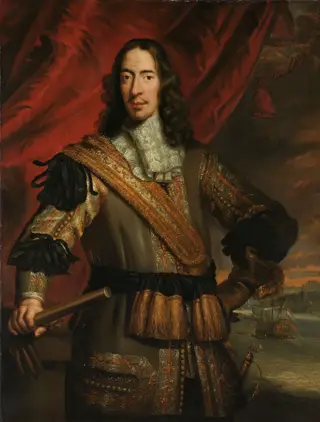
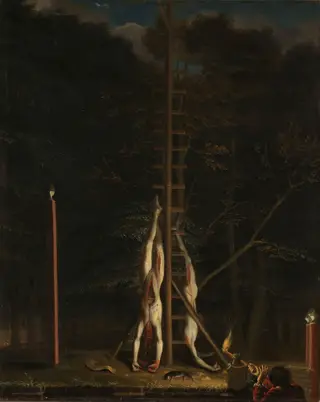
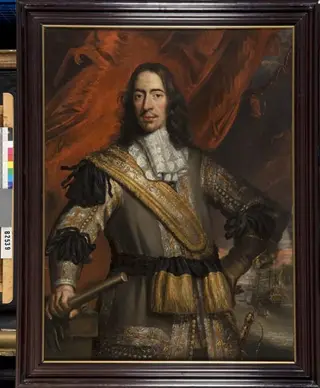
Born this day: Jan de Baen
Jan de Baen, a Dutch portrait painter, was born on February 20, 1633. He was a prominent figure during the Dutch Golden Age, known for his popular portraits of distinguished individuals. De Baen's work was characterized by his time as a pupil of Jacob Adriaensz Backer and his later work in The Hague.
Jan de Baen's portraits continue to be a testament to the artistic excellence of the Dutch Golden Age.
- 1844 Born
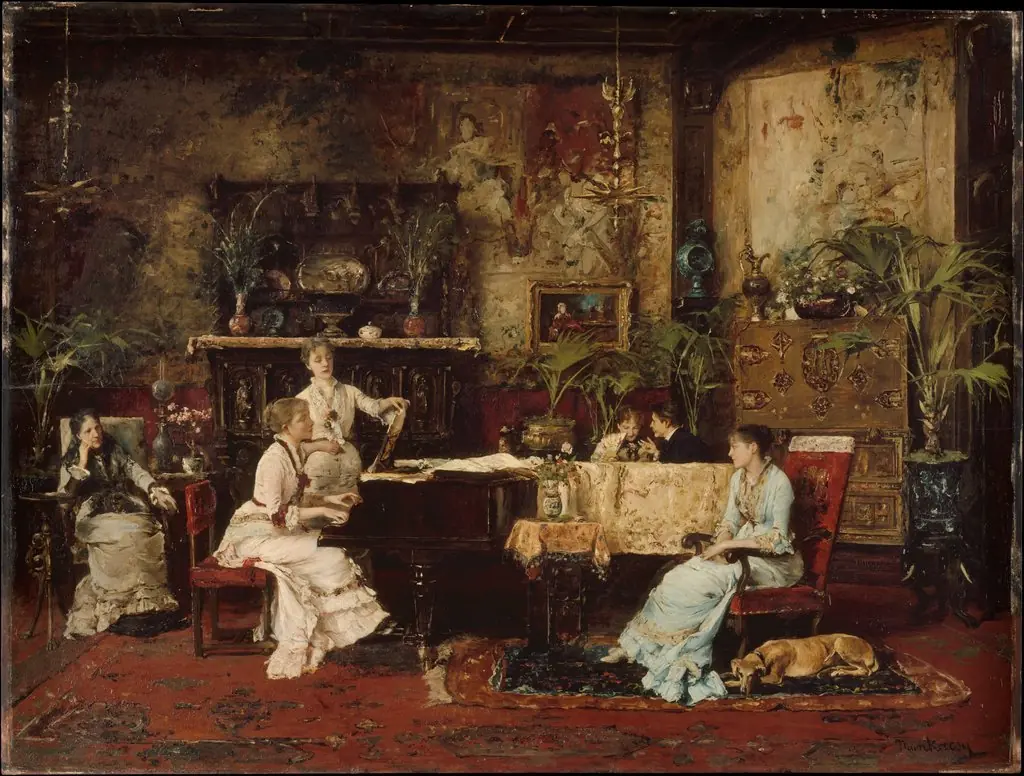
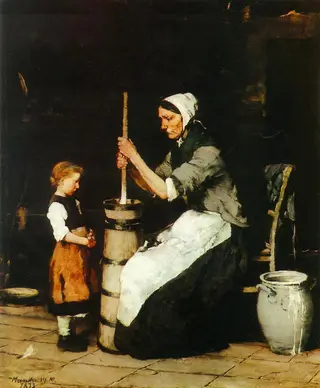
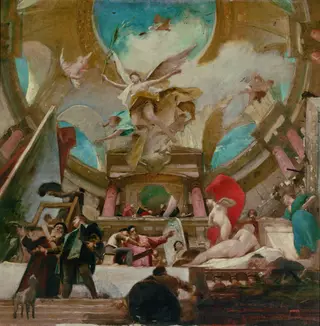
Born this day: Mihály Munkácsy
Mihály Munkácsy, a Hungarian painter born on February 20, 1844, is known for his genre pictures and large-scale biblical paintings, which earned him international recognition. His works, such as The Music Room and Apotheose der Renaissance, showcase his skill and artistry.
Mihály Munkácsy's contributions to Hungarian art have left a lasting impact on the country's cultural heritage.
Died on this day 1
- 1941 Died
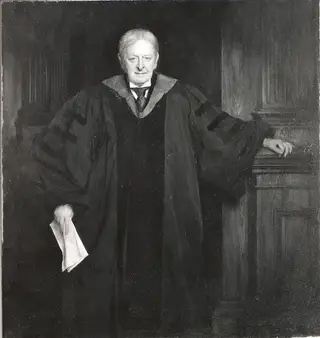
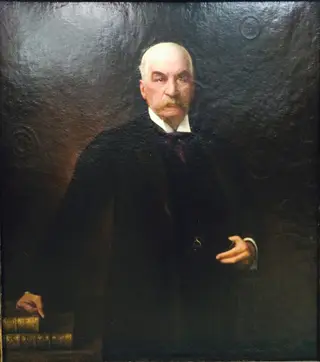
Died this day: Carlos Baca-Flor
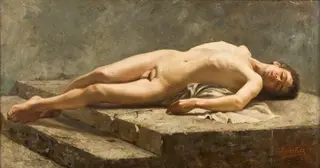
Carlos Baca-Flor, an artist born in Islay in 1869, is notable for his portraits such as The Honorable Joseph Hodges Choate and J. Pierpont Morgan, showcasing his skill in capturing likenesses of prominent figures. His work also includes pieces like Abel muerto, demonstrating a range of artistic expression.
Carlos Baca-Flor's legacy lies in his contributions to portrait art, leaving behind a collection of notable works that continue to be appreciated today.
Exhibitions & salons 1
- 1948 Exhibition
Fifty Seven Artists opens at the Pyramid Club
The Pyramid Club exhibition Fifty Seven Artists opened in Philadelphia and ran through March 20. The club, founded by African American professionals, was one of the city's key Black-controlled cultural spaces, and its annual art exhibitions from 1941 to 1957 gave Black artists access to patrons, critics, and institutional networks that often excluded them elsewhere. The 1948 show was dedicated to the recently deceased painter Laura Wheeler Waring and included women artists despite the club's male membership structure. Listed participants included Selma Burke, Elizabeth Kitchenman Coyne, Reba Klein, Naomi Lavin, Elsie Reber, Edith Townsend Scarlett, and Sarai Sherman.
The show preserved the Pyramid Club's role as a major midcentury platform for Black artists in Philadelphia.
Openings & foundings 1
- 1872 Opening Landmark
The Metropolitan Museum of Art opens to the public
The Metropolitan Museum of Art first opened to the public in rented quarters at 681 Fifth Avenue in New York. Its founding circle combined financiers, publishers, artists, and civic reformers who wanted the city to have an encyclopedic museum devoted to art education and public access. John Taylor Johnston, whose own collection helped seed the institution, served as its first president; George Palmer Putnam became founding superintendent; and artists including Eastman Johnson and Frederic Edwin Church were among the co-founders. The early collection was small, but it quickly outgrew its first home, moved again in 1873, and entered its Central Park building in 1880.
The opening launched what became the largest art museum in the Americas.
Manifestos & publications 2
- 1909 Manifesto Landmark
Futurist Manifesto appears in Le Figaro
Filippo Tommaso Marinetti's Futurist Manifesto appeared in French on the front page of the Paris newspaper Le Figaro after an earlier Italian publication in Bologna. The text announced Futurism as an aggressively modern movement opposed to inherited artistic tradition and devoted to speed, machinery, youth, industrial power, and shock. Its claims were literary and political as well as visual, but the manifesto gave later Futurist painters and sculptors a public identity before their technical programs were fully developed. Marinetti's use of a mass newspaper also made publicity itself part of the avant-garde method.
The publication helped establish the manifesto as a defining modern-art format.
- 1909 Manifesto
Futurist Manifesto Published in Le Figaro
The poet Filippo Tommaso Marinetti bought the front page of the Paris daily Le Figaro to proclaim a new art of speed, machines and violence — declaring a racing automobile more beautiful than the Victory of Samothrace and demanding the museums be burned. Futurism arrived as publicity stunt and program at once.
The manifesto itself became an art form: every avant-garde of the next half-century — Dada, De Stijl, Surrealism — announced itself in Marinetti's genre.