Artwork
The Corpses of the De Witt Brothers
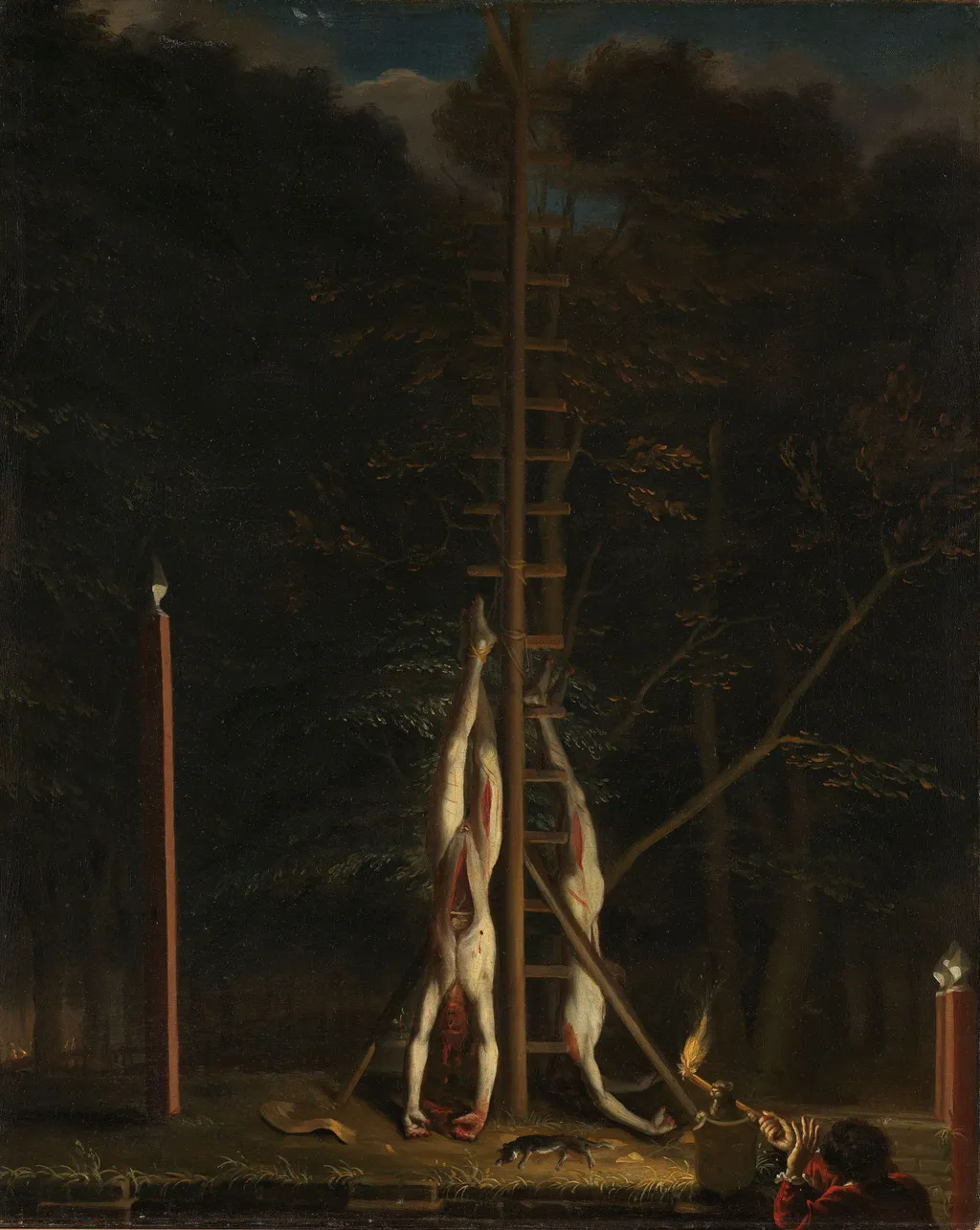
The Corpses of the De Witt Brothers is an oil painting by the Dutch Golden Age artist Jan de Baen. It dates from 1673 and is held in the collection of the Rijksmuseum.
About this work
Subject & Meaning
The image functions both as a documentary record of political violence and as a cautionary emblem of the factional turmoil of the Rampjaar.
The painting depicts the lynched and mutilated bodies of Johan de Witt, the former Grand Pensionary of Holland, and his brother Cornelis de Witt, hanging upside down from the wip, a gallows-like beam at the Groene Zoodje, the place of execution before the Gevangenpoort in The Hague. The brothers had dominated Dutch politics as opponents of the House of Orange and were blamed by a furious local mob for leaving the Republic unprepared for Louis XIV's 1672 invasion, the so-called Rampjaar. Their killing on 20 August 1672 followed the forced resignation of Johan and the exile verdict handed to Cornelis, and was carried out by supporters of the young William of Orange, who had just been appointed stadtholder.
Many details match eyewitness accounts: Johan is suspended one rung higher than Cornelis, and both bodies were eviscerated, with toes, fingers, and noses severed. A dead cat in the foreground was reportedly originally placed between Cornelis's legs. An inscription on the verso identifies the figures, noting that Cornelis is the one without a wig while Johan wears his own hair, and claims the work was painted from life on the night of 20 August 1672.
The image functions both as a documentary record of political violence and as a cautionary emblem of the factional turmoil of the Rampjaar.
Technique & Style
Created circa 1672–75, this work is an oil painting on canvas measuring 69.5 by 56 cm. Although traditionally attributed to Jan de Baen, the piece lacks a signature or date, leading some scholars to suggest it may be a copy of a print by Roelant Roghman rather than a direct observation of the scene. The composition depicts the mutilated bodies of Johan and Cornelis de Witt hanging upside down from a gibbet, with specific details such as Johan's higher position and the absence of a wig on Cornelis aligning with historical accounts of the lynching. A dead cat appears in the foreground, originally positioned between the brothers' legs.
Despite claims on a label affixed to the reverse that the image was painted from life at 11:00 PM on the night of the execution, discrepancies with eyewitness reports regarding missing hands indicate the artist likely did not witness the event directly.
History & Provenance
The painting, attributed to Jan de Baen, is undated and unsigned but is generally dated to the period 1672–1675, reflecting the lynching of the De Witt brothers on August 20, 1672. Although an inscription on the reverse claims the work was painted from life that same evening, art historians suggest the composition likely derives from a print by Roelant Roghman rather than direct observation. The work entered the national collection in 1802 when Alexander Gogel purchased it for nearly 1,000 guilders for the National Art Gallery in The Hague, a precursor to the Rijksmuseum.
This acquisition occurred despite objections from Cornelis Sebille Roos, who argued the piece was merely a copy and should be concealed. Shortly after the purchase, the attribution was corrected from Frans van Mieris to Jan de Baen. The painting has remained in the collection ever since, though it has occasionally been displayed only in rooms containing anatomical scenes.
Since 1802 the painting has been held by the Rijksmuseum, Amsterdam, where it is inventoried as SK-A-15.
It was purchased that year for the National Kunst-Galerij in The Hague by Alexander Gogel for nearly 1,000 guilders and transferred with the collection to the Rijksmuseum upon its establishment. The work was long displayed only in designated anatomy rooms out of respect for its graphic subject.
It appeared in the 2013 exhibition Denkbeeldig vaderland. Kunst en politiek in de Bataafs-Franse tijd 1795–1813 at the Rijksmuseum.
Context
Jan de Baen's depiction of the lynched De Witt brothers occupies a singular place in Dutch Golden Age history as a document of political violence rather than traditional portraiture. While the artist was a leading portraitist in The Hague known for celebrating the brothers' earlier triumphs, this 1673 work captures the brutal aftermath of the 1672 Rampjaar. The painting's status as a primary historical record is underscored by a label on its reverse, which claims it was painted from life on the night of August 20, 1672, though some scholars argue it may be a copy after a print by Roelant Roghman.
Acquired in 1802 by Alexander Gogel for nearly 1,000 guilders, the work was immediately recognized as a highlight of the national collection, despite contemporary advice to conceal it. Its placement in the Rijksmuseum alongside anatomy scenes reflects its enduring, albeit disturbing, significance as a testament to the era's political instability.
Legacy
The painting has been regarded as a highlight of the Dutch national history collection since its 1802 acquisition, and it has remained on display at the Rijksmuseum, where it is generally shown only in rooms with anatomical subjects out of deference to its disturbing effect on casual viewers. Its subject was also disseminated through a popular print by Roelant Roghman, broadening the image's reach beyond the painted canvas.
In modern popular culture, the work appeared in season 2 of the television series Killing Eve, in which the character Villanelle stages a murder replicating the painting's composition after viewing the image. The 2015 Dutch film Admiral additionally dramatizes the lynching of the De Witt brothers and depicts Jan de Baen himself immortalizing their deaths on canvas.
Overview
Jan de Baen’s oil on canvas, executed between 1672 and 1675, portrays the gruesome aftermath of a political murder. The work, now housed in Amsterdam’s Rijksmuseum, captures the bodies of the De Witt brothers suspended upside down on a wooden post at the Groene Zoodje, the execution site before The Hague’s Gevangenpoort.
Own this work as a print
Artist & collection
Artist
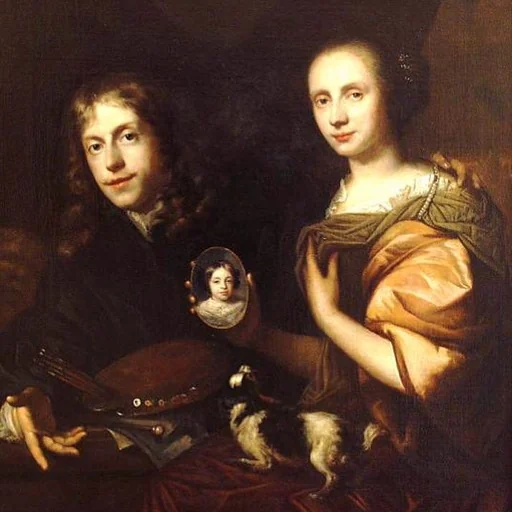
Jan de Baen (20 February 1633 – 1702) was a Dutch portrait painter who lived during the Dutch Golden Age.

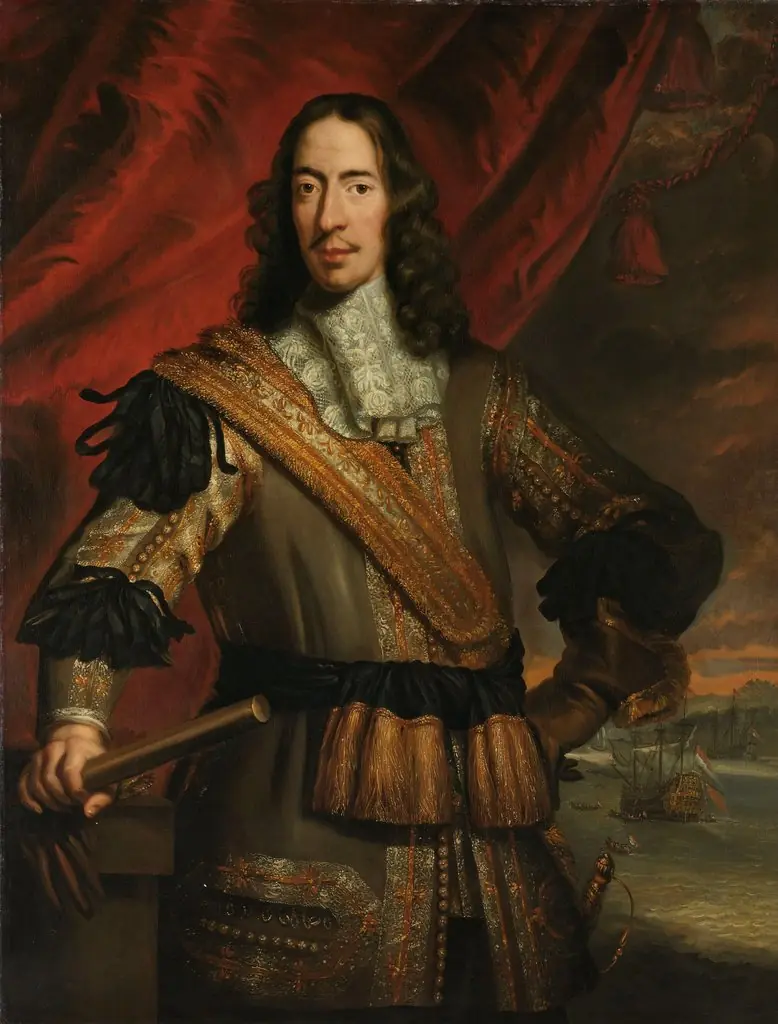 Portrait of Cornelis de Witt (1623-72), Burgomaster of Dordrecht and lord lieutenant of Putten
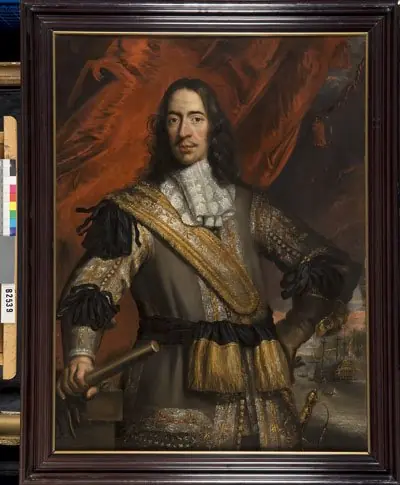 Portrait of Cornelis de Witt (1623-1672)
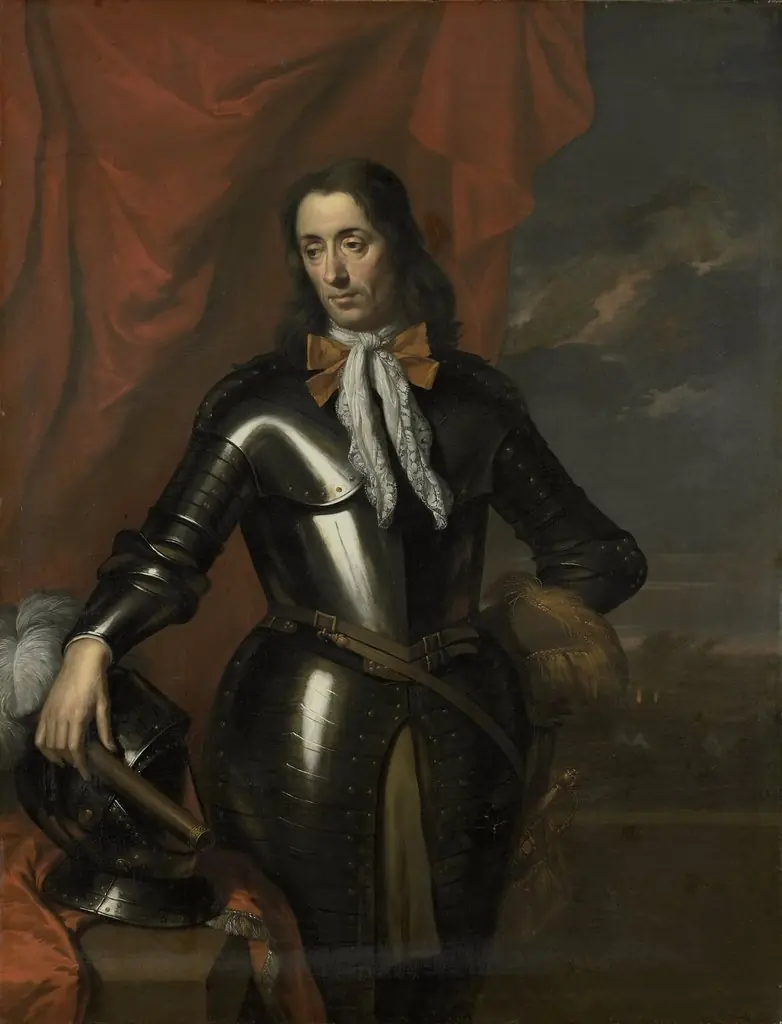 Portrait of Isaac de l'Ostal de Saint-Martin (ca 1629-96), governor of the Dutch East Indies and commander of the garrison at Batavia
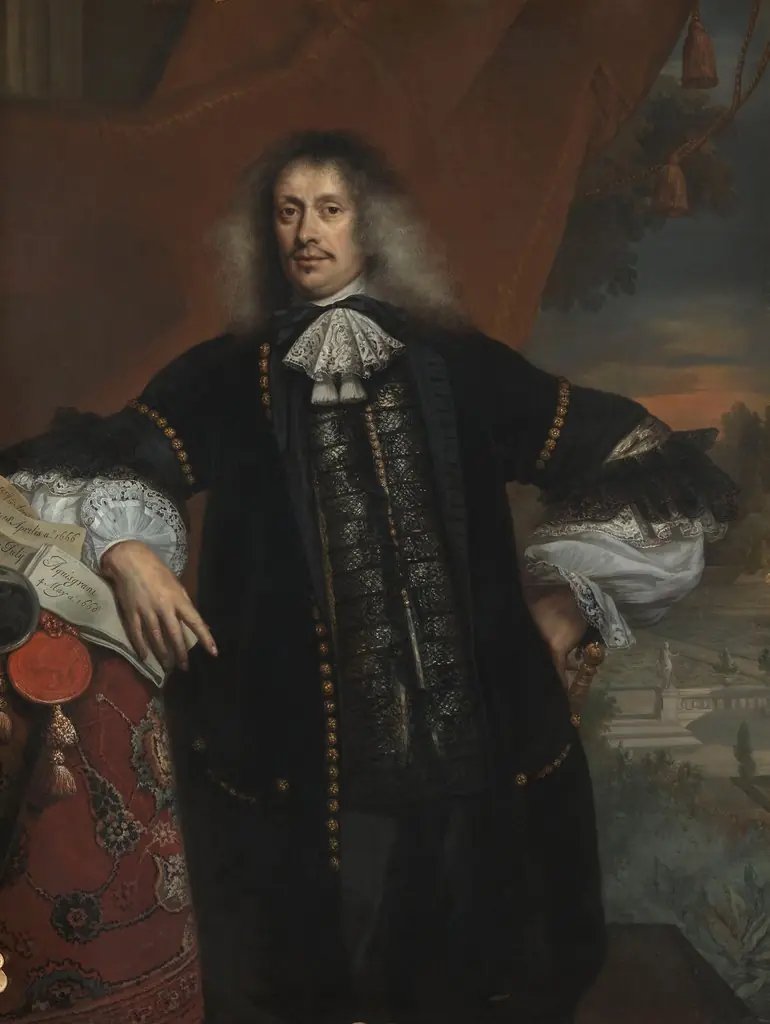 Hieronymus van Beverningk
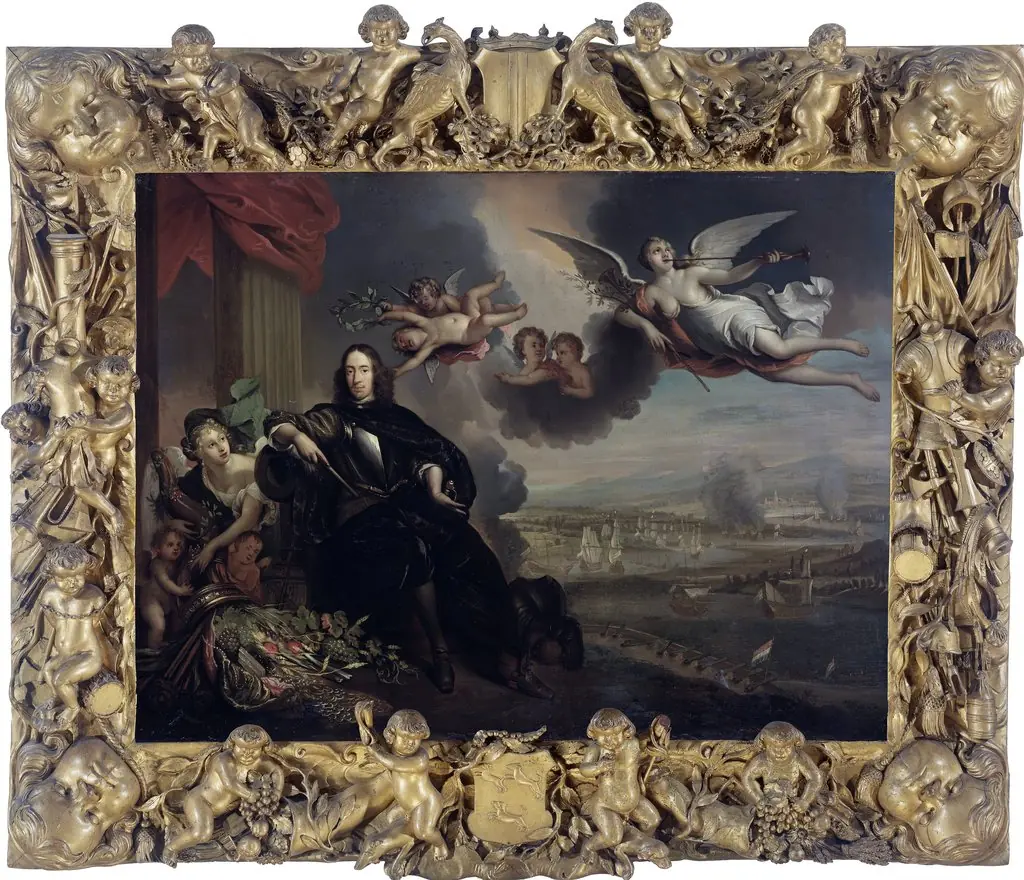 The apotheosis of Cornelis de Witt, with the raid on Chatham in the background
- Slaughtered Ox
 The Descent from the Cross
 Horsemen Attacked by Robbers
 Christ in Limbo
 Hunting Trophies
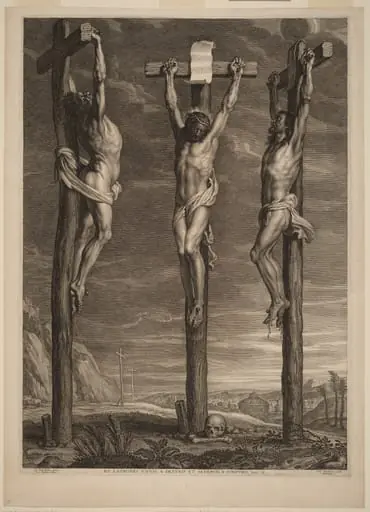 Christ Crucified between Two Thieves
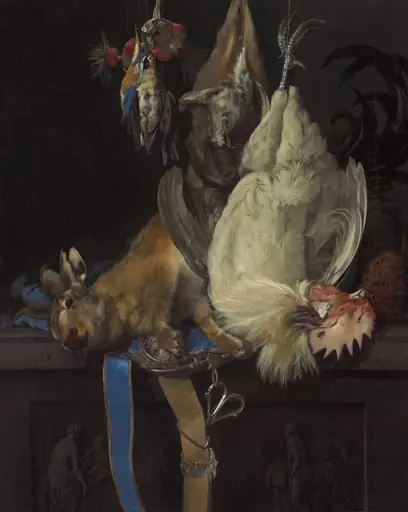 Still Life with Dead Game
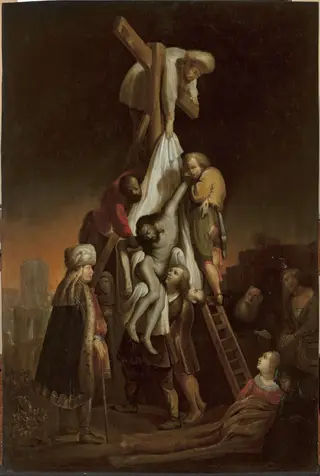 Descent from the Cross (Matthew 27:58–59; Mark 15: 45–46; Luke 23:52–53; John 19:38)
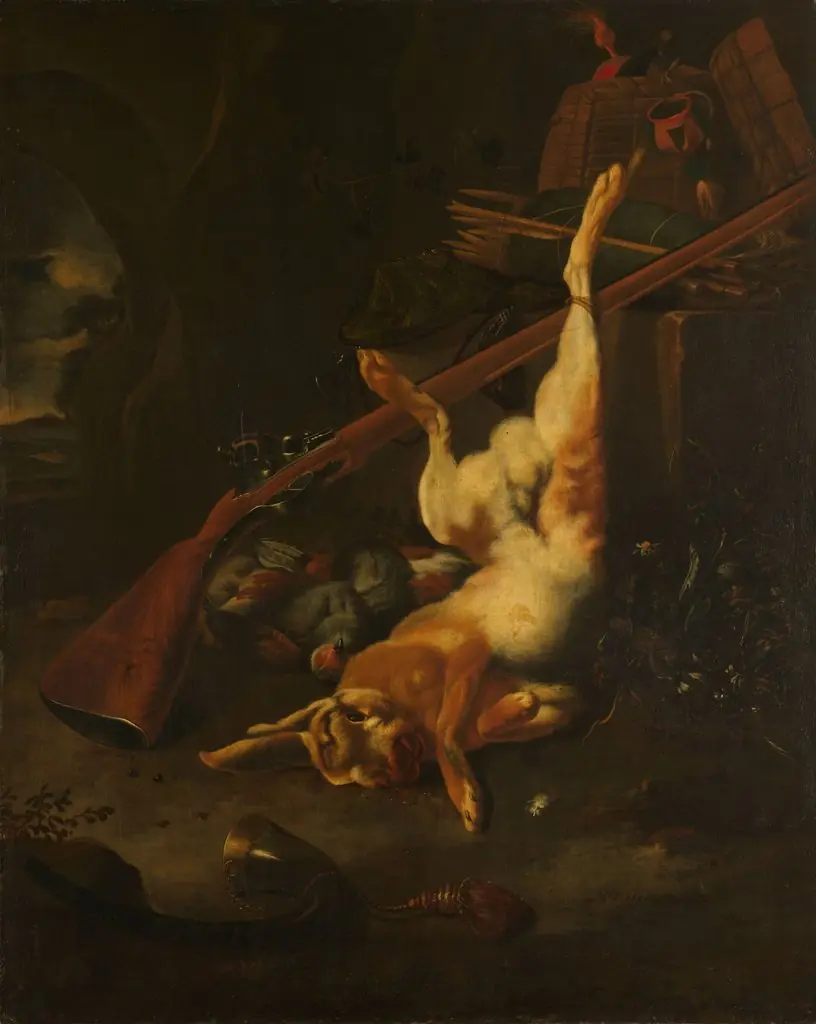 A hunter's bag with dead hare
 Slaughtered Ox
 The Flagellation of Christ
 Still Life with Dead Birds, Cage and Net