February 26 in Art History
7 real events recorded on February 26, the earliest from 1808. 2 artists were born , 1 died on this date.
The day's biggest moments
Born on this day 2
- 1808 Born
Born this day: Honoré Daumier
On February 26, 1808, French artist Honoré Daumier was born, known for his paintings, sculptures, and prints that commented on social and political life in France, often through satire and caricature. His works, such as The Third-Class Carriage and Don Quixote and the Dead Mule, continue to offer insightful commentary on the human condition.
Daumier's legacy remains as a pioneering figure in social commentary through art, influencing generations of artists and thinkers.
- 1836 Born
Born this day: Elihu Vedder
Elihu Vedder, born on February 26, 1836, was an American symbolist painter, book illustrator, and poet known for his dreamlike and often mystical works. His most notable contribution is the illustration of Edward FitzGerald's translation of The Rubaiyat of Omar Khayyam.
Vedder's illustrations continue to influence the visual interpretation of classic literature.
Died on this day 1
- 1829 Died
Died this day: Johann Heinrich Wilhelm Tischbein
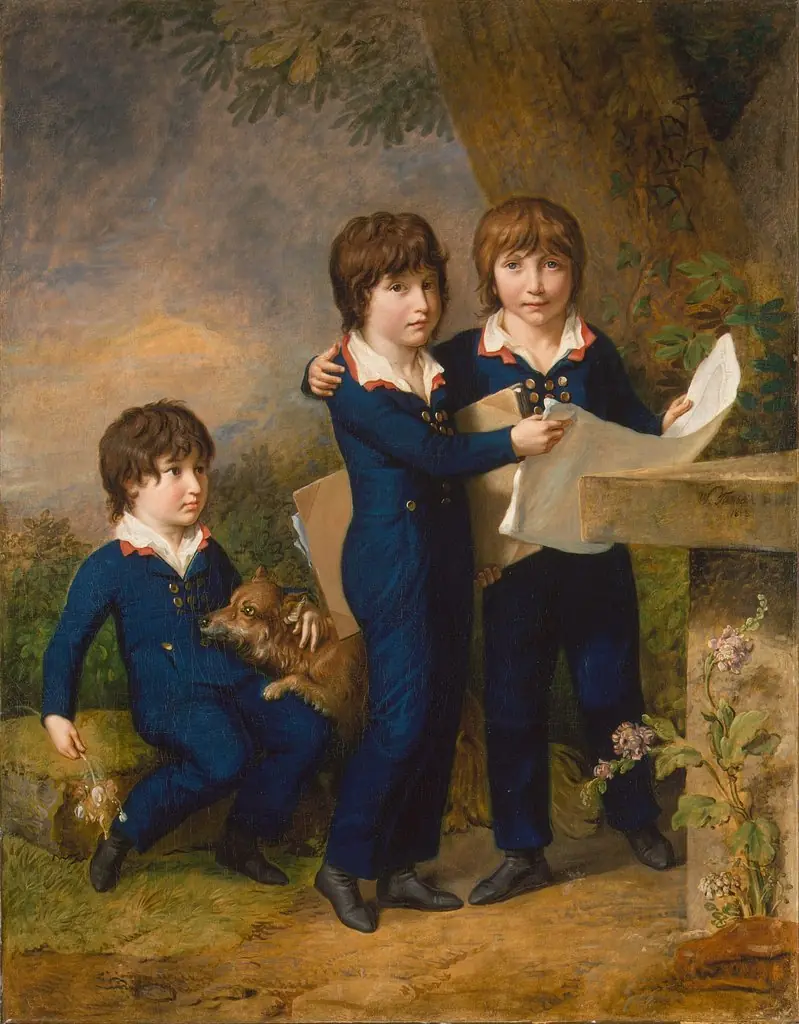
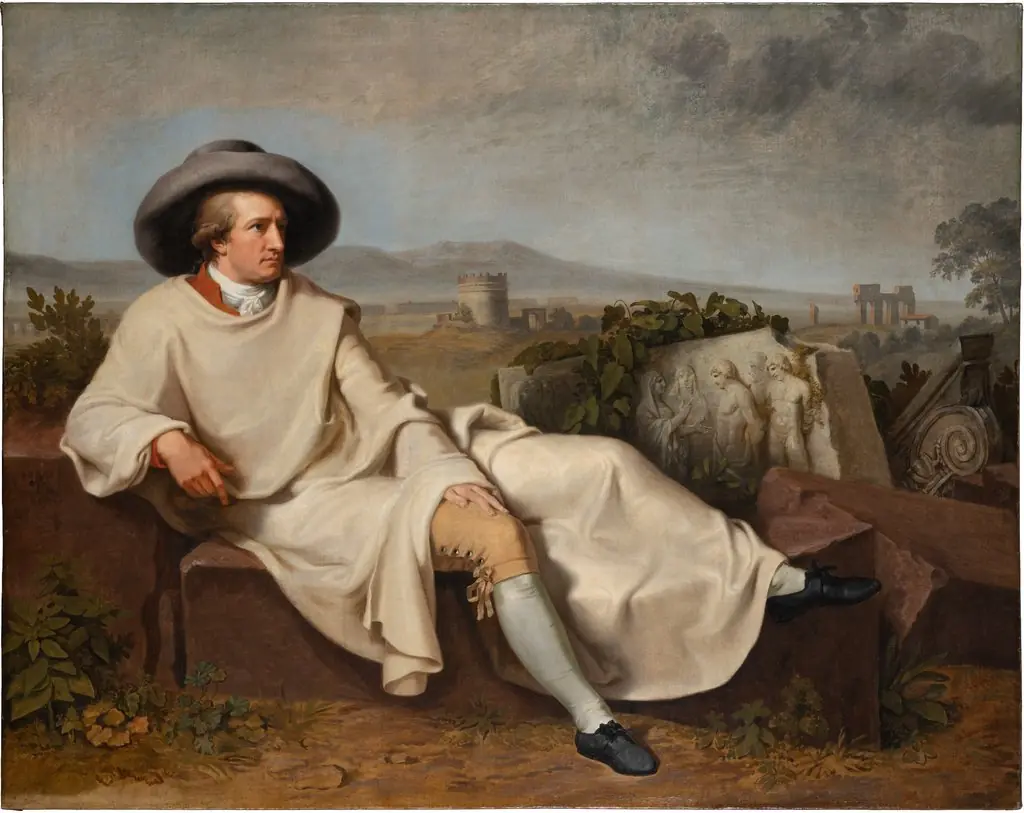
Johann Heinrich Wilhelm Tischbein, a German painter from the notable Tischbein family of artists, is known for his portraits and historical scenes, including the famous 'Goethe in the Roman Campagna'. His work often captured the essence of his subjects with detail and emotion.
Tischbein's artwork remains a significant part of German art history, particularly in the Neoclassical and Romantic periods.
Exhibitions & salons 2
- 1884 Salon Landmark
Opening of the Salon des Indépendants
On February 26, 1884, the first Salon des Indépendants opened in Paris at the Tuileries Palace, organized by the Société des Artistes Indépendants. Founded by artists including Albert Dubois-Pillet, Odilon Redon, Georges Seurat, and Paul Signac, the exhibition was established to provide an alternative to the official, jury-controlled Paris Salon. The group adopted the motto 'No jury, no prizes,' allowing any artist to exhibit upon payment of a small fee, fundamentally challenging the academic hierarchy and censorship of the time.
It established a permanent, open platform that became the primary showcase for avant-garde movements like Neo-Impressionism and Fauvism.
- 2009 Exhibition
Brücke: The Birth of Expressionism Opens
Neue Galerie New York opened "Brücke: The Birth of Expressionism, 1905-1913," a museum exhibition devoted to the Dresden- and Berlin-based group whose artists helped define German Expressionism. The exhibition brought together more than 100 paintings, sculptures, and works on paper and was organized by Reinhold Heller, a scholar of German Expressionism and member of the museum's board. Its importance lay partly in geography: it was documented as the first major United States exhibition to focus on the Brücke artists as a group, and Neue Galerie was the sole venue. By concentrating Kirchner, Heckel, Schmidt-Rottluff, Pechstein, and their circle in an American museum context, the show reframed the movement as a foundational modernist formation rather than a secondary strand of European avant-garde history.
The exhibition helped consolidate Brücke's visibility for American audiences as a central origin point of Expressionism.
Ernst Ludwig Kirchner , Karl Schmidt-Rottluff , Erich Heckel
Openings & foundings 1
- 1955 Opening
Terrain Gallery Opens
The Terrain Gallery opened in New York under the direction of painter Dorothy Koppelman, pairing its first exhibition, "Intersection '55," with the publication of Eli Siegel's aesthetic questions under the title "Is Beauty the Making One of Opposites?" The gallery was unusual in treating an exhibition space as a forum for a theory of art: Aesthetic Realism and Siegel's idea that reality's opposites are made one in successful works. Its early program brought contemporary painting, sculpture, graphics, photography, poetry, and public discussion into the same intellectual setting. Later accounts connect the gallery with artists including Chaim Koppelman, Ad Reinhardt, Larry Rivers, Roy Lichtenstein, Andre Kertesz, Mark di Suvero, and Elaine de Kooning, making its founding a distinctive episode in postwar New York's alternative-gallery culture.
It created a long-running artist-run forum where exhibitions were explicitly organized around aesthetic philosophy.
Auctions, prizes & heists 1
- 2019 Auction
Monet's Le Palais Ducal Sells at Sotheby's
A private-family version of Claude Monet's "Le Palais Ducal," painted after his 1908 stay in Venice, was sold at Sotheby's in London. The work is one of several views of the Doge's Palace in which Monet translated Venetian Gothic architecture, lagoon light, and reflection into a late Impressionist structure of color and broken surface. The sale is documented with the exact Sotheby's date of 26 February 2019 and a price of about GBP 27.5 million, described in later accounts as an auction record for one of Monet's Venetian paintings. The event also had public-collection consequences: the United Kingdom later placed a temporary export bar on the painting, valuing it at GBP 27,534,000 plus VAT and emphasizing its rarity and importance for studying Monet's Venetian series.
The sale pushed Monet's Venice market upward and triggered UK scrutiny over whether the painting should leave the country.