Artwork
Goethe in the Roman Campagna
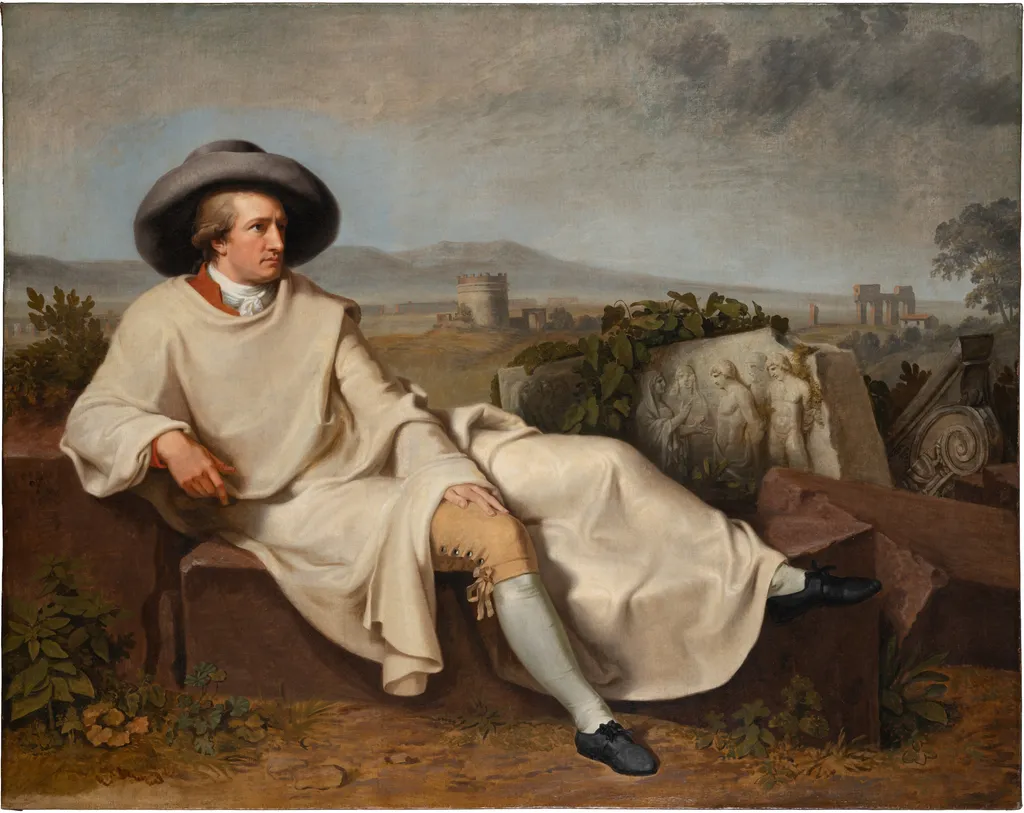
Goethe in the Roman Campagna is an oil painting by the Neoclassicist artist Johann Heinrich Wilhelm Tischbein. It dates from 1794 and is held in the collection of the Städel Museum.
About this work
To learn more about the artist who created this work, look up Johann Heinrich Wilhelm Tischbein.
This painting is called Goethe in the Roman Campagna. It was made by Johann Heinrich Wilhelm Tischbein.
The painting shows Johann Wolfgang von Goethe during his travels in Italy. He wrote a book about his trip, called Italian Journey, which was published later.
The painting has been at the Städel Museum since 1887. To learn more about the artist who created this work, look up Johann Heinrich Wilhelm Tischbein.
Subject & Meaning
The painting portrays Johann Wolfgang von Goethe as an idealized traveler contemplating the fate of human works amid the Roman Campagna. He is depicted reclining on granite blocks, surrounded by ruins including the Tomb of Caecilia Metella, a Roman aqueduct, and a fragment of a Greek bas-relief showing Iphigenia in Tauris, referencing Goethe's play. The composition blends Neoclassical reverence for antiquity with eclectic symbolic elements, Egyptian obelisk fragments, Greek motifs, and Roman ruins, reflecting the era's classicism while introducing sentimental classicism through its layered allusions.
The work's restricted palette and balanced structure contrast with Baroque asymmetry, emphasizing classical simplicity. These symbolic layers, alongside the spiritual 'Et in Arcadia ego' motto from Goethe's Italian Journey, convey themes of mortality, artistic legacy, and the poet's contemplation of civilization's transience. The painting thus embodies the intellectual and spiritual convergence of Goethe and Tischbein, reflecting their shared fascination with antiquity as a counterpoint to contemporary art movements.
Technique & Style
The painting is executed in oil on canvas, measuring 166 cm in height and 210.3 cm in width. It depicts Goethe seated on granite blocks amid Roman ruins, including the Tomb of Caecilia Metella and fragments of a Greek relief showing Iphigenia in Tauris. Tischbein composed the landscape eclectically from various antiquities, blending Neoclassical ideals of symmetry with sentimental classicism.
The colour palette is restrained, and the composition balances classical motifs with idealized naturalism. Anatomical inaccuracies are present, such as an elongated left leg and disproportionate limbs, noted in contemporary observations.
The work reflects the shared fascination of Goethe and Tischbein with antiquity, serving as both a portrait and a symbolic representation of German cultural ideals during the formation of the German Empire. It was donated to the Städel Museum in 1887 by Adele von Rothschild.
History & Provenance
Goethe in the Roman Campagna is a full-length oil portrait painted by Johann Heinrich Wilhelm Tischbein between December 1787 and early 1788, depicting Johann Wolfgang von Goethe during his Italian journey. The work originated from a friendship between Goethe and Tischbein, who met in Rome after Goethe arrived in October 1786 and stayed with the artist, receiving a scholarship through Tischbein's patron, the Duke of Gotha. Goethe requested a life-sized portrait showing himself seated among ruins, reflecting on the fate of human works; Tischbein incorporated symbolic elements such as the Tomb of Caecilia Metella, Roman aqueducts, and a bas-relief of Iphigenia in Tauris, linking Goethe's intellectual themes with Neoclassical antiquity.
The painting, atypical in its eclectic composition, blends classical motifs with sentimental classicism, and was completed despite anatomical inaccuracies noted by contemporaries. It remained in Goethe's possession until 1887, when it was donated to the Städel Museum in Frankfurt by collector Adele von Rothschild during a period when Goethe was elevated to a national cultural icon in the newly formed German Empire. The artwork has been part of the Städel's permanent collection since then and is regarded as Tischbein's masterpiece and a defining image of German classical humanist ideals.
Since 1887 the painting has been held by the Städel Museum in Frankfurt, where it remains in the collection.
It was donated to the museum in 1887 by the private collector Adèle von Rothschild (1843–1922). The work entered the museum’s holdings with no further accession number reported in the cited sources.
Context
From its first exhibition onward, Tischbein’s portrait has been read as both an emblem of Goethe’s stature and a condensation of German classicism. Contemporaries praised the likeness and the synthesis of portrait and landscape, even as they noted the anatomical distortions that unsettle strict Neoclassical ideals. Goethe himself recorded in his Italian Journey that the painting pleased viewers and that its conception, Goethe seated on the ruins, gazing across the Campagna, captured his inward turn during the journey.
By the late nineteenth century the work had been adopted into a nationalist canon. The 1887 donation to the Städel Museum coincided with the high tide of the Goethe cult in the new German Empire; the image was mobilized to anchor a cultural pantheon centered on Goethe and Schiller. In this role Tischbein’s canvas became an icon of German humanistic aspiration, repeatedly reproduced and taught as a visual epitome of the classical ideal.
Modern scholarship continues to acknowledge its centrality within Tischbein’s oeuvre while emphasizing its hybrid character, an eclectic collage of Egyptian, Greek, and Roman motifs that exceeds a single classical purism and thus marks a distinctive moment in the porous border between Neoclassicism and early Romanticism.
Legacy
Since its donation to the Städel Museum in Frankfurt in 1887 by Adèle von Rothschild, the painting has become a central icon of German national art. Its elevation coincided with the peak of the "Goethe cult" and the formation of the German Empire, which sought cultural figures to embody a collective past. During this period, Goethe and Schiller were raised to national status, and Tischbein's portrait came to symbolize the German ideal of knowledge, art, and culture.
The work played a decisive role in shaping the modern perception of Goethe as the embodiment of German classical humanism. Today, it is widely regarded as Tischbein's only true masterpiece and a definitive symbol of the German spirit. It is considered one of the most recognized images in German culture, familiar to nearly every German with basic education, transcending its aesthetic value to serve as a major element of national identity.
Overview
Johann Heinrich Wilhelm Tischbein’s oil painting Goethe in the Roman Campagna dates to 1787. Executed in the Neoclassical idiom, the work portrays the German writer Johann Wolfgang von Goethe amid the pastoral landscape surrounding Rome, capturing a moment from his Italian sojourn.
Own this work as a print
Artist & collection
Artist
Johann Heinrich Wilhelm Tischbein
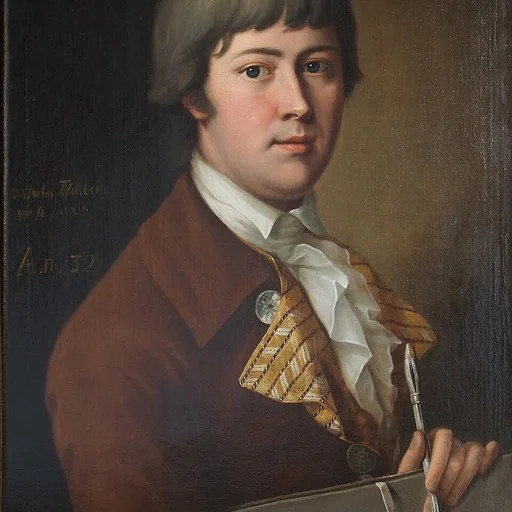
Johann Heinrich Wilhelm Tischbein, known as the Goethe Tischbein (15 February 1751 – 26 June 1829), was a German painter from the Tischbein family of artists.

- Portrait of Gaspar Melchor de Jovellanos
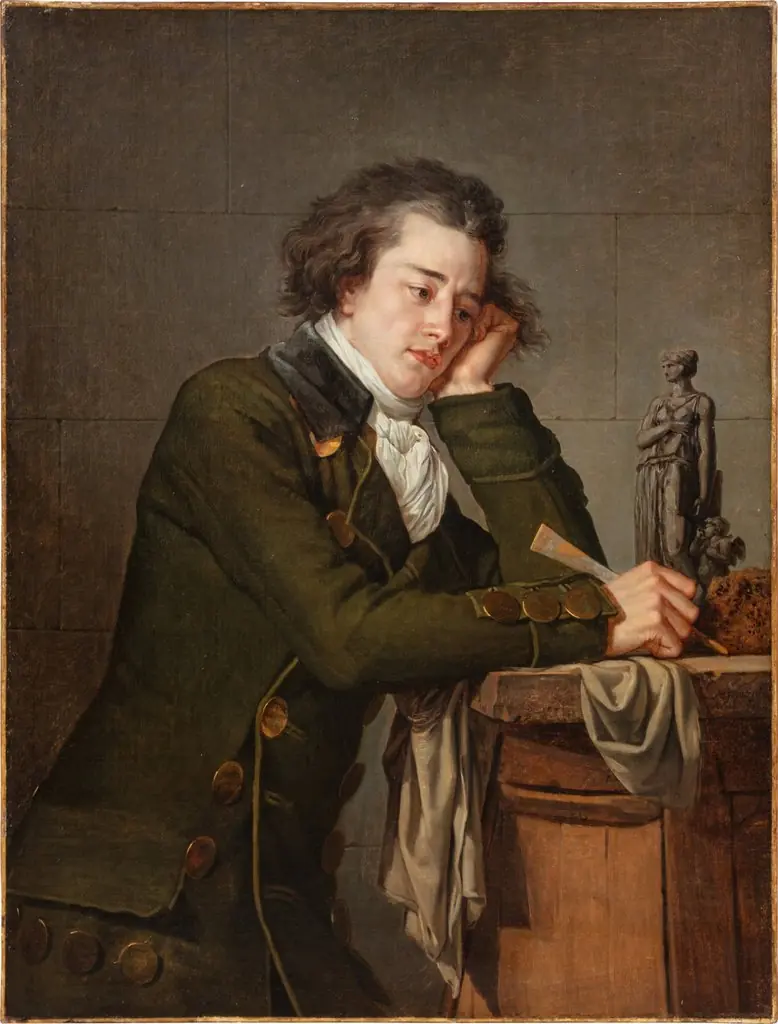 Portrait of Antoine-Denis Chaudet
 Boy with a Wicker Basket
 Portrait of Stanislaus Augustus Poniatowski (1732–1798) Dressed as Henry IV
 Ludwig Hess im Gebirge zeichnend
 Francis Basset, I Baron of Dunstanville
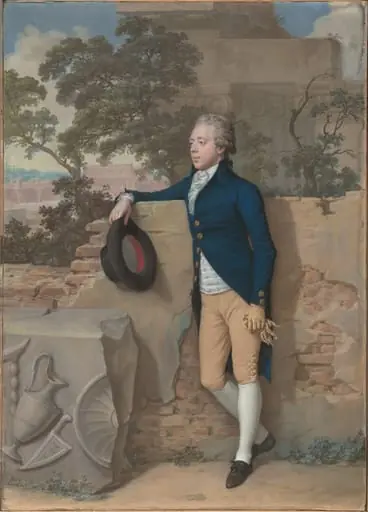 Frederick North, Later Fifth Earl of Guilford, in Rome
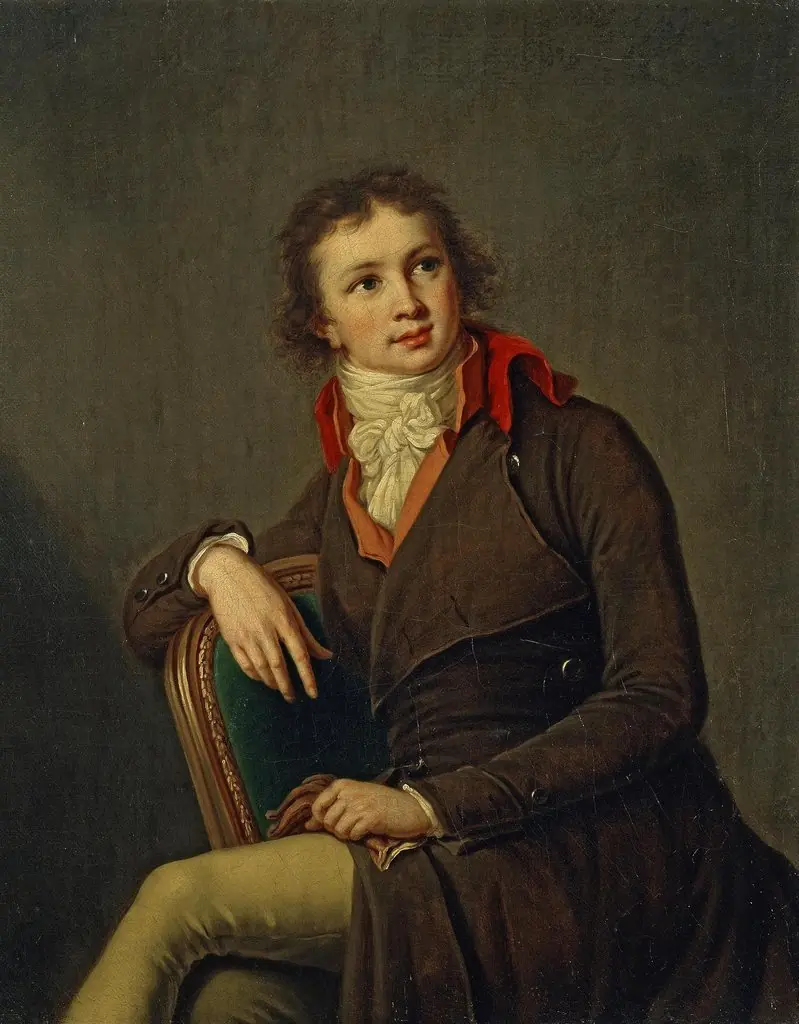 Portrait of Count Pavel Stroganov
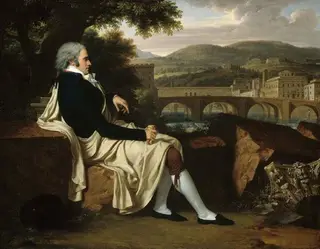 Joseph Allen Smith Contemplating Florence Across the Arno
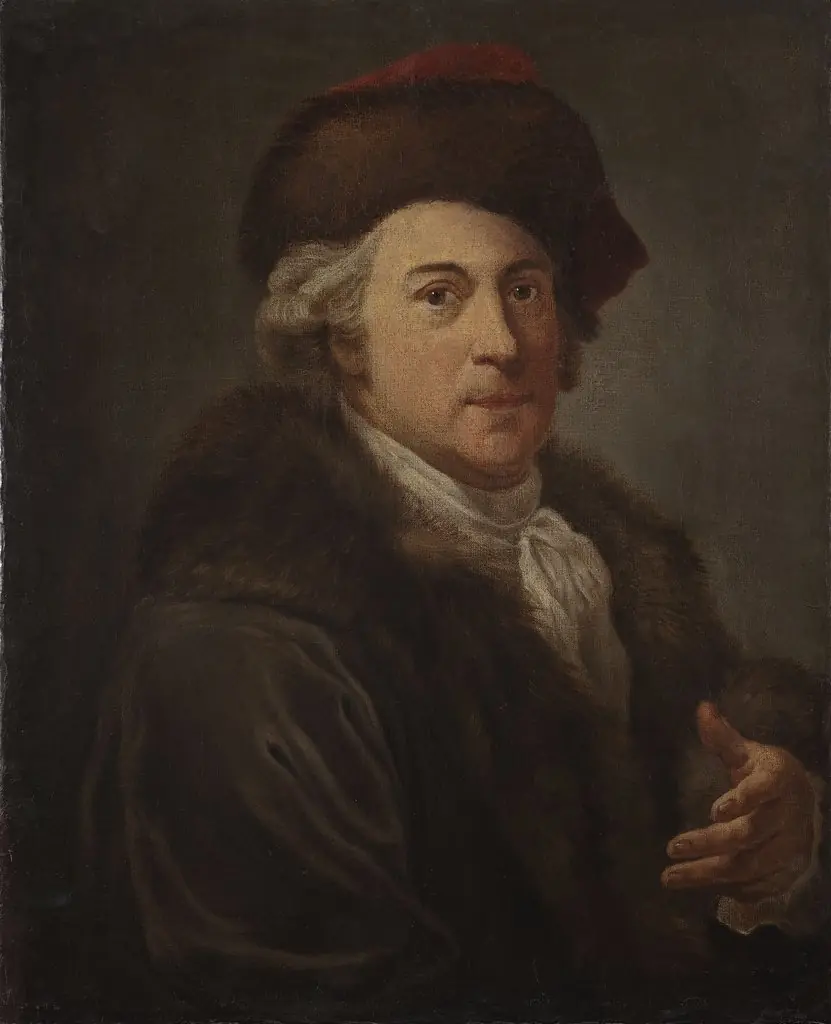 Portrait of Marcello Bacciarelli (1731–1818)
 Portrait of Louis Royer
 Gaetano Filangieri