March 8 in Art History
6 real events recorded on March 8, the earliest from 1806. 1 artist was born , 1 died on this date.
The day's biggest moments
Born on this day 1
- 1806 Born
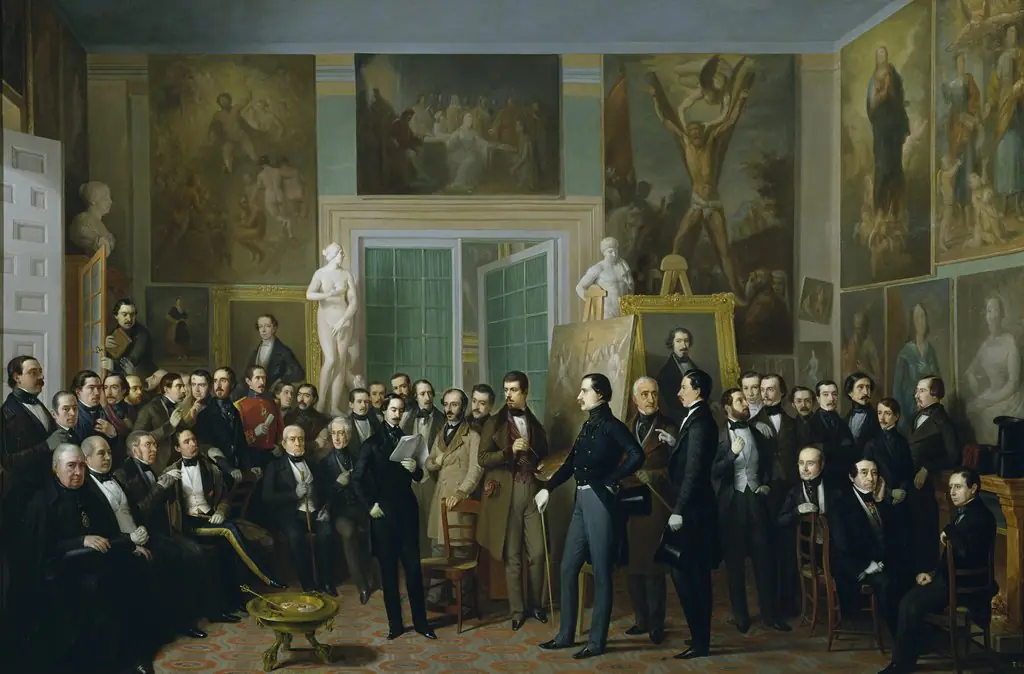
Born this day: Antonio María Esquivel
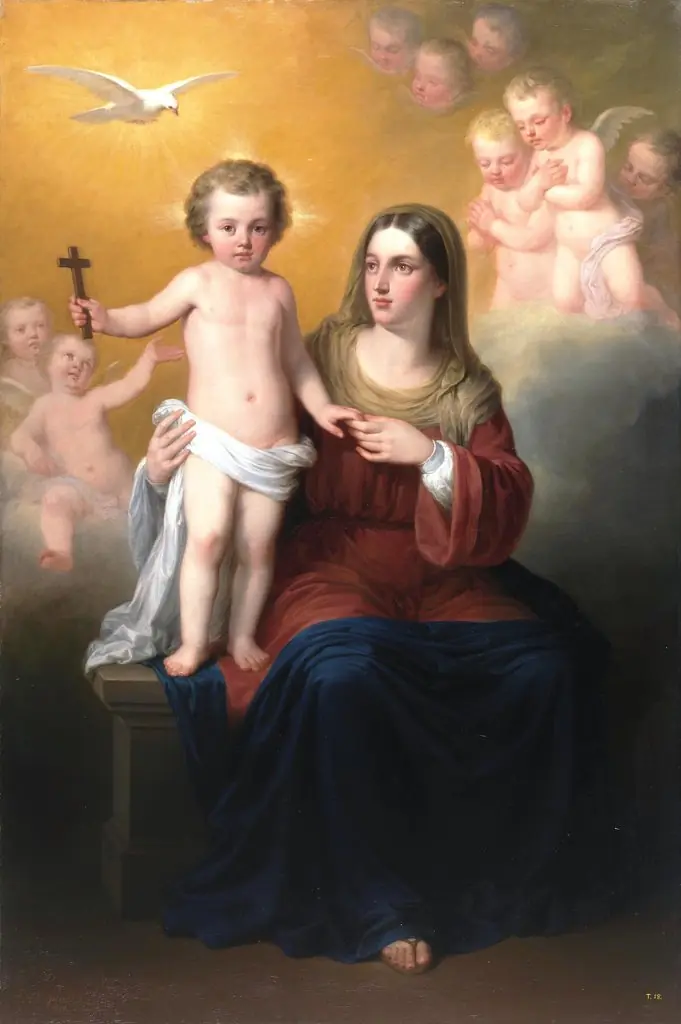
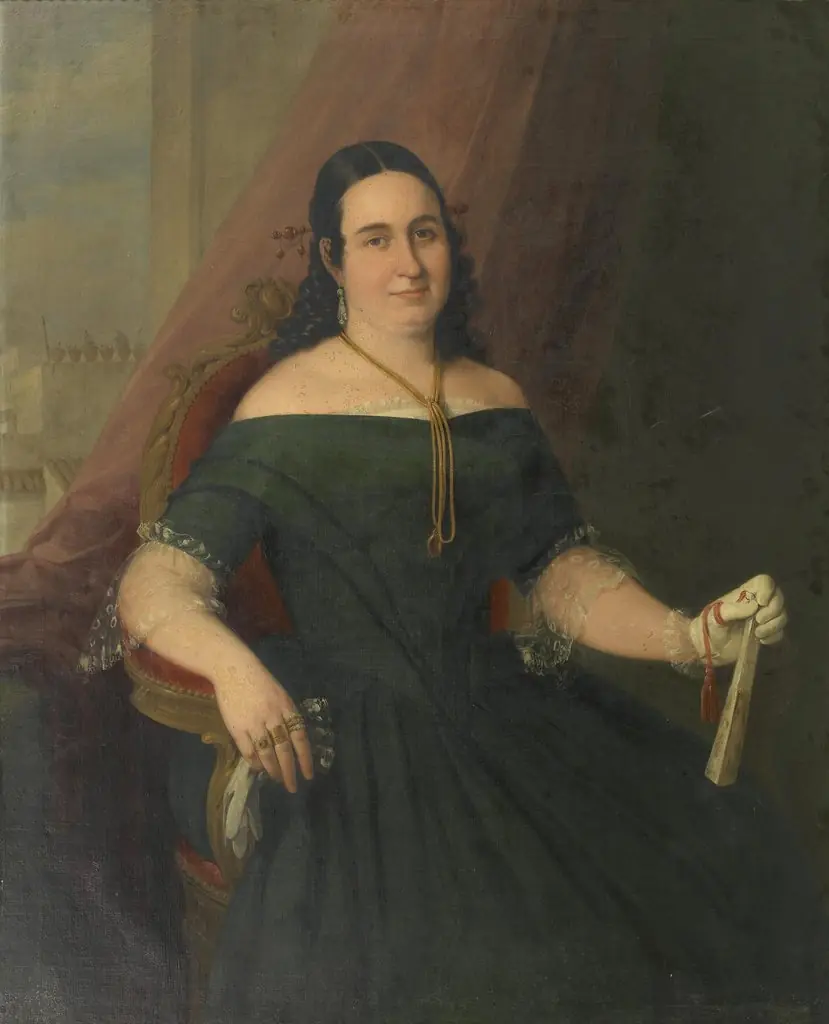
Antonio María Esquivel, a Spanish Romantic painter, was born on March 8, 1806. He is known for his portraits, which showcase his skill in capturing the essence of his subjects. His work, such as 'The Contemporary Poets' and 'Retrato de señora', demonstrates his ability to convey emotion and intimacy.
Esquivel's portraits remain significant examples of Spanish Romantic painting.
Died on this day 1
- 1938 Died
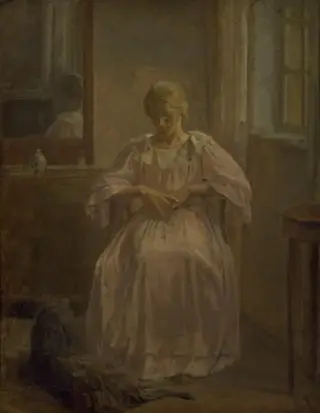
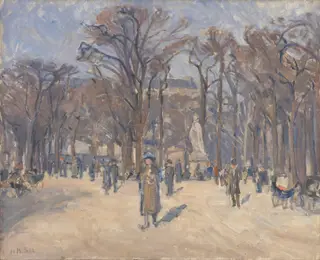
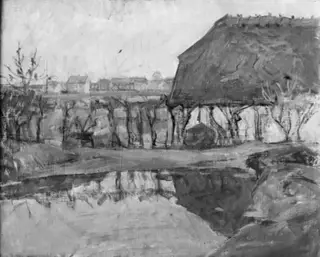
Died this day: Karl Schou
Karl Schou, a Copenhagen-born artist, is known for his captivating depictions of everyday life and landscapes, as seen in works like En ung pige, Sophie Lofthus, med en hund and Ved Canal Grande i Venedig. His art often featured serene and intimate scenes, showcasing his ability to find beauty in the mundane.
Karl Schou's legacy lies in his contributions to the representation of quiet, everyday moments in art.
Exhibitions & salons 3
- 1958 Exhibition
The Family of Man opens in Basel
The Basel presentation of The Family of Man opened at Kunsthalle Basel on March 8, 1958, as part of the second European tour of Edward Steichen's MoMA-organized photographic exhibition. The show had debuted at the Museum of Modern Art in 1955 with 503 photographs from 68 countries, arranged as a large-scale humanist photo-essay about birth, work, love, death, family, and the threat of nuclear war. By the time the Basel venue opened, the exhibition had become a Cold War cultural export, circulated by MoMA's International Program and the United States Information Agency. Its reach was extraordinary, but so was the later criticism: Roland Barthes, Susan Sontag, Allan Sekula, and others challenged its universalizing rhetoric and political simplifications.
The exhibition helped define photography's mass-museum audience while becoming a touchstone for debates about humanism, propaganda, and curatorial authorship.
- 2015 Exhibition
Björk opens at MoMA
Björk, a mid-career retrospective devoted to the Icelandic musician and multimedia artist, opened at the Museum of Modern Art on March 8, 2015. Curated by Klaus Biesenbach, the exhibition treated Björk's albums, videos, costumes, instruments, collaborations, and performance personae as material for a contemporary art museum. It included the MoMA-commissioned installation Black Lake, made with Andrew Thomas Huang, and a headphone-driven Songlines experience combining objects with a partly fictional audio narrative. Contemporary coverage emphasized the ambition and difficulty of translating an artist of sound, image, fashion, and technology into a museum exhibition; reviews were famously divided, with many critics faulting the installation while acknowledging the scale of Björk's cross-media influence.
The show became a high-profile case study in how museums frame popular music, digital media, fashion, and video as contemporary art.
- 2018 Exhibition
Before the Fall opens at Neue Galerie
Before the Fall: German and Austrian Art of the 1930s opened at Neue Galerie New York on March 8, 2018. Organized by Olaf Peters, it was the third exhibition in the museum's trilogy on German history, following Degenerate Art: The Attack on Modern Art in Nazi Germany 1937 and Berlin Metropolis: 1918-1933. The exhibition examined artistic production under the pressures of economic crisis, authoritarianism, exile, censorship, and the rise of National Socialism. In the context of Neue Galerie's focus on early twentieth-century German and Austrian art, the show extended familiar narratives of Expressionism and Weimar culture into the unstable decade when many artists faced persecution, accommodation, or forced migration.
It linked modernist art history to the political collapse of the 1930s and to the afterlife of Nazi cultural policy.
Unveilings & commissions 1
- 1960 Commission Landmark
UNESCO's Nubian Campaign officially begins
UNESCO's Nubian Campaign, the international rescue effort prompted by the construction of the Aswan High Dam, had its official inauguration on March 8, 1960. The campaign mobilized governments, archaeologists, conservators, and museums to document, dismantle, move, and preserve monuments and artworks in Egyptian and Sudanese Nubia before Lake Nasser submerged major sites. One important art-historical outcome was the excavation of Faras, where a Polish expedition led by Kazimierz Michalowski uncovered exceptionally preserved Christian Nubian wall paintings from the cathedral at ancient Pachoras. Removed from the walls, stabilized, and divided between Warsaw and Khartoum, these works became central to the Faras Gallery at the National Museum in Warsaw and to the modern study of Nubian Christian art.
The campaign became a model for international cultural-heritage rescue and transformed the visibility of Nubian wall painting.