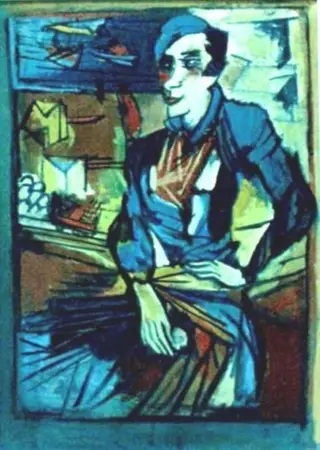
On 5 February 1916, Hugo Ball and Emmy Hennings opened the Cabaret Voltaire in the back room of the Holländische Meierei at Spiegelgasse 1 in Zurich. Conceived as a small performance venue for artists and writers during World War I, it became the crucible of Dada. The cabaret’s evenings mixed poetry, music, dance, masks, noise, and deliberately unstable performance, attracting figures including Tristan Tzara, Marcel Janco, Richard Huelsenbeck, Sophie Taeuber-Arp, and Jean Arp. Though the original venue lasted only until the summer of 1916, its anti-bourgeois, antiwar energy helped define Dada as a transnational avant-garde practice rather than a single style. Its program also pushed performance, sound poetry, collage, and manifesto culture into new forms of artistic dissent.
Cabaret Voltaire became the symbolic birthplace of Dada and a model for experimental performance spaces.