Five centuries of public-domain art, decade by decade. 53 navigable decades from the 1500s to the 2020s, each tying its works to the movements and artists that shaped it.
Thirty artists of the Société Anonyme des artistes peintres, sculpteurs et graveurs opened their own exhibition in the photographer Nadar's old studio, bypassing the Salon jury…
The model of the self-organized group exhibition was born, eight Impressionist shows followed through 1886, and with them the modern idea…
On the morning of August 21, 1911, Vincenzo Peruggia, an Italian glazier employed by the Louvre, removed the Mona Lisa from its frame and hid it under his smock to steal the…
The theft catapulted the Mona Lisa to unprecedented global fame, cementing its status as the world's most recognized artwork.
The International Exhibition of Modern Art, quickly known as the Armory Show, opened at New York's 69th Regiment Armory on February 17, 1913. Organized by the Association of…
It became the canonical starting point for modern art's broad public reception in the United States.
On 14 January 1506, the ancient marble group now known as Laocoon and His Sons was excavated in a vineyard near Santa Maria Maggiore in Rome. Pope Julius II sent Giuliano da…
The discovery helped make ancient sculpture a central standard for Renaissance and later European art.
The Metropolitan Museum of Art first opened to the public in rented quarters at 681 Fifth Avenue in New York. Its founding circle combined financiers, publishers, artists, and…
The opening launched what became the largest art museum in the Americas.
On December 17, 1895, the Lumière brothers held the first commercial public screening of their Cinématographe at the Salon Indien du Grand Café in Paris. While a private…
It established the foundation for the global film industry and the modern concept of the movie theater.
The British Benin Expedition is dated in fetched sources to February 9-18, 1897; art-historical accounts of Benin specifically mark February 18, 1897, as the arrival of British…
The dispersal created one of the most consequential restitution debates in modern museum history.
The International Exhibition of Modern Art, famously known as the Armory Show, opened at the 69th Regiment Armory in New York City. Organized by the Association of American…
It fundamentally altered the trajectory of American art by legitimizing modernism and shifting the center of the art world from Paris to…
On January 4, 1914, Leonardo da Vinci's Mona Lisa resumed its place in the Louvre's Salon Carre after its 1911 theft by former Louvre worker Vincenzo Peruggia. The painting had…
The theft and return helped make the Mona Lisa the world's best-known painting.
Walter Gropius officially opened the State Bauhaus in Weimar, Germany, merging the Grand-Ducal Saxon Academy of Fine Arts with the Saxon School of Arts and Crafts. The school…
It became the most influential school of design, architecture, and applied arts in history.
The Museum of Modern Art (MoMA) in New York City officially opened its doors to the public on November 7, 1929, just days after the Wall Street Crash. Founded by Abby Aldrich…
It became the preeminent global institution for the collection and promotion of modern and contemporary art.
In the early hours of March 18, 1990, two men disguised as police officers entered Boston's Isabella Stewart Gardner Museum after claiming to respond to a disturbance. They…
The theft permanently changed museum-security discourse and left some of the world's most famous unrecovered artworks missing.
Filippo Tommaso Marinetti's Futurist Manifesto appeared in French on the front page of the Paris newspaper Le Figaro after an earlier Italian publication in Bologna. The text…
The publication helped establish the manifesto as a defining modern-art format.
The New York presentation of the International Exhibition of Modern Art, later known as the Armory Show, ended its run at the 69th Regiment Armory on March 15, 1913. Organized by…
It accelerated American engagement with Cubism, Fauvism, and modernist collecting.
On 5 February 1916, Hugo Ball and Emmy Hennings opened the Cabaret Voltaire in the back room of the Holländische Meierei at Spiegelgasse 1 in Zurich. Conceived as a small…
Cabaret Voltaire became the symbolic birthplace of Dada and a model for experimental performance spaces.
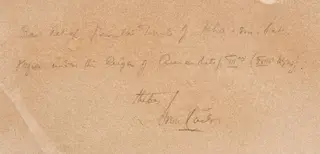
On February 16, 1923, Howard Carter and Lord Carnarvon formally opened the burial chamber of Tutankhamun with Egyptian government officials present. The antechamber had been…
The event turned an archaeological discovery into one of the twentieth century's defining museum blockbusters and design crazes.
On March 11, 2021, Christie's closed its online auction of Beeple's Everydays: The First 5000 Days, an NFT-linked digital collage drawn from Mike Winkelmann's daily-image project.…
The sale made NFTs unavoidable in contemporary-art market discourse.
On 9 February 1897, the British punitive expedition against the Kingdom of Benin began. The operation, led by Rear-Admiral Harry Rawson after the killing of a British party…
The dispersal of Benin court art seeded major museum collections and remains a benchmark case for repatriation claims.
On 5 February 1909, Filippo Tommaso Marinetti’s founding Futurist manifesto was first published in Bologna’s La gazzetta dell’Emilia, before its better-known French appearance in…
The manifesto made the art manifesto a central weapon of the twentieth-century avant-garde.
On March 24, 1937, Andrew W. Mellon's birthday, an Act of Congress accepted Mellon's proposed gift of an old-master collection and construction funds, authorizing a new National…
The act created a durable model for a free national art museum supported by federal stewardship and private gifts.
On January 8, 1963, Leonardo da Vinci's Mona Lisa was unveiled at the National Gallery of Art in Washington, D.C., beginning the painting's unprecedented United States exhibition.…
The tour helped turn the Mona Lisa into an American pop-cultural icon as well as a European masterpiece.
By order of Napoleon III, works rejected by the 1863 Paris Salon jury were shown in a parallel exhibition so the public could judge for itself. Crowds came to laugh, above all at…
The first institutional crack in the academic system: from here the path runs straight to the independent exhibitions of the Impressionists.
The first Salon des Indépendants opened in Paris on February 5, 1884, organized by the Société des Artistes Indépendants. Founded by artists including Albert Dubois-Pillet, Odilon…
It established a permanent alternative exhibition model that democratized the Parisian art world and accelerated the acceptance of…
The first Salon des Indépendants opened in Paris on February 25, 1884, founded by artists including Albert Dubois-Pillet, Odilon Redon, and Georges Seurat. Established as a…
It permanently altered the exhibition landscape by democratizing access to the Paris art market and fostering the rise of modernist…
On February 10, 1884, the Société des Artistes Indépendants held its first exhibition at the Palais des Tuileries in Paris. Founded by artists including Albert Dubois-Pillet,…
It institutionalized the 'no jury' model that defined modern independent art movements for decades.
On February 11, 1884, the Société des Artistes Indépendants held its inaugural exhibition in Paris, establishing a radical alternative to the official Académie des Beaux-Arts.…
It institutionalized the concept of the jury-free exhibition, fundamentally altering how modern art was presented and consumed in France.
On February 26, 1884, the first Salon des Indépendants opened in Paris at the Tuileries Palace, organized by the Société des Artistes Indépendants. Founded by artists including…
It established a permanent, open platform that became the primary showcase for avant-garde movements like Neo-Impressionism and Fauvism.
On November 29, 1884, the Société des Artistes Indépendants was officially founded in Paris by a group of artists including Albert Dubois-Pillet, Odilon Redon, Georges Seurat, and…
It established the enduring model of the jury-free exhibition, fundamentally democratizing the Parisian art market.
On December 29, 1884, the Société des Artistes Indépendants held its inaugural general assembly in Paris, formally establishing the Salon des Indépendants. Founded by artists…
It established the enduring model of the jury-free exhibition, fundamentally altering how modern art was displayed and critiqued.
The seventh annual exhibition of Les XX opened in Brussels with six paintings by Vincent van Gogh, including two Sunflowers, Ivy, Flowering Orchard, Wheat Field, Sunrise, and The…
The Brussels showing became a crucial marker of Van Gogh's recognition by avant-garde peers before his posthumous fame.
On December 10, 1901, the first Nobel Prizes were awarded in Stockholm and Oslo, marking the fulfillment of Alfred Nobel's will. While the Literature prize went to Sully…
It established the world's most prestigious international award for literary and cultural achievement.
The International Exhibition of Modern Art, organized by the painters Arthur B. Davies and Walt Kuhn, brought roughly 1,300 works to a National Guard armory in Manhattan, giving…
American collecting, museum-building and art-making pivoted toward European modernism in a single season.
On February 27, 1933, the German Reichstag building in Berlin was set on fire, an event that became a pivotal moment in the rise of the Nazi regime. While not an artistic creation…
The event triggered the immediate suppression of modern art in Germany and the exile of thousands of artists, reshaping the global art map.
On March 17, 1941, President Franklin D. Roosevelt accepted the completed National Gallery of Art in Washington, D.C., on behalf of the American people. The museum arose from…
The opening established one of the United States' central public art institutions and encouraged major private collectors to give…
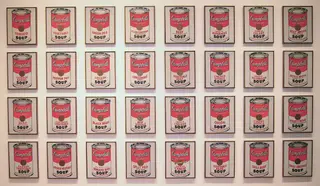
While primarily a political event, the assassination of President John F. Kennedy on November 22, 1963, in Dallas, Texas, became a defining moment in American cultural history…
It catalyzed the creation of Warhol's most famous series, permanently altering the trajectory of Pop Art to include themes of mortality and…
The Centre Pompidou was officially opened on 31 January 1977 by French president Valery Giscard d'Estaing. Commissioned under Georges Pompidou and designed by Renzo Piano, Richard…
It became a model for the late twentieth-century museum as civic infrastructure and architectural icon.
On February 3, 2010, Sotheby's London sold Alberto Giacometti's bronze L'Homme qui marche I in its Impressionist and Modern Art Evening Sale. The auction catalogue identifies the…
The result accelerated the market revaluation of modern sculpture and helped make Giacometti a benchmark for trophy-level auction prices.
On 5 February 1852, the New Hermitage in Saint Petersburg opened to the public, transforming part of the Romanov imperial collection from courtly privilege into a public museum…
The Hermitage became one of the defining public art museums of Europe.
On 10 March 1914, suffragette Mary Richardson entered the National Gallery in London and attacked Diego Velazquez's Rokeby Venus with a meat cleaver. The action followed the…
The attack became one of the defining examples of modern political vandalism directed at a museum masterpiece.
Peggy Guggenheim's Exhibition by 31 Women opened on January 5, 1943 at Art of This Century, her Frederick Kiesler-designed New York gallery. Conceived with Marcel Duchamp and…
It became a touchstone for later histories of women artists and feminist exhibition-making.
On 12 February 1994, the opening day of the Lillehammer Winter Olympics, two thieves broke into the National Gallery in Oslo and stole the 1893 painted version of Edvard Munch's…
The theft made The Scream a benchmark example in modern museum-security debates.
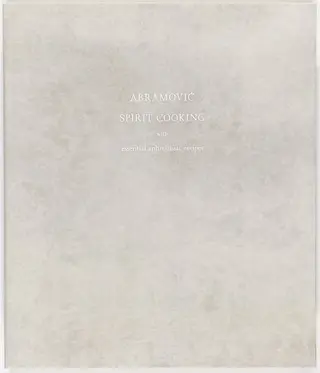
Marina Abramovic's retrospective The Artist Is Present opened at the Museum of Modern Art on March 14, 2010. The exhibition surveyed and reperformed decades of Abramovic's…
The exhibition made durational performance a central, widely recognized museum form.
While the society was founded earlier, the specific opening day of their first major public exhibition occurred on February 10, 1884. This event marked the first time the public…
It legitimized avant-garde movements and paved the way for future independent exhibitions like the Salon d'Automne.
The 1905 Salon des Indépendants opened on March 19, featuring the controversial works of Henri Matisse, André Derain, and Maurice de Vlaminck. Their use of wild, non-naturalistic…
The exhibition launched the Fauvist movement, permanently altering the trajectory of color usage in 20th-century painting.
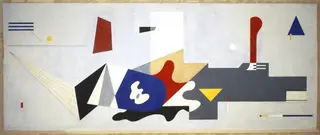
The American Abstract Artists General Prospectus was issued in New York, formalizing an artists' organization devoted to abstract art at a time when American galleries and museums…
AAA helped build a public and institutional platform for American abstraction before Abstract Expressionism became dominant.
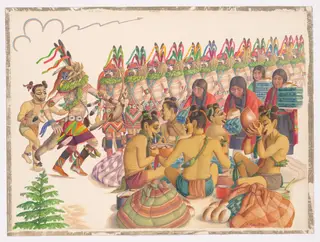
The Museum of Modern Art opened Indian Art of the United States, a large survey organized by the Indian Arts and Crafts Board with Rene d'Harnoncourt, Frederic H. Douglas, and…
It helped make Native American art visible within major modern-art museum discourse.
Barcelona's Museu Picasso opened to the public in the Palau Aguilar on Carrer de Montcada. The museum grew from Jaume Sabartes's wish to donate his Picasso collection and from…
It anchored Picasso's early career in Barcelona and became a model for single-artist museums built around local biography.
In the early hours of January 25, 2025, thieves used explosives to break into the Drents Museum in Assen, the Netherlands, and stole major loans from the exhibition Dacia: Kingdom…
The heist became a major test case for international loan security and the vulnerability of archaeological gold to destructive theft.
UNESCO's Nubian Campaign, the international rescue effort prompted by the construction of the Aswan High Dam, had its official inauguration on March 8, 1960. The campaign…
The campaign became a model for international cultural-heritage rescue and transformed the visibility of Nubian wall painting.
Seven young artists and writers, led by Dante Gabriel Rossetti, William Holman Hunt and John Everett Millais, formed a secret brotherhood pledged to reject the academic formulas…
Britain's first organized avant-garde: its medievalism and truth-to-nature creed shaped Victorian painting, the Aesthetic movement and the…
The Nationalgalerie building on Berlin's Museum Island, now the Alte Nationalgalerie, opened in the presence of Kaiser Wilhelm I. The project had grown from Joachim Heinrich…
It anchored Berlin's National Gallery system and helped define Museum Island as a modern museum ensemble.
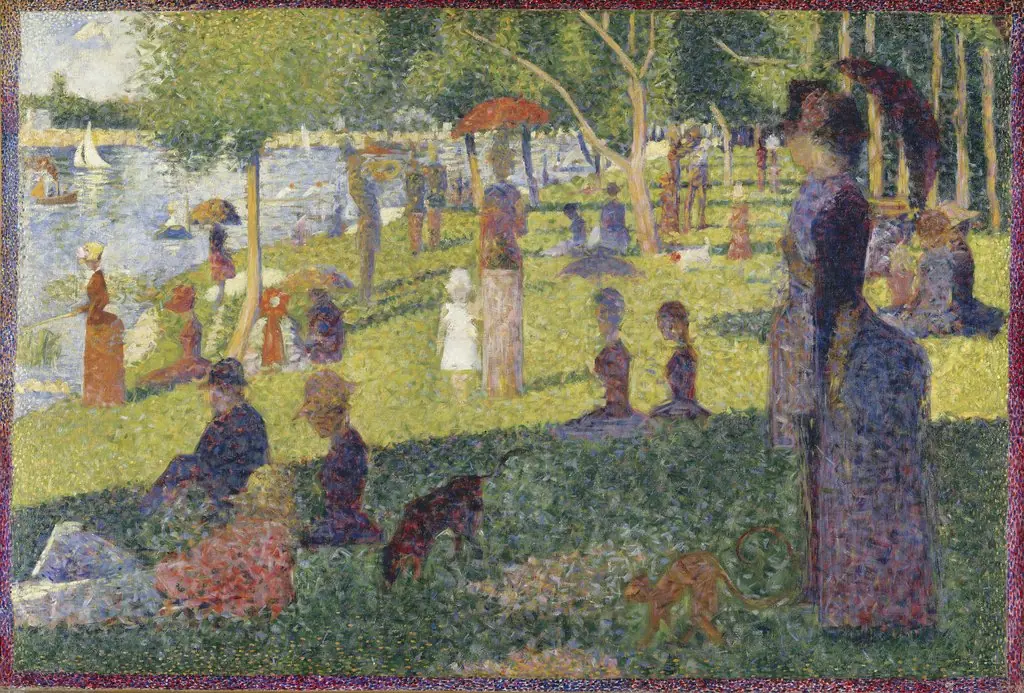
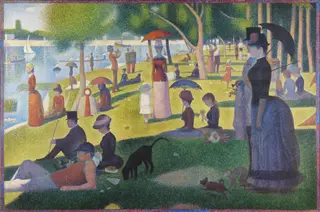
The final group exhibition of the Impressionists was also the debut of something new: Georges Seurat's A Sunday on La Grande Jatte hung in the last room, its dots of pure color…
Impressionism's group identity dissolved at the very moment its successor movement stepped on stage, the torch passing visible in a single…
Alphonse Mucha's lithographed poster for Sarah Bernhardt's revival of Victorien Sardou's Gismonda appeared on the streets of Paris. The commission came through the printer…
The poster helped establish Mucha as a defining figure of Art Nouveau graphic art.
In Room VII of the 1905 Salon d'Automne, canvases by Matisse, Derain and Vlaminck blazed with arbitrary, violent color around a conventional Renaissance-style torso, prompting the…
The first of the twentieth century's named avant-gardes: color freed from description, a precedent every Expressionist current built on.
Herwarth Walden issued the first number of Der Sturm in Berlin, launching a weekly journal that quickly became one of the central organs of the European avant-garde. The magazine…
Der Sturm helped make Berlin a major prewar clearinghouse for international modernism.
The Salon des Independants opened in Paris on March 20, 1912, and ran through May 16. The exhibition came one year after the Cubist concentration in Room 41 had shocked the 1911…
The show consolidated Cubism as an international avant-garde force rather than a local Parisian provocation.
The Barnes Foundation officially opened on March 19, 1925, in Merion, Pennsylvania. Albert C. Barnes had chartered the foundation in 1922 as an educational institution devoted to…
The Barnes became one of the most influential and contested private art collections turned public educational institution in the United…
The Nazi regime hung 650 confiscated modernist works, Kirchner, Nolde, Marc, Beckmann, Chagall among them, crowded and mock-labelled, as an exhibition of 'degenerate art'. More…
German museums were stripped of modern art; artists were banned, exiled or driven to despair, and the exhibition became the permanent…
On 19 January 1939, Art et Liberté was officially formed in Cairo around Georges Henein and a circle that included Cairo Surrealists such as Kamel el-Telmissany and Ramses Younan,…
The group became a key bridge between Egyptian modernism and international Surrealist anti-fascist networks.
On January 10, 1973, the Whitney Museum of American Art opened Whitney Biennial 1973: Contemporary American Art, running through March 18. The museum's own archive identifies the…
The 1973 format helped make the Whitney Biennial a recurring barometer of contemporary American art.
![Ginevra de' Benci [obverse]](https://artifactworldgallery.com/img/ginevra-de-benci-obverse--afb6ec3a3e65f392-w320.webp)
![Dance Hall Bellevue [obverse]](https://artifactworldgallery.com/img/dance-hall-bellevue-obverse--d1e14aac4297c69e-w320.webp)