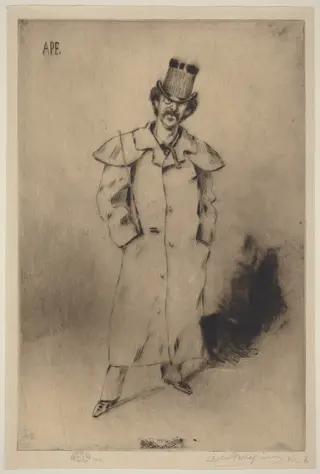
On January 30, 1869, the British weekly Vanity Fair published a full-page caricature of Benjamin Disraeli by Carlo Pellegrini, the first in the magazine's long-running series of color lithographic portraits of public figures. The image followed Thomas Gibson Bowles's promise of new pictorial material and turned a struggling society magazine into an important visual record of Victorian and Edwardian public life. Later issues made artists, writers, politicians, scientists, soldiers, clergy, and athletes recognizable through a consistent format: a large chromolithograph paired with sharp social commentary. The Disraeli sheet established the magazine's best-known contribution to graphic satire and celebrity portraiture.
The series made Vanity Fair caricature a collectible visual archive of late nineteenth-century public culture.