Museum
Asia and Pacific Museum

Image: Wikimedia Commons.
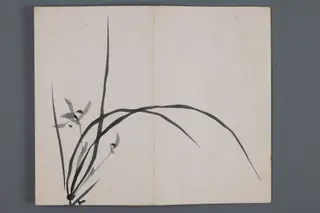
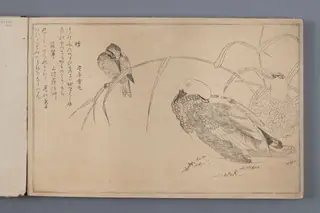
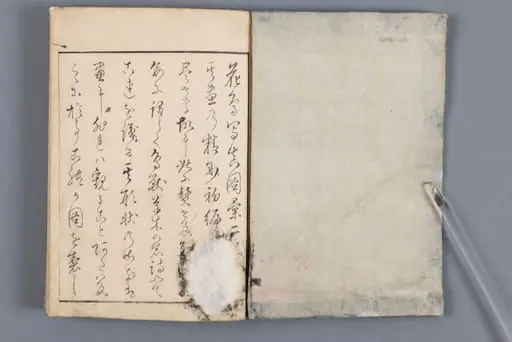
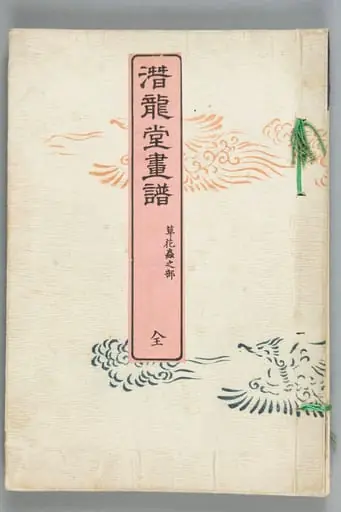
Asia and Pacific Museum is a museum in Warsaw, Poland. 4 works from its collection are in this catalog, including 北尾 重政 Kitao surname Shigemasa name and Original woodcut autor 喜多川 歌麿 Kitagawa surname Utamaro name.
About Asia and Pacific Museum
The Asia and Pacific Museum (Polish: Muzeum Azji i Pacyfiku), in Warsaw, Poland, was founded in 1973 from a private collection of Oriental art amassed by Andrzej Wawrzyniak, sailor, diplomat, and connoisseur–collector of Oriental art. After returning to Poland, he donated his collection, numbering over 3,000 objects, to Poland. Thus the Museum of the Nusantara Archipelago was created in Warsaw in 1973.
In 1973 the Museum, continually enhanced with objects from additional regions of the world, became the Asia and Pacific Museum, with Wawrzyniak as its lifetime director and chief curator. The Museum's holdings include over 20,000 objects from Asia, Australia, and Oceania.
Overview
The Asia and Pacific Museum (Muzeum Azji i Pacyfiku) in Warsaw, Poland, is a specialized institution dedicated to the art and culture of Asia, Australia, and Oceania. Established in 1973, it houses a collection of over 20,000 objects, ranging from traditional artifacts to contemporary works. The museum serves as a cultural bridge, showcasing the diverse material and spiritual heritage of the region while also featuring works by Polish artists inspired by Asian themes.
It operates as a center for research and education, supported by a significant library and unique architectural setting.
History & Founding
The museum's origins trace back to the private collection of Andrzej Wawrzyniak, a Polish diplomat and sailor who served as an attaché in the Polish Embassy in Jakarta between 1961 and 1971. During his tenure, he amassed a vast collection of Indonesian art and crafts. Upon returning to Poland in 1971, Wawrzyniak initiated efforts to transform his collection into a public institution, appointing himself as the lifetime director and chief curator.
The museum was officially founded on February 26, 1973, initially under the name Museum of the Nusantara Archipelago, reflecting its primary focus on the Indonesian archipelago before expanding its scope to the broader Asia-Pacific region.
Building & Architecture
The museum is housed in two historic, two-story late neoclassical buildings dating back to 1854. These twin structures, originally designed by an architect (specific name not detailed in the source but noted as a design from that era), form the core of the museum's physical presence. The site also includes a distinctive garden area known as the 'Oriental Oasis.'
A notable feature of the museum's exterior is a black-and-white sgraffito titled 'Javanese Shadow Theater' on the wall of a newer building, designed by Professor Tytus Sawicki. The architectural ensemble provides a unique backdrop for the diverse cultural artifacts displayed within.
Collection Highlights
The museum's holdings are extensive, comprising over 20,000 objects. The foundational collection is Indonesian, featuring white weaponry, rich textiles, numerous theatrical dolls and masks, musical instruments, sculptures, and paintings by contemporary artists. Beyond Indonesia, the collection is particularly strong in artifacts from Mongolia, India, Nepal, Tibet, Vietnam, Burma, Laos, China, Central Asia (including Uzbekistan, Tajikistan, Turkmenistan, Kazakhstan, and Kyrgyzstan), Afghanistan, Papua New Guinea, and Vanuatu.
The museum also uniquely collects works by Polish artists who were inspired by Asian cultures, integrating local artistic responses with the primary collection.
The Oriental Oasis
A distinctive feature of the museum is its garden, referred to as the 'Oriental Oasis.' This space gradually accumulated various Asian-style objects and structures. Its centerpiece is a replica of the 'One Pillar Pagoda' from Hanoi, Vietnam, a Buddhist temple originally from the 11th century.
This square structure on a single circular pillar was constructed in 1988 by Vietnamese masters to commemorate the museum's 15th anniversary. The garden also houses a Nepalese temple bell cast by the founder Dahrana, a stone sculpture titled 'Creative Buddha' by Miłosz Płonka, and ceramic reliefs by Paweł Wolański depicting Chinese dragons playing with a pearl. A wooden pavilion in a style referencing Chinese architecture was added in 2000.
Library & Research
The museum maintains the Asian Library (Biblioteka Azjatycka), which contains over 14,000 volumes. The library's origins lie in the private book collection of the founder, Andrzej Wawrzyniak. It primarily gathers scientific publications on the material and spiritual cultures of Asian, Australian, and Oceanian countries.
The collection includes rare 19th-century prints, many of which are richly illustrated, as well as domestic and foreign publications of an academic, artistic, and popular nature. It holds unique items in Polish collections, including museum catalogs received through international cooperation, specialized journals, dictionaries, encyclopedias, and auction catalogs for Asian art.
Significance & Exhibitions
For many years, the museum operated without a permanent exhibition, relying instead on temporary shows held in its smaller additional locations. However, in September 2016, the first part of a permanent exhibition was opened, followed by a new permanent exhibition in June 2022. The museum also opened a new temporary exhibition hall in 2016, which has hosted various significant displays.
The institution plays a vital role in preserving and presenting the cultural heritage of the Asia-Pacific region in Poland, serving as a repository for both the founder's original vision and the evolving artistic dialogue between Poland and Asia.
Asia and Pacific Museum by the numbers
- Founded
- 1973
Works from Asia and Pacific Museum
Plan your visit
Asia and Pacific Museum
- Website
- www.muzeumazji.pl
Museums near Asia and Pacific Museum
- Art Museum National Museum in Warsaw Śródmieście, Poland
- Castle Wawel Castle Kraków, Poland
- Art Museum National Museum in Kraków Kraków, Poland
- Art Museum Alte Nationalgalerie Bezirk Mitte, Germany
- National Museum National Museum in Prague Prague, Czech Republic
- Art Museum Bode Museum Bezirk Mitte, Germany


