Palace
Heidecksburg

Image: Wikimedia Commons.
Heidecksburg is a palace in Rudolstadt, Germany.
About Heidecksburg
Heidecksburg is a Baroque palace in Rudolstadt, Thuringia, Germany. The palace served as the residence of the princes to Schwarzburg-Rudolstadt. It is located prominently approximately 60 m above the old town. After a fire in 1735 and its reconstruction, it has remained intact, including during World War II.
Plan your visit
Heidecksburg
- Website
- www.heidecksburg.de
Overview
Heidecksburg is a Baroque palace in Rudolstadt, Thuringia, Germany, perched approximately 60 meters above the old town. Formerly the residence of the princes of Schwarzburg-Rudolstadt, it is now one of the most magnificent Baroque palaces of the 18th century and one of the most popular destinations in Thuringia, attracting over 100,000 visitors annually. The palace houses the Thuringian State Museum Heidecksburg (Thüringer Landesmuseum Heidecksburg) and the Thuringian State Archive Rudolstadt (Thüringer Staatsarchiv Rudolstadt), and serves as the headquarters of the Thuringian Foundation for Palaces and Gardens (Stiftung Thüringer Schlösser und Gärten). Remarkably, after a devastating fire in 1735 and subsequent reconstruction, the palace remained intact even during World War II.
Founding & history
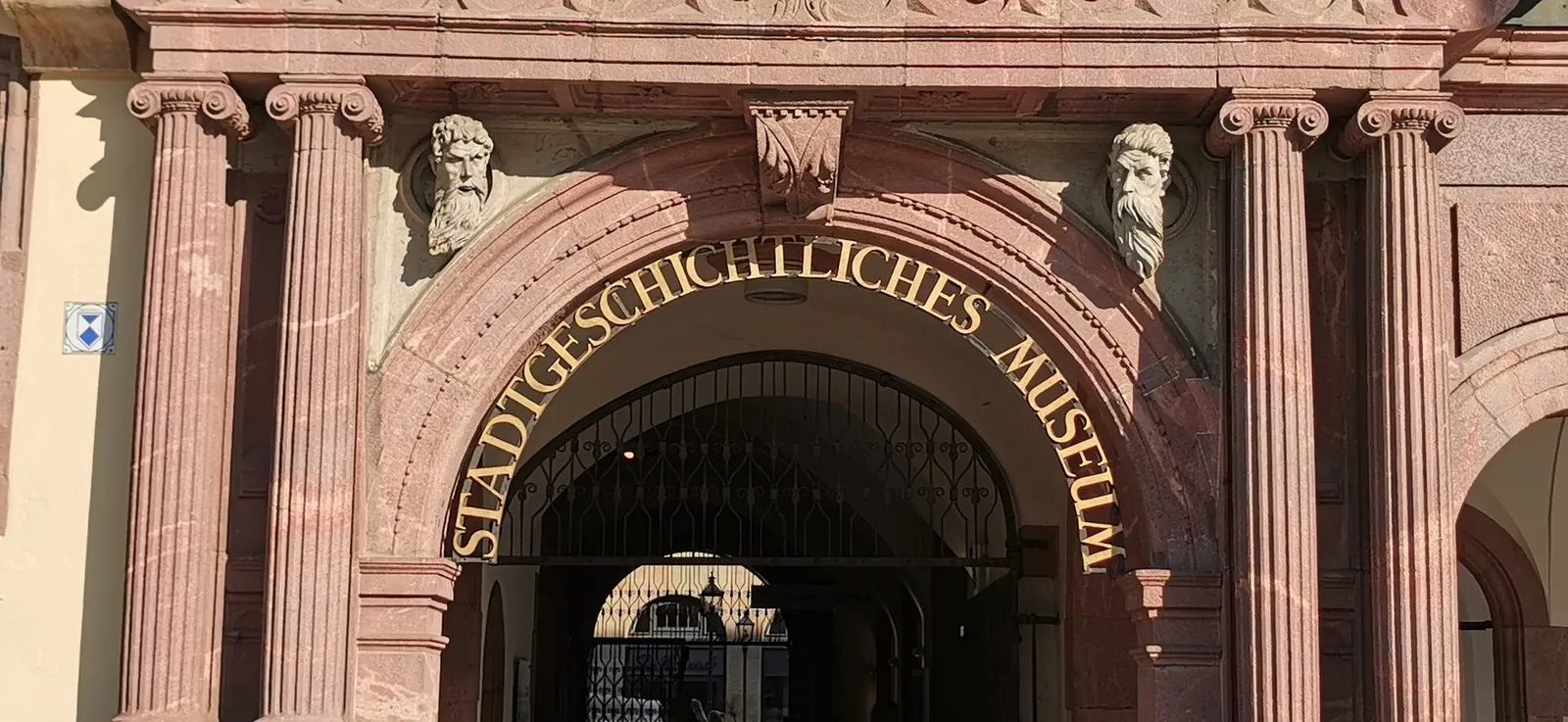
The site's history stretches back to a 13th-century medieval fortress built by the Counts of Orlamünde, acquired by the Counts of Schwarzburg in 1334, and destroyed in March 1345 during the Thuringian Counts' War. A late-14th-century successor castle followed, of which a round tower incorporated into the present Marstall (stables) may survive. In 1570, a territorial division prompted conversion of the old castle into a Renaissance residence. Architect Georg Robin, trained in the Netherlands and probably Italy, drew plans from 1571 and directed works until 1575; Christoph Junghans then continued, creating a three-winged palace that largely prefigured today's layout. A fire in 1573 and partial burning nonetheless preceded this reconstruction. The Renaissance palace itself burned extensively in 1735, though the gatehouse, the rib-vaulted ground floor of the west wing, the north wing portal, and much of the south wing with its mirror cabinet survived and were integrated into the new building. Prince Friedrich Anton, whose house had been raised to princely status in 1710, commissioned a Baroque replacement. Johann Christoph Knöffel, successor to Matthäus Daniel Pöppelmann as Dresden's chief architect, began in 1737 but was relieved in 1743 due to overcommitment. Gottfried Heinrich Krohne, Weimar's state architect, accelerated progress, though decorative works continued into the 1770s and even the early 19th century for the north and east wings. A plaque records 1786 as the completion date. Around 1800, Classical remodeling and garden additions, including a Horus temple and artificial ruins, marked a further phase. After the 1918 abdication of Prince Günther Victor, the palace transitioned to public use. The collections were unified as the State Museum Heidecksburg in 1950, and in 1940 the weapons collection from Schloss Schwarzburg was transferred here. Post-1945 damage was repaired through the 1950s, with notable restorations including a new copper roof for the 40-meter tower in 1966 and the mirror cabinet in 1971. Since 1994, the Thuringian Foundation for Palaces and Gardens has overseen ongoing preservation.
Collection scope
The Thuringian State Museum Heidecksburg encompasses diverse collections reflecting centuries of princely collecting passion. The natural history collection is the largest component, containing approximately 500,000 objects spanning animals, plants, minerals, rocks, and fossils, alongside books, files, and correspondence. This collection traces its origins to Prince Friedrich Karl of Schwarzburg-Rudolstadt, who founded his cabinet of naturalia in 1757 with guidance from his physician and geologist Georg Christian Fuechsel, recognized as one of its founders. An earlier cabinet of rarities existed from 1729 but was largely lost in the 1735 fire. The art collections include furniture and paintings from the late Renaissance through Rococo to Historicism, a significant decorative porcelain collection, and an exhibition on Schwarzburg history. The museum also presents the permanent exhibition "Rococo en miniature - Die Schlösser der gepriesenen Insel" and hosts changing special exhibitions. The Wunderkammer Heidecksburg recreates the wonder-cabinet tradition of princely courts.
Building & site
Heidecksburg occupies a commanding position on a hill about 60 meters above Rudolstadt's old town, its visibility defining the townscape. The palace courtyard stretches approximately 150 meters. The present three-winged Baroque complex, built in the second half of the 18th century, rises on the remains of the 1735 fire. The south wing largely retains the fabric of its Renaissance predecessor, including the gatehouse and mirror cabinet. The new west wing, designed by Knöffel, centers on the festival hall and displays Dresden late-Baroque influence in its facade, while the interior room sequence, with two apartments each comprising antechamber, main room, cabinet with alcove, and wardrobe, shows clear French influence oriented toward comfort. The north wing served administrative functions for the princely ministries and was extended with smaller utility buildings including the Marstall. The 40-meter Baroque tower was erected in 1744. The Schallhaus, originally a garden pavilion on the lower castle terrace, dates from the late 17th century. Garden additions around 1800 included a Horus temple, artificial ruins, and column stumps.