Art Museum
Hispanic Society of America

Image: Wikimedia Commons.
Hispanic Society of America is an art museum in Manhattan, United States.
About Hispanic Society of America
The Hispanic Society of America operates a museum and reference library for the study of the arts and cultures of Spain and Portugal and their former colonies in Latin America, the Spanish East Indies, and Portuguese India. Despite the name, it has never functioned as a learned society.
Founded in 1904 by philanthropist Archer M. Huntington, the institution continues to operate at its original location in a 1908 Beaux Arts building on Audubon Terrace in the Washington Heights neighborhood of Manhattan in New York City. A second building, on the north side of the terrace, was added in 1930. Exterior sculpture in front of that building includes work by Anna Hyatt Huntington and nine major reliefs by the Swiss-American sculptor Berthold Nebel, a commission that took ten years to complete.
Hispanic Society of America by the numbers
- Founded
- 1904
- Visitors / year
- 20,000
Plan your visit
Hispanic Society of America
- Website
- hispanicsociety.org
Overview
The Hispanic Society of America is a museum and reference library in New York City devoted to the arts and cultures of Spain and Portugal and their former colonies in Latin America, the Spanish East Indies, and Portuguese India. Founded in 1904 by philanthropist Archer M. Huntington, it has never functioned as a learned society despite its name. The institution occupies a Beaux Arts complex on Audubon Terrace in the Washington Heights neighborhood of Manhattan, where it continues to operate at its original location. Its significance lies in holding the most important collection of Hispanic art outside Spain, serving as a major center for scholarly research while remaining free and open to the public.
Founding & history
Archer Milton Huntington (1870-1955), heir to one of the wealthiest families of his era, established the Hispanic Society of America on May 18, 1904. His interest in Hispanic culture had developed during childhood travels to Spain and Mexico with his parents; he subsequently learned Spanish and Arabic and amassed extensive collections of paintings, manuscripts, coins, ceramics, and textiles. Huntington deliberately chose a site away from Manhattan's busy center, acquiring property on Broadway between 155th and 156th Streets known as Audubon Terrace, named for ornithologist John James Audubon who had lived there until his death in 1851. The neighborhood was still developing when the subway extended northward in 1906. Huntington envisioned Audubon Terrace as a cultural campus, and by 1930 several institutions had joined the complex: the American Numismatic Society, the American Geographical Society, the Museum of the American Indian, and the American Academy of Arts and Letters, along with Our Lady of Esperanza Church. Since 1978, most institutions have departed, leaving only the Hispanic Society and the American Academy of Arts and Letters, with Boricua College later joining as a neighbor. The Hispanic Society complex was designated a National Historic Landmark in 2012, and in 2017 it received the Princess of Asturias Award for International Cooperation. In 2005, the institution had already been honored with the Gold Medal of Merit in Fine Arts by the Spanish Ministry of Education, Culture and Sports.
Collection scope
The museum holds more than 18,000 works spanning every medium from prehistoric times to the 20th century, including over 800 paintings, 600 watercolors, 1,000 sculptures, 6,000 decorative arts objects, approximately 175,000 photographs dating from 1850, and 15,000 prints. The library contains more than 250,000 books, 200,000 documents, 175,000 photographs, and 15,000 prints. Its rare books collection comprises 15,000 volumes printed before 1700, including 250 incunables. The manuscript collection is considered the richest outside Spain, featuring the first Fuero Real de Castille from Aguilar de Campoo, the original of El alguacil endemoniado from Quevedo's Sueños, and the Black Book of Hours (Horae Beatae Virginis Mariae ad usum Romanum, circa 1458), one of only a handful of such works. Other notable holdings include a first edition of Don Quijote, the 1526 Map of the World by Juan Vespucio, and an extensive collection of works by the Hispano-Mexican writer Sor Juana Inés de la Cruz. The institution once maintained a significant coin collection of 38,000 pieces, which was auctioned in 2012 to fund acquisitions.
Notable holdings
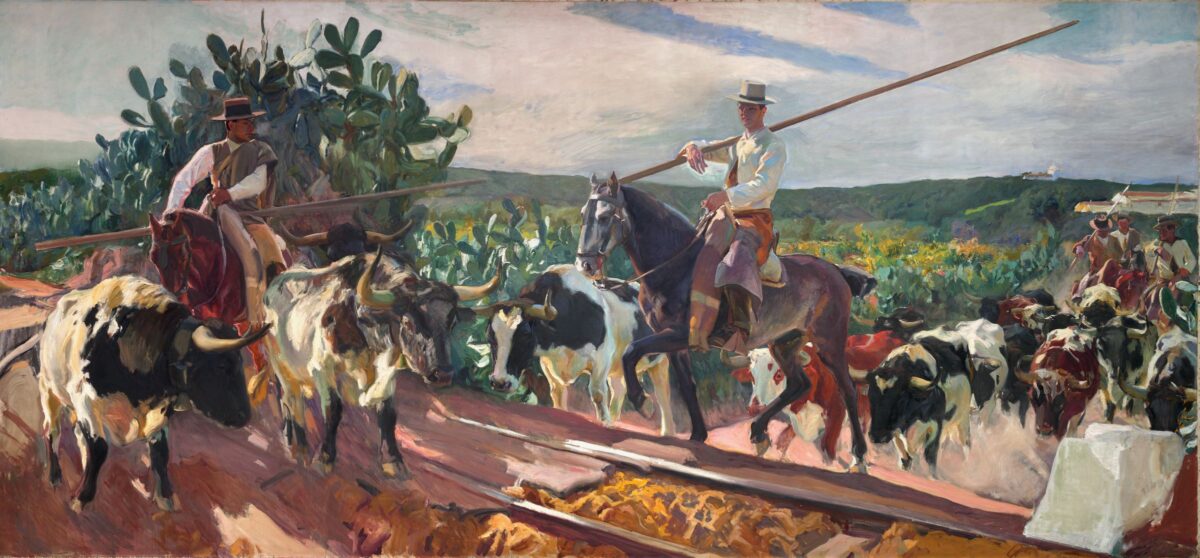
The painting collection features major Spanish masters from the medieval period through the 20th century. Works by El Greco include Holy Family, Pieta, Portrait of a Man, Portrait of Saint Francis, Saint Jerome in Prayer, and Portrait of an Evangelist. Bartolomé Esteban Murillo is represented by The Prodigal Son, while Francisco de Zurbarán contributed depictions of Saint Lucy and Saint Rufina, and Juan Carreño de Miranda painted The Immaculate Conception. Luis de Morales's works include Holy Family, Madonna with the Spindle, and Ecce Homo. Diego Velázquez is represented by portraits of Cardinal Camillo Astali Pamphili, Gaspar de Guzmán, Count-Duke of Olivares, and Portrait of a Young Girl. Francisco de Goya's portraits include El Brigadier D. Alberto de Foraster, Manuel Lapeña, and the celebrated Duchess of Alba in Black. The museum holds the largest collection of Joaquín Sorolla's works outside Spain, including portraits of Aureliano de Beruete, Raimundo de Madrazo, José Echegaray, José Ortega y Gasset, Rafael Altamira, Pío Baroja, José Martínez Ruiz, Vicente Blasco Ibáñez, Juan Ramón Jiménez, Ramón Pérez de Ayala, Louis Comfort Tiffany, and photographer Antonio García Peris, as well as landscapes and genre scenes such as Arco y puerta de Santa Maria, Sol de la tarde, Idilio en el mar, Saliendo del baño, Niños en la playa, and Aleanos Leoneses. The centerpiece is Sorolla's Vision of Spain, a cycle of 14 monumental paintings commissioned by Huntington in 1911 and completed between 1913 and 1919, totaling more than 200 linear feet (61 m), which ring a dedicated gallery depicting scenes from Spain's regions.
Building & site
The original 1908 Beaux Arts building was designed by Charles Pratt Huntington, a cousin of Archer M. Huntington, with an extension wing completed in 1915. An east wing followed designs by Erik Strindberg, and the library was built to designs by H. Brooks Price between 1923 and 1930. A second building on the north side of the terrace was added in 1930. Exterior sculpture in front of that building includes work by Anna Hyatt Huntington and nine major reliefs by Swiss-American sculptor Berthold Nebel, a commission that took ten years to complete. Between 2007 and 2011, the Dia Art Foundation commissioned contemporary projects at the building on West 155th Street by Francis Alÿs, Dominique Gonzalez-Foerster, and Koo Jeong A, along with a weekly "Tuesdays on the Terrace" program of dance, music, and poetry. In April 2015, Philippe de Montebello was appointed to chair the Board of Overseers and lead an expansion to roughly double the museum's size by renovating the vacant adjacent Beaux Arts building formerly occupied by the Museum of the American Indian, which had relocated to the former U.S. Custom House in lower Manhattan. Beginning January 1, 2017, the museum closed for extensive renovations, a $15 million project to replace the roof and lighting; the library remained open on a limited basis by appointment. The reopening, originally scheduled for fall 2019, was delayed. In 2021, the museum expanded into the former home of the Museum of the American Indian adjacent to the original building.
Visiting
The Hispanic Society of America is located at 613 West 155th Street in the Washington Heights neighborhood of Manhattan, New York City, near Trinity Cemetery. Access to the museum is free of charge. The institution continues to fulfill its dual role as a public museum and a research center for scholars worldwide studying Hispanic history, literature, art, and culture. Despite its location in what has become a predominantly Dominican neighborhood, the society has been described as "perhaps New York's most misunderstood institution" because its focus remains on Old Spain and its colonial cultures rather than contemporary Hispanic American culture. In 2012, a proposal to rename the museum the "Archer M. Huntington Museum of Art" to clarify this distinction was suggested but never pursued.
Museums near Hispanic Society of America
- Cooper Hewitt, Smithsonian Design Museum Manhattan, United States
- Art Museum Metropolitan Museum of Art Manhattan, United States
- Art Museum Solomon R. Guggenheim Museum Manhattan, United States
- Art Museum Neue Galerie Manhattan, United States
- Art Museum The Frick Collection Manhattan, United States
- Art Museum Museum of Modern Art Manhattan, United States