Cultural Institution
Instituto Cervantes
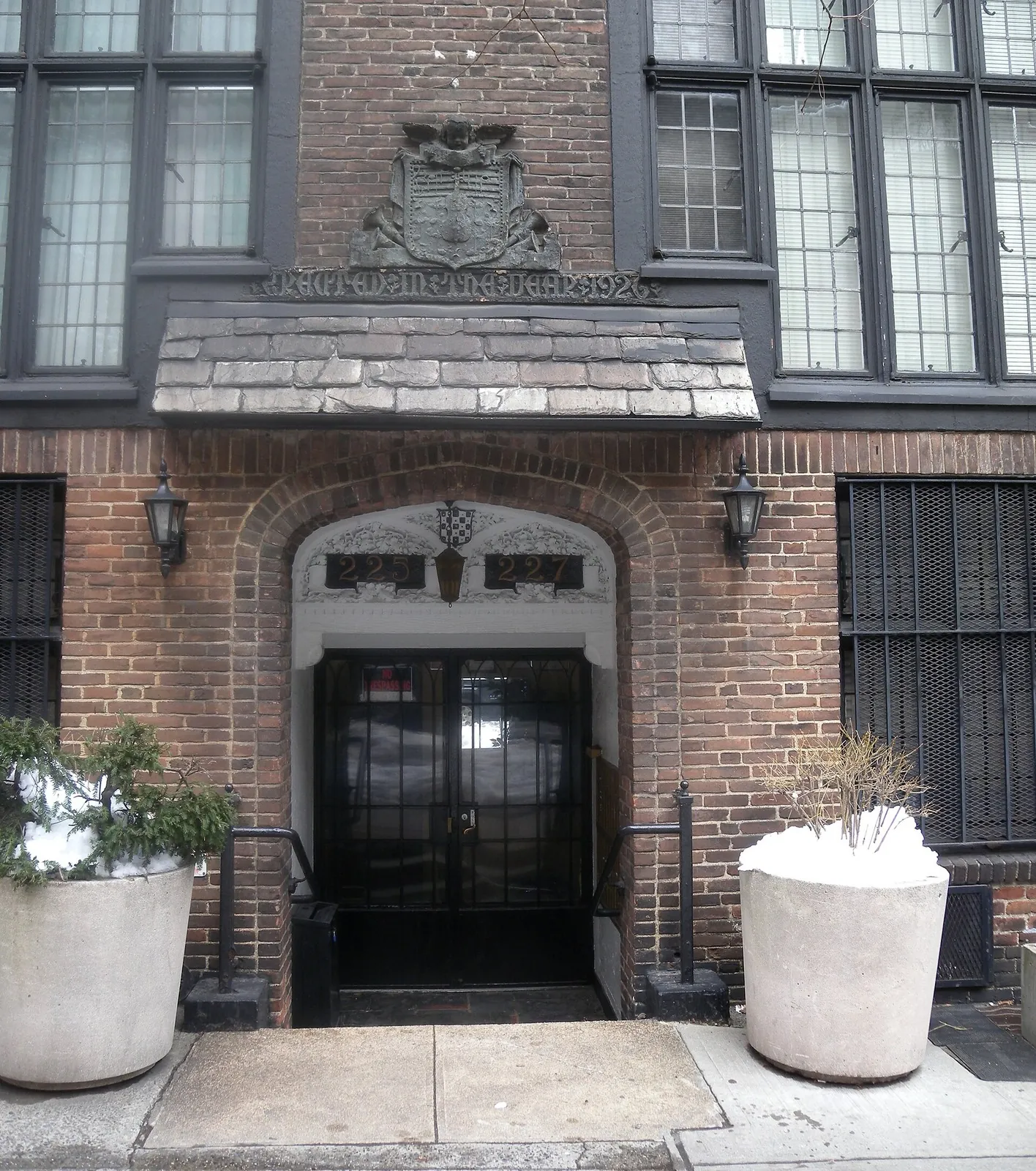
Instituto Cervantes is a cultural institution in Madrid, Spain. 1 work from its collection is in this catalog, including Georges de La Tour.
About Instituto Cervantes
Instituto Cervantes is a worldwide nonprofit organization created by the Spanish government in 1991. It is named after Miguel de Cervantes (1547–1616), the author of Don Quixote and perhaps the most important figure in the history of Spanish literature. The Cervantes Institute is the largest organization in the world responsible for promoting the study and the teaching of Spanish language and culture.
This organization has branched out to 52 countries with 103 centres devoted to the Spanish and Hispanic American culture and Spanish language. Article 3 of Law 7/1991, of March 21, created the Instituto Cervantes as a government agency.
Instituto Cervantes by the numbers
- Founded
- 1991
Works from Instituto Cervantes
Plan your visit
Instituto Cervantes
- Website
- cervantes.org
Overview
The Instituto Cervantes is a worldwide nonprofit organization created by the Spanish government in 1991 to promote the teaching, study, and use of the Spanish language and to disseminate Spanish and Hispanic American culture. Named after Miguel de Cervantes (1547-1616), author of Don Quixote and the most important figure in Spanish literature, it is the largest organization of its kind in the world. The institute operates from headquarters in Madrid and Alcalá de Henares, maintaining a network that has reached 52 countries with 103 centres, or by other counts 88 centres in 64 countries. It functions as Spain's counterpart to Germany's Goethe-Institut, France's Alliance Française, and the British Council, serving as the official reference institution for Spanish language teaching and certification outside Spain.
Founding & history
The Instituto Cervantes was established by Law 7/1991, dated 21 March 1991, which created it as a government agency with autonomous legal personality under the joint oversight of the Ministries of Education and Culture and Foreign Affairs. The founding law defined its mandate to coordinate language teaching, certify proficiency, and foster cultural exchanges. The historian Nicolás Sánchez-Albornoz directed the institution at its creation. The institute began operations shortly after enactment, with its headquarters in Madrid and initial centres opening abroad in 1991. In 1993, it inaugurated its central headquarters in Alcalá de Henares, repurposing the historic Colegio del Rey as a hub for administration and cultural activities. A pivotal milestone occurred in 1994 during the Summit of the Americas in Miami, where Spain announced the opening of centres in Latin America. By the end of the 1990s, the institute had opened 34 centres worldwide, and by 2006 the network had grown to 66 centres. The Centro Virtual Cervantes, an online service for the diffusion of the Spanish language and Hispanic cultures, was created in December 1997. In the 2010s and 2020s, expansion continued with notable openings including a centre in Los Angeles in 2021, an expanded facility in El Paso, Texas the same year, and by 2025 new centres in Mauritania and Toronto, Canada. A major renovation of the Casablanca headquarters was completed in 2025, expanding to over 2,300 square metres of space plus green areas.
Collection scope
The Instituto Cervantes manages the largest network of Spanish libraries in the world, known as the Red de Bibliotecas del Instituto Cervantes (RBIC). The libraries collectively hold more than one million media items in various formats. The collections focus on Spanish and Latin American language and culture, with the majority of materials in Spanish, though documents in other official languages of Spain such as Catalan, Galician, and Basque are also present. The German centres alone hold more than 80,000 media items. The libraries serve language students, university students, teachers, journalists, and all those interested in Spanish-speaking culture. Materials span literature, film, Spanish as a foreign language, music, history, geography, biography, encyclopedias, dictionaries, social sciences, children's and young adult literature, comics, art, architecture, and photography, all within the Hispanic context. The digital offering includes online lending, e-books, audiobooks, databases, and digital press. The libraries also maintain collections dedicated to the writers after whom they are named, and some hold materials on Spanish-German relations or other local connections, such as the Dámaso Alonso Library in Dublin with its collection on Spain-Ireland relations.
Notable holdings
Individual library collections reflect both local and pan-Hispanic priorities. The Dámaso Alonso Library in Dublin, opened in 1995, holds approximately 11,000 volumes representing Spanish and Hispanic-American culture, inheriting books from the previous Spanish Cultural Institute that had been sustained with donations from different public institutions. The library is named after Dámaso Alonso, Spanish writer and critic who was awarded the Cervantes Prize in 1978 and who authored the first translation into Spanish of James Joyce's Portrait of the Artist as a Young Man, published in Madrid in 1926 by Biblioteca Nueva. The London library's collections include reference books, Spanish and Latin American literature, children's and young adult literature, books on history, art, philosophy, politics, economics and sociology, periodicals including El País in digital format, and audiovisual materials spanning Spanish and Latin American films, documentaries, television series, and music across genres including Latin, pop, rock, flamenco, jazz, light, classical, and singer-songwriter. Special collections and named libraries throughout the network honour significant figures in Hispanic letters, such as the bibliothèque Octavio-Paz in Paris, the bibliothèque Antonio-Buero Vallejo in Bordeaux, the bibliothèque Gabriel-Aresti in Lyon, and the bibliothèque Manuel-Azaña in Toulouse.
Building & site
The Instituto Cervantes maintains two headquarters in Spain. The main headquarters is located on Calle de Alcalá in Madrid, one of the city's most iconic streets. This building was constructed in the 17th century as a Trinitarian convent and was subsequently used as a military hospital and a prison before being renovated and adapted to accommodate the offices of the Cervantes Institute. The second headquarters is in Alcalá de Henares, the birthplace of Miguel de Cervantes, where the historic Colegio del Rey was repurposed in 1993 as a hub for administration and cultural activities. The Alcalá de Henares site also serves as the venue for the annual Cervantes Prize ceremony, held in April each year, which is presided over by the King and Queen of Spain. The institute's presence in France includes a notable location in Bordeaux, situated in the building where the Spanish painter Francisco de Goya died on 16 April 1828.
Visiting
The Instituto Cervantes operates as a public institution under the Spanish Ministry of Foreign Affairs, the European Union, and Cooperation. Its governance structure includes a Patronato (Board of Trustees) with King Felipe VI as honorary president, the Prime Minister, and representatives from culture and letters in Spain and the Americas; a Consejo de Administración (Board of Directors) with representatives from multiple ministries; and a Director appointed by the Council of Ministers. The institute is present in 87 cities across 44 countries on five continents, or by other counts 103 centres in 52 countries. In the German-speaking region, there are six centres: Berlin, Bremen, Frankfurt, Hamburg, Munich, and Vienna. In France, centres operate in Paris, Bordeaux, Toulouse, and Lyon. The Paris centre, inaugurated on 11 February 1992, was subject to a retrocession procedure announced in early 2025. Centres offer general and specialized Spanish courses, administer DELE and SIELE certification exams and the CCSE test for Spanish nationality, provide teacher training, and host cultural activities including lectures, book presentations, concerts, art exhibitions, film festivals, and flamenco festivals. Library services include lending, interlibrary loan across the RBIC network, internet access, and cultural programming. Many resources are also accessible through the Centro Virtual Cervantes online platform.
Museums near Instituto Cervantes
- Birthplace of Cervantes (Alcalá de Henares) Alcalá de Henares, Spain
- Art Museum Museo del Prado Madrid, Spain
- Art Museum Thyssen-Bornemisza Museum Madrid, Spain
- Art Museum Museo de la Trinidad Madrid, Spain
- Palace Royal Monastery of San Lorenzo de El Escorial San Lorenzo de El Escorial, Spain
- Art Museum Museo Fundación Lerma Toledo, Spain


