Art Museum
Kenwood House

Image: Wikimedia Commons.
Kenwood House is an art museum in Hampstead, United Kingdom.
About Kenwood House
Kenwood House (also known as the Iveagh Bequest) is a stately home in Hampstead, London, on the northern boundary of Hampstead Heath. The present house, built in the late 17th century, was remodelled in the 18th century for William Murray, 1st Earl of Mansfield by Scottish architect Robert Adam, serving as a residence for the Earls of Mansfield until the 20th century.
The house and part of the grounds were bought from the 6th Earl of Mansfield in 1925 by Edward Guinness, 1st Earl of Iveagh, and donated to the nation in 1927. The entire estate came under ownership of the London County Council and was open to the public by the end of the 1920s. It remains a popular local tourist attraction.
Kenwood House by the numbers
- Founded
- 1929
- Visitors / year
- 159,556
Plan your visit
Kenwood House
- Website
- www.english-heritage.org.uk
Overview
Kenwood House, also known as the Iveagh Bequest, is a stately home and public art museum in Hampstead, London, situated on the northern boundary of Hampstead Heath. The house is celebrated both for its architecture, particularly Robert Adam's neoclassical interiors, and for its art collection, which includes major works by Rembrandt, Vermeer, and other European masters. Established as a public institution in 1928 following a bequest to the nation, it has been managed by English Heritage since 1986 and remains a significant cultural destination, attracting approximately 93,000 visitors in 2024.
Founding & history
The site's origins trace to around 1616, when John Bill, the King's Printer, built a house known as Caen Wood House. The property was acquired in 1694 by William Bridges, Surveyor-General of the Ordnance, who demolished and rebuilt it; the original brick structure survives beneath the later facade, and the orangery was added around 1700. After passing through several owners, it was purchased in 1754 by William Murray, the future 1st Earl of Mansfield and Lord Chief Justice, establishing the family's long association with the estate.
In 1764, Lord Mansfield commissioned Robert Adam to remodel the house, granting him complete design freedom. Adam added the celebrated library and an Ionic portico. The house survived the Gordon Riots of June 1780, when rioters targeted it after ransacking Lord Mansfield's Bloomsbury townhouse; free ale from the Spaniards Inn, supplemented by wine from the house, stalled the mob until cavalry arrived. Following the 1st Earl's death in 1793, his nephew David Murray, Lord Stormont, commissioned extensions by Robert Nasmith and then George Saunders, who added north wings, a dining room, offices, kitchen buildings, and a dairy. The main Hampstead-Highgate road was diverted northward between 1793 and 1796. Royal visits included George III in 1794 and William IV and Queen Adelaide in 1835. The Mansfields increasingly preferred their Scottish seat, Scone Palace, and the 6th Earl leased the house from 1910 to the exiled Grand Duke Michael Mikhailovich of Russia and his wife Countess Sophie of Merenberg, who hosted George V and Queen Mary in 1914. After Nancy Leeds departed in 1920, the contents were sold in 1922.
The modern era began when the Kenwood Preservation Council acquired part of the grounds in 1922, preventing development; this land passed to the London County Council in 1924 and opened to the public in 1925 with King George V present. Edward Guinness, 1st Earl of Iveagh, purchased the house and remaining 74 acres in 1925 and bequeathed it to the nation upon his death in 1927; it opened to the public in 1928. The house closed during World War II and reopened in 1950. Ownership transferred to the Greater London Council in 1965, then to English Heritage in 1986. Major renovations from 2012 to 2013, partly Heritage Lottery Funded, included roof repairs and redisplay of the Iveagh Bequest paintings.
Collection scope
The art collection at Kenwood House derives from the Iveagh Bequest, the personal collection of Edward Guinness, 1st Earl of Iveagh, which accompanied his gift of the house to the nation. The collection is particularly strong in European old master paintings, with notable depth in Dutch and Flemish works, and is complemented by British portraiture and landscape painting. The paintings are displayed throughout the house, with the Iveagh Bequest collection redisplayed in the south of the house following the 2012-2013 renovations. The collection also supports temporary exhibitions that engage with the house's history; for example, in 2025 an exhibition titled 'Heiress' presented portraits by John Singer Sargent of wealthy American women who married into English society, including Nancy Astor, Mary Crowninshield Endicott, and Consuelo Vanderbilt.
Notable holdings
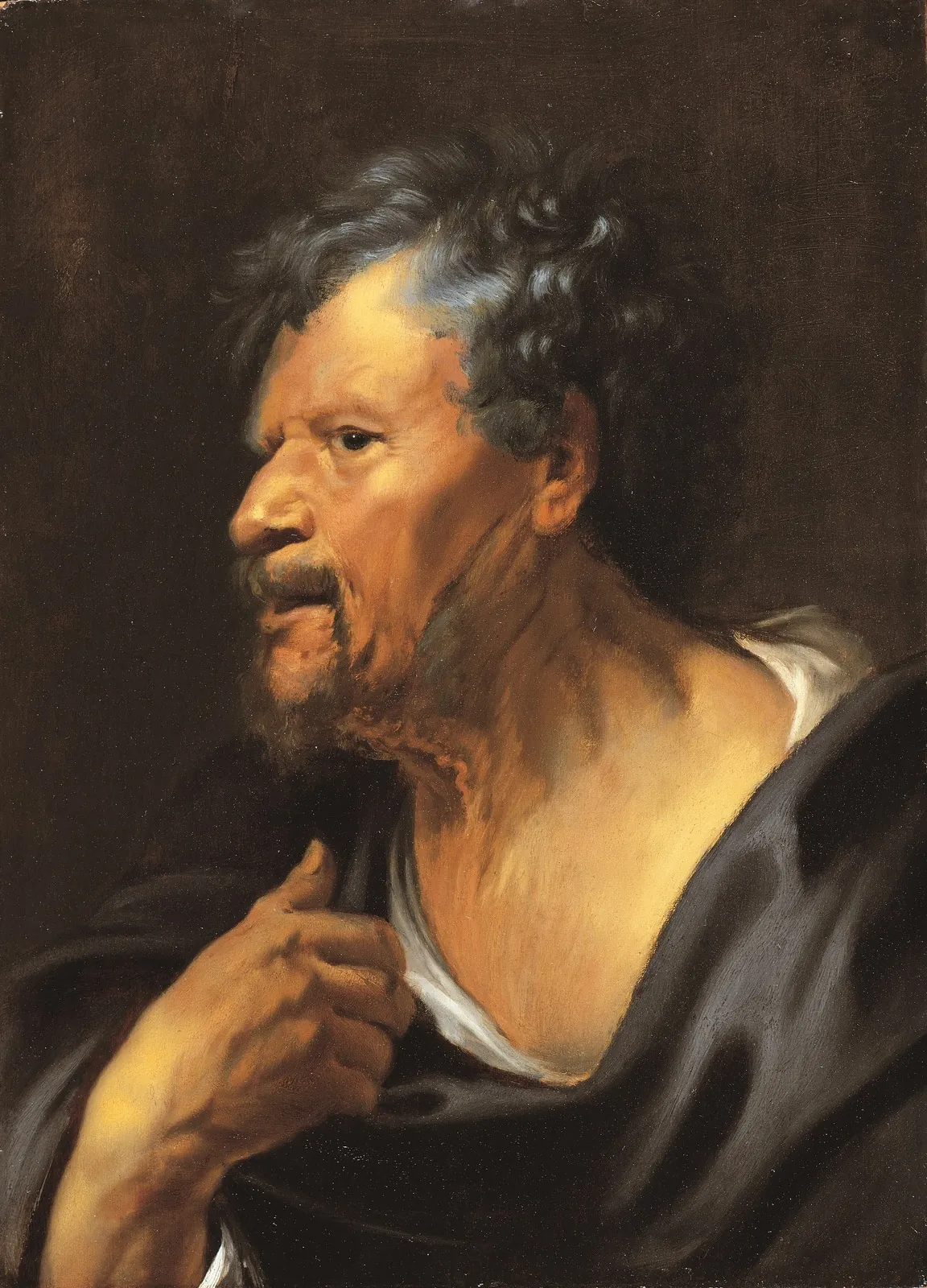
The collection's highlights include a late self-portrait by Rembrandt van Rijn, known as 'Self-Portrait with Two Circles,' and Johannes Vermeer's 'The Guitar Player.' Other significant works encompass Frans Hals, a portrait of James Stuart, Duke of Lennox and Richmond by Anthony van Dyck, and Thomas Gainsborough's 'Portrait of the Countess Howe.' The collection also holds works by John Constable and Joshua Reynolds. Beyond the paintings, the estate features a sculpture collection in the park including works by Henry Moore, Barbara Hepworth, Reg Butler, and Eugène Dodeigne.
Building & site
The present house, built in the late 17th century, was fundamentally transformed by Robert Adam's neoclassical remodelling between 1764 and 1779. This was Adam's third major classical commission, following Osterley Park and Syon House. The library interior is widely regarded as a pinnacle of Adam's achievement, designed to balance the existing orangery and accommodate Lord Mansfield's book collection. The Ionic portico at the entrance is another distinctive Adam addition. George Saunders's late 18th-century extensions, restored from 1955 to 1959, added functional wings to the north.
The grounds comprise a landscaped park of approximately 45 hectares, originally designed by Humphry Repton in the English landscape style. This designed landscape contrasts with the wilder, wooded terrain of Hampstead Heath to the south. The park has been modified over time, with a new garden section laid out by Arabella Lennox-Boyd. The estate's cinematic and cultural presence extends to its use as a filming location, notably for scenes in the film 'Notting Hill.' The park also serves as a regular venue for open-air concerts during summer months.
Visiting
Kenwood House is located at the north edge of Hampstead Heath, to the south of Hampstead Lane (the B519), in the London Borough of Camden, just south of the boundary with the London Borough of Haringey. It is owned and managed by English Heritage and has been open to the public without charge since 1928. The house was closed for major renovations from 2012 until late 2013, reopening after extensive repairs to the Westmorland slate roof and redecoration. Visitor numbers were approximately 132,000 in 2019 and about 93,000 in 2024. The adjacent park remains a popular destination for Londoners, with summer open-air concerts continuing as a regular feature.
Museums near Kenwood House
- Art Museum Schorr Collection City of Westminster, United Kingdom
- Art Museum British Museum London Borough of Camden, United Kingdom
- Art Museum National Gallery City of Westminster, United Kingdom
- Gallery Matthiesen Gallery London, United Kingdom
- Art Museum National Portrait Gallery City of Westminster, United Kingdom
- Art Museum Tate Modern London Borough of Southwark, United Kingdom