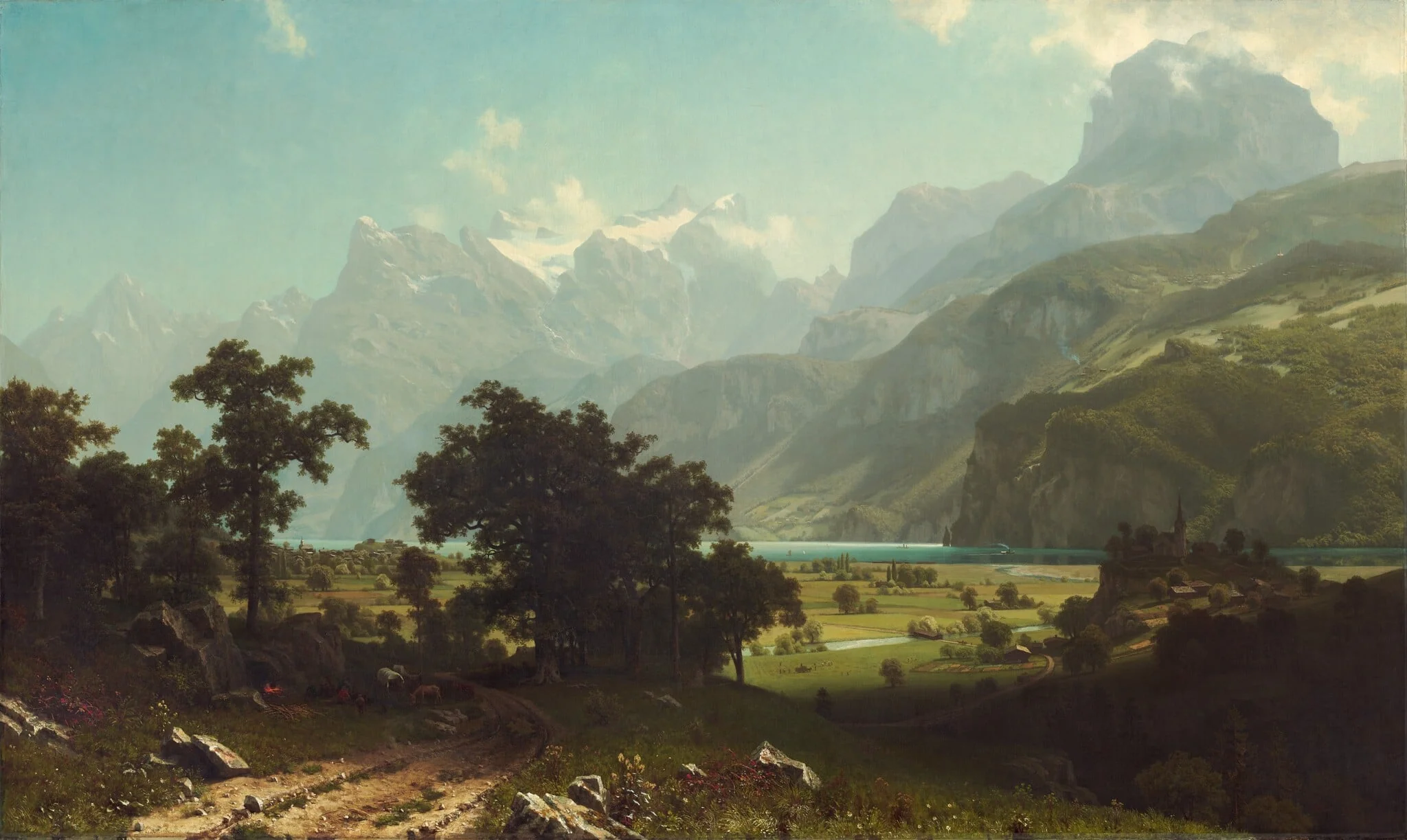
For most of the history of Western painting, landscape was not a subject. It was a setting — the hills and trees and sky behind the real business of a picture, which was a holy figure, a ruler, or a story from myth. The view existed to locate the action and to flatter the patron. It took several centuries for the background to step forward and claim the canvas for itself, and when it finally did, landscape became one of the most flexible carriers of meaning in all of art.
From setting to subject
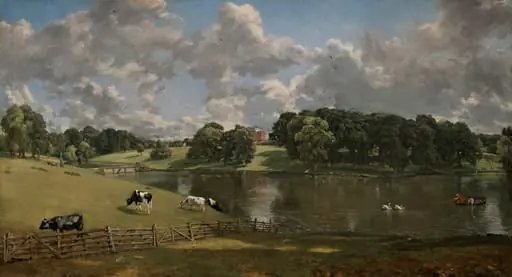
The shift began in earnest with the Dutch in the seventeenth century, who painted their own flat country — its dykes, windmills, and enormous skies — as worthy subjects on their own terms. By the time of John Constable in early nineteenth-century England, landscape had a full claim to seriousness. His Wivenhoe Park, Essex is a portrait of a specific place under a specific weather, the clouds and water observed with the patience earlier painters had reserved for faces. Constable insisted that the ordinary English countryside, closely looked at, was subject enough for major painting.
What made this possible was a change in what landscape could mean. Once a view no longer had to serve a figure or a story, it could carry the painter’s own feeling about nature — its calm, its grandeur, its indifference. The countryside stopped being a backdrop and became a mirror.
The American wilderness
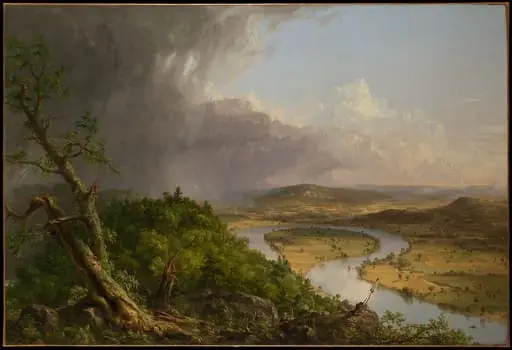
Nowhere did landscape take on greater ambition than in nineteenth-century America. A young nation without ancient cathedrals or ruins found its grandeur in its land, and the painters of the Hudson River School made that land into a national subject. Thomas Cole’s View from Mount Holyoke — the painting known as The Oxbow — sets a wild, storm-darkened wilderness against the cultivated valley below, and asks the viewer to weigh one against the other. The landscape is not just a view; it is an argument about what the country should become.
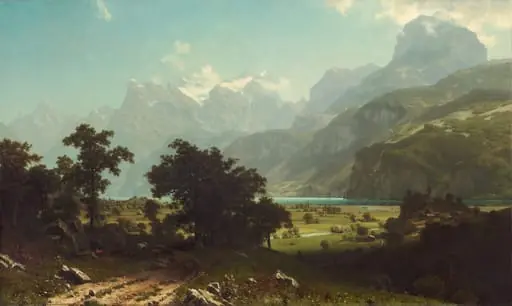
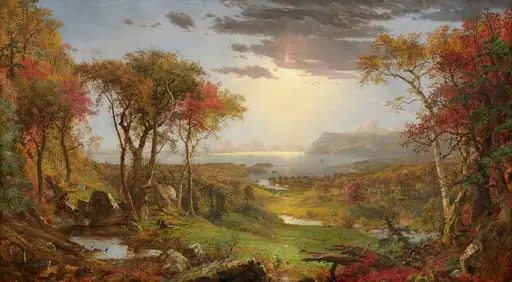
Albert Bierstadt pushed the scale further still. His Lake Lucerne and his vast western scenes treat nature as something close to a religious experience: enormous, luminous, and humbling. Jasper Francis Cropsey’s Autumn — On the Hudson River turns the American fall into a blaze of colour stretching to the horizon. These painters were selling their countrymen a vision of the continent as a sublime inheritance, and the public bought it by the thousand.
A vehicle for everything
By the later nineteenth century landscape had become the genre painters used to work out their largest questions. Turner used it to chase light to its limit. The Impressionists used it to study perception itself. The American painters used it to define a nation. What had begun as the empty space behind the real subject had become the place where painting did its most adventurous thinking.
That is why landscape rewards a second look. A view is never only a view. It carries the weather the painter chose, the scale they decided on, and the feeling they wanted the land to hold.
For more, see the Landscape genre page and the Romanticism movement.