Artwork
Wivenhoe Park, Essex
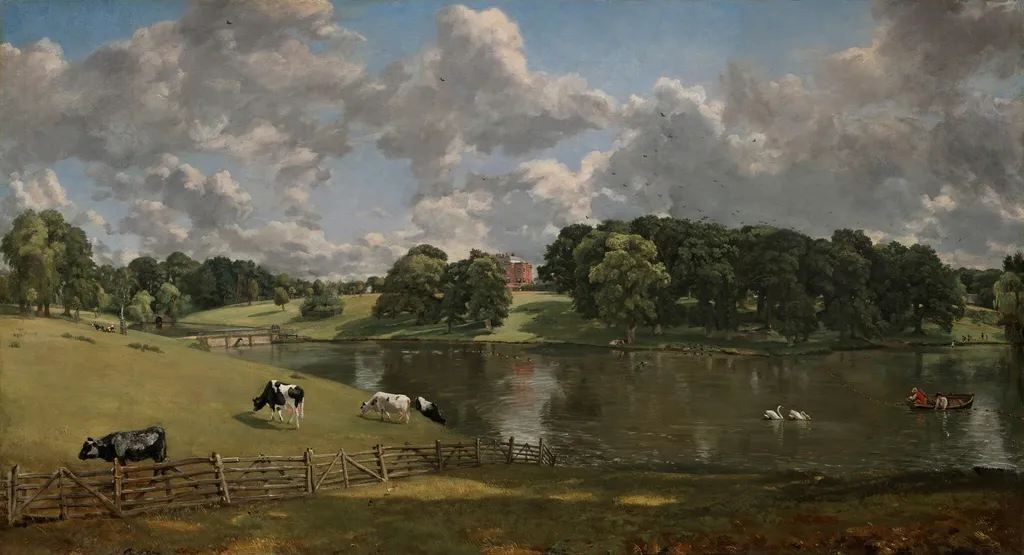
Wivenhoe Park, Essex is an oil painting by the Romanticist artist John Constable. It dates from 1816 and is held in the collection of the National Gallery of Art.
About this work
John Constable finished this sweeping view of Wivenhoe Park near Colchester in September 1816, the estate of Major-General Francis Slater-Rebow.
John Constable finished this sweeping view of Wivenhoe Park near Colchester in September 1816, the estate of Major-General Francis Slater-Rebow. A silvery lake, grazing cattle, and net-hauling fishermen fill the grounds, with Rebow's young daughter Mary steering a donkey cart at the left. Constable enlarged the canvas as he worked, leaving visible seams, and the fee let him marry Mary Bicknell the next month.
Subject & Meaning
The painting depicts Wivenhoe Park, the Essex estate of Major-General Francis Slater Rebow, a friend of Constable's father. The composition presents a panoramic view of the parkland, featuring a herd of cows grazing in a pasture, a fisherman by a body of water, swans, and cattle, all set within a carefully cultivated English garden. The scene includes specular reflections in the water and a dynamic sky filled with clouds, typical of Constable's naturalistic approach.
As a commissioned work, the painting functions as a topographical portrait of the estate, celebrating the picturesque harmony between managed nature and rural life. The inclusion of working elements, livestock, fishing, and fenced pastures, reflects the Enlightenment ideal of productive landscape, while the serene atmosphere conveys the owner's status and the beauty of the Essex countryside.
Technique & Style
John Constable executed Wivenhoe Park, Essex in oil on canvas in 1816, a medium that allowed him to build the luminous sky and intricate reflections on the water through layered, broken brushwork. The painting’s wide, panoramic format (56.1 × 101.2 cm) is typical of his approach to landscape, emphasizing the expansive Essex horizon. As a work of British Romanticism, it combines direct observation of nature with a lyrical, pastoral mood.
The composition integrates a herd of cows, a fisherman, swans, and a barque within the park’s English garden, while the sky and clouds, handled with the fresh, vigorous stroke Constable refined through plein-air studies, dominate the upper half. The handling alternates between detailed passages in the foreground foliage and looser, more atmospheric touches in the distance and sky, a hallmark of Constable’s naturalistic style. No condition issues are recorded in the available sources.
History & Provenance
Painted in 1816 for Major-General Francis Slater Rebow, a friend of John Constable's father, the canvas was commissioned to depict his estate in Essex. It passed by inheritance to his daughter’s second husband, John Gurdon Rebow, and then to their son, Hector John Gurdon Rebow around 1902. The sale of the painting likely preceded the family's sale of Wivenhoe House and Park.
By 1906, it was owned by Leo Nardus and was purchased that year by Peter A.B. Widener of Lynnewood Hall, Pennsylvania. The work entered the National Gallery of Art in 1942 as a gift from the estate of Peter A.B. Widener through Joseph E. Widener.
The painting is held by the National Gallery of Art in Washington, D.C., to which it was gifted in 1942 by Joseph E. Widener, following its ownership by Peter A.B. Widener. The work had previously been in the collection of the Rebow family, for whom it was painted in 1816. No accession number or specific exhibition history is provided in the available sources.
Context
Commissioned in 1816 by Major-General Francis Slater Rebow, a friend of Constable's father, Wivenhoe Park, Essex is a landscape painting belonging to the Romantic movement. The work remained with the Rebow family until around 1902. It is now in the National Gallery of Art, Washington, D.C..
This painting reflects Constable's early engagement with rural scenes and his developing naturalistic style, situating it within his broader oeuvre as a precursor to his later, more celebrated landscapes. Its art-historical significance lies in its representation of the English countryside and its connection to Constable's patronage network.
Overview
John Constable's 1816 oil painting, Wivenhoe Park, Essex, captures a detailed view of Major-General Francis Slater-Rebow's extensive estate. This work exemplifies Constable's focus on the English countryside, a theme central to his artistic output. The canvas presents a serene landscape featuring a shimmering lake, livestock, and figures engaged in daily activities, reflecting the Romantic era's appreciation for nature.
Legacy
John Constable, a native of Suffolk, is primarily recognized for his evocative landscape paintings, particularly those inspired by the English countryside of his youth. His works, including Wivenhoe Park, are now celebrated as significant contributions to British art. They are widely regarded for their aesthetic appeal and considerable value, cementing Constable's position as a prominent figure in the history of landscape painting.
Artist & collection
Artist
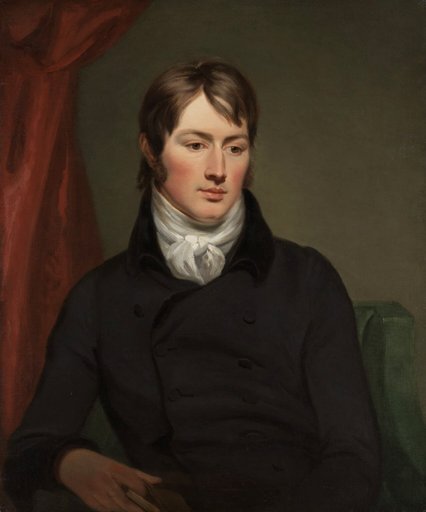
John Constable was an English landscape painter in the Romantic tradition. Born in Suffolk, he is known principally for revolutionising the genre of landscape painting with his pictures of Dedham Vale, the area on the…

 Compared in the How to Look at a Painting course