Artist
Felix Octavius Carr Darley
United States
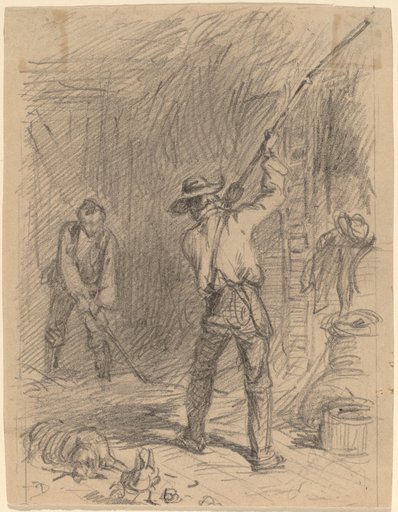
Felix Octavius Carr Darley is an United States Impressionism artist. 7 works are cataloged here, principally at National Gallery of Art.
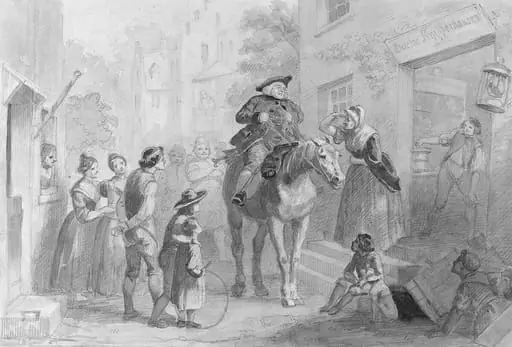
![Chef Tossing Pancakes and Group of Four Men [verso]](https://artifactworldgallery.com/img/felix-octavius-carr-darley--chef-tossing-pancakes-and-group-of-four-men-verso--2a1e79eefaebb888-w320.webp)
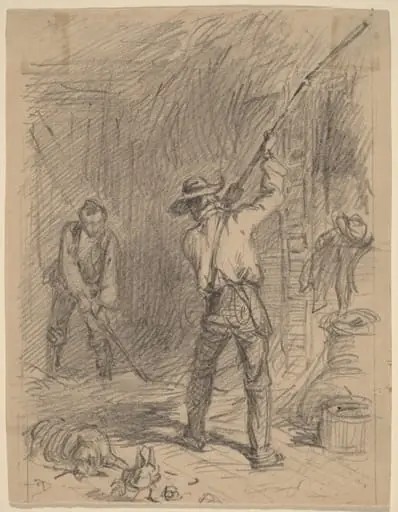
![Bernini Fountain, Rome [recto]](https://artifactworldgallery.com/img/felix-octavius-carr-darley--bernini-fountain-rome-recto--bed0d506722bdbdf-w320.webp)
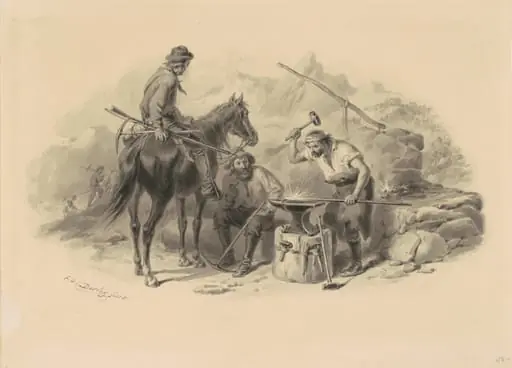
American, Philadelphia, Pennsylvania 1822–1888 Claymont, Delaware
Overview
Felix Octavius Carr Darley (June 23, 1822, March 27, 1888), often credited as F. O. C. Darley, was an American illustrator whose prolific output defined the visual culture of 19th-century American literature. A self-taught artist who rose from staff positions in Philadelphia publishing houses to national prominence in New York City, Darley produced illustrations for many of the era's most celebrated authors, including James Fenimore Cooper, Charles Dickens, Washington Irving, Nathaniel Hawthorne, Harriet Beecher Stowe, and Edgar Allan Poe. His nearly 350 drawings for Cooper's novels, 500 drawings for Benson John Lossing's History of the United States, and landmark illustrated editions of Irving's tales established him as one of the most significant American illustrators of his generation. Elected to the National Academy of Design in 1851 and elevated to full academician in 1852, Darley helped elevate illustration from commercial craft to respected art form.
Biography & dates
Darley was born on June 23, 1822, in Philadelphia, Pennsylvania. Without formal training, he began his career as a staff artist for a Philadelphia publishing company, where the breadth of assignments developed his versatility across subjects and media. His relocation to New York City proved pivotal: his work began appearing in Harper's Weekly and in books from various publishers, bringing him national exposure. On January 31, 1843, Darley signed a contract with Edgar Allan Poe to create original illustrations for Poe's planned literary journal The Stylus, at a rate of $7 per illustration for three to five works monthly through July 1, 1844. Though The Stylus was never produced, Darley illustrated the final installments of the first serial publication of Poe's prize-winning tale 'The Gold-Bug' later in 1843. In 1848, Darley produced drawings for the first fully illustrated edition of Washington Irving's 'Rip Van Winkle,' issued by the American Art-Union, followed that same year by illustrations for Irving's The Sketch Book of Geoffrey Crayon, Gent. and later Wolfert's Roost in 1855. His professional standing was recognized with election as an honorary member of the National Academy of Design in 1851 and appointment as full academician in 1852. At age thirty-seven, he married Jane Colburn in 1859. Over his career, he produced nearly 350 drawings for James Fenimore Cooper's novels, collected in multi-volume editions printed from 1859 to 1861. Following a European visit in 1868, he published Sketches Abroad with Pen and Pencil. Darley died on March 27, 1888, at his home in Claymont, Delaware, and was buried at Mount Auburn Cemetery in Cambridge, Massachusetts. His Victorian mansion in Claymont, now known as the Darley House, was placed on the National Register of Historic Places in 1974.
Style & movement
Darley's style was characterized by what contemporaries described as swing, vigor, facility, and versatility. Working primarily in lithography, drawing, engraving, and etching, he demonstrated remarkable adaptability across subjects ranging from literary scenes to American historical incidents to bank-note vignettes. His watercolor paintings of episodes in American history were noted for their spirit and energy. The sheer volume of his output, estimated at 500 drawings for Lossing's History of the United States alone and nearly 350 for Cooper's novels, attests to both his technical efficiency and his capacity to maintain high average quality across projects. His illustrations for Irving's works helped establish visual conventions for American literary characters that persisted for generations. Beyond book illustration, Darley worked in watercolor and produced historical scenes and bank-note vignettes, demonstrating a range that extended his influence into civic and commercial visual culture. His self-taught background informed a practical, assignment-driven approach that nonetheless achieved artistic recognition through institutional validation.
Major works
Darley's major works span illustration, original publication, and painting. His 500 drawings for Benson John Lossing's History of the United States represent one of his largest single commissions. For Washington Irving, he created lithographic illustrations for 'The Legend of Sleepy Hollow,' the first fully illustrated edition of 'Rip Van Winkle' in 1848, The Sketch Book of Geoffrey Crayon, Gent. the same year, and Wolfert's Roost in 1855. His nearly 350 drawings for James Fenimore Cooper's novels were issued in several volumes from 1859 to 1861. His 1868 publication Sketches Abroad with Pen and Pencil documented his European travels. His watercolors depicting incidents in American history and his bank-note vignettes extended his repertoire beyond book illustration. The current locations of individual original works are not specified in available sources, though his illustrations were widely disseminated through print publications and institutional collections. The Darley House, his Victorian mansion in Claymont, Delaware, survives as a historic property listed on the National Register of Historic Places since 1974.
Influences & students
As a self-taught artist, Darley had no documented formal teachers or academic training. His early development came through practical experience in Philadelphia publishing houses, where the variety of assignments cultivated his adaptability. The sources do not record specific pupils, followers, or a defined artistic circle associated with Darley. His influence operated primarily through the widespread dissemination of his illustrations in major American and British literary editions, shaping visual interpretations of canonical texts for mass audiences rather than through direct pedagogical transmission.
Legacy
Darley's legacy rests on his role in establishing illustration as a significant art form in 19th-century America and on the enduring visual vocabulary he created for classic American literature. His illustrations for Irving, Cooper, and others shaped how generations of readers visualized iconic American characters and scenes. Institutional recognition came with his election to the National Academy of Design and, posthumously, with the 1974 listing of his Claymont, Delaware home, the Darley House, on the National Register of Historic Places. Archival collections at the Winterthur Library preserve documentation of his career. His work is represented in major institutional holdings, with 179 catalog records at the Library of Congress alone. Contemporary and subsequent assessments emphasize his technical accomplishment and prolific output as making him one of the most noteworthy American illustrators of his era. The market for his original works and the scholarly assessment of his place within American art history continue to develop through institutional collections and exhibitions.
Works by Felix Octavius Carr Darley
Collections represented


Artists in a similar vein