Artwork
Village Scene with Dutch Colonial Figures (from Hosack Album)
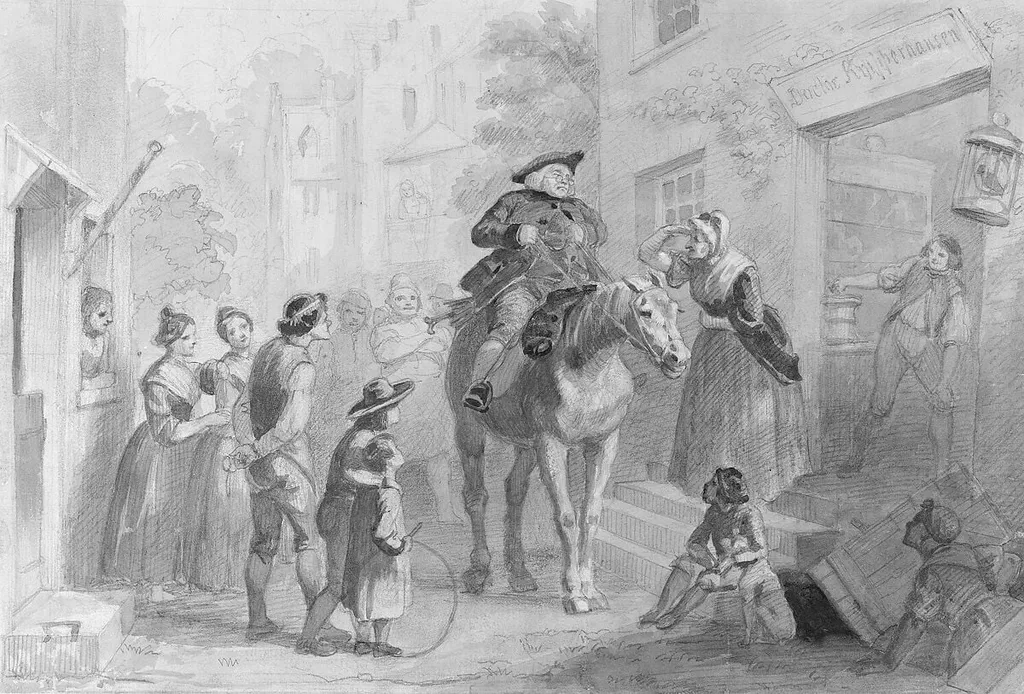
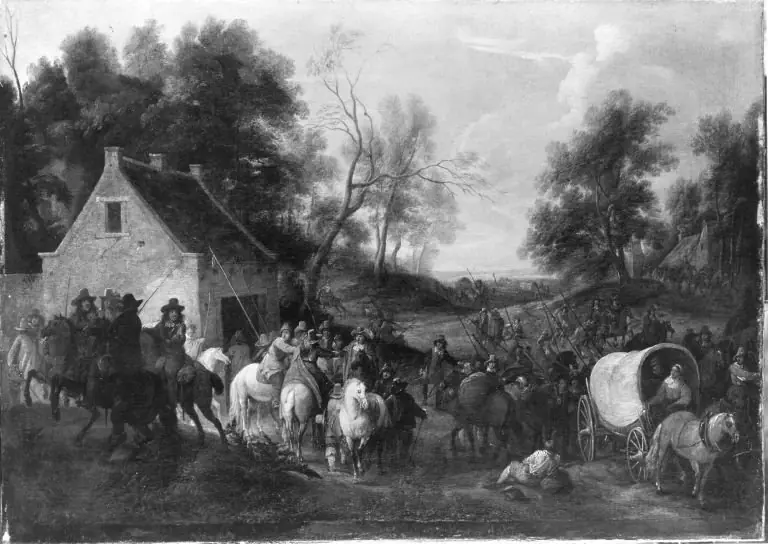
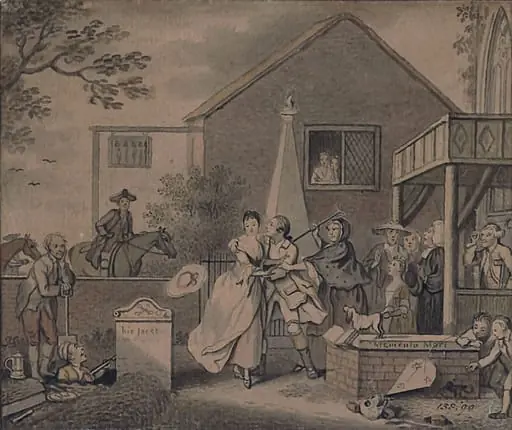
Village Scene with Dutch Colonial Figures (from Hosack Album) is a watercolor work on paper by the American Folk Art artist Felix Octavius Carr Darley. It dates from 1855 and is held in the collection of the Metropolitan Museum of Art. Created in 1855, this watercolor on laid paper presents a bustling village street populated by figures in period dress.
About this work
Technique & Style
The scene’s stylistic qualities feature a subdued palette dominated by earth tones, with restrained yet precise modeling of colonial-era attire and physiognomy.
The work employs watercolor washes as its primary medium, augmented by graphite underdrawing and gouache highlights to establish contrast and depth. The support is an off-white laid paper, consistent with mid-19th-century American watercolor practices. Handling emphasizes delicate, controlled washes with localized gouache to model figures and architecture, while graphite outlines guide the composition.
The scene’s stylistic qualities feature a subdued palette dominated by earth tones, with restrained yet precise modeling of colonial-era attire and physiognomy.
Dimensions are 16.8 cm in height and 24.8 cm in width.
History & Provenance
The work Village Scene with Dutch Colonial Figures (from Hosack Album) is held in the collection of the Metropolitan Museum of Art. It is classified within the museum's American Wing. The piece was created in 1855 and measures 16.8 cm in height by 24.8 cm in width.
No specific inventory or accession number is provided in the available sources, nor is there any recorded exhibition history for this work.
Overview
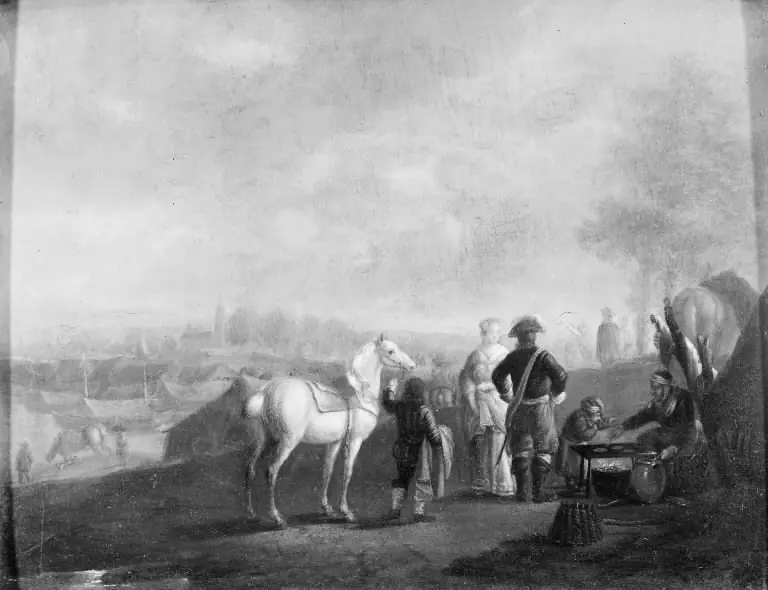
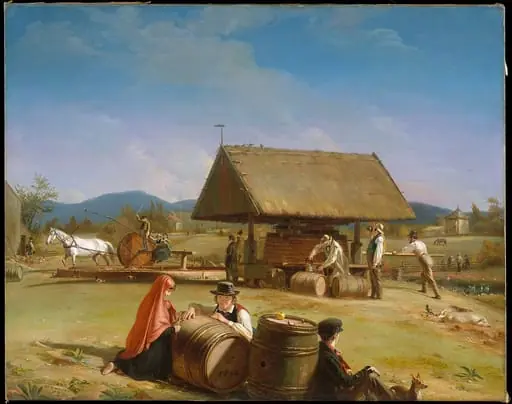
Created in 1855, this watercolor on laid paper presents a bustling village street populated by figures in period dress. A man in a top hat and a woman in a long skirt stand amid children at play and horse‑drawn carts, evoking the atmosphere of a modest American settlement in the mid‑nineteenth century.
Subject & Meaning
The composition captures a slice of everyday life, focusing on ordinary activities rather than heroic narratives. By placing the central couple within a lively communal setting, the work reflects the social rhythms of a small town, suggesting themes of domesticity, local commerce, and the interdependence of residents in a pre‑industrial landscape.
Artist & collection