Artist
James Wells Champney
United States
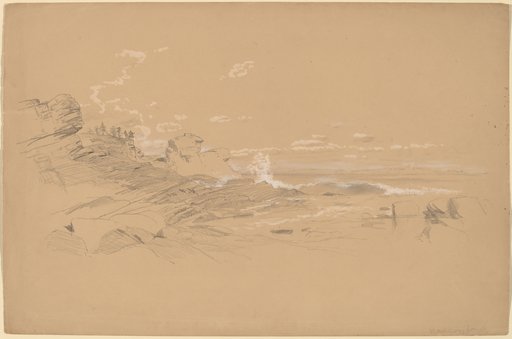
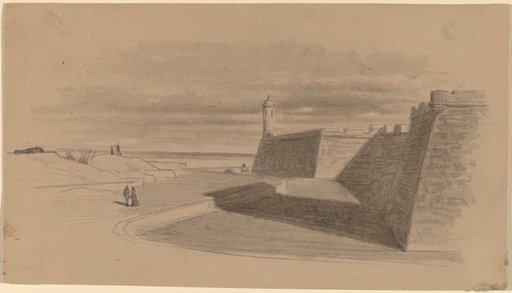
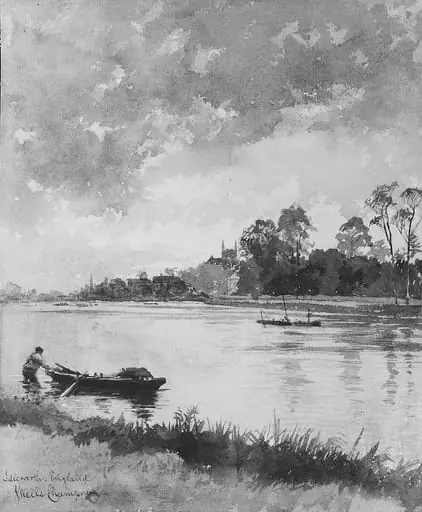
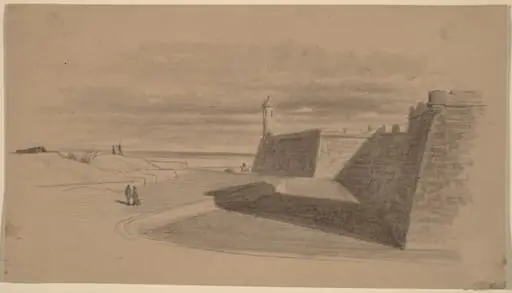
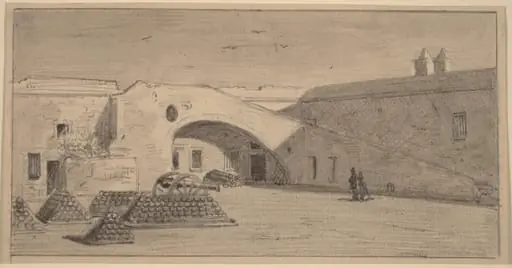
James Wells Champney is an United States Impressionism artist. 8 works are cataloged here, principally at National Gallery of Art.
American, Boston, Massachusetts 1843–1903 New York
Overview
James Wells Champney (July 16, 1843, May 1, 1903) was an American genre painter, portraitist, illustrator, and pastellist whose career bridged the post-Civil War period and the turn of the twentieth century. Working across oil painting, etching, wood engraving, and pastel, he produced portraits, Orientalist scenes, and American landscapes, and became especially known for his pastel portraits of young women after 1885. His collaborative partnership with his wife, the writer Elizabeth Williams Champney, produced illustrated travel books and magazine work that reached a wide audience. Champney's technical range, his early adoption of Impressionist elements, and his role in popularizing pastel as a serious medium in America mark his significance in late nineteenth-century American art.
Biography & dates
Champney was born in Boston, Massachusetts, on July 16, 1843, the son of Benjamin and Sarah Wells Champney. His mother died when he was very young, and he was raised by relatives. At age sixteen he began an apprenticeship in wood engraving, supporting himself through that trade. In 1862, at the outbreak of the Civil War, he left his apprenticeship to enlist in the 45th Massachusetts Volunteers. He saw action at Gettysburg and contracted malaria during his service, leading to his discharge in 1864. After recovering, he taught drawing briefly, including two years at the Young Ladies Seminary of Diocletian Lewis, and received early artistic training at the Lowell Institute in Boston, where he also attended anatomy lectures by Oliver Wendell Holmes.
In October 1866, Champney traveled to Europe to pursue painting. After a short stay in London, he studied with Edouard Frère at the École des Beaux-Arts in Paris and then with Joseph Van Lerius at the Royal Academy of Fine Arts in Antwerp, where he won first prize in drawing in 1868. He returned to the United States in 1870, briefly opening an academy in Boston, but soon went back to Europe, spending time in Rome and Paris.
In May 1873 he eloped with Elizabeth Williams, a former drawing student, to prevent her arranged marriage. The couple spent three years traveling in Europe, living in France when their first child, Édouard Frère Champney, was born in 1874. Their daughter, Maria Mitchell Champney (later Marie Humphreys), was born in 1877. The family eventually settled in Deerfield, Massachusetts, though Champney also worked in New Orleans from 1873 to 1874 and maintained ties to New York.
In 1879 the Champneys purchased a home on Fifth Avenue in New York, where James established a studio while keeping his Deerfield workspace. In 1880 the couple secured a contract to illustrate articles for Century Magazine, which sent them to North Africa, Spain, and Portugal. Between 1880 and 1890 they made repeated European trips, and in 1890 Champney opened a studio in Paris. From about 1885 he concentrated almost exclusively on pastels. He taught at Smith College between 1877 and 1884, and was elected an Associate of the National Academy of Design in 1882. He was also a member of the Salmagundi Club.
Champney died on May 1, 1903, in New York from injuries sustained in a fall down an elevator shaft at the Camera Club. The New York Times reported the circumstances of his death. He was survived by his wife, his son Édouard (who became an architect in Washington), and his daughter Marie, a painter of miniatures.
Style & movement
Champney's artistic development moved through several distinct phases. He began as a wood engraver, acquiring precise draftsmanship skills that informed his later illustration work. His European academic training with Frère and Van Lerius grounded him in traditional genre painting and draftsmanship, with his Antwerp studies culminating in a first prize in drawing in 1868.
The German Wikipedia source identifies him as among the first American artists to incorporate Impressionist elements into his work, a notable early adoption given the resistance to French Impressionism in much of American art during the 1870s. His style encompassed genre scenes, portraits, and landscapes in oil, but his most significant technical shift came around 1885 when he began working almost exclusively in pastel. This medium became the vehicle for his most characteristic works: delicate, luminous portraits, particularly of young women, that combined academic precision with a freer handling of color and light.
His North African and Spanish travels with Elizabeth, undertaken for Century Magazine in 1880, exposed him to the works of Spanish realist Mariano Fortuny and French painter Henri Regnault, whose Orientalist subjects and techniques influenced his subsequent work. He also lectured on photography and advocated for its pictorial potential, showing an openness to new media and technologies. His decorative work included commissions for the Hotel Manhattan in 1898. He frequently signed works as "Champs" to distinguish himself from other artists with the same surname.
Major works
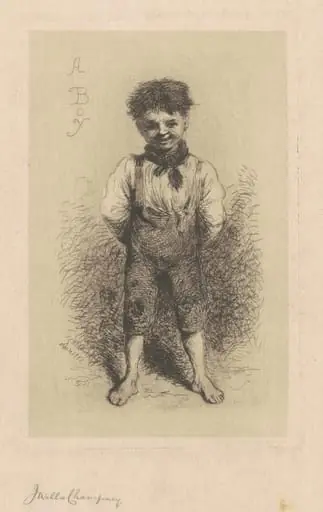
Champney's oeuvre spans oil paintings, pastels, etchings, illustrations, and decorative work. His early paintings include genre subjects such as The Lesson (1874), The Little Beggar (1874), and Puss in Boots (1875). From his European period come works like The Letter (1881), The Fan (1882), and The Coquette (1885). His Self-Portrait in a Turban (1887) reflects his Orientalist interests, while Garden at Versailles (1893) and Woman Seated Holding Lilies (1902) represent his mature pastel period. Other notable works include Housekeeping (1882), Deerfield Valley (1877), and Hide and Seek (1885).
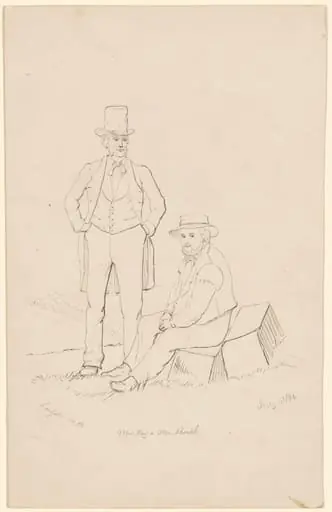
His portrait subjects included prominent figures: writer William Winter, explorer Henry Morton Stanley, and actress Mary Mannering in the role of "Daphne." He also painted portraits of Oliver Wendell Holmes, Sr., and Diocletian Lewis, as well as a portrait titled Darling Elizabeth (1875).
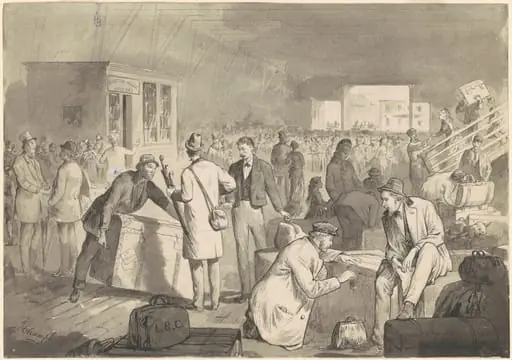
As an illustrator, Champney produced wood engravings and etchings for numerous publications. His illustrations appeared in Edward Smith King's The Great South (1875), William Henry Thomes's The Gold Hunters' Adventures (1888), and multiple volumes in his wife's "Three Vassar Girls" series, including Three Vassar Girls Abroad (1883), Three Vassar Girls in South America (1885), Three Vassar Girls in Italy (1886), Three Vassar Girls in Switzerland (1890), and Three Vassar Girls in the Tyrol (1891). Other collaborative works with Elizabeth included Great-grandmother's Girls In New France (1887) and Witch Winnie in Paris (1893).
He exhibited at the Salon de Paris in 1869 and 1875, the Centennial Exhibition in 1876, the Southern Art Union in 1882, the Columbian Exposition in Chicago in 1893, the Tennessee Centennial Exposition in Nashville in 1897, and at Knoedler's Gallery in 1897. The 1897 Knoedler's exhibition is regarded as a career highlight.
Influences & students
Champney's formative teachers included the French genre painter Edouard Frère, under whom he studied at the École des Beaux-Arts in Paris, and the Belgian painter Joseph Van Lerius at the Royal Academy in Antwerp. The academic training he received from these European masters provided the foundation for his draftsmanship and genre painting. During his travels with Elizabeth, he encountered and studied the works of Mariano Fortuny and Henri Regnault, whose Orientalist subjects and techniques influenced his own North African and Spanish scenes.
Elizabeth Williams Champney was herself a significant figure in his professional life. Beginning as his drawing student before their 1873 marriage, she became his collaborator in illustrated books and magazine articles for publications including Scribner's and Harper's. Their partnership represents one of the more productive husband-wife collaborations in nineteenth-century American publishing.
Champney taught at Smith College from 1877 to 1884, though specific named pupils beyond his wife are not documented in the available sources. His son Édouard Frère Champney became an architect in Washington, and his daughter Marie Champney Humphreys achieved local recognition as a painter of miniatures, suggesting some transmission of artistic vocation within the family.
Legacy
Champney's posthumous reputation rests on several achievements: his early integration of Impressionist elements into American painting, his role in elevating pastel from a minor medium to a vehicle for serious portraiture, and the extensive body of illustrations produced with his wife that documented travel and culture for a broad American readership. His death was reported in The New York Times, reflecting his established position in the art world of his time.
His works are held in institutional collections including the Art Institute of Chicago, the Museum of Modern Art, and the National Gallery of Art, though specific current locations of individual paintings are not detailed in the available sources. The sources note his presence in standard artist reference works including Bénézit's Dictionnaire critique et documentaire des peintres and the Allgemeines Künstlerlexikon. Exhibition catalogs and his works at Project Gutenberg indicate ongoing scholarly and public interest in his output.
Works by James Wells Champney
Collections represented


Artists in a similar vein