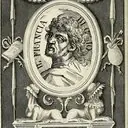
Artist
Giovanni Antonio Boltraffio

Giovanni Antonio Boltraffio is an Early Renaissance artist. 9 works are cataloged here, principally at Gemäldegalerie Berlin.
Giovanni Antonio Boltraffio (or Beltraffio) (1466 or 1467 – 1516) was an Italian painter of the High Renaissance from Lombardy, who worked in the studio of Leonardo da Vinci. Boltraffio and Bernardino Luini are the strongest artistic personalities to emerge from Leonardo's studio. According to Giorgio Vasari, he was of an aristocratic family and was born in Milan.
Overview
Giovanni Antonio Boltraffio (1466 or 1467-1516) was an Italian painter of the High Renaissance from Lombardy, celebrated as one of the strongest artistic personalities to emerge from Leonardo da Vinci's studio. Alongside Bernardino Luini, he represents the most accomplished interpretation of Leonardo's style among the Lombard school. Born into an aristocratic Milanese family according to Giorgio Vasari, Boltraffio forged a successful career as a portraitist and painter of devotional works, developing a technically refined style that adapted Leonardesque motifs to his own precise, linear manner. His significance lies in bridging Leonardo's revolutionary naturalism with the regional traditions of Lombard and Bolognese painting, producing works of considerable elegance and psychological penetration that were prized by contemporary patrons.
Biography & dates
Boltraffio was born in Milan in 1466 or 1467 into an aristocratic family, as recorded by Giorgio Vasari. His earliest works show the influence of Bernardo Zenale, Ambrogio Borgognone, and Vincenzo Foppa, suggesting training outside Leonardo's immediate circle before he joined Leonardo's Milanese workshop in 1491, alongside Marco d'Oggiono and Salaì. In 1491, he signed a contract for the Resurrection altarpiece with Marco d'Oggiono, now in Berlin. He established himself as a portraitist at the courts of Milan and Mantua, traveling to Mantua in 1498. Between 1500 and 1502, he worked in Bologna, where he found sympathetic patrons in the Casio family and painted his acknowledged masterwork, the Pala Casio. He returned to Milan by 1502, working for the church of Santa Maria presso San Satiro. A Roman sojourn followed around 1506, and in 1508 he completed the Lodi Altarpiece. He died in Milan in 1516 at the age of 49 and was buried in the cemetery of San Paolo in Comito. The monumental Leonardo da Vinci monument on the Piazza della Scala in Milan commemorates Boltraffio alongside three other artists from Leonardo's school: Marco d'Oggiono, Cesare da Sesto, and Andrea Salaino.
Style & movement
Boltraffio's style represents a distinctive adaptation of Leonardo's innovations within the Lombard Renaissance. He adopted certain Leonardesque motifs, occasionally employing chiaroscuro and firm, transparent modeling, yet his execution remained fundamentally different. His outlines are characterized by clean, hard edges that lack Leonardo's celebrated sfumato, resulting in a more linear and precise aesthetic. His portraits, often in profile, and his half-length renderings of the Madonna and Child are Leonardesque in conception but reveal an independent artistic temperament. In Bologna, he absorbed the soft, serene qualities of Bolognese painting, creating a synthesis that proved influential. Technically accomplished, his work reveals refined taste, considerable expressive power, and lively characterization. French scholarship has suggested he played a role in transmitting Leonardesque models to the Veronese painter Caroto, indicating his broader significance within northern Italian artistic networks.
Major works
The Resurrection (1491-1494), painted with Marco d'Oggiono, is housed in the Gemäldegalerie, Berlin, and represents his major painting of the 1490s. The Madonna and Child in the Museo Poldi Pezzoli, Milan, is considered one of the high points of the Lombard Quattrocento. The Pala Casio (circa 1500), now in the Louvre Museum, Paris, depicts the Madonna and Child with John the Baptist and Saint Sebastian and two kneeling donors, Giacomo Marchione de' Pandolfi da Casio and his son, the poet Girolamo Casio; it is widely regarded as his masterwork. His portrait of Girolamo Casio (1500-1502) is in the Pinacoteca di Brera, Milan. The Portrait of a Man in Profile is in the National Gallery, London. The Lodi Altarpiece (1508), showing the Virgin and Child with saints, is in the Szépművészeti Múzeum, Budapest. Other significant works include the Young Man with an Arrow in the Pushkin Museum, Moscow, and another version in the Timken Museum of Art, San Diego; a Portrait of a Youth in the National Gallery of Art, Washington; Saint Barbara (circa 1502) in the Gemäldegalerie, Berlin; and a Portrait of a Nobleman in the Kunstmuseum, Bern. The Christ Child (1490-1495) is in the Museo Lázaro Galdiano, Madrid, and a Portrait of a Woman as Saint Lucy (1500) is in the Museo Thyssen-Bornemisza, Madrid.
Influences & students
Boltraffio's primary influence was Leonardo da Vinci, whose Milanese workshop he joined in 1491. His early work also reflects the influence of Bernardo Zenale, Ambrogio Borgognone, and Vincenzo Foppa, painters active in Lombardy before Leonardo's dominance. Within Leonardo's studio, he worked alongside Marco d'Oggiono and Salaì, with whom he collaborated on the Berlin Resurrection. Bernardino Luini, the other major personality to emerge from Leonardo's studio, represented a parallel rather than dependent development. The French Wikipedia suggests Boltraffio influenced the transmission of Leonardesque models to the Veronese painter Caroto, though this remains a point of scholarly discussion rather than established fact. No pupils of Boltraffio are documented in the sources, and his direct artistic following appears limited. The so-called Pseudo-Boltraffio, a painter of the Leonardesque school whose work was formerly attributed to Boltraffio, indicates the difficulty of distinguishing his hand from that of close followers, but this figure remains an anonymous contemporary rather than a documented student.
Legacy
Boltraffio's posthumous reputation has been shaped by the enduring fascination with Leonardo's circle and the challenges of attribution that plague Leonardesque painting. The standard scholarly monograph remains Maria Teresa Fiorio's Giovanni Antonio Boltraffio: Un pittore milanese nel lume di Leonardo (Milan and Rome, 2000). His works have commanded significant scholarly and museum attention, with major paintings in the Louvre, the National Gallery in London, the Gemäldegalerie in Berlin, and the National Gallery of Art in Washington. Attribution debates have significantly affected his legacy, most notably concerning the Salvator Mundi, which was attributed wholly to Boltraffio until 2011. While the consensus by 2017 favored Leonardo's authorship, Metropolitan Museum of Art curator Carmen Bambach maintained that Boltraffio painted most of the work with small retouchings by the master, and art historian Matthew Landrus argued Leonardo contributed only 5 to 20 percent. The Portrait of a Young Woman with a Scorpion Chain in the Columbia Museum of Art, formerly attributed to the Master of the Vierge aux Balances, has been reattributed to Boltraffio and dated 1490-1505, with uncertain Leonardo participation in its design. The Madonna Litta in the Hermitage, Saint Petersburg, and the Holy Family in the National Gallery in Prague remain subjects of attribution debate involving Boltraffio, Leonardo, and other members of the workshop. A Madonna and Child acquired by Wilhelm von Bode in 1872, lost after 1945, recovered from American private ownership in 2012, and returned to the Gemäldegalerie is now catalogued as by an anonymous master of the Lombard school, illustrating the volatility of his attributional corpus.
Works by Giovanni Antonio Boltraffio
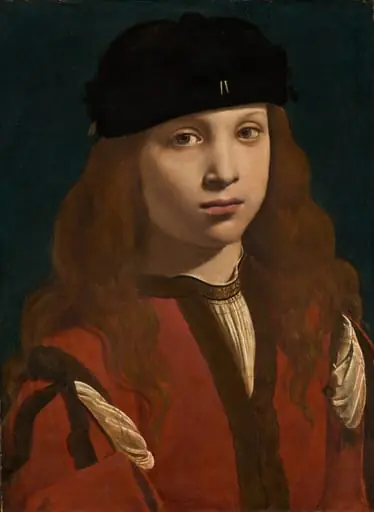 Portrait of a Youth
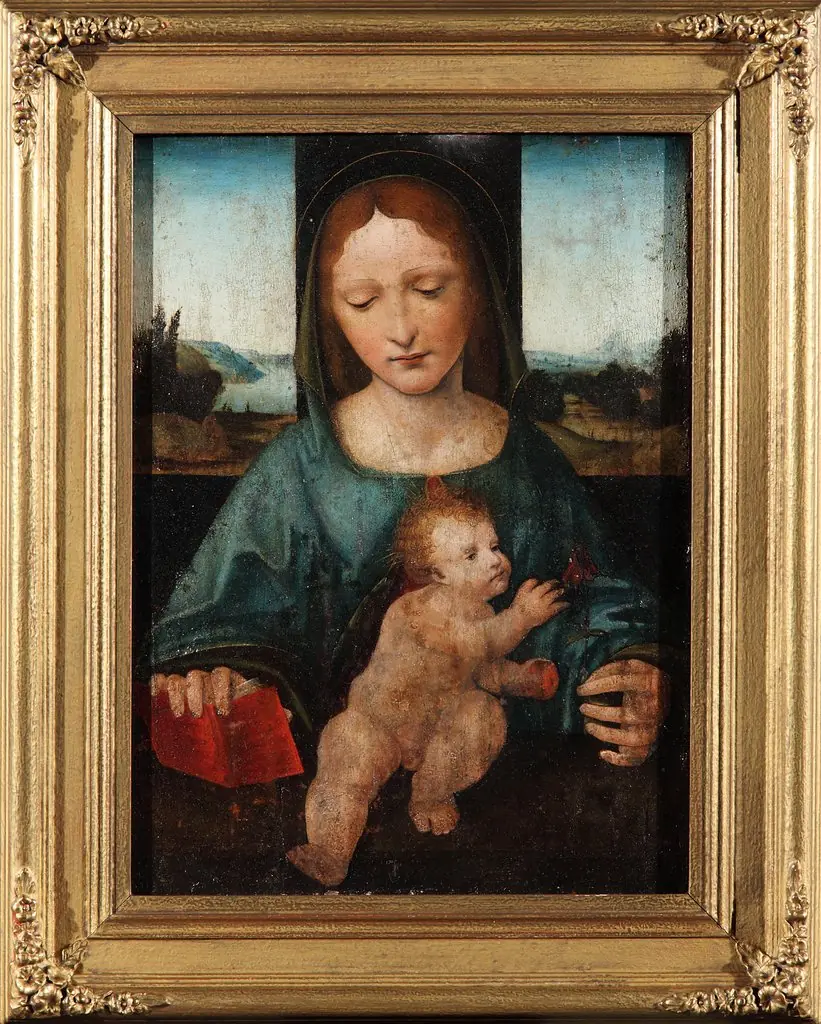 The Virgin and Child
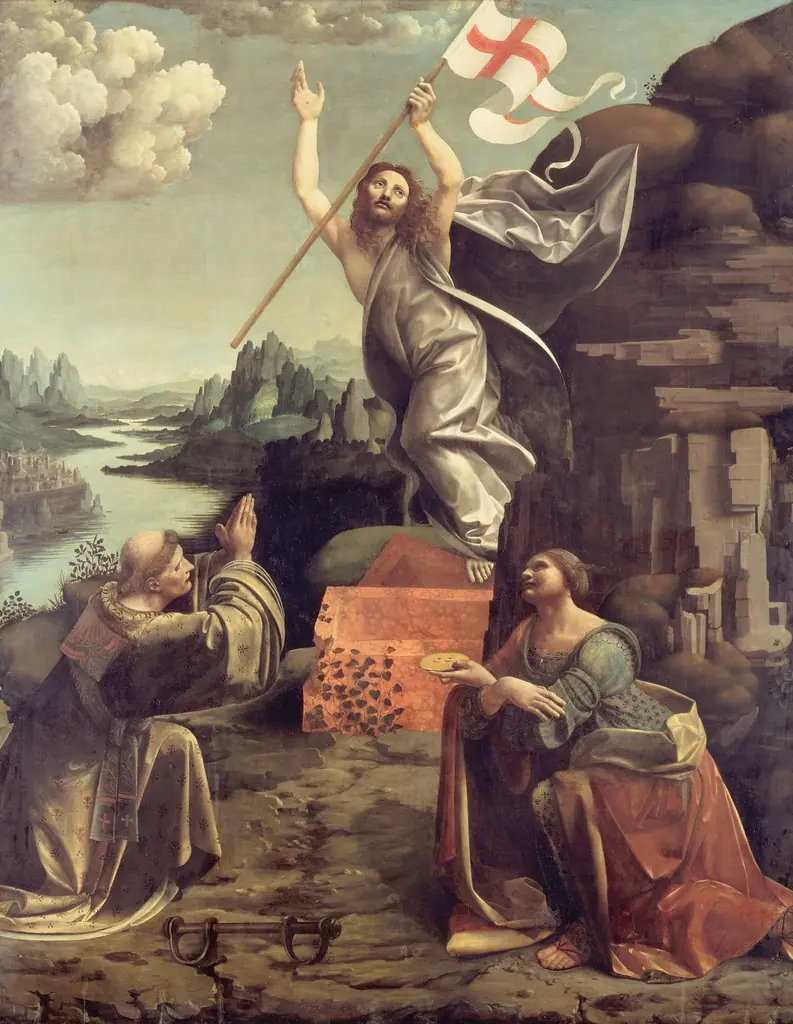 The Resurrection of Christ with SS. Leonard of Noblac and Lucia
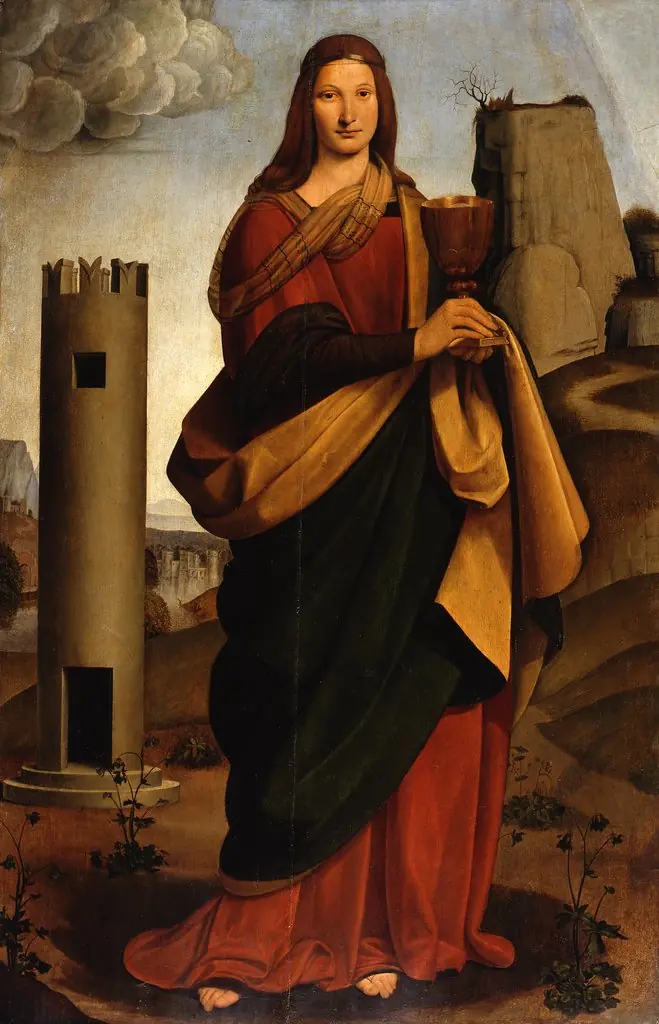 Saint Barbara
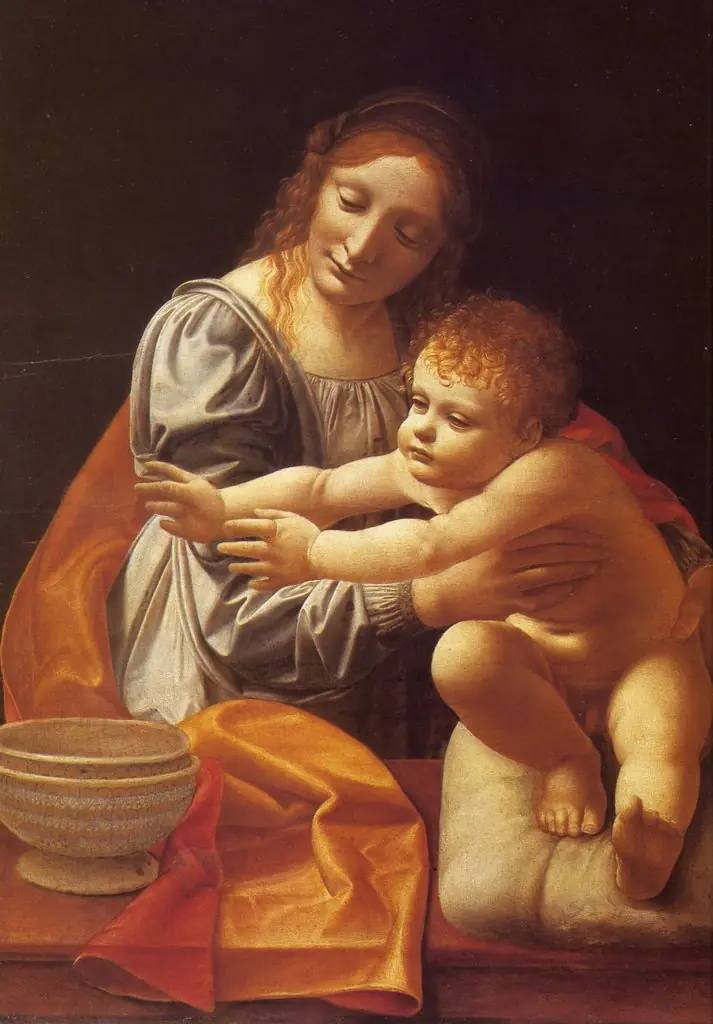 Madonna and Child
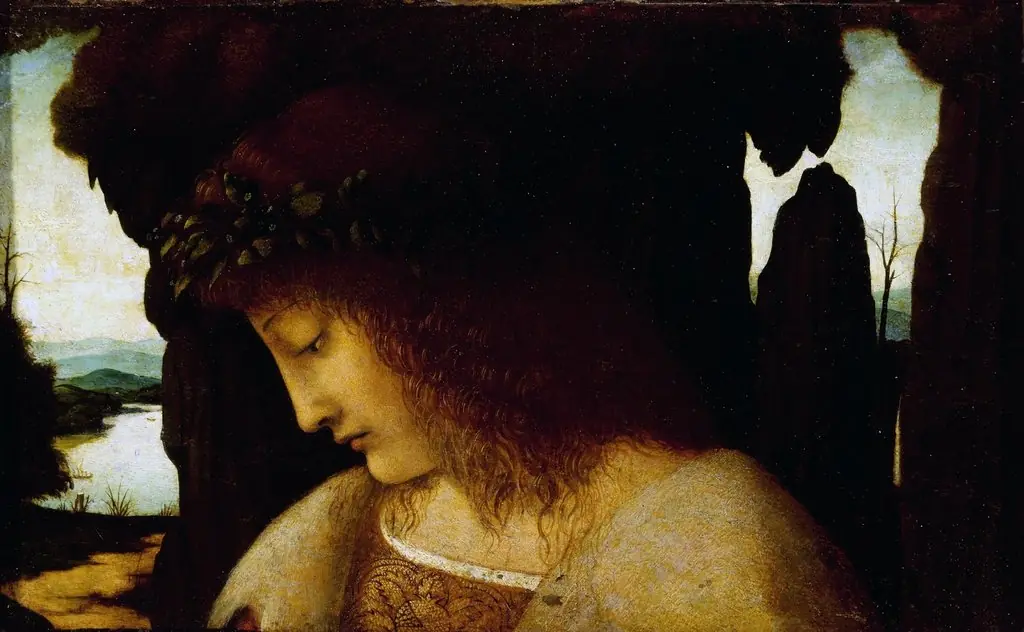 Narcissus at the Fountain
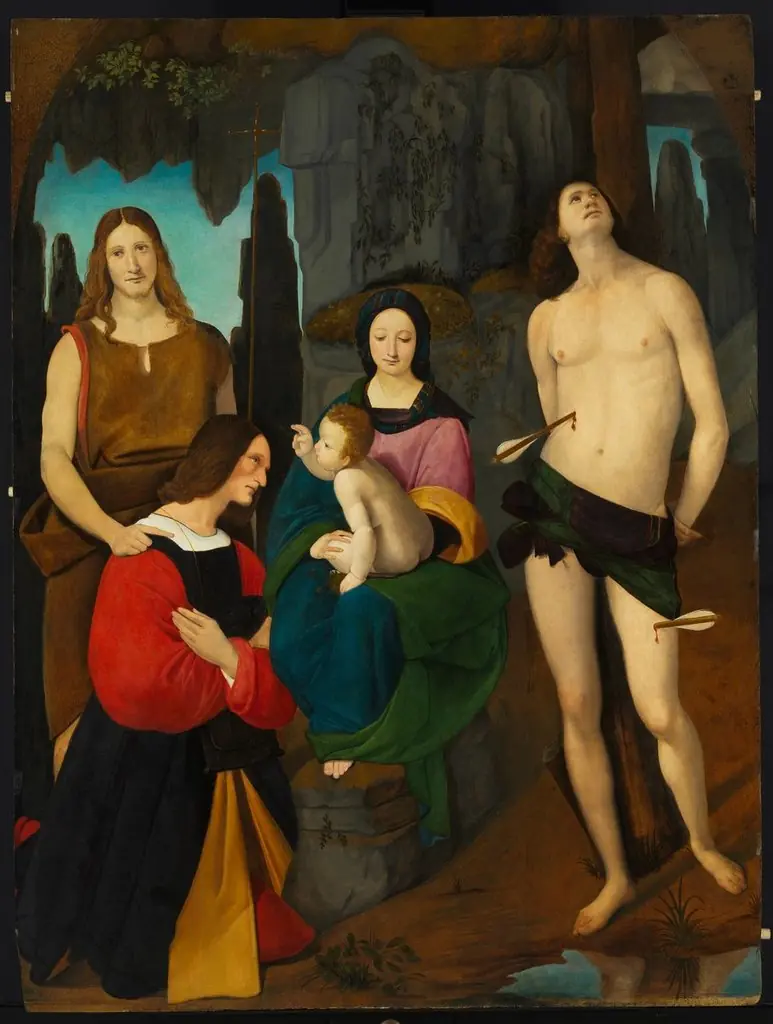 Madonna and Child with Saint John the Baptist, Saint Sebastian and Donor Bassiano Da Ponte
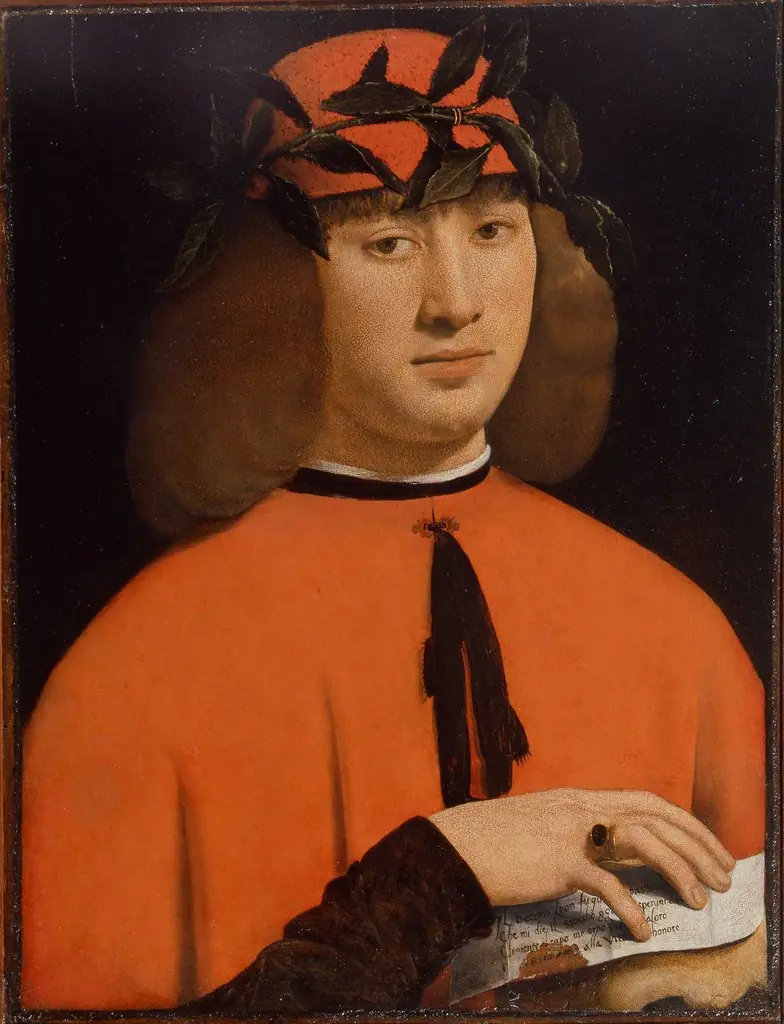 Portrait of Gerolamo Casio
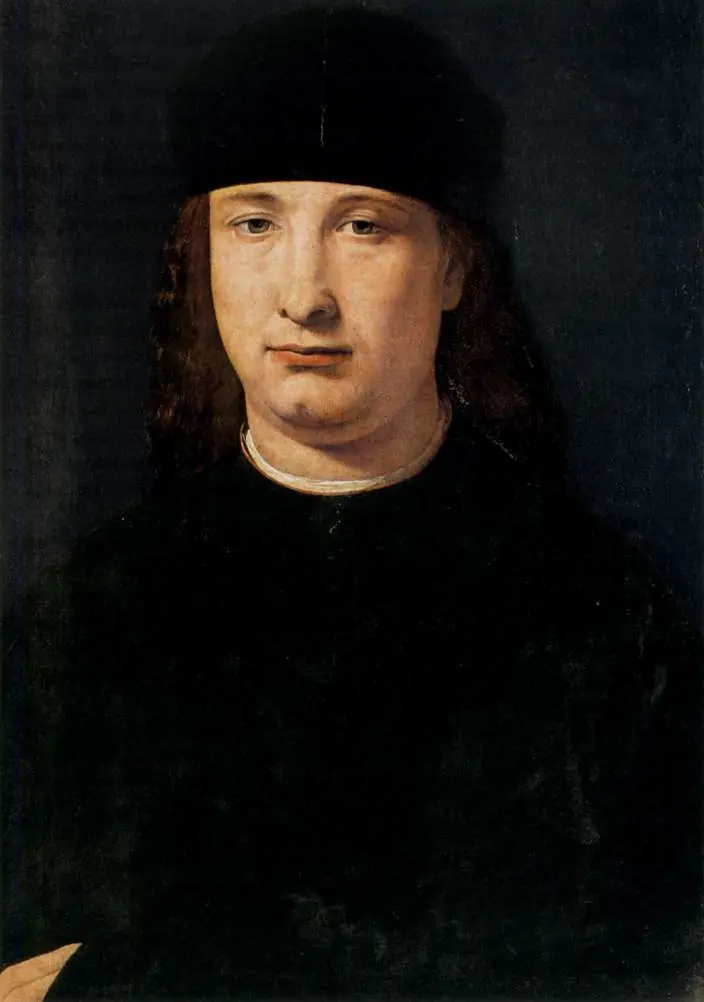 Portrait of a Notable (or Gerolamo Casio)
Collections represented


Artists in a similar vein