Movement
Quattrocento
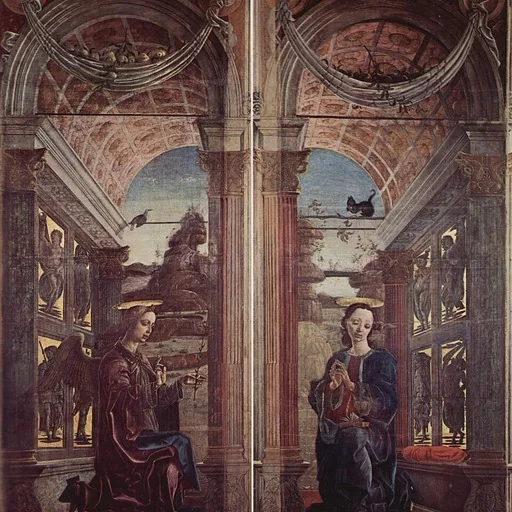
Quattrocento is an art movement of the 1400–1500 period. The gallery holds 1 work in this movement, including works by Cosimo Tura and Cosimo Rosselli. Browse Quattrocento paintings, portraits, pictures and artworks from the world's public-domain museum collections.
The Quattrocento—from the Italian for "four hundred," shorthand for the 1400s—names the totality of artistic and cultural achievement in fifteenth-century Italy, the formative phase of the Renaissance now often called the Early Renaissance. By convention it is bracketed by two Florentine events: the 1401 competition to design the bronze doors of the Baptistery, won by Lorenzo Ghiberti, and the close of the century around 1500, after which the High Renaissance of Leonardo, Raphael and Michelangelo crystallised. Florence was its crucible. Fuelled by mercantile and banking wealth—above all the patronage of the Medici—and by a humanist revival of classical antiquity, artists turned away from the lingering Gothic toward a more rational, human-centred vision of the world.
The period's defining breakthrough was the systematic understanding of space. The architect Filippo Brunelleschi is credited with formulating linear perspective, a geometric method for projecting three-dimensional depth onto a flat surface. The painter Masaccio was the first to deploy it convincingly, most famously in his fresco of the Holy Trinity (c. 1427) in Santa Maria Novella, whose mathematically coherent illusionistic chapel astonished contemporaries. Alongside perspective came a new naturalism: anatomically grounded figures, modelled volume, classical drapery and a revived interest in narrative clarity. In sculpture, Donatello pursued the same ends, his bronze David standing as the first free-standing nude cast since antiquity.
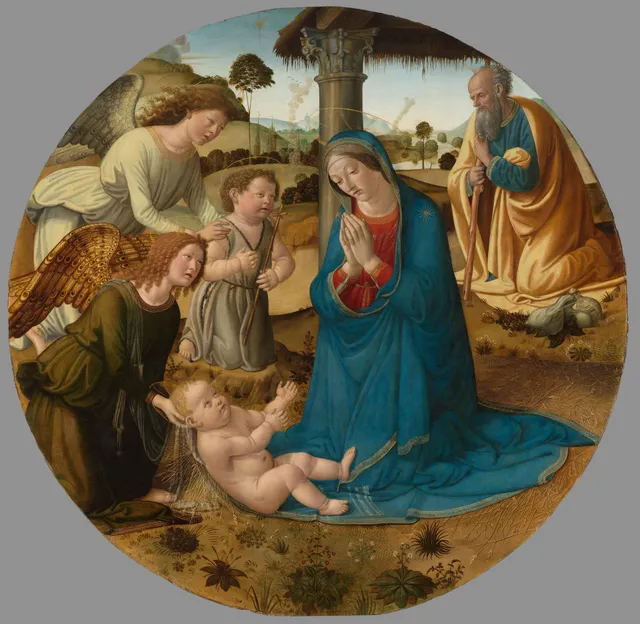
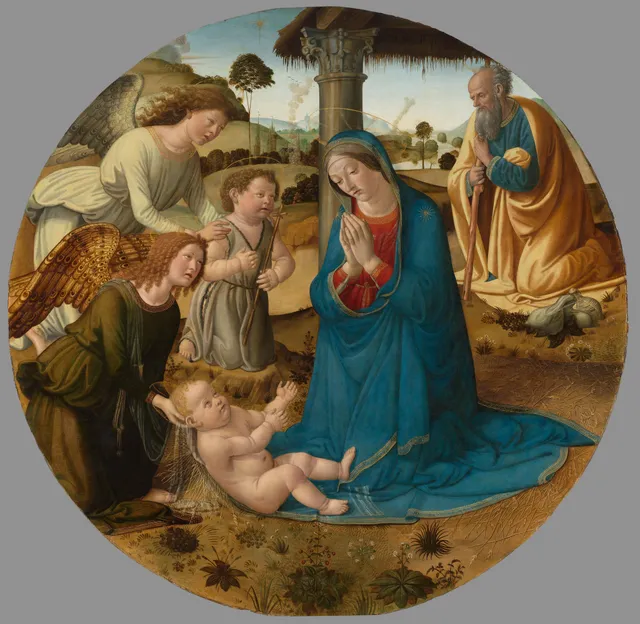
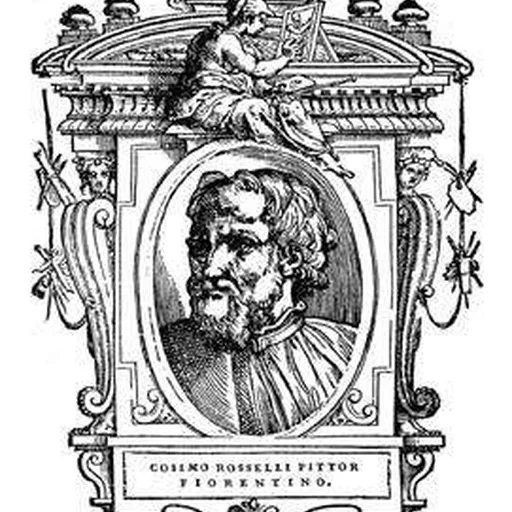
The canon is broad. Beyond Brunelleschi, Donatello and Masaccio, it includes Fra Angelico, Filippo Lippi, Domenico Ghirlandaio, Piero della Francesca and Sandro Botticelli, whose lyrical, linear mythologies such as the Birth of Venus epitomise late-Quattrocento Florence. Outside Tuscany, regional schools flourished: in Ferrara, Cosmè (Cosimo) Tura founded a distinctive, hard-edged court style under the Este dukes. The Florentine Cosimo Rosselli (1439–1507)—represented in this collection, including his Adoration of the Christ Child (De aanbidding van het Christuskind)—was among the masters summoned to Rome in 1481 to fresco the walls of the Sistine Chapel beside Botticelli, Ghirlandaio and Perugino.
The Quattrocento's innovations in perspective, proportion and humanist subject matter laid the direct foundation for the High Renaissance and shaped European painting for centuries. It marks the decisive transition from the medieval to the modern conception of the image.
Key artists
Works
Frequently asked questions
What is Quattrocento?
Quattrocento is an art movement. The Italian 15th century (quattrocento = 400s) — the central era of the Early Renaissance.
Who are the key Quattrocento artists?
Key Quattrocento artists in the collection include Cosimo Tura and Cosimo Rosselli.
When did Quattrocento take place?
Quattrocento dates from 1400–1500.
Where can I see Quattrocento works?
Quattrocento works in the collection are held by Rijksmuseum.