Artist
Jerome Myers
United States
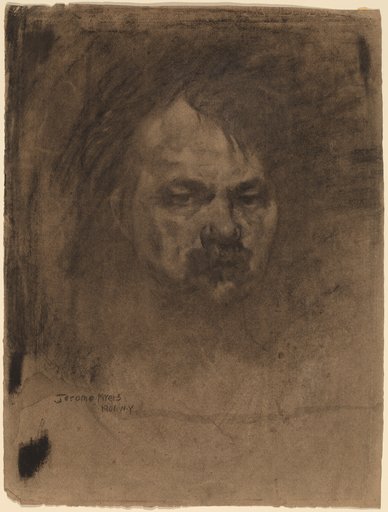
Jerome Myers is an United States Ashcan School artist. 10 works are cataloged here, principally at National Gallery of Art.
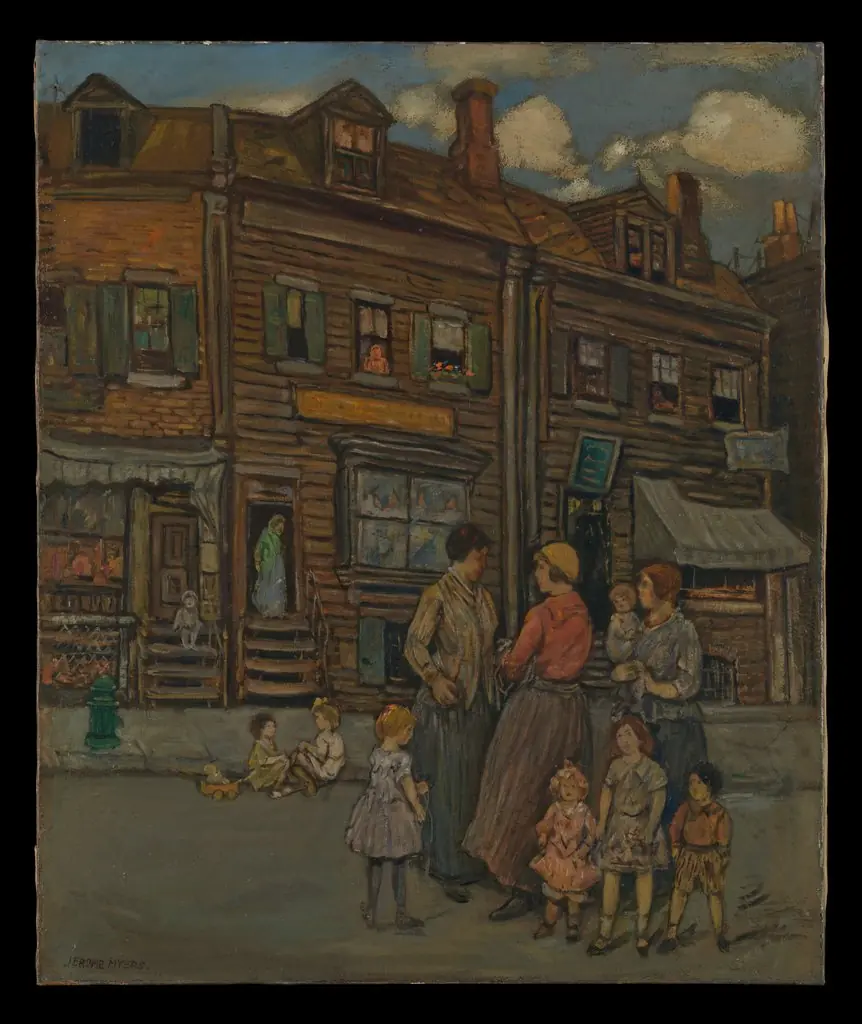
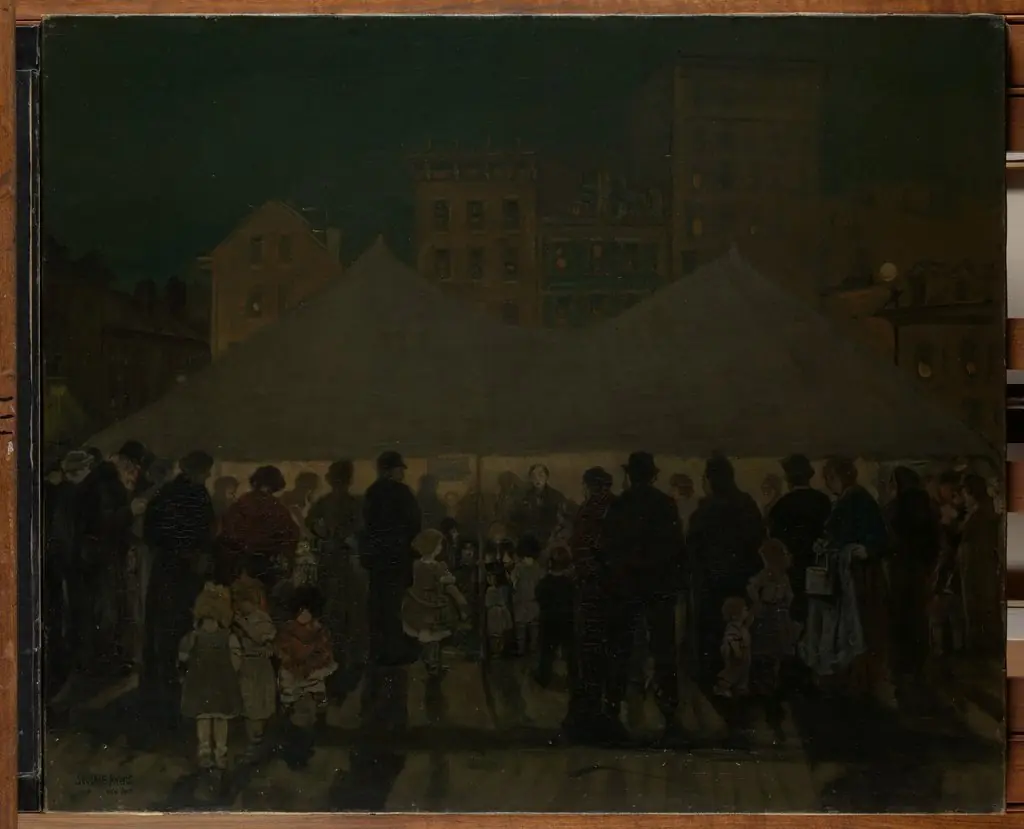
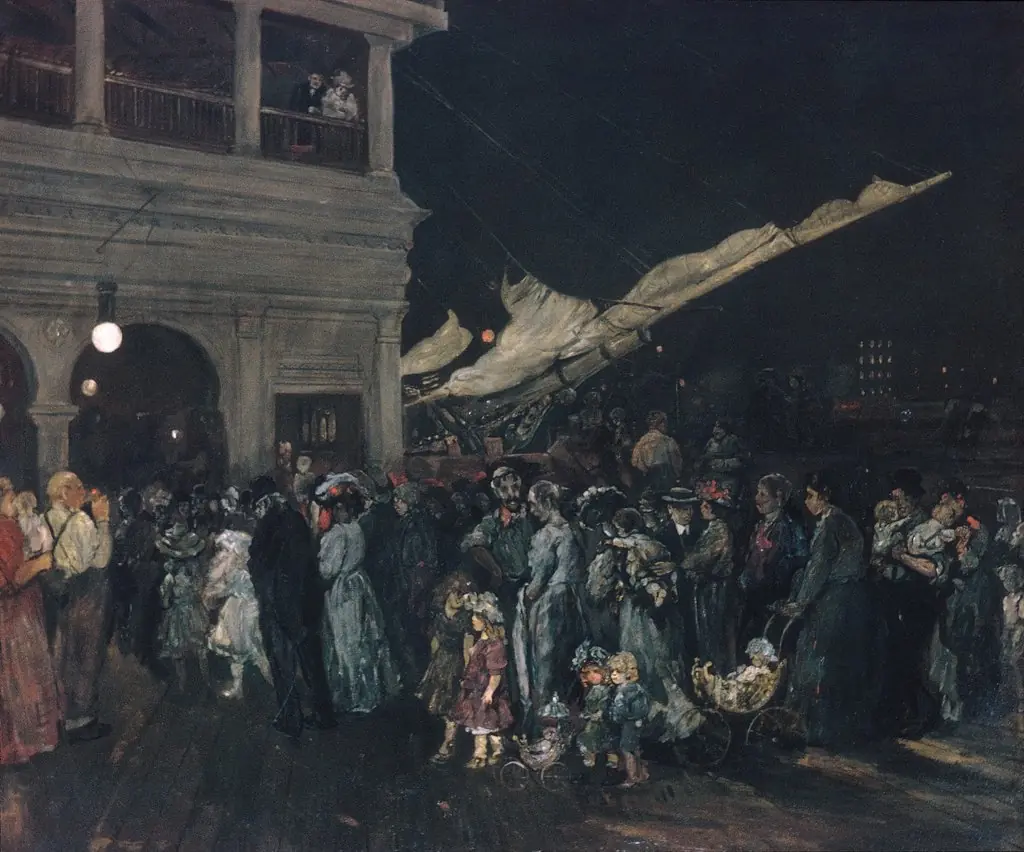
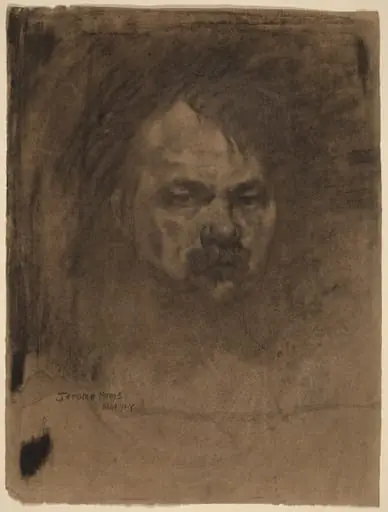
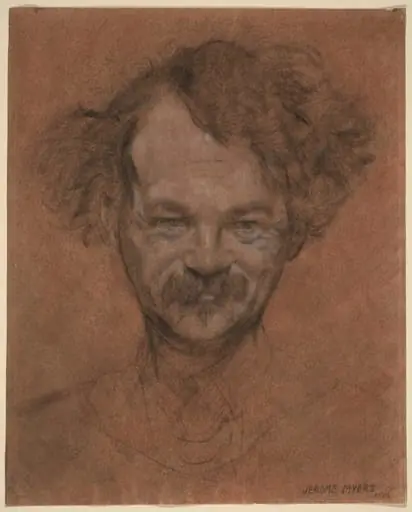
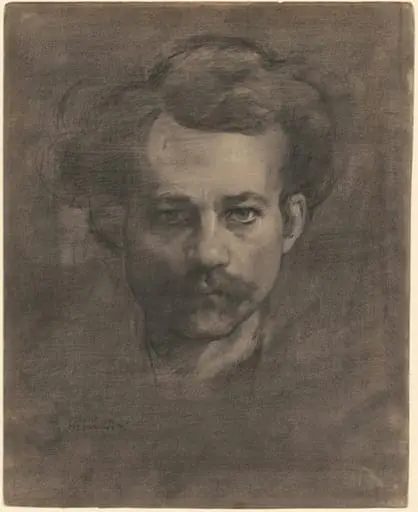
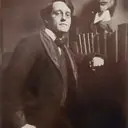
Jerome Myers (March 20, 1867 – June 19, 1940) was an American artist and writer associated with the Ashcan School, particularly known for his sympathetic depictions of the urban landscape and its people. He was one of the main organizers of the 1913 Armory Show, which introduced European modernism to America. Born in Petersburg, Virginia, and raised in Philadelphia, Trenton and Baltimore, he spent his adult life in New York City. Myers worked briefly as an actor and scene painter. He then studied art for a year at Cooper Union followed by study at the Art Students League over a period of eight years where his main teacher was George de Forest Brush. In 1896 he went to Paris, but only stayed a few months, believing that his main classroom was the streets of New York's Lower East Side. His strong interest and feelings for the new immigrants resulted in over a thousand drawings, as well as paintings, etchings and watercolors that depicted their lives outside of the tenements which were their first homes in America. In a 1923 magazine article he explained why cities were his greatest source of inspiration:
All my life I had lived, worked and played in the poorest streets of American cities. I knew them and their population and was one of them. Others saw ugliness and degradation there, I saw poetry and beauty, so I came back to them. I took a sporting chance of saying something out of my own experience and risking whether it was worthwhile or not. That is all any artist can do.
Overview
Jerome Myers (March 20, 1867 - June 19, 1940) was an American artist and writer associated with the Ashcan School, renowned for his sympathetic depictions of the urban landscape and its people. He is particularly celebrated for portraying the lives of new immigrants on the Lower East Side of New York City, finding poetry and beauty in neighborhoods that others viewed with condescension. Beyond his painting, Myers played a crucial institutional role in American art history as one of the main organizers of the 1913 Armory Show, which introduced European modernism to the United States.
Biography & dates
Born in Petersburg, Virginia, to Abram and Julia Hillman Myers, Jerome experienced an itinerant childhood. His frequently absent father left the family under financial strain, prompting Myers to leave school at age eleven to support his ailing mother and four siblings, including his brother, the future muckraking journalist Gustavus Myers. The family moved through Philadelphia, Trenton, and Baltimore, where Myers and his elder brother ran a sign painting business, an endeavor that gave him lead poisoning. In 1886, he relocated to Manhattan, working as a scene painter and for the Moss Engraving Company while taking evening classes at Cooper Union starting in 1887. He subsequently studied at the Art Students League for eight years under George de Forest Brush and Kenyon Cox, though he chafed at their academic conservatism. After a brief stay in Paris in 1896, he returned to New York permanently. Art dealer William Macbeth discovered his work around 1902, purchasing two paintings and facilitating his first solo show at the Macbeth Gallery in January 1908. In 1905, Myers married the artist Ethel May Klink, and their daughter Virginia was born the following year. Following the Metropolitan Museum of Art's acquisition of his painting The Mission Tent in 1912, the family moved into the Carnegie Hall building, where he maintained a studio for the rest of his life. He won the Benjamin Altman Prize in 1931 and 1937, was elected an associate of the National Academy of Design in 1919, and became a full member in 1928. He died in Manhattan in 1940, the same year his autobiography, Artist in Manhattan, was published.
Style & movement
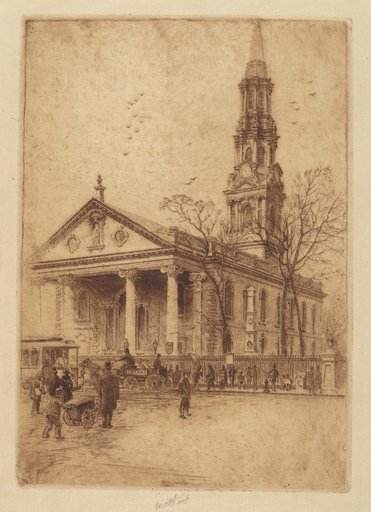
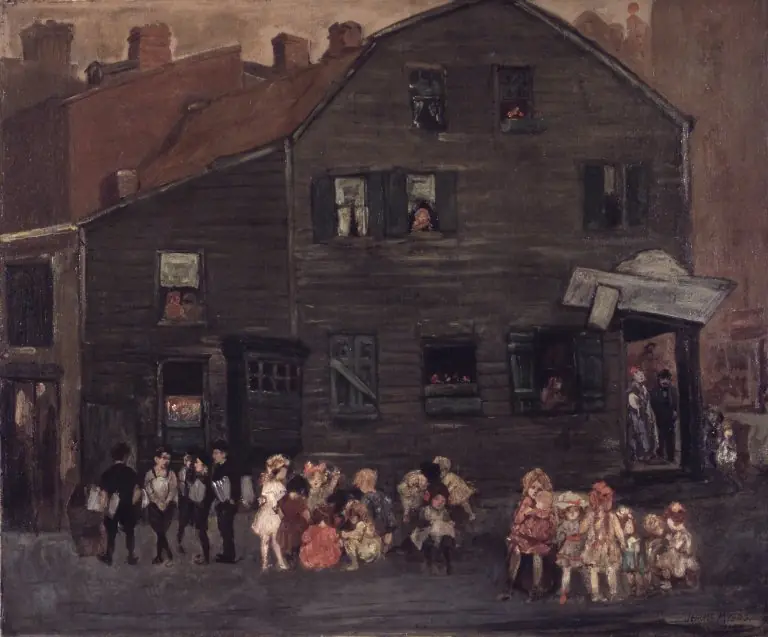
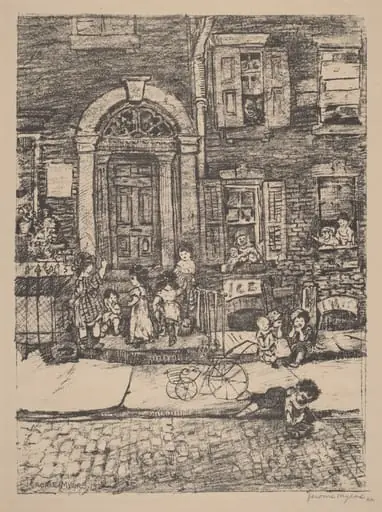
Aligned with the Ashcan School, Myers focused on urban realism, yet his approach diverged from the more confrontational or politically reformist tendencies of some peers. Drawing on his own childhood poverty, he approached the working class and immigrant communities not as a tourist or social reformer, but as a participant. He famously stated that where others saw ugliness and degradation in the slums, he saw poetry and beauty. His work captured the vibrant, chaotic life of tenement districts, emphasizing the joy and community found in the open air during summer months, rather than the squalor of the interiors. He produced over a thousand drawings, alongside paintings, etchings, and watercolors, documenting the everyday routines of Italian and Jewish neighborhoods with an empathetic, sometimes sentimental lens. He took up etching in 1915, expanding his technical repertoire to further document the urban scene.
Major works
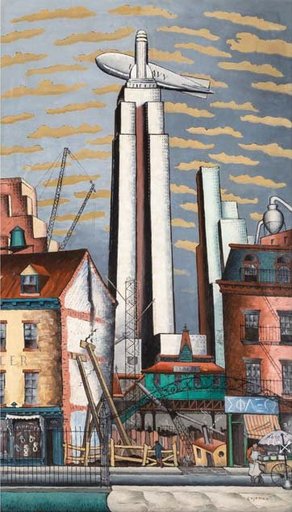
Myers's earliest oil painting, Backyard (1888), depicting clotheslines against distant tenements, is considered one of the first paintings exemplifying Ashcan School subject matter in America. The Mission Tent, acquired by the Metropolitan Museum of Art in 1911, marked a significant early institutional recognition. Street Group entered the Metropolitan's collection in 1934. His award-winning paintings include Street Shrine, which won the Benjamin Altman Prize in 1931, and City Playground, which won the same prize in 1937. Other notable works include Recreation Pier, The Italian Procession, and his very first sale around 1893, a sketch of a canal boat sold for two dollars to the woman who lived on it.
Influences & students
Myers's formal instructors included George de Forest Brush and Kenyon Cox at the Art Students League, though he ultimately rejected their conservative academic principles in favor of urban subject matter. His entry into the professional art world was heavily influenced by the painter Edward Adam Kramer, who introduced him to art dealer William Macbeth. Macbeth advised Myers to abandon pencil and pastel in favor of oils, shaping his mature output. Myers worked closely with key Ashcan figures Robert Henri and John Sloan, exhibiting with them as early as 1903 at the Colonial Club. Alongside Elmer Livingston MacRae and Walt Kuhn, Myers was instrumental in founding the Association of American Painters and Sculptors in 1911 at the Madison Gallery, directed by Henry Fitch Taylor, with Arthur B. Davies serving as president. Through this association, he and his collaborators brought Henri and Sloan into the fold to organize the 1913 Armory Show. He also exchanged artistic ideas with his wife, Ethel Myers, a painter and sculptor who had studied under Robert Henri and Kenneth Hays Miller at the New York School of Art.
Legacy
Myers's posthumous reputation has been sustained by institutional holdings and memorial exhibitions. In April and May 1941, the Whitney Museum of American Art hosted The Jerome Myers Memorial Exhibition, featuring over ninety of his works. His art is now held in more than sixty American museums and institutions, including the Metropolitan Museum of Art, the Brooklyn Museum, the Smithsonian American Art Museum, the Detroit Institute of Arts, and the Corcoran Collection. His archives are preserved at the New York Public Library and the Delaware Art Museum. Although widespread fame eluded him somewhat during his lifetime, his critical reputation was bolstered early on by figures like Walter Pach, who praised him in the Gazette des beaux-arts in 1907, and private collectors such as Duncan Phillips and John Quinn. His legacy remains that of a pivotal figure in American realism who documented the immigrant experience with profound empathy.
Works by Jerome Myers
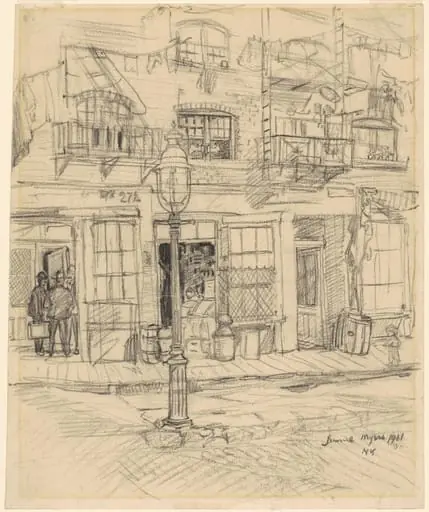
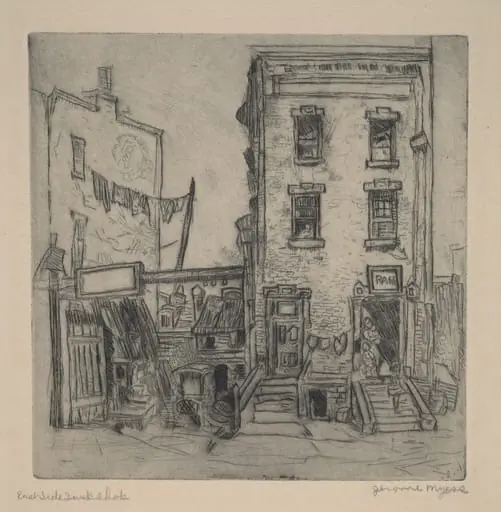
Collections represented


Artists in a similar vein