Artist
Augustin de Saint-Aubin
France
Augustin de Saint-Aubin is a France Baroque artist. 62 works are cataloged here, principally at National Gallery of Art.
Augustin de Saint-Aubin sometimes styled Auguste de Saint-Aubin (3 January 1736 – 9 November 1807), belongs to an important dynasty of French designers and engravers.
Overview
Augustin de Saint-Aubin, sometimes styled Auguste de Saint-Aubin (3 January 1736-9 November 1807), was a French illustrator, draftsman, and engraver who belonged to an important dynasty of French designers and engravers. Born and based in Paris, he was the most commercially successful of the Saint-Aubin siblings during his lifetime, though he has since become the least known of them. He is recognized for his extensive output of over 1,300 engravings, his portraits of notable figures, and his official role as engraver to the king and the Royal Library. His work spans the transition from the Ancien Régime through the French Revolution, encompassing book illustration, portrait engraving, and the design of revolutionary currency.
Biography & dates
Augustin de Saint-Aubin was born on 3 January 1736 in Paris to Gabriel-Germain de Saint-Aubin (1696-1756), the king's embroiderer. He was one of seven siblings, including the artists Charles-Germain, Gabriel-Jacques, and Louis-Michel de Saint-Aubin, as well as Catherine Louise, Athanasius, and Agathe. The family was collectively known as the "Book of Saint-Aubin." His niece Marie-François, daughter of Charles, also became an artist. Augustin received his initial training from his brother Gabriel-Jacques, then studied with Étienne Fessard from 1755, and later with Nicolas-Henry Tardieu and Laurent Cars. His first submission to the Salon was an etching in 1752. On 25 May 1771, he was approved (agrée) by the Académie Royale de Peinture, though he never completed the requirements for full membership. In 1776 or 1777, he was appointed engraver to the king and the Bibliothèque Royale. During the French Revolution, he was consulted by the National Assembly and designed the motifs for assignats of 200, 300, and 1,000 livres created by laws of 19 and 21 December 1789 and 16 and 17 April 1790, working with Pierre-Joseph Lorthior and Nicolas-Marie Gatteaux. He married Louise-Nicole Godeau. He died in Paris on 9 November 1807.
Style & movement
Augustin de Saint-Aubin's artistic practice centered on engraving and drawing, with a particular strength in portraiture. He worked extensively after designs by others, most notably producing engravings of portraits by Charles-Nicolas Cochin the Younger (1715-1790). His style served as a chronicle of contemporary society, capturing concerts, balls, and the fashions of his era. The French Wikipedia notes his work on the Journal de musique de M. Lagarde, theatrical representations, sale catalogs, books, and the natural history cabinet of the Duc de Chevreuse. His engravings ranged from commercial commissions, including bookplates, frontispieces, invitations, tradesmen's cards, and programs, to more ambitious projects such as the etching of antique gems from the collection of the Duc d'Orléans. His allegorical and commemorative works from the Revolutionary period, such as the tribute to the National Constituent Assembly circa 1791, demonstrate his adaptability to changing political circumstances. Emmanuel Bocher's 1879 catalog documented over 1,300 works by Augustin, attesting to his prolific output.
Major works
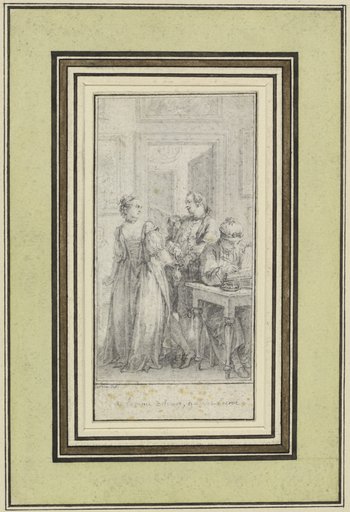
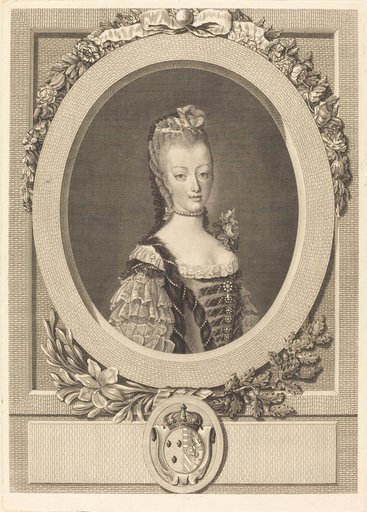
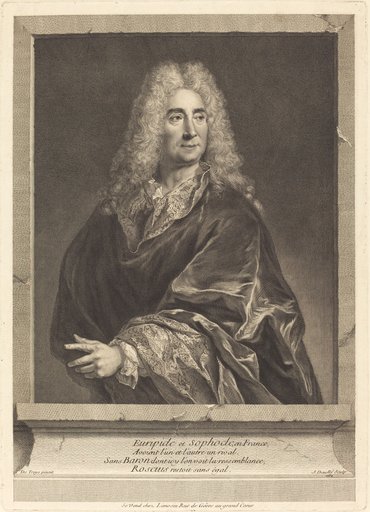
Saint-Aubin's drawings are held in major collections, particularly the Louvre Museum in Paris, which holds multiple sheets including L'indiscrétion vengée, Feu d'artifice au bal de Saint-Cloud chez Griel (1759), Portrait de Vivant-Dominique, baron Denon (1747-1825) de profil, and Bal à Saint-Cloud chez Griel. The Louvre also holds numerous pages from the Livre des Saint-Aubin, a family album. Other drawings include Scène dans un intérieur rustique: jeune femme implorant le roi and Portrait de Rochambeau (Bayonne, Musée Bonnat). The University of Michigan Museum of Art holds Portrait d'une femme dans une chaise. His engravings include the portrait of Jean-François Marmontel illustrating his Contes moraux, and the Galerie des Modes et Costumes Français in three volumes (Museum of Fine Arts, Boston). The Museum of Fine Arts, Boston also holds L'art du brodeur. The Rothschild Collection at the Louvre holds several prints including Gravure d'après Gravelot (equestrian statue), Tribute to the beneficent views of the National Constituent Assembly and the loyalty of Louis XVI (circa 1791), Le Bal paré, and C'est ici les différents jeux des petits Polissons de Paris: le sabot. The Palace of Versailles and Grand Trianon hold engraved portraits of Jean-Baptiste-Joseph Languet de Gercy, the Marquise de Pompadour (1722-1764), Jean-Baptiste Lully (1633-1687), Thomas Corneille (1625-1709), Louis Bourdaloue, and Antoine-Jean Amelot de Chaillou, as well as an Allegory with Louis XVI and the Constitution. The National Museum of French-American Friendship and Cooperation at Blérancourt holds his portrait of Benjamin Franklin (1706-1790).
Influences & students
Augustin de Saint-Aubin was trained by his older brother Gabriel-Jacques de Saint-Aubin, and subsequently studied with the established engravers Étienne Fessard, Nicolas-Henry Tardieu, and Laurent Cars. His collaboration with Charles-Nicolas Cochin the Younger was particularly significant, as he produced numerous engravings after Cochin's portrait designs. The Saint-Aubin family itself constituted an important artistic dynasty, with his brothers Charles-Germain, Gabriel-Jacques, and Louis-Michel all achieving recognition as artists. According to the French Wikipedia, his pupils included Jean-Louis Anselin, Marie-Rosalie Bertaud, Maurice Blot, and Charles-François-Adrien Macret.
Legacy
During his lifetime, Augustin de Saint-Aubin was considered the most successful of the Saint-Aubin siblings, yet he has become the one about whom least is now known. His posthumous reputation rests partly on the sheer volume of his output, documented in Emmanuel Bocher's 1879 catalog of over 1,300 works, and on his role as a recorder of French society and culture in the second half of the eighteenth century. Modern scholarship has begun to reassess his contribution, with Pierre Rosenberg's Le livre des Saint-Aubin (2002) providing important context for the family as a whole, and Stephen A. Bergquist's 2017 article "The Musical Portraits of Augustin de Saint-Aubin" examining his depictions of musicians. His works are distributed across major international collections including the Louvre, the Palace of Versailles, the Museum of Fine Arts Boston, the University of Michigan Museum of Art, and the National Museum of French-American Friendship and Cooperation at Blérancourt, ensuring his continued presence in the study of eighteenth-century French graphic arts.
Works by Augustin de Saint-Aubin
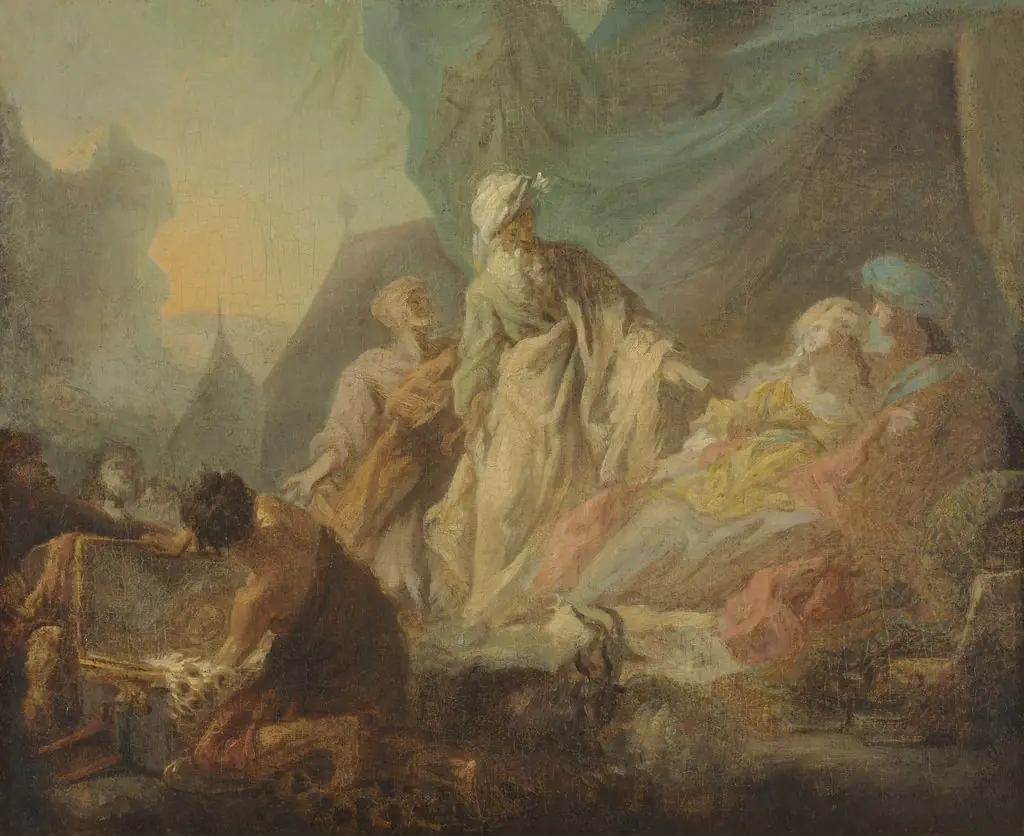 Laban Searching for His Stolen Gods
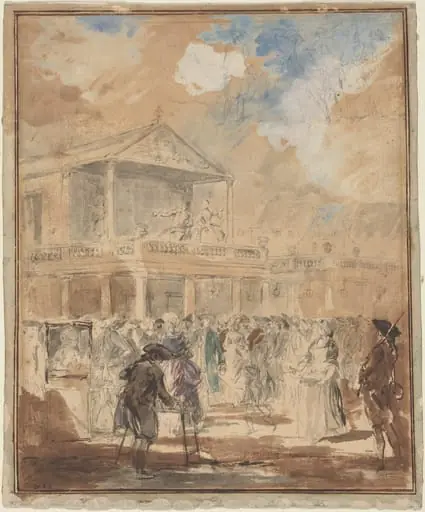 Parade (A Theatrical Procession in Paris)
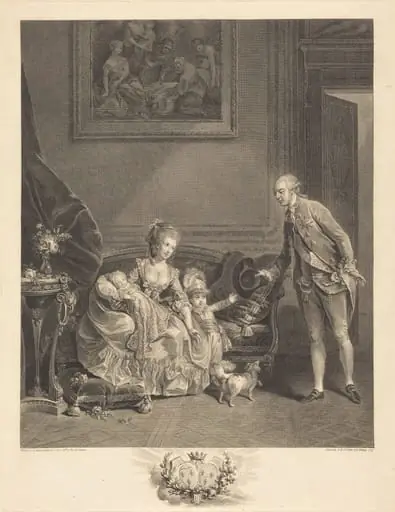 Le duc de Chartres, son epouse et ses enfants
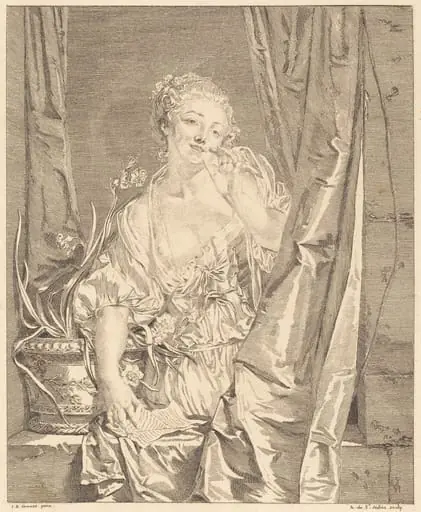 Le baiser envoyé
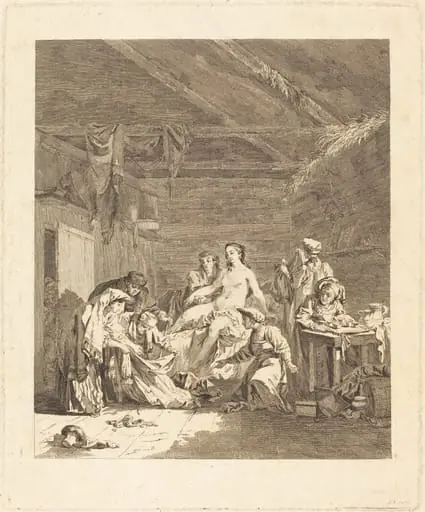 Le lever de la mariée russe (Custom of the Russians after the Marriage Ceremony and before the Wedding Feast)
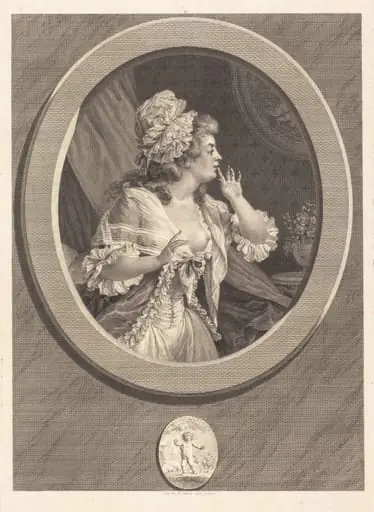 Au moins soyez discret (At Least Be Discreet!)
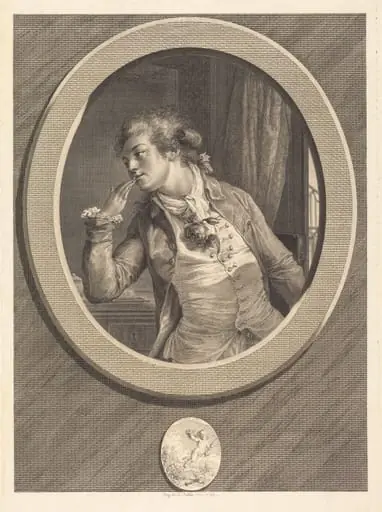 Comptez sur mes sermens (You May Count on Me!)
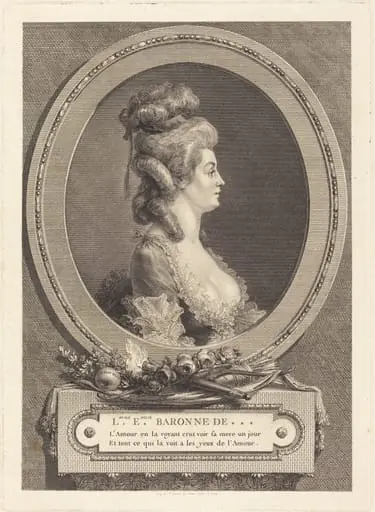 Louise Emilie Baronne de ***
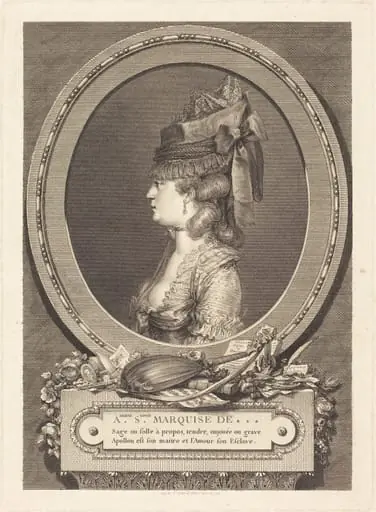 Adrienne Sophie Marquise de ***
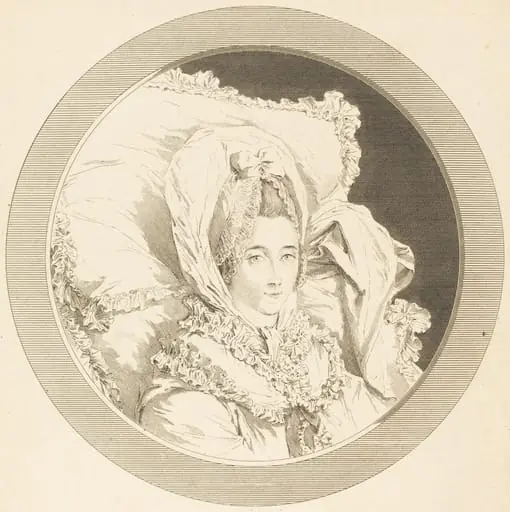 Derniere heure de la Baronne de Rebecque
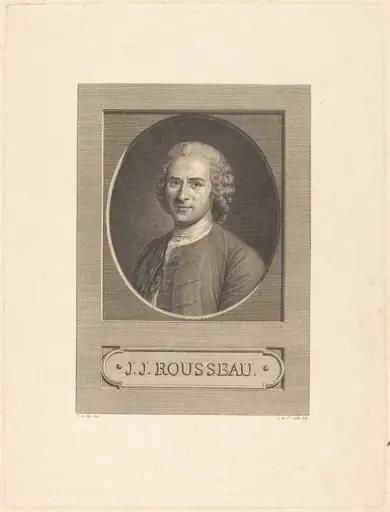 Frontispiece: J.J. Rousseau
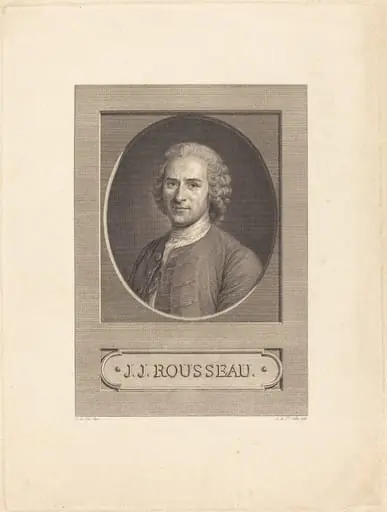 J.J. Rousseau
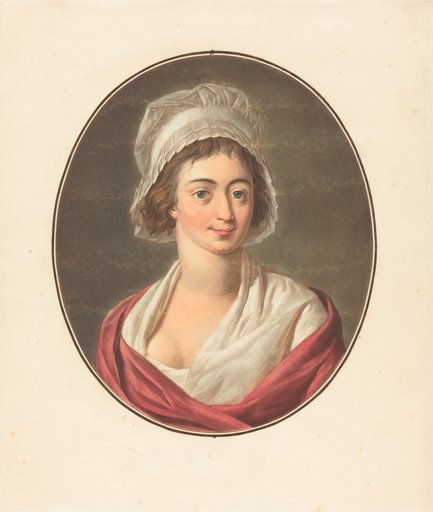
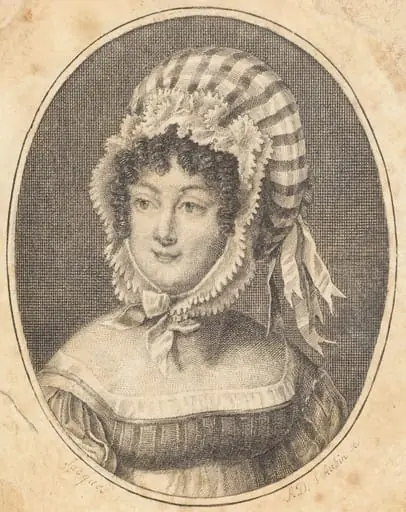 Head of a Woman Wearing a Striped Bonnet
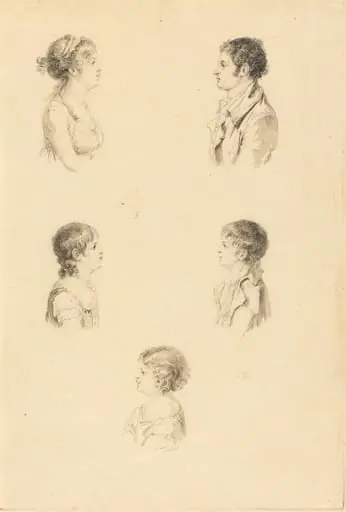 Five Busts
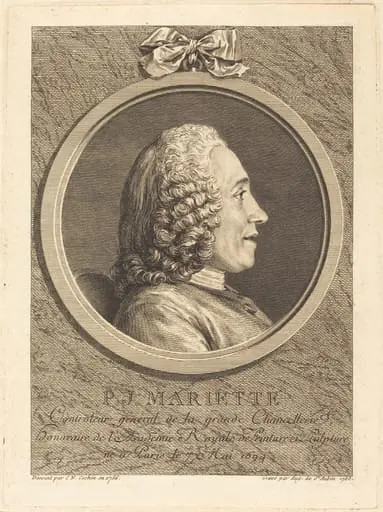 Pierre-Jean Mariette
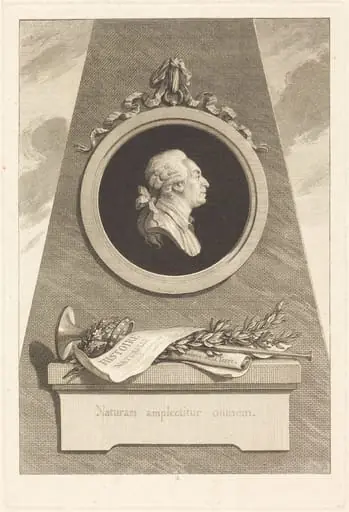 Comte de Buffon
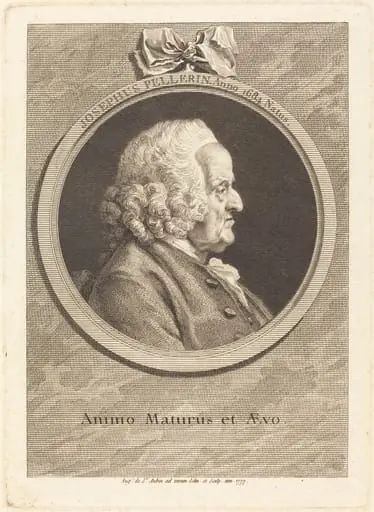 Joseph Pellerin
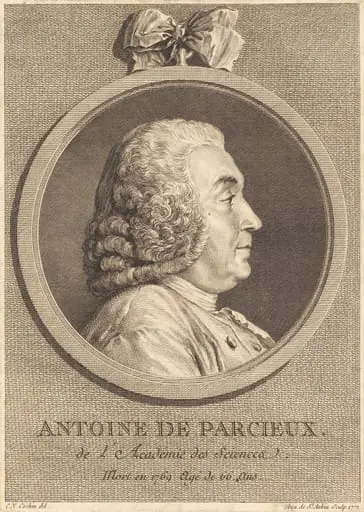 Antoine De Parcieux
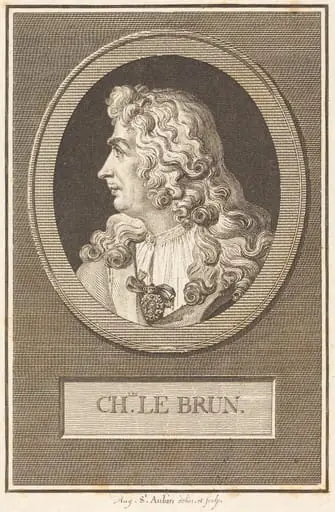 Charles Le Brun
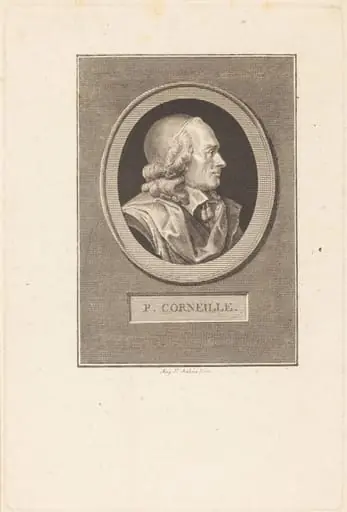 Pierre Corneille
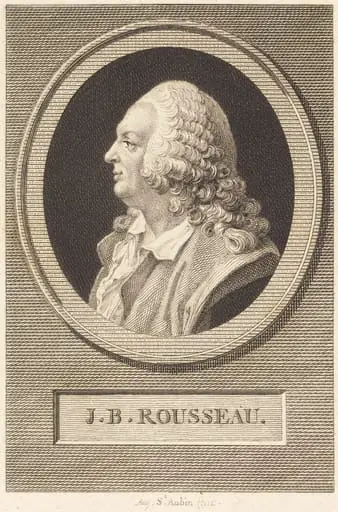 Jean-Baptiste Rousseau
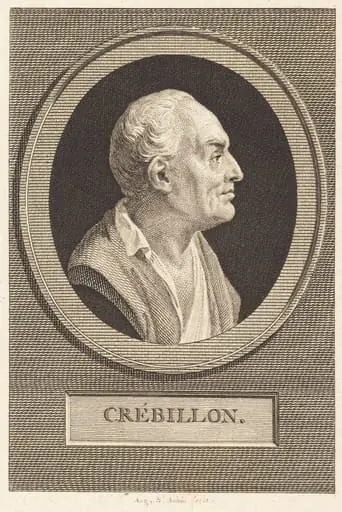 Prosper Jolyot de Crebillon
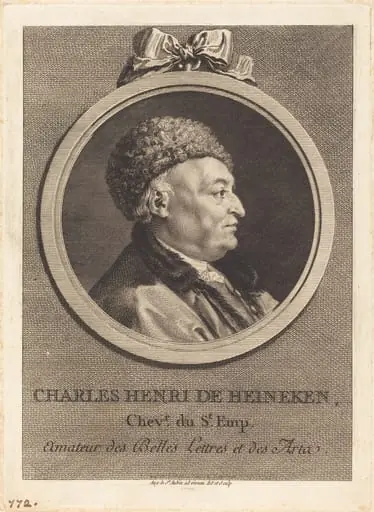 Charles Henri de Heineken
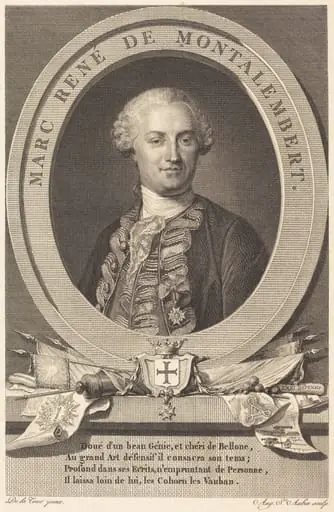 Marc Rene de Montalembert
62 works in the catalog · 24 shown
Collections represented


Museum
Palais Galliera - Musée de la Mode de la Ville de Paris
2 works at Palais Galliera - Musée de la Mode de la Ville de Paris
Artists in a similar vein