Artwork
Comte de Buffon
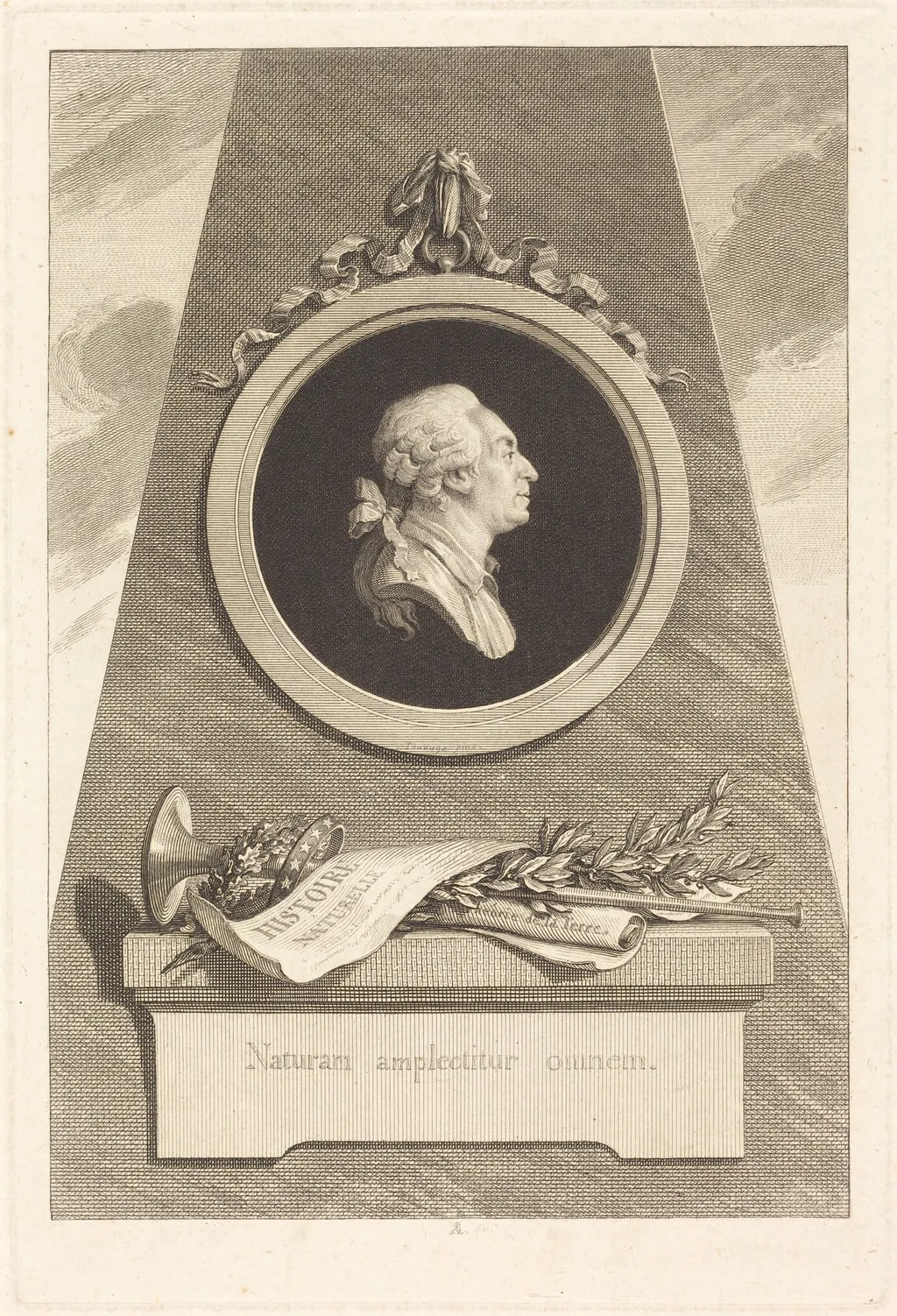
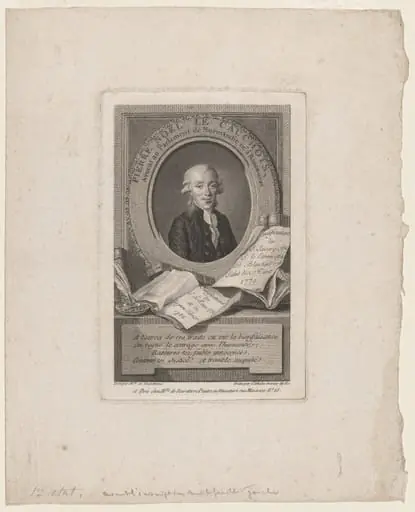
Comte de Buffon is an ink print by the Romanticist artist Augustin de Saint-Aubin. It dates from 1798 and is held in the collection of the National Gallery of Art.
- Inscription
- Inscribed:around circumference in plate bottom of medallion: Sauvage pinx.; lower center in plate on top scroll: HISTOIRE / NATURELLE; lower center in plate on bottom scroll: Theorie de la Terre.; lower center in plate below ledge: Nat uram ampleotitur omnem; lCp//below frame: A.S.[in monogram] fecit.
About this work
Overview
Comte de Buffon is a portrait engraving over etching on laid paper, created by Augustin de Saint-Aubin in 1798. The work showcases the artist's technical proficiency within the French printmaking tradition of the late 18th century.
Subject & Meaning
The portrait depicts a serious-faced man with curly hair, looking slightly sideways, enclosed in a framed oval.
The portrait depicts a serious-faced man with curly hair, looking slightly sideways, enclosed in a framed oval. A scroll with writing and a laurel branch below the subject may symbolize honor, achievement, or intellectual pursuits, though the specific context or the sitter's identity as 'Comte de Buffon' suggests a potential connection to the renowned naturalist Georges-Louis Leclerc, Comte de Buffon.
Technique & Style
Executed in black and white, the engraving highlights Saint-Aubin's meticulous craftsmanship, evident in the detailed rendering of the subject's hair and attire. The combination of engraving (carved into metal) over etching (using acid to create design on metal) demonstrates a layered printmaking technique, characteristic of refined late 18th-century French print practices.
History & Provenance
Created in 1798 by Augustin de Saint-Aubin, a member of a distinguished French family of designers and engravers, the work's specific provenance (ownership history) is not detailed here, but its creation reflects the artistic lineage of its creator.
Context
Comte de Buffon situates itself within the late 18th-century French printmaking scene, characterized by high technical standards and a penchant for portraitures of esteemed figures. The use of laurel and the subject's demeanor align with contemporary representations of intellectual and noble figures.
Legacy
While specific influences or direct artistic lineage of Comte de Buffon are not outlined, the piece contributes to the broader legacy of French engraving and etching traditions, showcasing the enduring appeal of meticulously crafted portraits from this period.
Own this work as a print
Artist & collection
Artist
Augustin de Saint-Aubin sometimes styled Auguste de Saint-Aubin (3 January 1736 – 9 November 1807), belongs to an important dynasty of French designers and engravers.

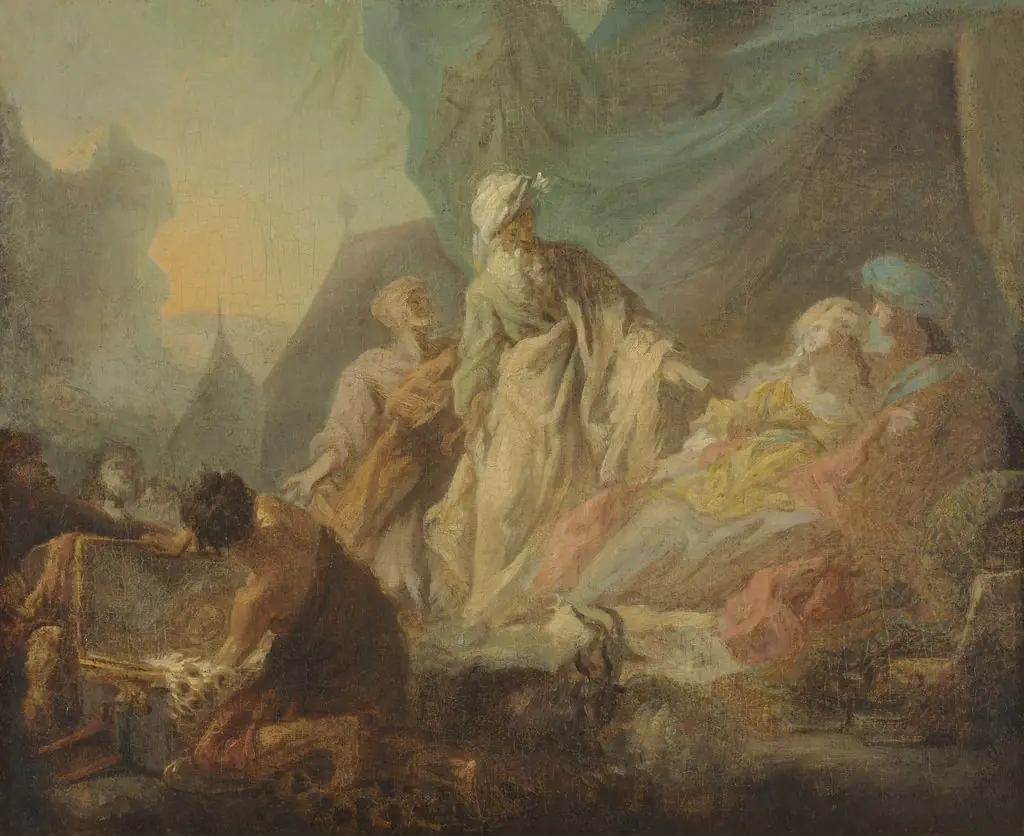 Laban Searching for His Stolen Gods
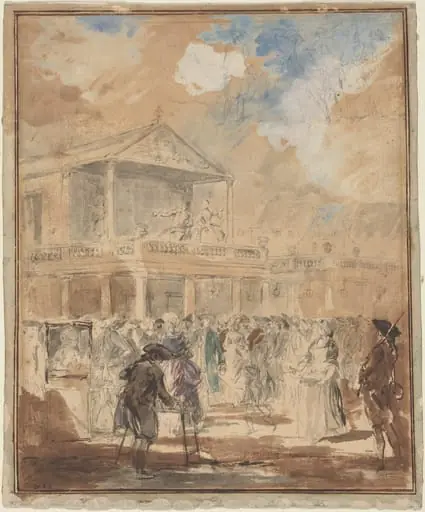 Parade (A Theatrical Procession in Paris)
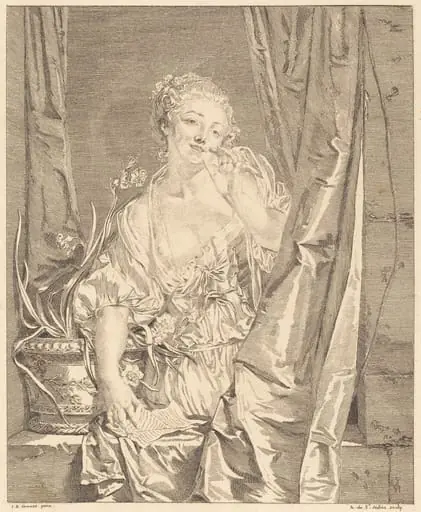 Le baiser envoyé
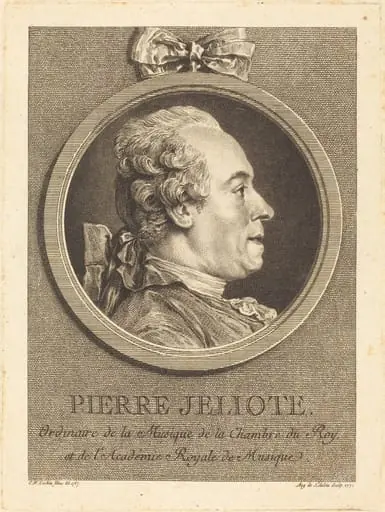 Pierre Jeliote
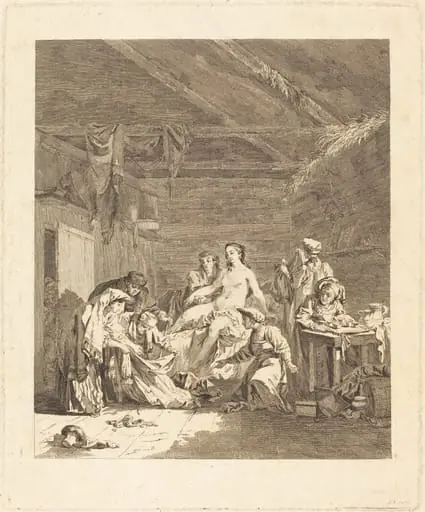 Le lever de la mariée russe (Custom of the Russians after the Marriage Ceremony and before the Wedding Feast)
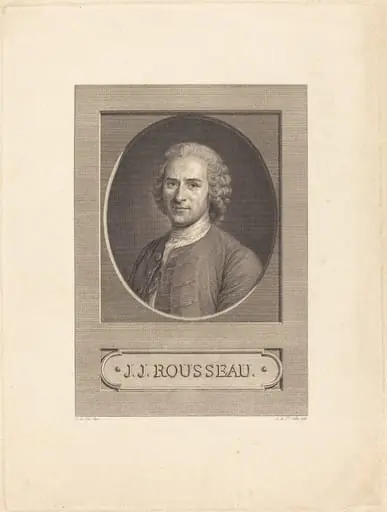 J.J. Rousseau
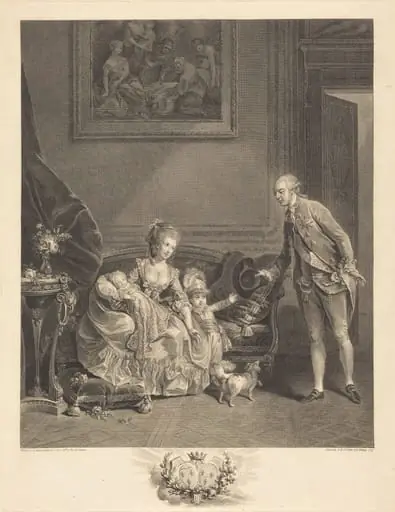 Le duc de Chartres, son epouse et ses enfants
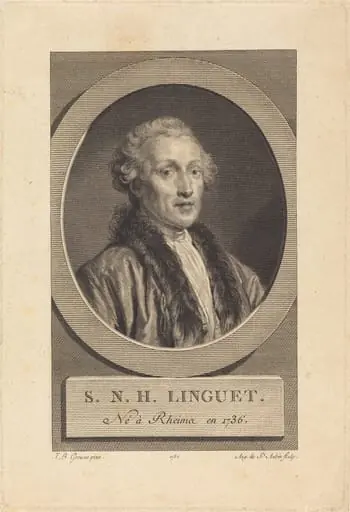 Simon-Nicolas-Henri Linguet