Artist
Robert Walter Weir
United States
Robert Walter Weir is an United States Hudson River School artist. 17 works are cataloged here, principally at National Gallery of Art.
American, New Rochelle, New York 1803–1889 New York
Overview
Robert Walter Weir (June 18, 1803 to May 1, 1889) was an American artist and educator associated with the Hudson River School. Known for his landscape, history, and portrait paintings, he produced over 450 works, though many remain unsigned and unattributed. He served as the art instructor at the United States Military Academy at West Point for 42 years, where he taught numerous future Civil War commanders. His most famous painting, Embarkation of the Pilgrims, commissioned by Congress in 1837, hangs in the United States Capitol rotunda in Washington, D.C.
Biography & dates
Born in New York City to Robert and Mary Katherine Brinckley Weir, his family moved to New Rochelle in 1811 before returning to New York City in 1817. He left a mercantile clerk position in 1821 to paint professionally. He received early training from an English heraldic painter, Robert Cox (or Cook), and John Wesley Jarvis, and studied anatomy at the New York University medical faculty. From 1822 to 1824 he taught himself drawing and painting in New York City. He traveled to Italy in 1824, living in Florence until 1825 and Rome until 1827, sharing lodgings with Horatio Greenough and studying Renaissance masters. He returned to New York in 1827 to care for a sick Greenough and established a studio. Elected an associate member of the National Academy of Design in 1829, he was appointed Teacher of Drawing at West Point in 1834, becoming Professor of Drawing in 1846. After retiring in 1876, he settled in Castle Point, Hoboken, New Jersey, maintaining a New York City studio. He later taught again in New York City from 1878. He died in New York City in 1889.
Style & movement
Weir worked within the Hudson River School but demonstrated broad versatility across landscape, history painting, genre scenes, and portraiture. His canvases dealt principally with historical and religious subjects, such as Taking the Veil (1863) and Evening of the Crucifixion (1867). He frequently exhibited at the National Academy of Design, showing seventeen paintings in 1832 alone, and his works reached a wider public through engravings in annual gift books like The Token and Atlantic Souvenir. His style incorporated realist tendencies while drawing heavily on the Renaissance masters he studied in Italy, evident in his careful compositions and allegorical details.
Major works
His most prominent work is Embarkation of the Pilgrims at Delft Haven, Holland, July 22, 1620, placed in the Capitol rotunda in December 1843. The painting depicts Protestant pilgrims on the deck of the Speedwell, led in prayer by William Brewster and Pastor John Robinson, alongside Governor Carver, William Bradford, and Miles Standish. A rainbow on the left symbolizes hope and divine protection, rendered in the red, white, and blue of the Dutch flag. Other significant historical and literary works include Landing of Henry Hudson (1835), The Spy (1836) inspired by James Fenimore Cooper, Saint Nicholas (1837) held by the Smithsonian American Art Museum, and Columbus before the Council of Salamanca (1884). His portraits include Robert E. Lee, one of only two painted before the Civil War, and General Winfield Scott.
Influences & students
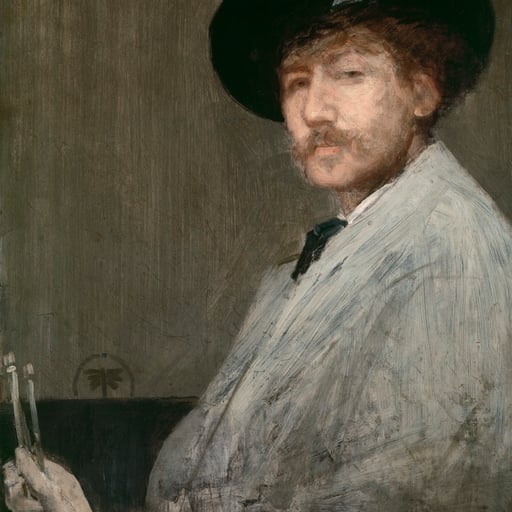
Weir was deeply influenced by the Italian Renaissance masters, particularly Michelangelo and Raphael, whose works he studied during his years in Florence and Rome. As Professor of Drawing at West Point, he instructed a generation of military leaders and artists. His notable students included painters James Abbott McNeill Whistler, Seth Eastman, George Martin Ottinger, and Winckworth Allan Gay. He also developed a special relationship with Ulysses S. Grant. After his retirement, he taught Juliette Gordon Low and Irene E. Parmelee. Within his own family, he trained his sons, John Ferguson Weir and Julian Alden Weir, both of whom became distinguished artists and members of the National Academy of Design.
Legacy
Weir's artistic legacy extends through his own extensive output and the achievements of his students and children. His works are held in major institutions including the Metropolitan Museum of Art, Brooklyn Museum, Wadsworth Atheneum, Yale University Art Gallery, Museum of Fine Arts in Boston, Detroit Institute of Arts, and the National Portrait Gallery. His son John Ferguson Weir became director of the Yale University Art School in 1868, while Julian Alden Weir became a founder of the Society of American Artists and a member of the Ten American Painters. Weir's granddaughter, Irene Weir, continued the family tradition as an educator and artist. The large number of unsigned paintings he produced means his full oeuvre may never be completely attributed.
Works by Robert Walter Weir
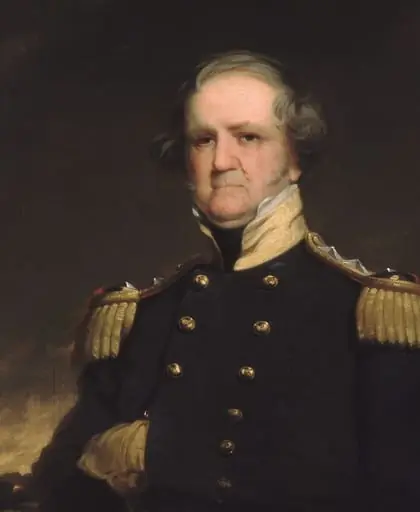 General Winfield Scott
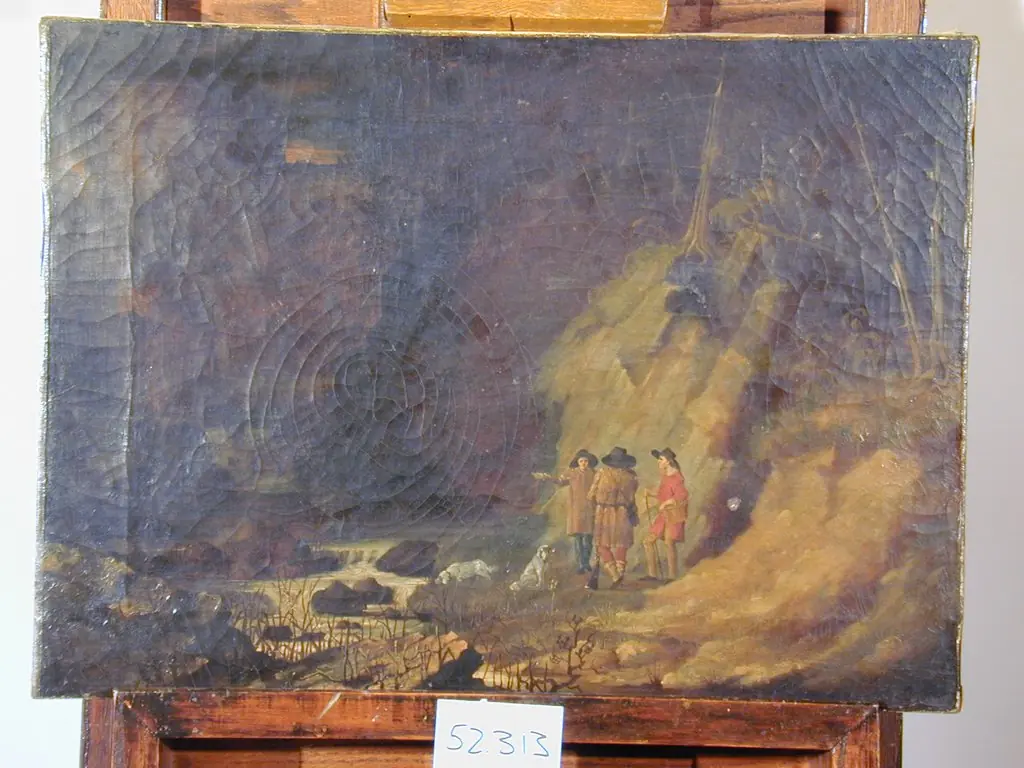 Landscape
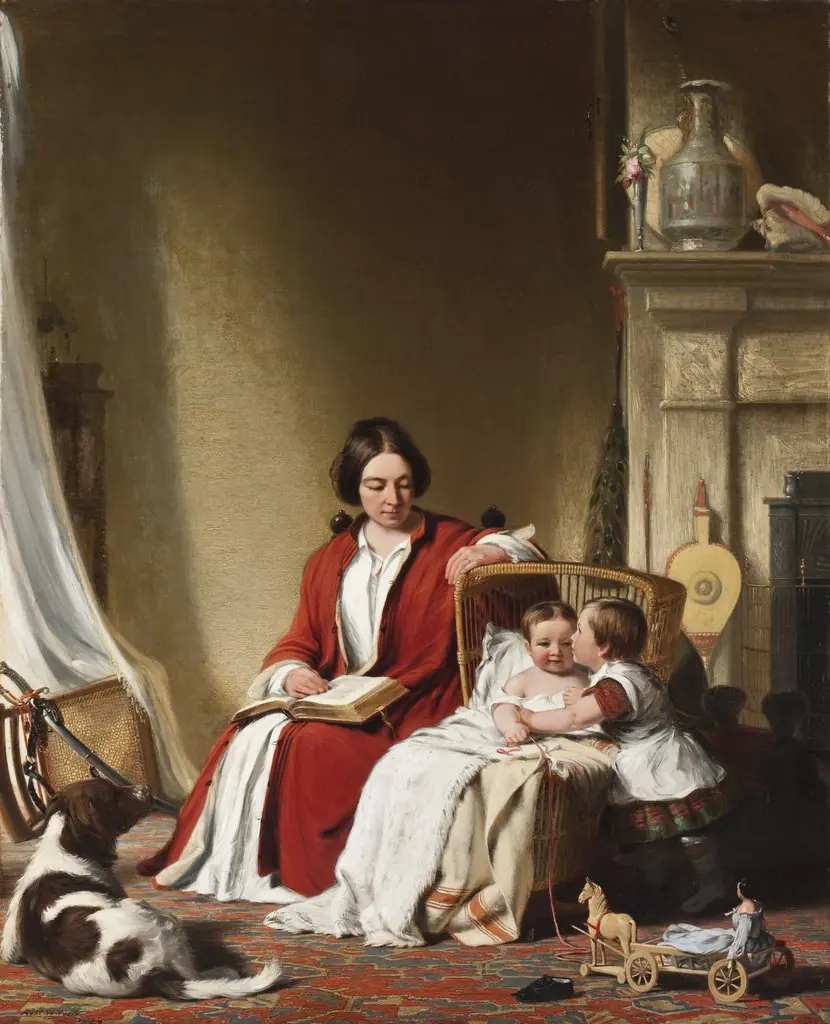 Mrs. Bradford Ripley Alden and her Children
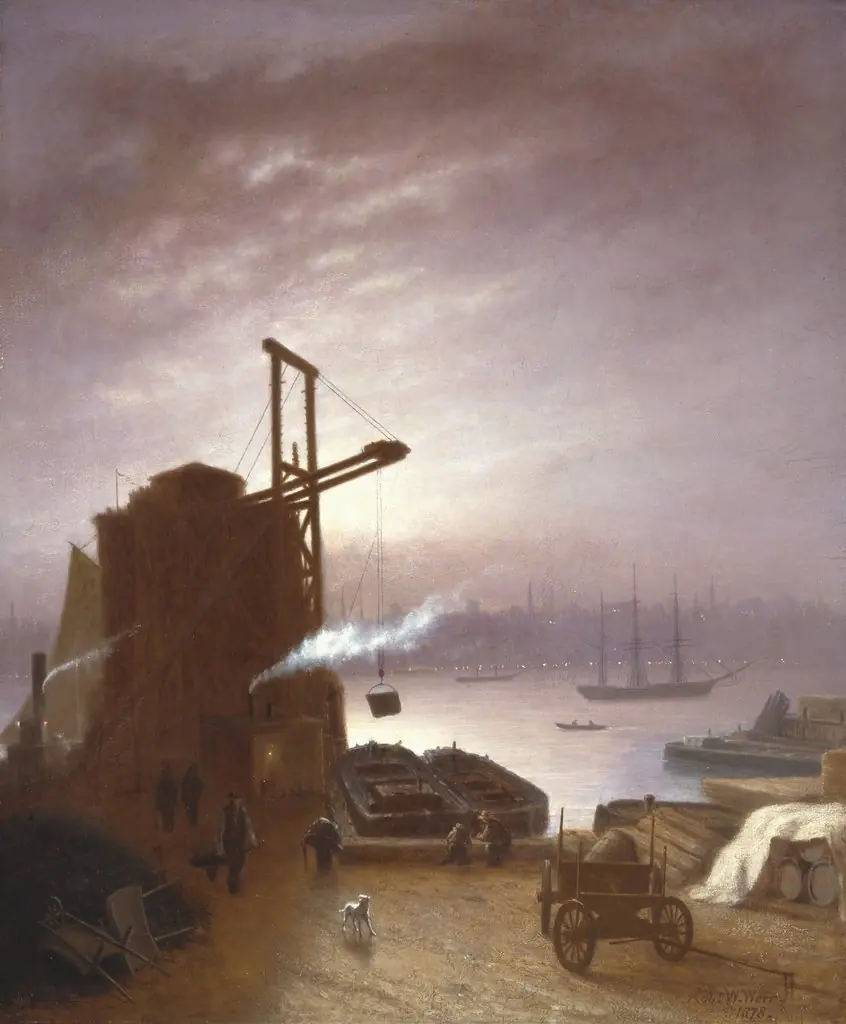 The Hudson River from Hoboken
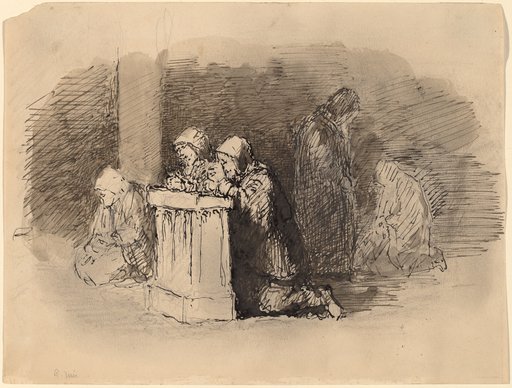
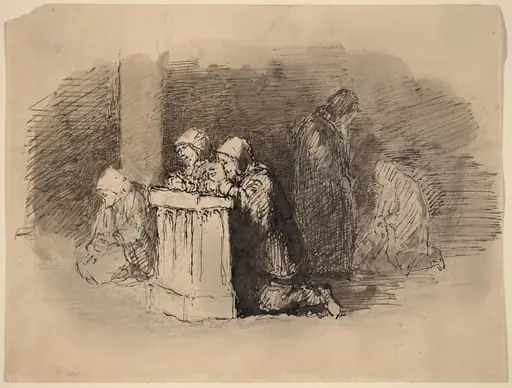 Praying Figures in a Church, Florence
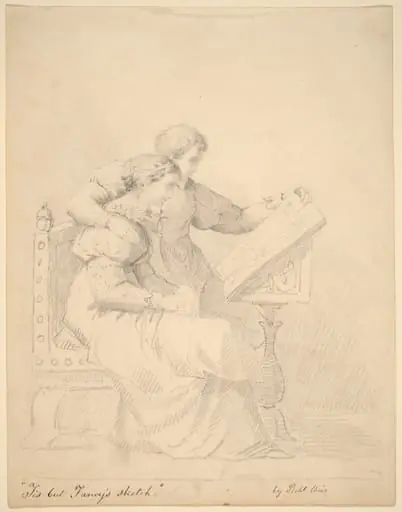 "Tis but Fancy's Sketch"
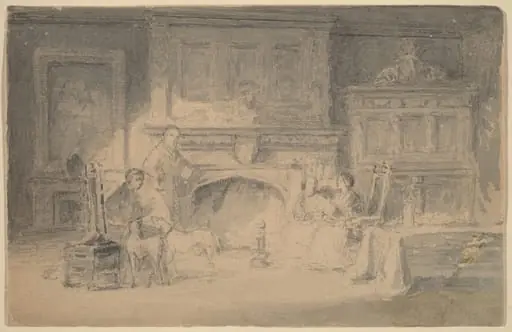 Study for "The Bailey Family"
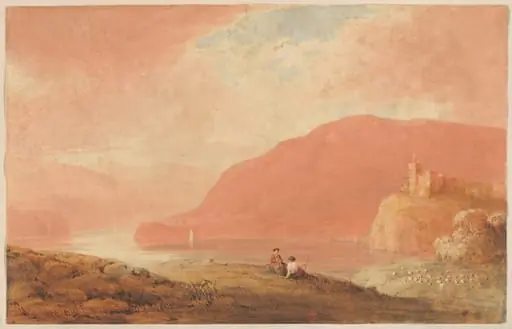 Castle on a River
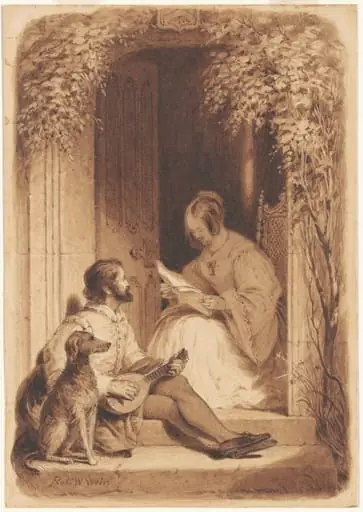 When Other Friends Are Round Thee
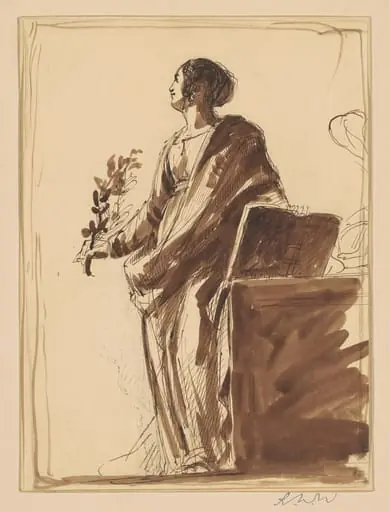 Study for "War and Peace"
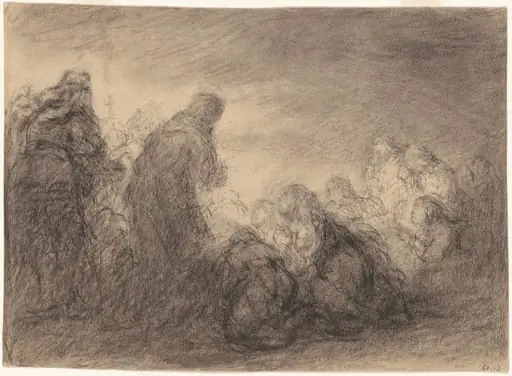 Group of Figures
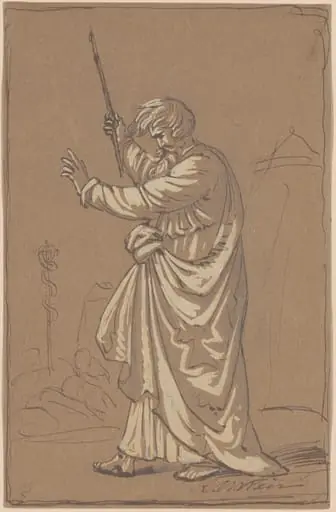 Aaron Converting His Staff into a Serpent
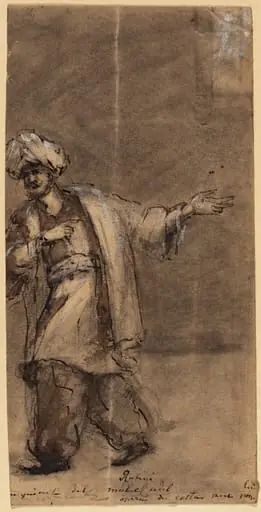 Man in Oriental Costume
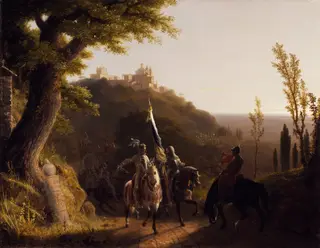 The Duke of Bourbon's Halt at La Riccia, on His March to the Assau Rome, May 3d, 1527
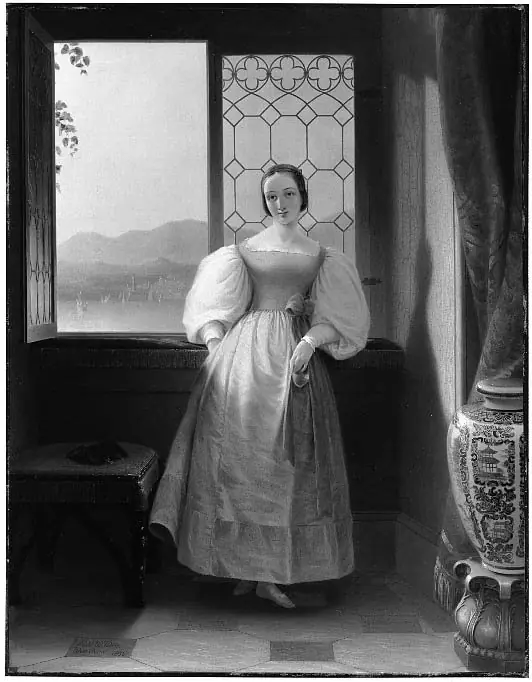 Bianca
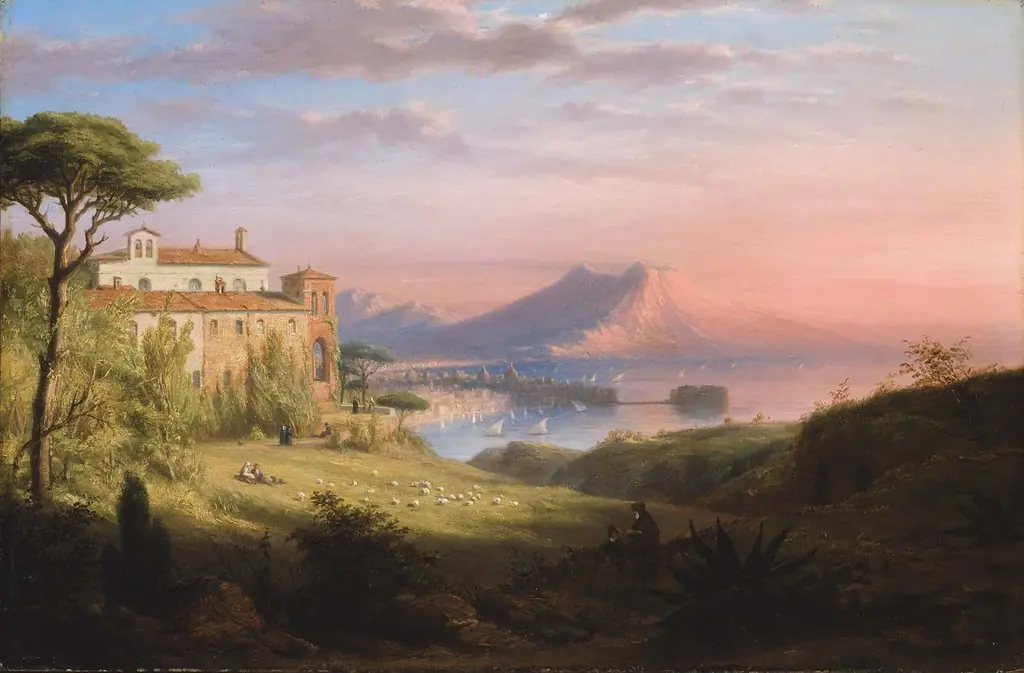 Bay of Naples
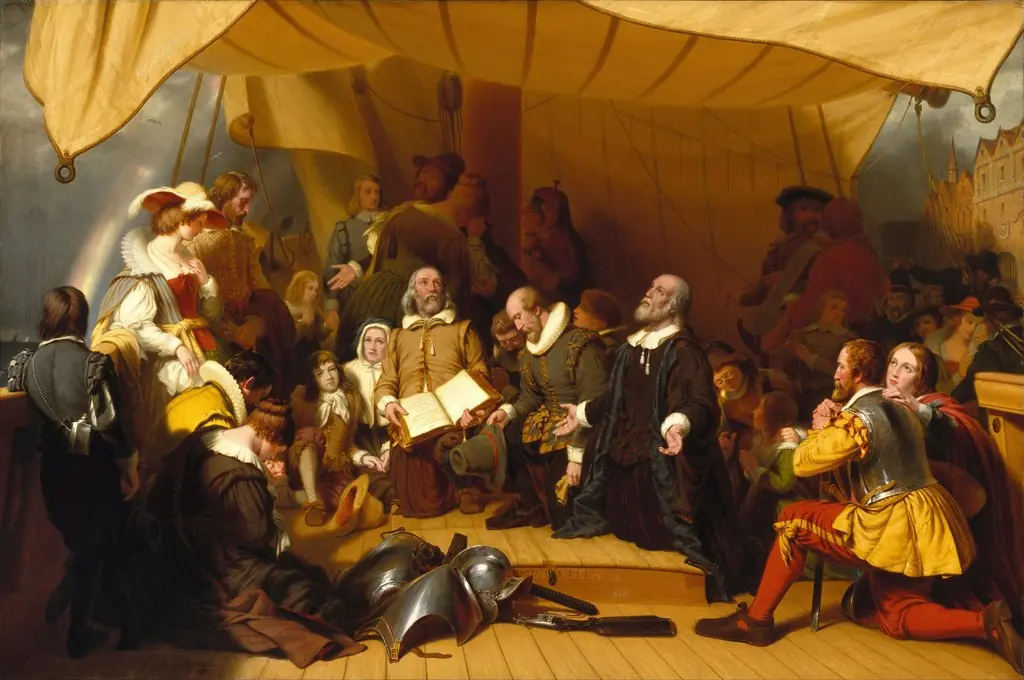 Embarkation of the Pilgrims
Collections represented


Artists in a similar vein