Artist
Jean-Baptiste Massé
France
Jean-Baptiste Massé is a France Romanticism artist. 16 works are cataloged here, principally at National Gallery of Art.
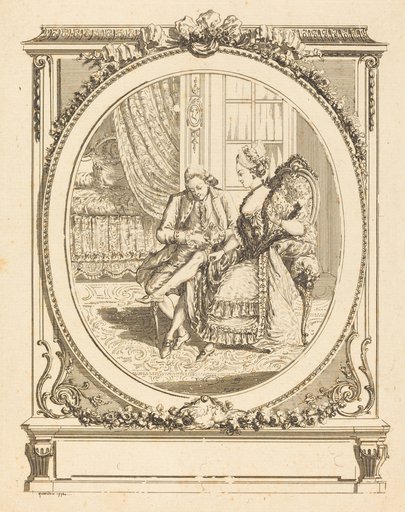
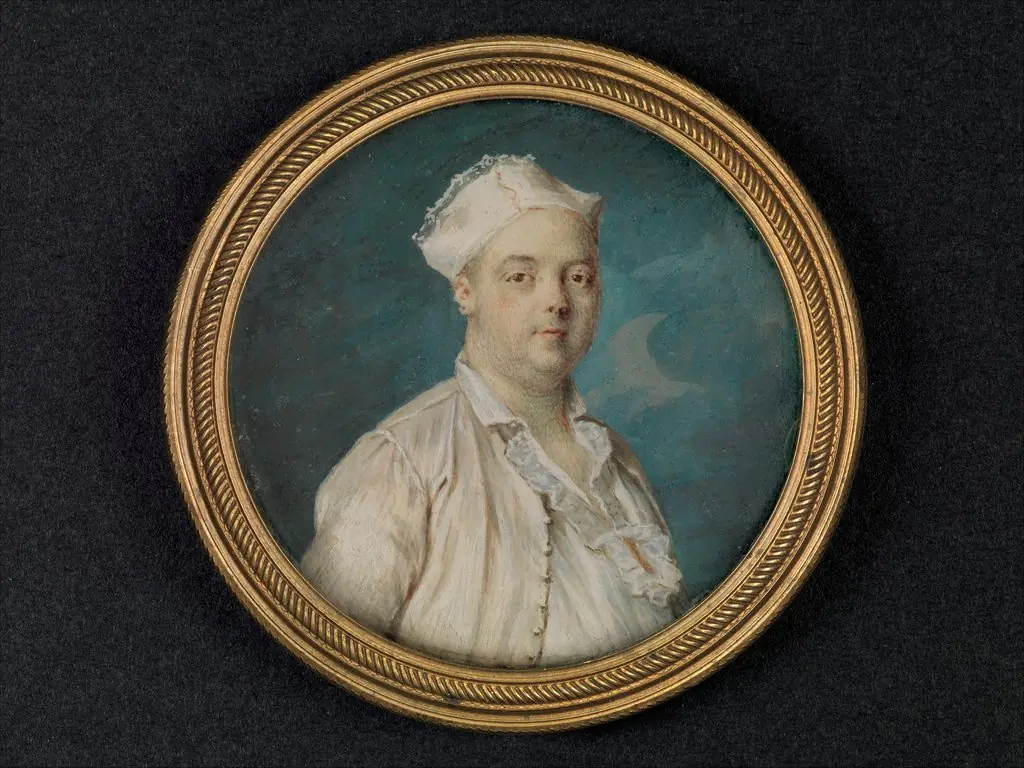 Pierre Louis Dubus (1721–1799), Called Préville, of the Comédie-Française
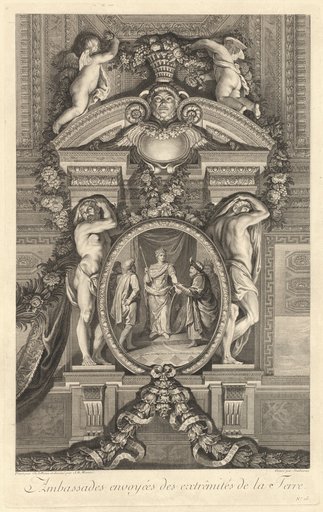
![Ambassades envoyées des extrêmités de la Terre (Embassies Sent from the Extremities of the Globe) [pl. 15]](https://artifactworldgallery.com/img/jean-baptiste-masse--ambassades-envoyees-des-extremites-de-la-terre-embassies-sen--d683ea402b3c3659-w320.webp) Ambassades envoyées des extrêmités de la Terre (Embassies Sent from the Extremities of the Globe) [pl. 15]
Ambassades envoyées des extrêmités de la Terre (Embassies Sent from the Extremities of the Globe) [pl. 15]![La Prééminence de la France reconnue par l'Espagne 1662 (The Preeminance of France Recognized by Spain 1662) [pl. 17]](https://artifactworldgallery.com/img/jean-baptiste-masse--la-preeminence-de-la-france-reconnue-par-l-espagne-1662-the--0865c0d8271fc4b5-w320.webp) La Prééminence de la France reconnue par l'Espagne 1662 (The Preeminance of France Recognized by Spain 1662) [pl. 17]
La Prééminence de la France reconnue par l'Espagne 1662 (The Preeminance of France Recognized by Spain 1662) [pl. 17]![Renouvellement d'Alliance avec les Suisses 1663 (Renewal of Alliance with the Swiss 1663) [pl. 18]](https://artifactworldgallery.com/img/jean-baptiste-masse--renouvellement-d-alliance-avec-les-suisses-1663-renewal-of-a--b0549fa383211be6-w320.webp) Renouvellement d'Alliance avec les Suisses 1663 (Renewal of Alliance with the Swiss 1663) [pl. 18]
Renouvellement d'Alliance avec les Suisses 1663 (Renewal of Alliance with the Swiss 1663) [pl. 18]![Protection accordée aux beaux-arts 1663 (Protection Granted to the Fine Arts 1663) [pl. 24]](https://artifactworldgallery.com/img/jean-baptiste-masse--protection-accordee-aux-beaux-arts-1663-protection-granted-t--045f3db9c3e49b51-w320.webp) Protection accordée aux beaux-arts 1663 (Protection Granted to the Fine Arts 1663) [pl. 24]
Protection accordée aux beaux-arts 1663 (Protection Granted to the Fine Arts 1663) [pl. 24]![Alliance de l'Allemagne et de l'Espagne avec la Hollande 1672 Cintre de la Gallerie du côté du Salon de la Guerre (Alliance of Germany and Spain with Holland 1672, Center of the Gallery next to the Salon of War) [pl. 31]](https://artifactworldgallery.com/img/jean-baptiste-masse--alliance-de-l-allemagne-et-de-l-espagne-avec-la-hollande-167--4b670ecaa7c4c5d8-w320.webp) Alliance de l'Allemagne et de l'Espagne avec la Hollande 1672 Cintre de la Gallerie du côté du Salon de la Guerre (Alliance of Germany and Spain with Holland 1672, Center of the Gallery next to the Salon of War) [pl. 31]
Alliance de l'Allemagne et de l'Espagne avec la Hollande 1672 Cintre de la Gallerie du côté du Salon de la Guerre (Alliance of Germany and Spain with Holland 1672, Center of the Gallery next to the Salon of War) [pl. 31]
Jean-Baptiste Massé (29 December 1687, in Paris – 26 September 1767, in Paris) was a French miniature painter, engraver, and draftsman, best remembered as the court painter of Louis XV, for training Jean-Étienne Liotard and Cornelius Høyer, and for his volumes on the works of Charles Le Brun titled Galerie de Versailles (produced 1732–1753).
Overview
Jean-Baptiste Massé was a French miniature painter, engraver, and draftsman who served as the court painter to Louis XV. Born in Paris on 29 December 1687, he spent his life in the city until his death on 26 September 1767. He is best remembered for his official portraits of the royal family in miniature, his role in training prominent artists like Jean-Étienne Liotard and Cornelius Høyer, and his monumental reproductive print series documenting the works of Charles Le Brun at Versailles.
Biography & dates
Massé was born in Paris in 1687, the son of goldsmith Jacob Massé. He received his early artistic training under the painters Jouvenet and Châtillon. He began his career working as an engraver and a painter on enamel before shifting his focus to portrait miniatures and oil painting. In 1714, he became an associate of the Académie Royale, and he was received as a full member in 1717, presenting an engraving of Coypel as his reception piece. He advanced to become a counsellor of the Académie Royale de Peinture et de Sculpture in 1740. As a Protestant, his sustained success at the Catholic court was notable, and he lived at court while producing numerous miniatures for the gift boxes of the Duke de Richelieu and Louis XV. In 1759, Louis XV appointed him Garde des tableaux. He maintained a friendship with Voltaire, who highly praised his art. He died in Paris in 1767.
Style & movement
Massé operated within the French academic tradition of the early eighteenth century, applying his meticulous draftsmanship to both miniature painting and reproductive engraving. Early in his career, he painted on enamel, later transitioning to portrait miniatures and oils. His approach was defined by fine detail and delicate brushwork suited to the small scale of his miniatures, which were often set into elaborate gift boxes for the court. His style was shaped by the academic principles of his teachers, Jouvenet and Châtillon, and he applied this rigorous draftsmanship to his broader historical paintings and his exacting reproductive engravings of large-scale frescoes.
Major works
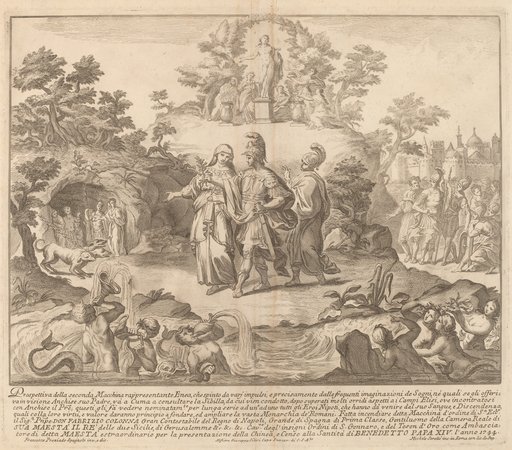
Massé's defining achievement was the Galerie de Versailles, a vast publication of engravings reproducing the decorative schemes of Charles Le Brun, the first painter to Louis XIV, in the Grande Galerie and its two accompanying salons at Versailles. Massé made the preparatory drawings for the project, which he began in 1723 and completed in 1753. The engravings were executed under his supervision by the leading printmakers of the era, including Laurent Cars, Michel Aubert, Simon François Ravenet, Louis Desplaces, Benoît Audran II, Nicolas-Gabriel Dupuis, Bernard Lépicié, and Jacques Nicolas Tardieu. The National Gallery of Art in Washington, D.C., holds a bound volume of this project containing fifty-six engravings, including an engraved portrait of Massé and twenty-three double-spread plates, published in 1752. Additionally, Massé produced numerous portrait miniatures of the young King Louis XV and other members of the royal family.
Influences & students
Massé's artistic foundation was shaped by his instruction under the painters Jouvenet and Châtillon. As an established master, he became a significant teacher to the next generation of miniaturists. His most prominent pupils included the renowned Swiss painter Jean-Étienne Liotard, the Danish miniaturist Cornelius Høyer, and an artist named Alphen. Through his instruction, Massé influenced the development of eighteenth-century miniature painting across Europe.
Legacy
By the late nineteenth century, Massé had become an obscure figure, recognized primarily through his reproductive prints. In 1880, Émile Campardon published a study titled Un artiste oublié: J. B. Massé, peintre de Louis XV, dessinateur, graveur, explicitly framing him as a forgotten artist of the French court. Earlier, in 1860 and 1861, Paul Lacroix published a necrology on the painter in the Revue universelle des arts. Despite this period of obscurity, his legacy as a master of miniature painting and the driving force behind the Galerie de Versailles endured. His influence persisted through the successful careers of his pupils, Liotard and Høyer, and his engraved volumes remain essential records of the decorative programs at Versailles, held in major institutional collections such as the National Gallery of Art.
Works by Jean-Baptiste Massé
- Pierre Louis Dubus (1721–1799), Called Préville, of the Comédie-Française
- Ambassades envoyées des extrêmités de la Terre (Embassies Sent from the Extremities of the Globe) [pl. 15]
- La Prééminence de la France reconnue par l'Espagne 1662 (The Preeminance of France Recognized by Spain 1662) [pl. 17]
- Renouvellement d'Alliance avec les Suisses 1663 (Renewal of Alliance with the Swiss 1663) [pl. 18]
- Protection accordée aux beaux-arts 1663 (Protection Granted to the Fine Arts 1663) [pl. 24]
- Alliance de l'Allemagne et de l'Espagne avec la Hollande 1672 Cintre de la Gallerie du côté du Salon de la Guerre (Alliance of Germany and Spain with Holland 1672, Center of the Gallery next to the Salon of War) [pl. 31]
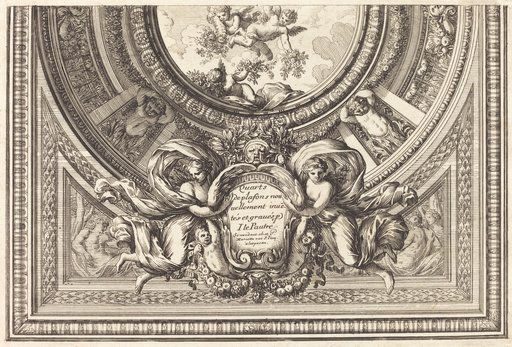
![Coupole du Salon de la Guerre (Cupola of the Salon of War) [pl. 35]](https://artifactworldgallery.com/img/jean-baptiste-masse--coupole-du-salon-de-la-guerre-cupola-of-the-salon-of-war-pl--2b9793f18c09c4bc-w320.webp) Coupole du Salon de la Guerre (Cupola of the Salon of War) [pl. 35]
Coupole du Salon de la Guerre (Cupola of the Salon of War) [pl. 35]![L'Allemagne Cintre du Salon de la Guerre du côté des appartemens du Roi (Germany, Center of the Salon of War next to the King's Chambers) [pl. 37]](https://artifactworldgallery.com/img/jean-baptiste-masse--l-allemagne-cintre-du-salon-de-la-guerre-du-cote-des-apparte--107e6bb2bd4fa1ce-w320.webp) L'Allemagne Cintre du Salon de la Guerre du côté des appartemens du Roi (Germany, Center of the Salon of War next to the King's Chambers) [pl. 37]
L'Allemagne Cintre du Salon de la Guerre du côté des appartemens du Roi (Germany, Center of the Salon of War next to the King's Chambers) [pl. 37]![L'Espagne Cintre du Salon de la Guerre en face de la Galerie (Spain, Center of the Salon of War Opposite the Gallery) [pl. 38]](https://artifactworldgallery.com/img/jean-baptiste-masse--l-espagne-cintre-du-salon-de-la-guerre-en-face-de-la-galerie--d829189dd221d18c-w320.webp) L'Espagne Cintre du Salon de la Guerre en face de la Galerie (Spain, Center of the Salon of War Opposite the Gallery) [pl. 38]
L'Espagne Cintre du Salon de la Guerre en face de la Galerie (Spain, Center of the Salon of War Opposite the Gallery) [pl. 38]![La Hollande Cintre du Salon de la Guerre sur L'Arcade qui donne entrée dans la Galerie (Holland, Center of the Salon of War in the Arcade that Opens into the Gallery) [pl. 39]](https://artifactworldgallery.com/img/jean-baptiste-masse--la-hollande-cintre-du-salon-de-la-guerre-sur-l-arcade-qui-do--fd044d5b0522362e-w320.webp) La Hollande Cintre du Salon de la Guerre sur L'Arcade qui donne entrée dans la Galerie (Holland, Center of the Salon of War in the Arcade that Opens into the Gallery) [pl. 39]
La Hollande Cintre du Salon de la Guerre sur L'Arcade qui donne entrée dans la Galerie (Holland, Center of the Salon of War in the Arcade that Opens into the Gallery) [pl. 39]![Coupole du Salon de la Paix (Cupola of the Salon of Peace) [pl. 44]](https://artifactworldgallery.com/img/jean-baptiste-masse--coupole-du-salon-de-la-paix-cupola-of-the-salon-of-peace-pl--083dda9da8b00531-w320.webp) Coupole du Salon de la Paix (Cupola of the Salon of Peace) [pl. 44]
Coupole du Salon de la Paix (Cupola of the Salon of Peace) [pl. 44]![L'Europe Chrêtienne en Paix Cintre du Salon de la Paix du côté des appartemens de la Reine (Christian Europe in Peace, Center of the Salon of Peace next to the Queen's Chambers) [pl. 45]](https://artifactworldgallery.com/img/jean-baptiste-masse--l-europe-chretienne-en-paix-cintre-du-salon-de-la-paix-du-co--42b41626259ce77e-w320.webp) L'Europe Chrêtienne en Paix Cintre du Salon de la Paix du côté des appartemens de la Reine (Christian Europe in Peace, Center of the Salon of Peace next to the Queen's Chambers) [pl. 45]
L'Europe Chrêtienne en Paix Cintre du Salon de la Paix du côté des appartemens de la Reine (Christian Europe in Peace, Center of the Salon of Peace next to the Queen's Chambers) [pl. 45]![L'Allemagne Cintre du Salon de la Paix en face de la Galerie (Germany, Center of the Salon of Peace Opposite the Gallery) [pl. 46]](https://artifactworldgallery.com/img/jean-baptiste-masse--l-allemagne-cintre-du-salon-de-la-paix-en-face-de-la-galerie--447dbb6c5f024d11-w320.webp) L'Allemagne Cintre du Salon de la Paix en face de la Galerie (Germany, Center of the Salon of Peace Opposite the Gallery) [pl. 46]
L'Allemagne Cintre du Salon de la Paix en face de la Galerie (Germany, Center of the Salon of Peace Opposite the Gallery) [pl. 46]![L'Espagne Cintre du Salon de la Paix sur l'Arcade de la Galerie (Spain, Center of the Salon of Peace in the Gallery's Arcade) [pl. 47]](https://artifactworldgallery.com/img/jean-baptiste-masse--l-espagne-cintre-du-salon-de-la-paix-sur-l-arcade-de-la-gale--1780f995882c221b-w320.webp) L'Espagne Cintre du Salon de la Paix sur l'Arcade de la Galerie (Spain, Center of the Salon of Peace in the Gallery's Arcade) [pl. 47]
L'Espagne Cintre du Salon de la Paix sur l'Arcade de la Galerie (Spain, Center of the Salon of Peace in the Gallery's Arcade) [pl. 47]![La Hollande Cintre du Salon de la Paix en face des Appartmens de la Reine (Holland, Center of the Salon of Peace Opposite the Queen's Apartments) [pl. 48]](https://artifactworldgallery.com/img/jean-baptiste-masse--la-hollande-cintre-du-salon-de-la-paix-en-face-des-appartmen--9afba5d041a04a3b-w320.webp) La Hollande Cintre du Salon de la Paix en face des Appartmens de la Reine (Holland, Center of the Salon of Peace Opposite the Queen's Apartments) [pl. 48]
La Hollande Cintre du Salon de la Paix en face des Appartmens de la Reine (Holland, Center of the Salon of Peace Opposite the Queen's Apartments) [pl. 48]![La Hollande accepte la paix et se détache de l'Allemagne et de l'Espagne 1678 Cintre de la Galerie du côté du Salon de la Paix (Holland Accepts Peace and Detaches Itself from Germany and Spain 1678, Center of the Gallery next to the Salon of Peace) [pl. 33]](https://artifactworldgallery.com/img/jean-baptiste-masse--la-hollande-accepte-la-paix-et-se-detache-de-l-allemagne-et--21582d3cc94c3d89-w320.webp) La Hollande accepte la paix et se détache de l'Allemagne et de l'Espagne 1678 Cintre de la Galerie du côté du Salon de la Paix (Holland Accepts Peace and Detaches Itself from Germany and Spain 1678, Center of the Gallery next to the Salon of Peace) [pl. 33]
La Hollande accepte la paix et se détache de l'Allemagne et de l'Espagne 1678 Cintre de la Galerie du côté du Salon de la Paix (Holland Accepts Peace and Detaches Itself from Germany and Spain 1678, Center of the Gallery next to the Salon of Peace) [pl. 33]
Collections represented


- Coupole du Salon de la Guerre (Cupola of the Salon of War) [pl. 35]
- L'Allemagne Cintre du Salon de la Guerre du côté des appartemens du Roi (Germany, Center of the Salon of War next to the King's Chambers) [pl. 37]
- L'Espagne Cintre du Salon de la Guerre en face de la Galerie (Spain, Center of the Salon of War Opposite the Gallery) [pl. 38]
- La Hollande Cintre du Salon de la Guerre sur L'Arcade qui donne entrée dans la Galerie (Holland, Center of the Salon of War in the Arcade that Opens into the Gallery) [pl. 39]
- Coupole du Salon de la Paix (Cupola of the Salon of Peace) [pl. 44]
- L'Europe Chrêtienne en Paix Cintre du Salon de la Paix du côté des appartemens de la Reine (Christian Europe in Peace, Center of the Salon of Peace next to the Queen's Chambers) [pl. 45]
- L'Allemagne Cintre du Salon de la Paix en face de la Galerie (Germany, Center of the Salon of Peace Opposite the Gallery) [pl. 46]
- L'Espagne Cintre du Salon de la Paix sur l'Arcade de la Galerie (Spain, Center of the Salon of Peace in the Gallery's Arcade) [pl. 47]
Artists in a similar vein