Artwork
Pierre Louis Dubus (1721–1799), Called Préville, of the Comédie-Française
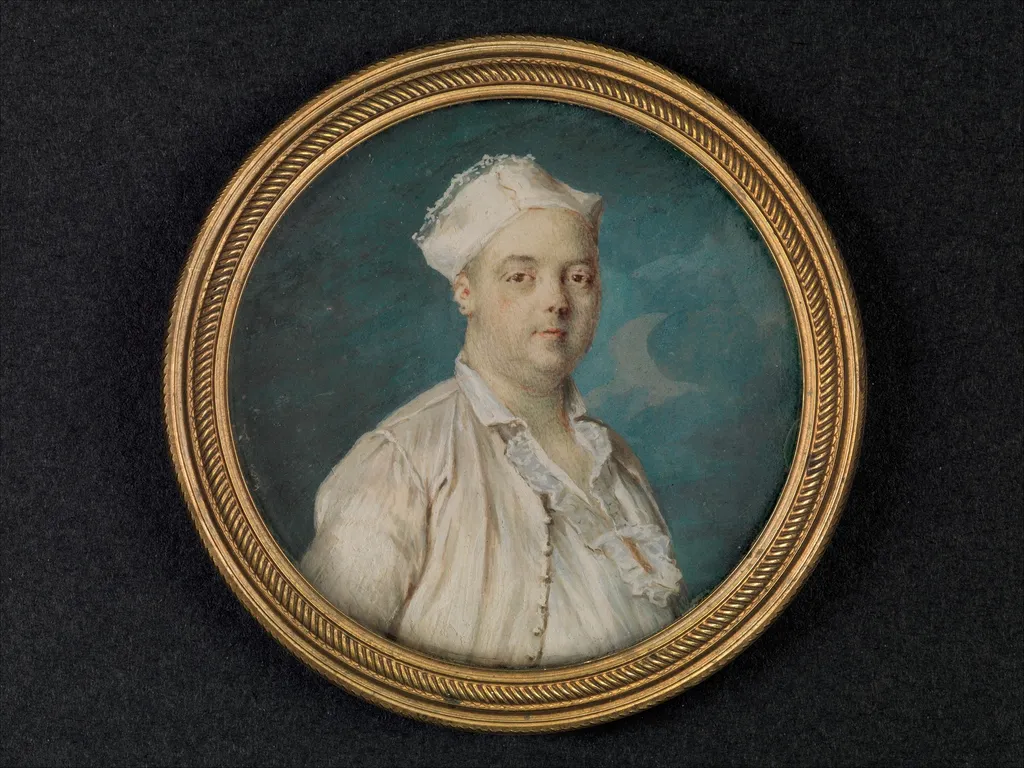
Pierre Louis Dubus (1721–1799), Called Préville, of the Comédie-Française is an ivory painting by the Neoclassicist artist Jean-Baptiste Massé. It is held in the collection of the Metropolitan Museum of Art.
About this work
Subject & Meaning
The medium of ivory further elevates the status of the sitter, aligning with the tradition of creating refined, miniature portraits of notable personalities.
The work depicts Pierre Louis Dubus, a prominent actor known by his stage name Préville, who was a member of the Comédie-Française. As a portrait, the piece focuses exclusively on the representation of this man, capturing his likeness as a theatrical figure. The iconography is straightforward, centering on the individual rather than employing complex allegorical symbolism or narrative scenes.
The subject is identified clearly as Préville, emphasizing his professional identity within the French theater world. The depiction serves to memorialize the actor, presenting him as a significant cultural figure of his time. The medium of ivory further elevates the status of the sitter, aligning with the tradition of creating refined, miniature portraits of notable personalities.
History & Provenance
The work is held in the Metropolitan Museum of Art, New York. Dated to 1800, it is executed in ivory on card stock and depicts the actor Préville, a member of the Comédie-Française. No exhibition history is recorded in the sources consulted, and the specific accession or inventory number is not provided in the available documentation.
Overview
This miniature portrait, created by Jean-Baptiste Massé in 1800, depicts Pierre Louis Dubus, an esteemed actor known as Préville, who was associated with the Comédie-Française. Executed on ivory, the painting exemplifies the refined aesthetic of neoclassical art prevalent in Europe during the late 18th and early 19th centuries. The work is currently housed at The Metropolitan Museum of Art.
Technique & Style
Massé rendered this portrait using delicate brushstrokes on an ivory support, a medium prized for its smooth surface and subtle translucence, which lends a particular luminosity to the subject's pale complexion. The soft blending of tones and blurred edges contribute to the work's refined quality. The plain, dark green background and the gold border frame the subject, aligning with the restrained elegance characteristic of the neoclassical style.
Own this work as a print
Artist & collection
Artist
Jean-Baptiste Massé (29 December 1687, in Paris – 26 September 1767, in Paris) was a French miniature painter, engraver, and draftsman, best remembered as the court painter of Louis XV, for training Jean-Étienne Liotard…

 Abbé Charles Bossut (1730–1814)
 Mr. Willem Boreel (1744-1796), magistrate of Amsterdam
 Portrait of Étienne François, comte de Stainville, duc de Choiseul
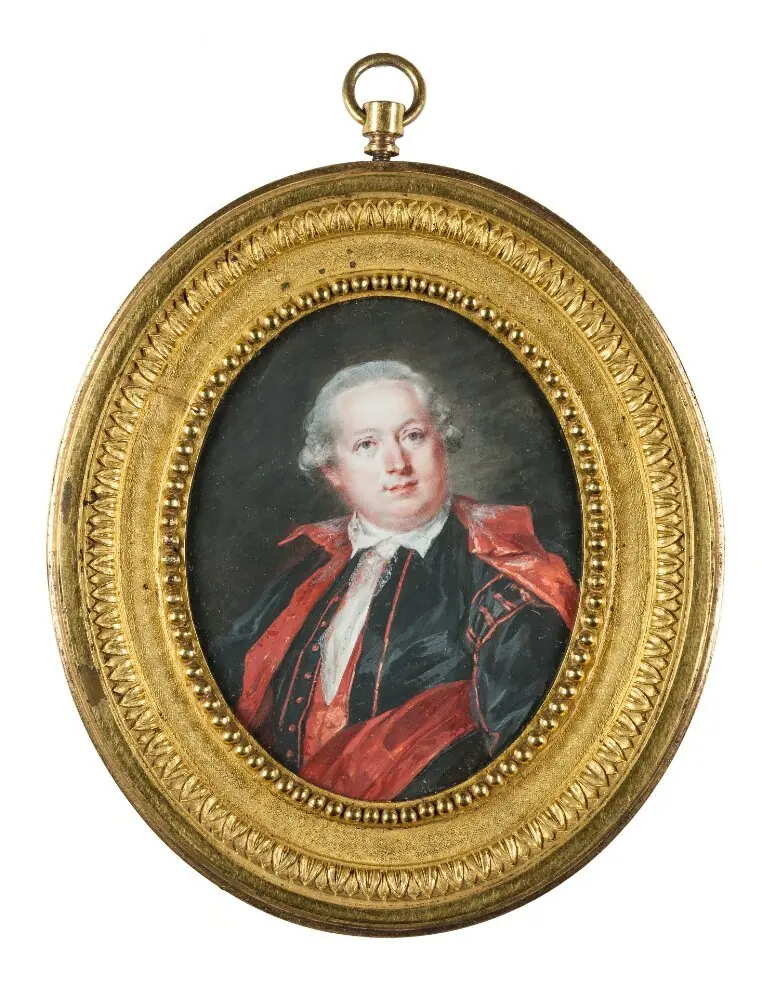 Johan Tobias Sergel (1740-1814) sculptor
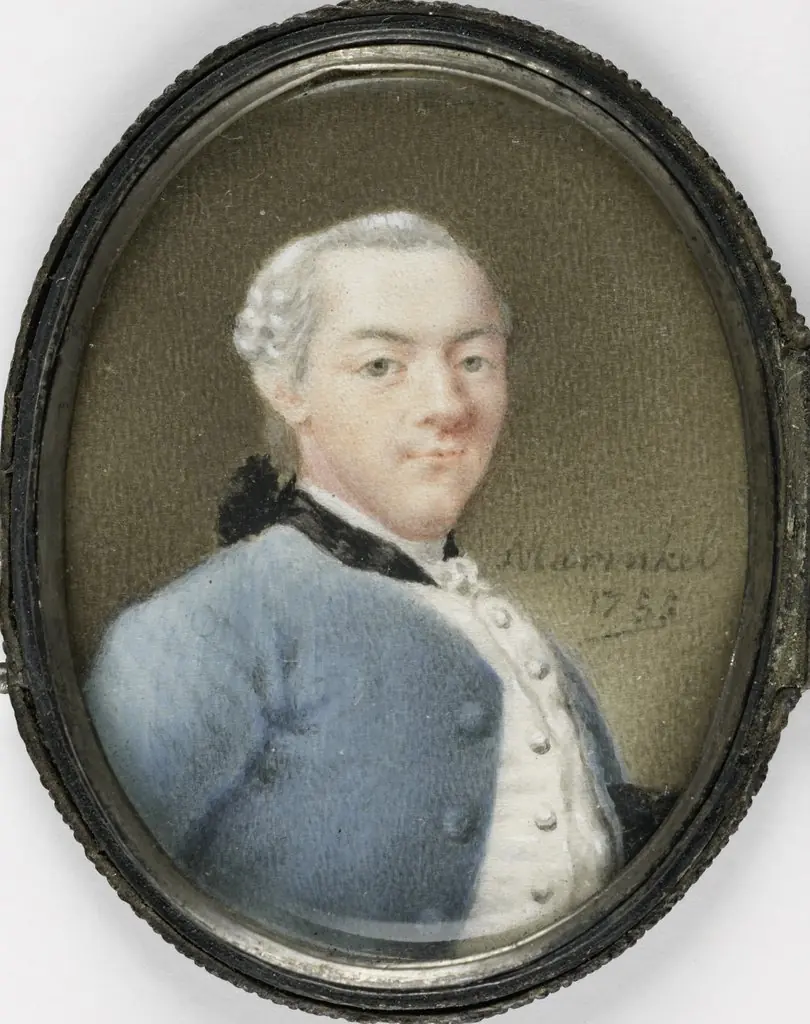 Portret van een man
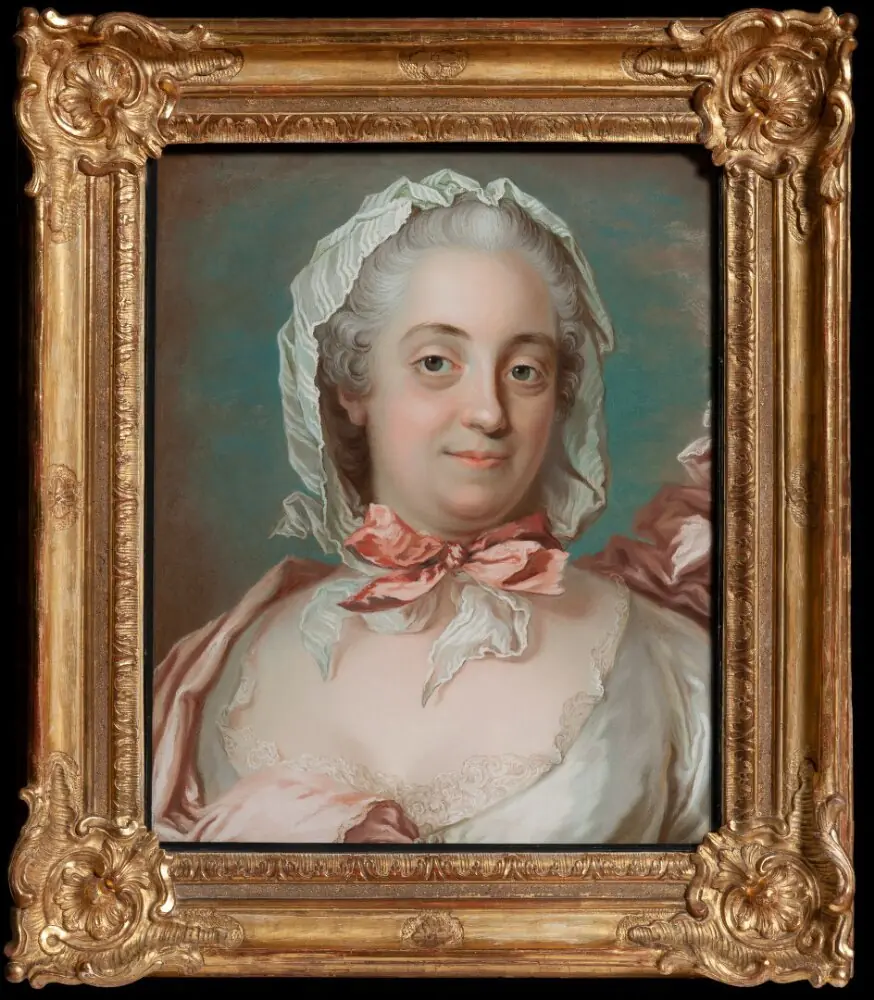 Anna Johanna Grill
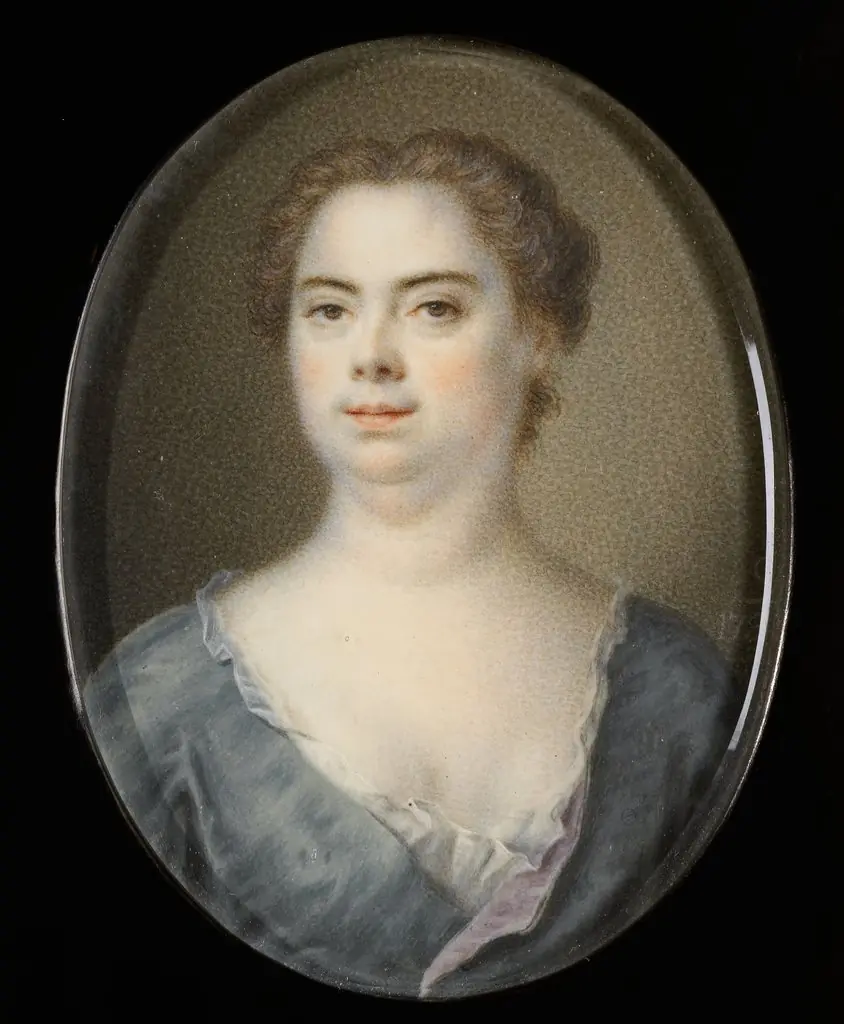 Portrait of Ester Winter
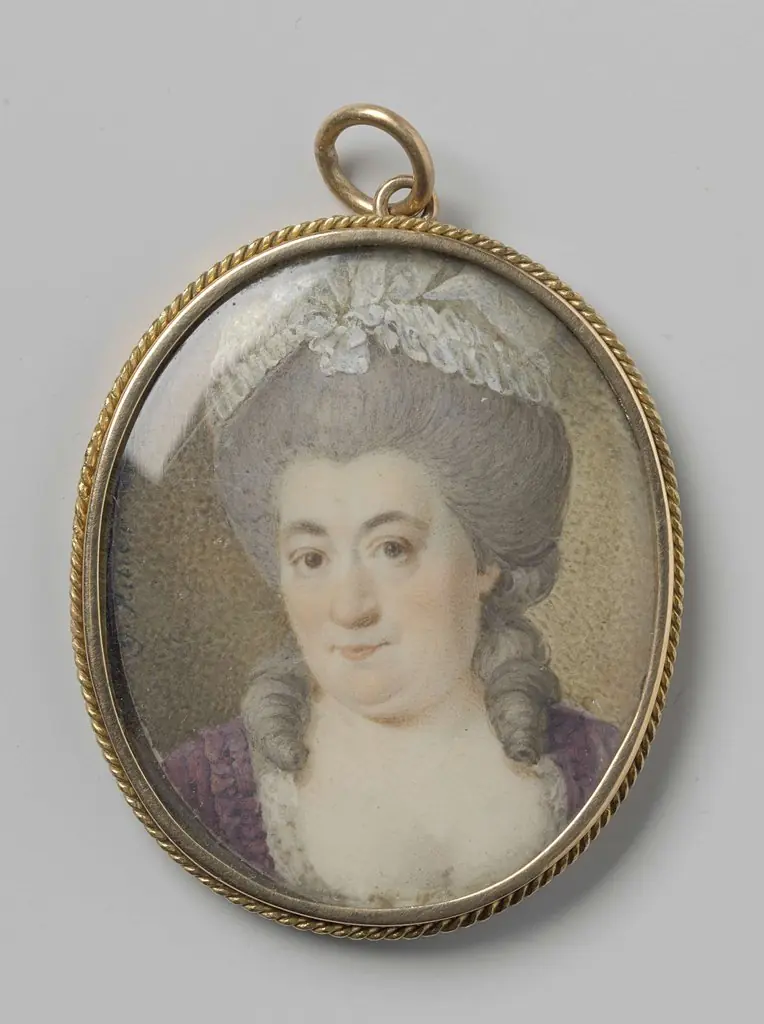 Portret van een vrouw
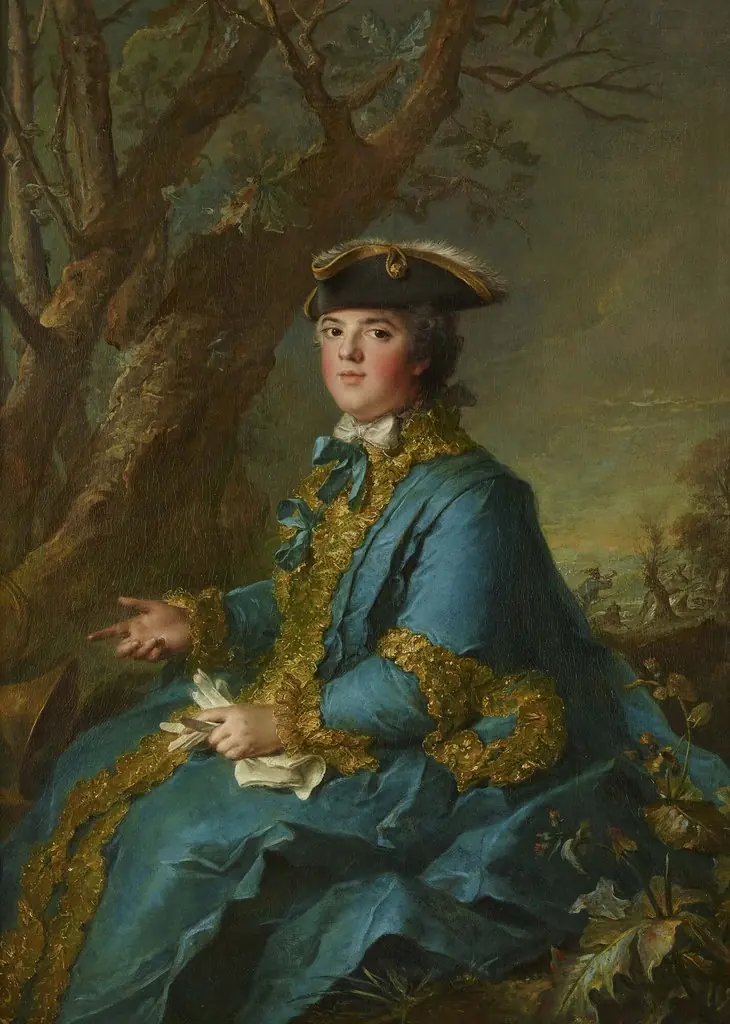 Posthumous portrait of Louise-Élisabeth de France, Duchess of Parma